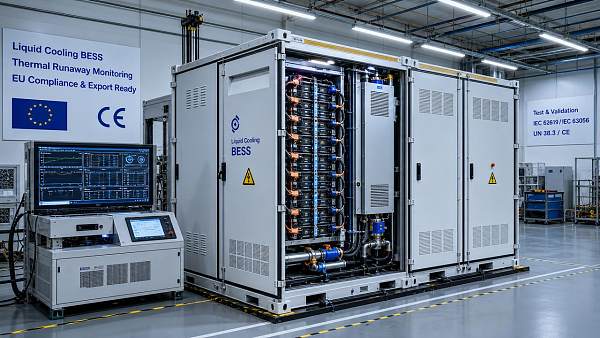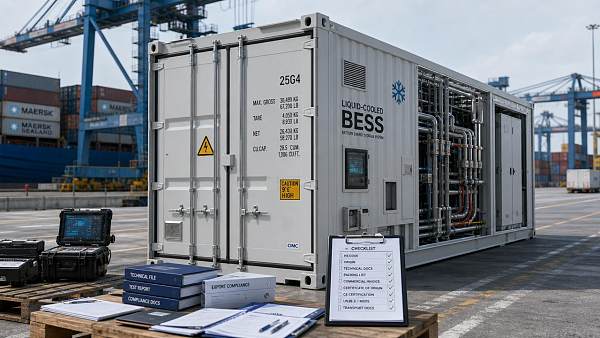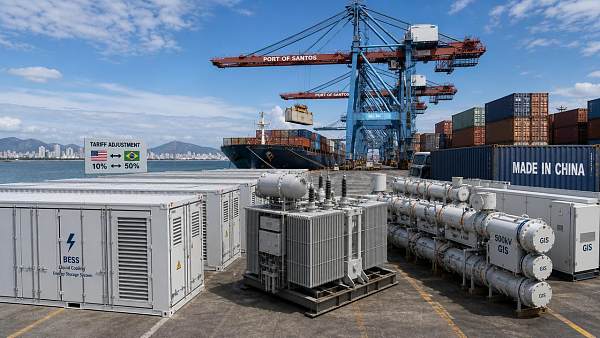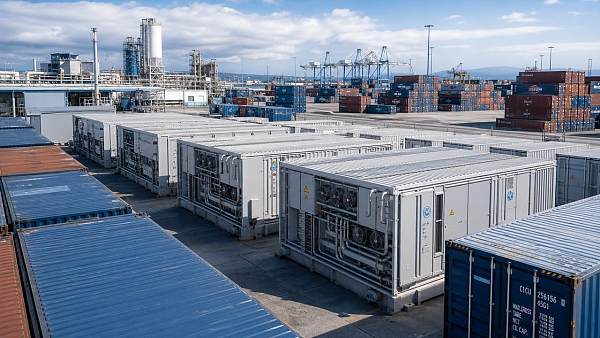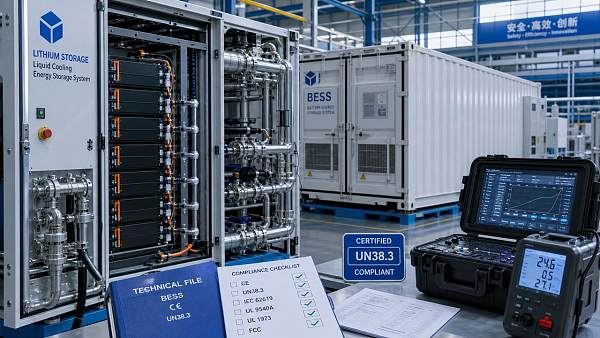
Why does thermal management become a safety issue so quickly in liquid-cooled BESS?
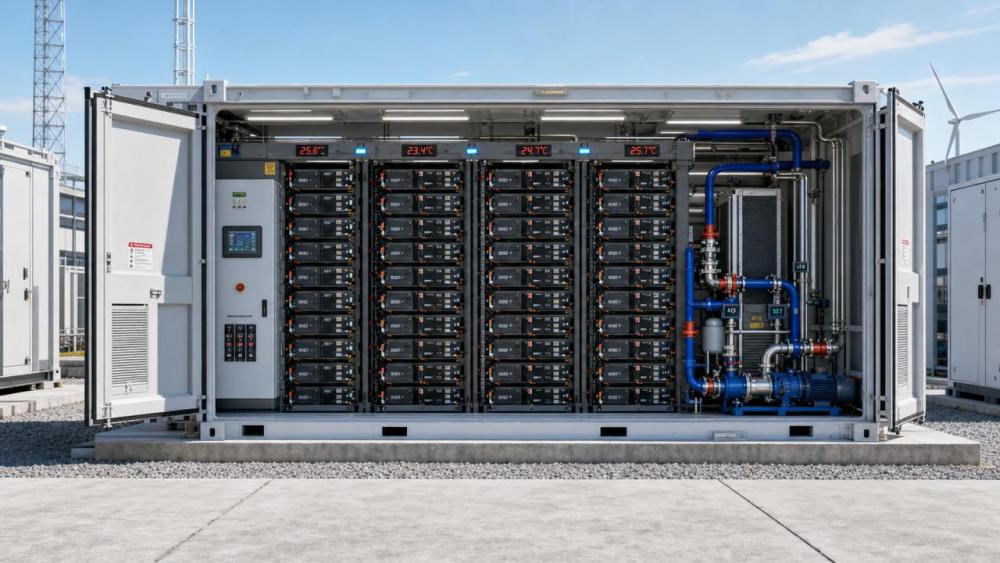
In grid-scale storage, thermal management shapes far more than cooling efficiency. It influences cell aging, fault propagation, export compliance, and even how confidently a project connects to the grid.
That is why liquid-cooled BESS deserves closer scrutiny. A system may appear electrically healthy while hidden thermal stress is already building inside modules, manifolds, or control loops.
In practical terms, small deviations matter. A few degrees of imbalance can reduce usable capacity, distort state estimation, and raise the chance of localized overheating during fast cycling.
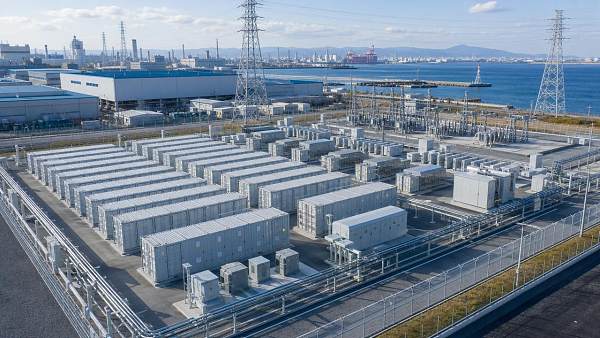
This concern sits at the center of broader energy infrastructure. ESGS tracks BESS containers alongside UHV transmission, smart grid equipment, mega charging hubs, and hydrogen systems because all depend on stable energy flow.
When thermal management fails inside storage, the impact does not stay inside one cabinet. It can affect dispatch response, warranty confidence, fire strategy, insurance discussions, and long-term asset returns.
The more useful question is not whether liquid cooling is advanced. It is whether the cooling architecture remains trustworthy under contamination, vibration, sensor drift, uneven load profiles, and hot ambient operation.
Which thermal management risks are most often missed during routine checks?
The obvious risks get attention first, such as pump failure or visible coolant leakage. More commonly, performance loss starts with quieter issues that look minor in daily records.
One frequent blind spot is temperature uniformity. Average pack temperature may stay acceptable while a few cell groups run consistently warmer than the rest.
Another overlooked point is flow imbalance. Partial blockage, trapped air, or manifold design variation can reduce coolant contact where heat density is highest.
Sensor accuracy also deserves suspicion. Drifted readings can make thermal management appear normal, while controls react too late during charge peaks or rapid discharge events.
Aging coolant is equally important. Changes in conductivity, viscosity, or contamination level can weaken heat transfer and introduce electrical safety concerns at the same time.
- Persistent delta-T between modules, even when overall temperature looks stable
- Repeated pump cycling or unstable pressure trends during identical duty periods
- Condensation near connectors, valves, or service points
- Temperature spikes linked to PCS ramp events or high ambient afternoons
- BMS alarms clearing too easily after restart without root-cause confirmation
These signs rarely act alone. In many projects, thermal management risk grows from several small weaknesses interacting over months, then surfacing during one extreme operating window.
How can you tell whether a temperature issue is harmless drift or a real escalation path?
A useful rule is to stop judging temperature by one snapshot. Thermal management should be evaluated by trend behavior, load correlation, and repeatability across similar operating cycles.
If a hotspot appears only once, the cause may be temporary. If it returns during the same charge window, the same row, or the same ambient condition, it deserves escalation.
The table below helps separate routine deviation from conditions that justify deeper inspection.
In real projects, this distinction matters because unnecessary shutdowns are costly, but delayed action is worse. Thermal management decisions should be evidence-based, not alarm-fatigue driven.
What usually causes thermal management problems after commissioning?
Commissioning often proves that the system works under planned conditions. It does not guarantee resilience across seasonal load changes, grid dispatch volatility, or maintenance inconsistency.
One common cause is mismatch between design assumptions and field duty. A site expected to smooth solar output may later face aggressive peak shaving or frequency regulation cycles.
Another cause is installation detail. Hose routing, insulation quality, valve positioning, and air purge quality can all weaken thermal management even when components meet specification on paper.
Control integration is another weak point. If BMS, EMS, HVAC, and PCS logic are not tuned together, response can become fragmented during high-load or fault conditions.
This matters across the wider green infrastructure chain. The same grid ecosystem that includes UHV power transfer, VPP coordination, and ultra-fast charging depends on storage behaving predictably under stress.
A useful review after commissioning should include not only leak checks and alarm tests, but also thermal management validation under realistic cycling intensity and ambient extremes.
What should be rechecked first?
- Cooling loop balance under partial and full power operation
- Sensor calibration drift after transport and early field runtime
- Coolant cleanliness, conductivity, and service interval assumptions
- Alarm thresholds against actual cell heat generation profiles
- Cabinet airflow interactions with liquid cooling components
Is liquid cooling always safer than air cooling, or is that too simplistic?
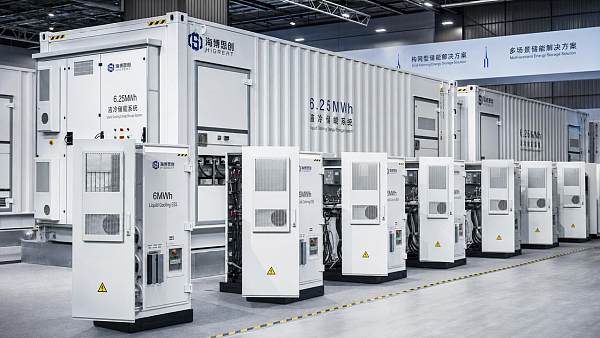
It is too simplistic. Liquid cooling can deliver tighter thermal management, lower temperature spread, and better support for high-energy-density systems, but safety depends on execution, not labels.
Air cooling avoids coolant leakage risk, yet it often struggles with uniformity in dense containers. Liquid systems control heat more precisely, but introduce pumps, seals, sensors, and fluid integrity concerns.
The smarter comparison is not technology versus technology. It is whether the selected architecture matches cycling intensity, ambient range, maintenance capability, and compliance objectives.
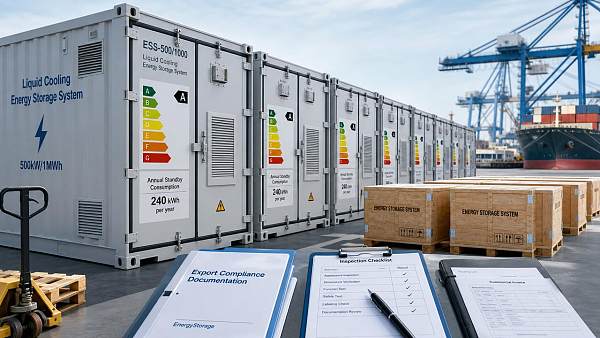
For export-oriented storage, thermal management credibility also affects documentation quality. Evidence around fault containment, propagation resistance, and test readiness becomes part of the safety narrative.
This is where ESGS-style intelligence is useful. In BESS, thermodynamic discipline cannot be separated from grid behavior, certification pressure, and long-duration economic performance.
Which controls reduce thermal management risk before it becomes a reportable event?
The most effective controls are usually procedural and analytical, not just hardware-based. Good thermal management relies on early pattern recognition and disciplined escalation rules.
A strong practice is to define paired indicators. Temperature alone is not enough. Trend it with flow, pressure, power ramp, ambient condition, and alarm recurrence.
It also helps to build a short action matrix for abnormal findings.
- Set module-to-module delta-T limits, not only absolute thresholds
- Trigger root-cause review after repeated nuisance alarms
- Use periodic infrared verification to challenge sensor assumptions
- Track coolant quality as a safety variable, not only a maintenance item
- Simulate high-ramp dispatch scenarios before seasonal demand peaks
- Align thermal records with compliance files and incident traceability logs
Needless to say, not every anomaly points to thermal runaway. Yet weak thermal management is often the path that allows smaller defects to become serious system events.
What is the best next step if the system looks stable today?
The best next step is to test stability, not assume it. A calm dashboard can hide slow degradation, especially in liquid-cooled BESS operating under changing dispatch duties.
Start with a focused thermal management review. Look at delta-T trends, coolant condition, sensor credibility, and repeated high-load intervals over the last operating season.
Then compare field behavior with design intent. If the site now supports deeper cycling, VPP response, or tighter grid services, the original cooling assumptions may no longer be conservative enough.
A practical outcome is a short watchlist: what must be trended weekly, what triggers inspection, and what requires immediate derating or shutdown review.
Thermal management is ultimately a reliability discipline. In storage systems connected to zero-carbon grids, safe heat control protects not only cells, but dispatch confidence, compliance readiness, and infrastructure credibility.
Related News
 Thermal Management Risks in Liquid-Cooled BESSGrid Storage ArchitectThermal management risks in liquid-cooled BESS can stay hidden until they threaten safety, uptime, and ROI. Learn the warning signs, causes, and smart controls before failures escalate.
 EU Rule Takes Effect for Liquid-Cooled BESS ExportsGrid Storage ArchitectEU Rule Takes Effect for Liquid-Cooled BESS Exports: learn how the new EU compliance rule adds UL 9540A-style monitoring, DCP reporting, and cost impacts for exporters.
 Storage+AI+Low-Altitude Demand Reshapes Buying PrioritiesGrid Storage ArchitectStorage, AI, and low-altitude demand are reshaping energy storage buying priorities. Discover how VPP compatibility, millisecond response, and integrated solutions are influencing global procurement.
 EU Tightens Battery Passport Checks for Liquid-Cooled BESSGrid Storage ArchitectEU Tightens Battery Passport Checks for Liquid-Cooled BESS: learn how new thermal safety data rules may affect customs clearance, supplier readiness, and export risk to the EU.
 Brazil Raises Tariffs on 1,252 Imports, Including Liquid-Cooled BESSGrid Storage ArchitectBrazil raises tariffs on 1,252 imports, including liquid-cooled BESS, C&I energy storage, transformers, and GIS switchgear. See how up to 18% duties may impact pricing, customs, and supply chains.
 Liquid-Cooled BESS Orders Surge as NCM Prices Jump 12%Grid Storage ArchitectLiquid-cooled BESS orders surge 68% as NCM811 prices jump 12.3%. Explore supply-chain risks, lead-time pressure, and what energy storage buyers should watch now.
 Liquid-Cooled BESS Prices Rise as NMC Inputs Jump 12%Grid Storage ArchitectLiquid-Cooled BESS Prices Rise as NMC inputs jump 12%, tightening FOB quotes, freight, and supply-chain planning. See what buyers and suppliers should review now.
 IEA Report Lifts the Bar for Liquid-Cooled BESS ExportsGrid Storage ArchitectIEA Report reveals how liquid-cooled BESS exports are being reshaped by thermal runaway prevention, LCOS, and 2°C verification standards—see what suppliers and buyers must do next.
 Japan Capacity Auction Picks 1.25GW of 6-Hour StorageGrid Storage ArchitectJapan Capacity Auction picks 1.25GW of 6-hour storage, signaling tougher market access in Japan. Learn what local content rules and 20-year contracts mean for BESS suppliers.
 EU ERP Label Rule Tightens for Liquid-Cooled BESSGrid Storage ArchitectEU ERP label rule tightens for liquid-cooled BESS: learn how new energy labeling, export packaging, and notified body re-inspection requirements could impact EU shipments and compliance.
![]() EU ERP Label Checks Tighten for Liquid-Cooled BESSGrid Storage ArchitectEU ERP label checks tighten for liquid-cooled BESS from June 9, 2026. Learn how PCS, QR code, and packaging compliance can impact export readiness and buyer acceptance.
EU ERP Label Checks Tighten for Liquid-Cooled BESSGrid Storage ArchitectEU ERP label checks tighten for liquid-cooled BESS from June 9, 2026. Learn how PCS, QR code, and packaging compliance can impact export readiness and buyer acceptance. SNEC 2026 Deal Signals Batch Validation for 8GWh BESSGrid Storage ArchitectSNEC 2026 deal signals batch validation for 8GWh BESS, highlighting liquid-cooled utility-scale storage, IEC 62933-5:2024 and UL 1973 compliance, and global procurement trends worth tracking.