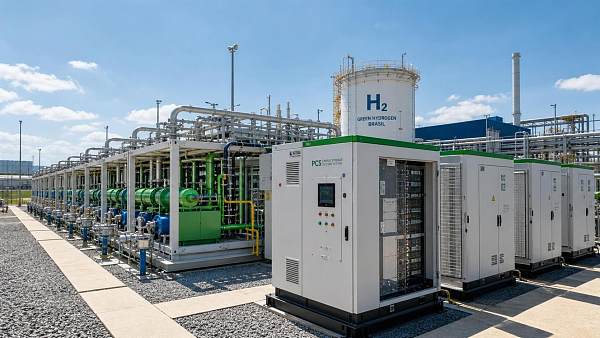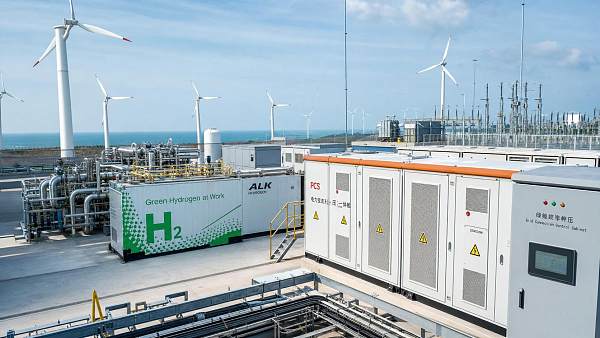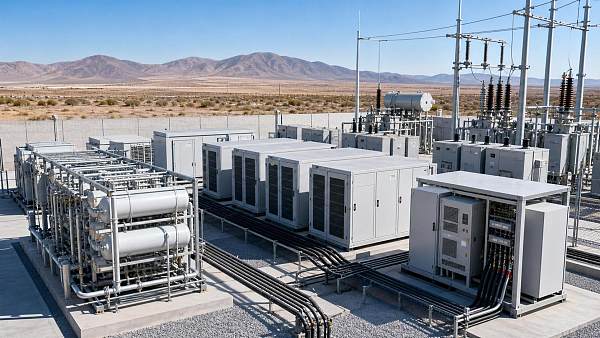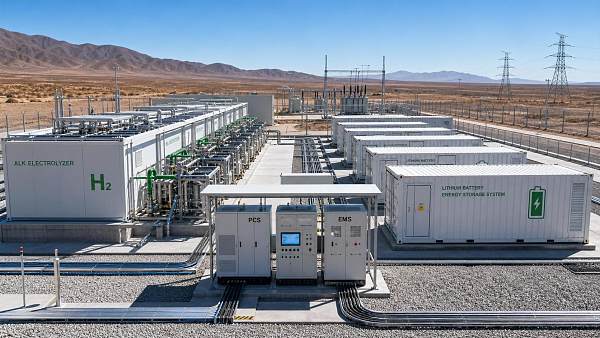
On June 16, 2026, Brazil’s ANP announced the first tender under its National Green Hydrogen Acceleration Plan, opening a 1.2GW procurement round for ALK electrolyzer system suppliers. The notice matters not only for electrolyzer vendors, but also for PCS-related integrators, grid-interface developers, and project delivery teams, because the tender sets specific design and communication requirements rather than focusing on capacity alone.
What the tender formally requires
According to the provided information, ANP released the first-round tender, Edital ANP 01/2026, on June 16, 2026 under the National Green Hydrogen Acceleration Plan. The bid is aimed at suppliers of ALK electrolyzer systems and covers a total scale of 1.2GW.
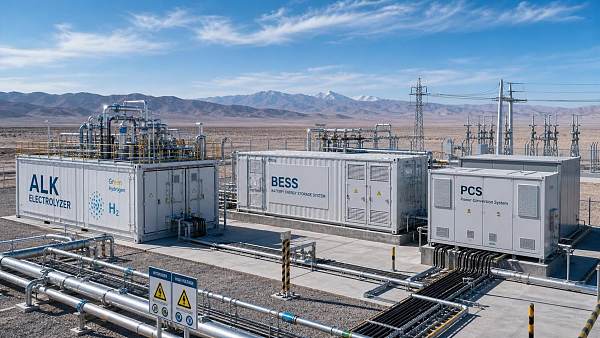
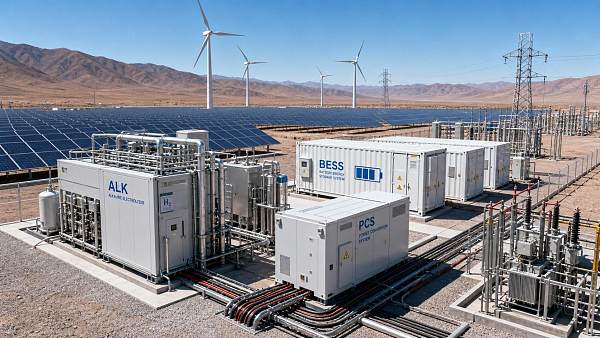
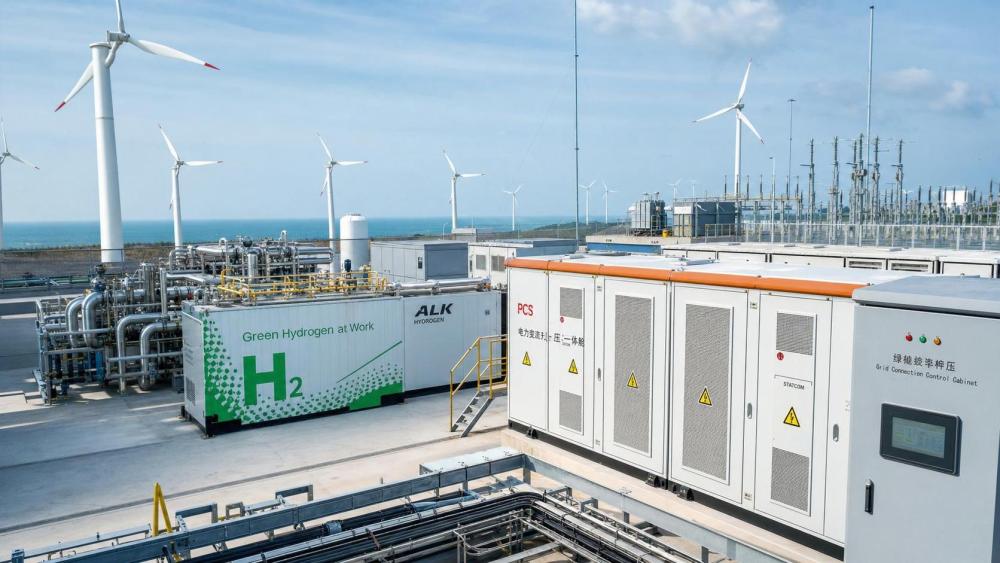
The tender explicitly requires electrolyzer systems to adopt a deeply co-architected design with PCS, or power conditioning systems. It also requires a pre-configured green hydrogen grid-connection communication interface compatible with IEC 62864-2.
The selected bidder or bidders must complete the first system’s grid-connection test at a wind-hydrogen base in northeastern Brazil by Q2 2027.
Why the requirements matter across the value chain
System design is moving closer to integrated delivery
From an industry perspective, the mandatory co-architecture between the ALK electrolyzer and PCS may affect suppliers whose products have traditionally been offered as more modular or separately packaged subsystems. The immediate impact is likely to be felt in engineering scope definition, interface management, and bid preparation, where compatibility and joint design logic become more important.
Grid communication capability becomes a practical bidding issue
For control system developers, interface providers, and integration service companies, the IEC 62864-2 compatibility requirement is relevant because communication readiness is framed here as a bid condition rather than a later optimization item. What deserves closer attention is whether suppliers can document interface preparedness clearly enough for procurement and testing stages.
Delivery teams face a schedule tied to grid testing
Project execution teams, supply-chain coordinators, and after-sales service providers may be affected by the Q2 2027 deadline for the first grid-connection test. The pressure point is not only equipment supply, but also cross-party coordination around commissioning, integration, and test readiness.
What companies should watch now
How ANP defines compliance in later documents
Analysis shows that one key issue is how the stated requirements are further expressed in official clarifications, annexes, or technical evaluation language. Companies should distinguish between the headline requirement and the exact form in which compliance must be demonstrated during bidding and testing.
Whether current product architecture fits the tender logic
ALK electrolyzer suppliers should review whether their existing platform already supports deep PCS co-design or whether the offer would depend on external integration work. This affects bid structure, partner selection, and the credibility of delivery commitments.
How interface readiness is evidenced
For firms involved in controls, communications, and grid-facing subsystems, the practical question is not only technical compatibility with IEC 62864-2, but also what documentation, configuration evidence, and test preparation may be expected during procurement and commissioning.
Whether the delivery timeline is realistic for project planning
Companies preparing to participate should pay attention to the gap between policy intent and executable schedule. The requirement to complete the first grid-connection test by Q2 2027 makes internal coordination on procurement, system integration, and customer communication a near-term operational issue, not only a strategic one.
How this should be read at this stage
Observably, this announcement can be read as more than a simple capacity tender because it highlights architecture and interface requirements alongside project scale. Analysis shows that the signal is strongest in two areas: first, integrated system design is being elevated within procurement criteria; second, grid communication capability is being treated as part of deployable project readiness.
At the same time, it is more appropriate to understand this as an actionable policy and procurement signal rather than a completed market outcome. The industry still needs to watch how the tender is implemented, how compliance is assessed, and how the first grid-connection test progresses.
A near-term procurement signal with longer-term implications
Based on the information provided, this development is best understood as a concrete near-term tender event that also carries a longer-term technical signal for the green hydrogen supply chain. The confirmed facts show that ANP is tying ALK electrolyzer procurement to PCS co-architecture and grid-interface readiness, which may shape how suppliers frame products, partnerships, and delivery plans. A neutral reading is that the announcement deserves close attention now, while broader market conclusions should remain subject to further verification.
Basis of this article and points for follow-up
This article is based on the user-provided news title, event date, and event summary. For this type of development, commonly relevant source categories may include official tender notices, regulator announcements, company disclosures, industry association updates, authoritative media coverage, and standards organization documents.
A specific official source link was not provided in the input, so the exact document path still needs continued verification. Follow-up attention should focus on any later ANP clarification, formal compliance language for PCS co-architecture and IEC 62864-2 compatibility, and progress toward the first grid-connection test scheduled for Q2 2027.
Related News
 Brazil ANP Tender Sets New Entry Rules for ALK BidsHydrogen Tech ScientistBrazil ANP tender sets new entry rules for ALK bids, requiring PCS integration, IEC 62443-3-3 interfaces, and extra compliance files. See what suppliers must prepare before December.
 Brazil ANP Opens First 1.2GW ALK TenderHydrogen Tech ScientistBrazil ANP opens its first 1.2GW ALK tender, spotlighting PCS co-architecture and IEC 62864-2 grid interface rules. See what suppliers and integrators must prepare now.
 Chile Sets First Grid Code for Green Hydrogen-Storage PlantsHydrogen Tech ScientistChile sets the first grid code for green hydrogen-storage plants, reshaping ALK electrolyzer, PCS/EMS, and BESS integration. Learn what it means for compliance, bidding, and project delivery.
 Chile Sets Grid Rules for Green Hydrogen-BESS PlantsHydrogen Tech ScientistChile sets new grid rules for green hydrogen-BESS plants, requiring shared PCS and EMS control. Learn how the Chile standard could reshape compliance, system design, and Latin America market strategy.
 Chile Sets Grid Rules for ALK-BESS Hybrid PlantsHydrogen Tech ScientistChile Sets Grid Rules for ALK-BESS Hybrid Plants: learn how Chile’s new grid standard reshapes PCS, EMS, and SCADA design, compliance, and project delivery before the July 2026 deadline.
 Chile Sets Grid Rule for ALK-BESS Hybrid PlantsHydrogen Tech ScientistChile Sets Grid Rule for ALK-BESS Hybrid Plants: learn how Chile’s new shared-PCS standard impacts ALK electrolyzers, BESS integration, procurement compliance, and project delivery.
 EU Rule Ties ALK Electrolyzer Exports to PEM CompatibilityHydrogen Tech ScientistEU Rule Ties ALK Electrolyzer Exports to PEM Compatibility: learn how the new EU certification requirement affects compliance, delivery timelines, supplier selection, and market access before Dec 2026.
 EU Rule Ties ALK Electrolyzer Exports to PEM CompatibilityHydrogen Tech ScientistEU Rule Ties ALK Electrolyzer Exports to PEM Compatibility: learn how the new EU pilot links TÜV Rheinland PEM compatibility to CE access, impacting export timing, costs, and compliance planning.
 EU Starts White List Pilot for ALK Hydrogen ExportsHydrogen Tech ScientistEU Starts White List Pilot for ALK Hydrogen Exports: learn how the new EU rule and TÜV Rheinland PEM compatibility test could reshape ALK electrolyzer access, procurement priority, and export compliance.
 TÜV Rheinland Revises ALK Export Certification RouteHydrogen Tech ScientistTÜV Rheinland revises the ALK export certification route for the EU, adding separate EMC testing and thermal runaway checks. See how ALK electrolyzer makers and importers can avoid delays.
![]() TÜV Rheinland Revises ALK Export EMC PathHydrogen Tech ScientistTÜV Rheinland revises the ALK export EMC path for EU shipments, adding EN 61000-6-4 testing and ALK/PEM area separation. See how it may affect CE validity, recertification, and delivery plans.
TÜV Rheinland Revises ALK Export EMC PathHydrogen Tech ScientistTÜV Rheinland revises the ALK export EMC path for EU shipments, adding EN 61000-6-4 testing and ALK/PEM area separation. See how it may affect CE validity, recertification, and delivery plans. Russia’s PD-8 Derivative Plan Lifts ALK Export AttentionHydrogen Tech ScientistRussia’s PD-8 derivative plan boosts attention on ALK electrolyzer exports, highlighting technical matching, CIS opportunities, and what suppliers should watch next.