Energy transition infrastructure is moving from background asset to project-critical variable
Energy transition infrastructure now shapes power projects long before steel reaches site or equipment reaches port.
What changed is not only technology maturity. The delivery logic behind modern power assets has changed as well.
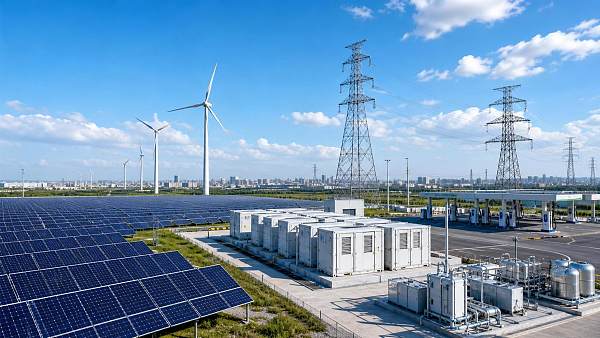
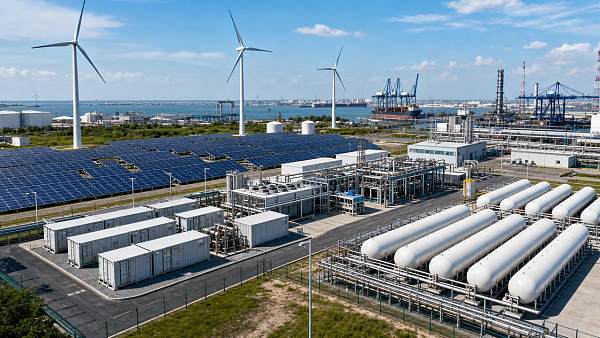
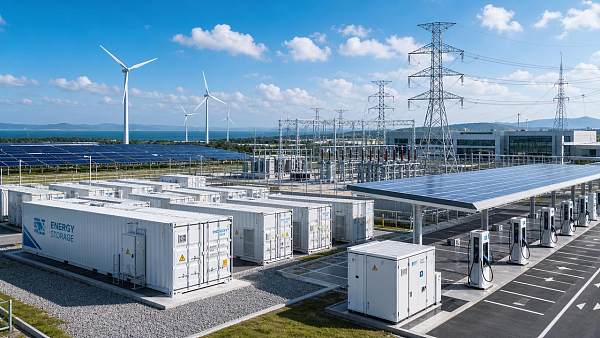
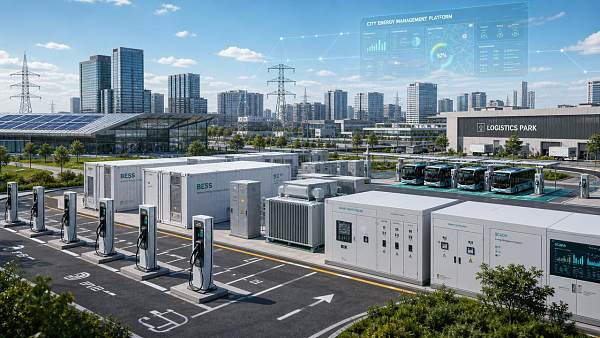
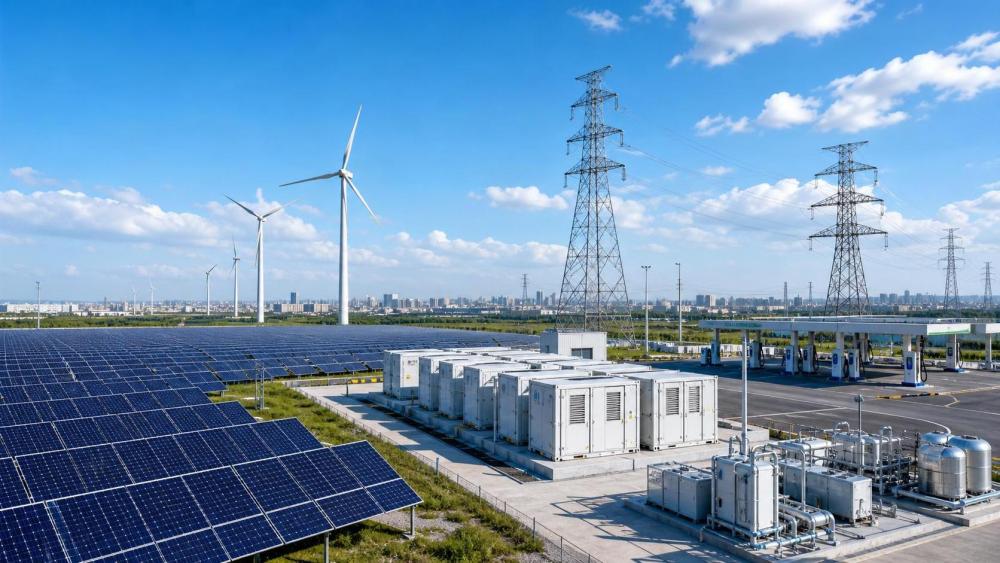
Grid-scale storage, UHV transmission, fast EV charging, and hydrogen systems are no longer separate investment themes.
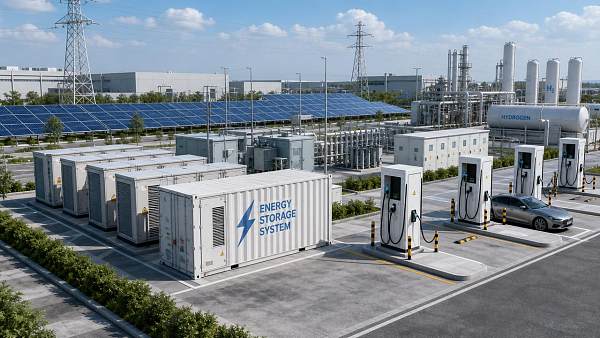
They increasingly behave like one connected infrastructure stack, with each layer affecting project timing, permitting, safety, and returns.
That is why energy transition infrastructure has become a strategic planning issue, not just an engineering procurement category.
Across major markets, renewable additions are exposing the same two structural pressures.
Generation is growing faster than grid flexibility, and clean power is often produced far from industrial and urban demand.
This is the space where ESGS closely tracks the “blood vessels and reservoirs” of the energy system.
From BESS container thermal control to millisecond dispatch, the practical challenge is keeping energy movable, bankable, and safe.
The strongest signal is system coupling, not isolated equipment growth
A few years ago, many power projects treated storage, transmission, charging, and hydrogen as optional later phases.
That approach is losing ground because interdependence is becoming visible at every project gate.
Storage affects grid connection strategy. Transmission capacity affects renewable curtailment risk. EV charging clusters affect local load volatility.
Hydrogen electrolyzers affect off-take structure because they can absorb low-value surplus electricity over long periods.
The result is a more coupled form of energy transition infrastructure, where one design choice can unlock or constrain several revenue paths.
This matters in execution. A project designed around single-asset optimization may look efficient on paper but underperform during dispatch, congestion, or compliance review.
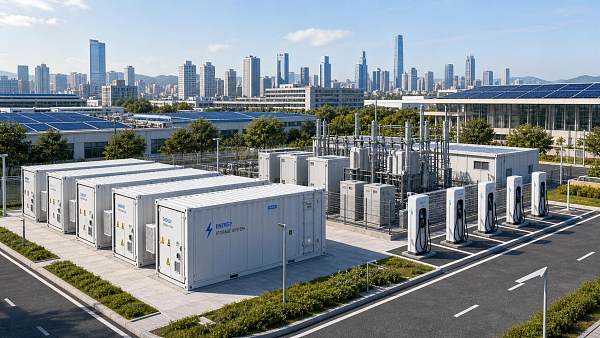
- BESS containers are now valued for flexibility services, not only energy shifting.
- HVDC and UHV assets are increasingly judged by how well they connect renewable geography to load centers.
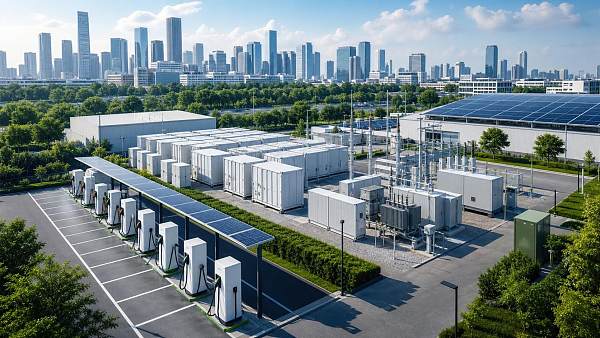
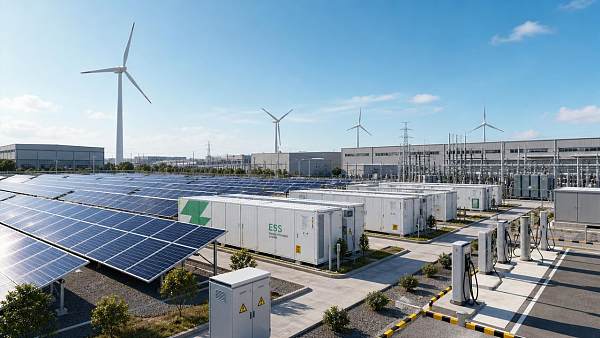
- EV charging hubs are becoming distributed grid nodes with storage and V2G relevance.
- Electrolyzers are moving from pilot status toward grid-balancing and industrial decarbonization roles.
In other words, energy transition infrastructure is being priced and managed as a network effect.
Why this shift is becoming more visible now
Several forces are converging at the same time, which explains why the trend feels sharper than before.
More interestingly, these drivers reinforce one another rather than appearing in sequence.
A congested grid creates curtailment. Curtailment improves the case for storage or hydrogen. That, in turn, raises safety, controls, and interconnection complexity.
This is why energy transition infrastructure decisions now carry larger downstream consequences than many owners expected.
The impact is spreading across planning, delivery, and asset performance
The first impact appears in early planning. Site selection now needs more than land, access, and headline demand forecasts.
It also needs visibility into transmission bottlenecks, storage economics, charging density, and future flexibility markets.
The second impact is on engineering scope. Integrated projects must account for thermal management, control hierarchy, protection coordination, and digital interfaces earlier.
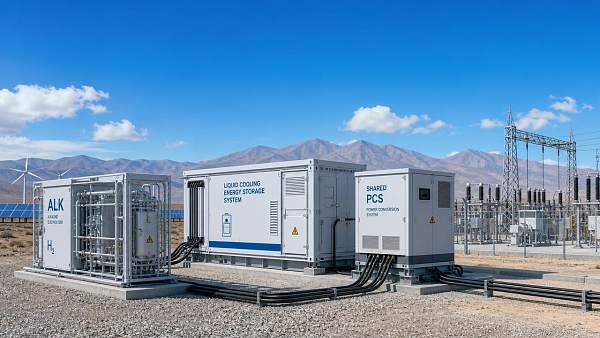
For BESS containers, that often means moving beyond nameplate capacity discussions toward temperature uniformity, UL 9540A exposure, and response speed.
For smart T&D equipment, it means checking whether fault isolation, switching speed, and HVDC behavior match the volatility of renewable-heavy systems.
For UHV transformers, the question is no longer only transmission distance. It is whether remote clean power can arrive with acceptable stability and losses.
For charging infrastructure, the conversation now includes local grid stress, liquid-cooled high-voltage readiness, and whether V2G can be monetized.
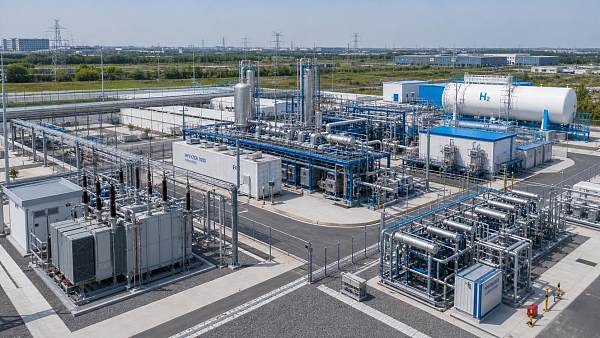
Hydrogen readiness adds another layer. Electrolyzers can improve utilization of excess power, but only when power quality, water supply, and logistics align.
In practical terms, energy transition infrastructure is turning delivery risk into a cross-functional issue rather than a discipline-specific one.
What deserves closer attention during execution
Recent projects show that cost overruns often start with assumptions that looked minor during concept design.
Three areas deserve closer review because they repeatedly shape schedule and asset value.
Safety and compliance are moving upstream
Thermal runaway testing, fire zoning, emergency isolation, and certification pathways now influence layout and equipment selection early.
This is especially true for storage exports and multi-asset hubs where one incident can affect permitting across the full site.
Controls are becoming as important as hardware
Millisecond-level power flow control, VPP orchestration, and charge-discharge optimization increasingly determine whether flexibility assets create measurable value.
Hardware without dispatch intelligence may still connect, but it often leaves money and resilience on the table.
Financial models need operational realism
Projects tied to energy transition infrastructure cannot rely on simple utilization assumptions anymore.
LCOS, curtailment capture, ancillary services, capacity leasing, and availability penalties should be tested against real dispatch scenarios.
- Check whether the control layer supports stacked revenue streams.
- Verify that safety standards match export or utility acceptance requirements.
- Test grid studies against future load growth, not only current connection data.
- Review whether hydrogen or charging modules alter balance-of-plant assumptions.
The next phase will reward projects built for flexibility, not static capacity
The broader direction is becoming clearer. Energy transition infrastructure is shifting from capacity expansion toward adaptive system value.
That means the strongest projects will not always be the largest or the fastest announced.
They will be the ones designed to absorb market volatility, policy adjustment, and changing grid conditions without major rework.
In this environment, intelligence matters as much as equipment density.
The ESGS view is useful here because it connects battery thermal boundaries, transmission behavior, dispatch logic, and hydrogen optionality into one operational picture.
That integrated view helps reveal where hidden constraints are likely to emerge and where asset value can be defended.
A practical next step is to reassess current projects against three questions.
- Does the design assume a stable grid, or a more volatile one?
- Are storage, transmission, charging, and hydrogen treated as linked options or isolated packages?
- Can the asset still deliver value if market signals shift within two to five years?
Those questions often reveal whether energy transition infrastructure has been planned for the next cycle rather than the last one.
For teams shaping future power assets, the smartest move now is simple: track the system signals, compare technology pathways, and build phased responses before constraints become expensive.
Related News
 Hydrogen Energy Infrastructure: Common Cost Gaps in Early Project PlanningHydrogen Tech ScientistHydrogen energy infrastructure often looks affordable early on, but hidden costs in grid access, water, compression, storage, and safety can reshape budgets. Learn what to check first.
 Energy Transition Infrastructure Trends Reshaping Power ProjectsHydrogen Tech ScientistEnergy transition infrastructure is redefining power projects—discover how storage, grid, EV charging, and hydrogen trends are shaping safer, smarter, and more bankable energy assets.
 Energy Hubs for Smart Cities: Best Use Cases and ROI SignalsHydrogen Tech ScientistEnergy hubs for smart cities: explore the best use cases, ROI signals, and design priorities for EV charging, resilience, tariff savings, and scalable urban energy growth.
 Energy Hubs for Smart Cities: Key Design Choices and PitfallsHydrogen Tech ScientistEnergy hubs for smart cities require smarter design than ever. Explore key architecture choices, common pitfalls, and how to improve resilience, efficiency, and ROI.
 Power-to-X Technology in Microgrids: Best Use CasesHydrogen Tech ScientistPower-to-X technology in microgrids: explore the best use cases for remote sites, ports, and export-limited campuses to turn surplus renewable energy into flexible, high-value returns.
 Chile Sets Grid Rule for Hydrogen-BESS PCS DesignHydrogen Tech ScientistChile Sets Grid Rule for Hydrogen-BESS PCS Design: learn how Chile’s new shared-PCS mandate reshapes hydrogen microgrid compliance, sourcing, and project delivery after July 2026.
 How Renewable Energy Hubs Reduce Curtailment in MicrogridsHydrogen Tech ScientistRenewable energy hubs cut microgrid curtailment by coordinating storage, flexible loads, and smart controls. Discover how they boost resilience, efficiency, and ROI.
 Energy Hubs Cost Analysis: What Drives ROI in Multi-Energy Projects?Hydrogen Tech ScientistEnergy hubs cost analysis reveals what truly drives ROI in multi-energy projects, from utilization and revenue stacking to lifecycle costs and grid rules. Click to compare smarter.
![]() How Power Flow Algorithms Improve Microgrid StabilityHydrogen Tech ScientistPower flow algorithms improve microgrid stability by revealing voltage risks, losses, and weak nodes. Learn how they support smarter dispatch, resilient design, and better energy asset performance.
How Power Flow Algorithms Improve Microgrid StabilityHydrogen Tech ScientistPower flow algorithms improve microgrid stability by revealing voltage risks, losses, and weak nodes. Learn how they support smarter dispatch, resilient design, and better energy asset performance. Energy Transition Risks and Opportunities for Industrial Power SystemsHydrogen Tech ScientistEnergy transition risks and opportunities in industrial power systems: learn how BESS, transmission, charging hubs, hydrogen, and digital dispatch can improve resilience, flexibility, and ROI.
 How Energy Hubs Support Smarter City Power PlanningHydrogen Tech ScientistEnergy hubs for smart cities help planners cut peak strain, improve resilience, and align charging, storage, and grid assets. Explore practical priorities for smarter city power planning.
![]() Renewable Energy Hubs: When Microgrids Improve Project PaybackHydrogen Tech ScientistRenewable energy hubs improve payback by combining microgrids, storage, EV charging, and smart controls to cut costs, boost resilience, and unlock new energy value.
Renewable Energy Hubs: When Microgrids Improve Project PaybackHydrogen Tech ScientistRenewable energy hubs improve payback by combining microgrids, storage, EV charging, and smart controls to cut costs, boost resilience, and unlock new energy value.