Digital Twin Grids for Fault Prediction
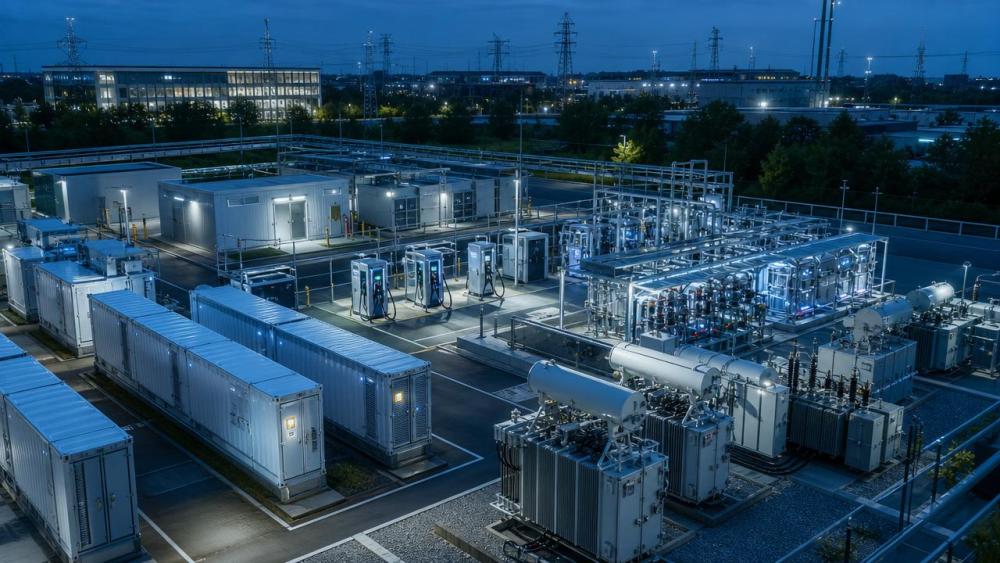
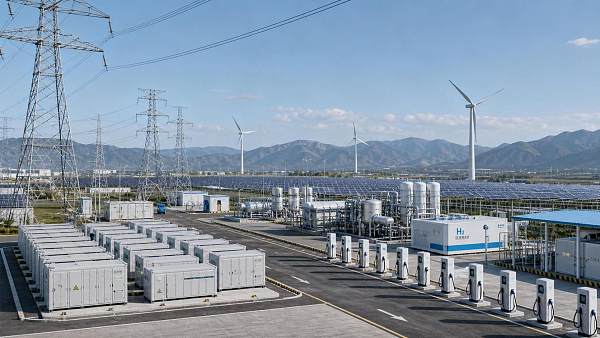
As grid-scale storage, UHV transmission, EV supercharging, and hydrogen production become tightly coupled, fault prediction is no longer a maintenance add-on.
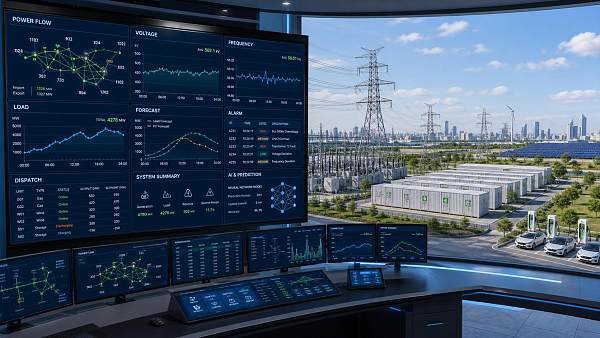
Digital twin grids give operators a real-time, physics-informed view of assets, power flows, thermal behavior, and protection events before failures cascade.
By combining sensor data, simulation models, and AI anomaly detection, digital twin grids turn reactive troubleshooting into predictive grid intelligence.
What Are Digital Twin Grids in Fault Prediction?
Digital twin grids are dynamic virtual replicas of electrical networks, storage assets, substations, charging hubs, and energy conversion systems.
Unlike static SCADA screens, digital twin grids continuously update using measurements from meters, relays, sensors, PCS units, and thermal monitoring systems.
They model how assets should behave under normal, stressed, and abnormal conditions.
When actual behavior deviates from expected behavior, fault prediction algorithms rank the likelihood, location, and severity of emerging risks.
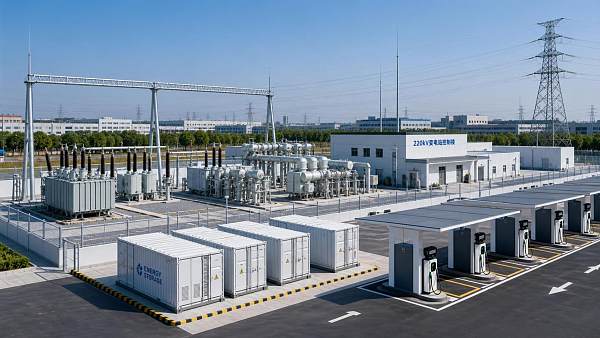
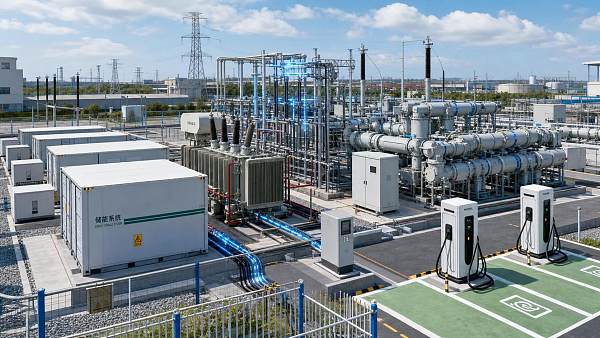
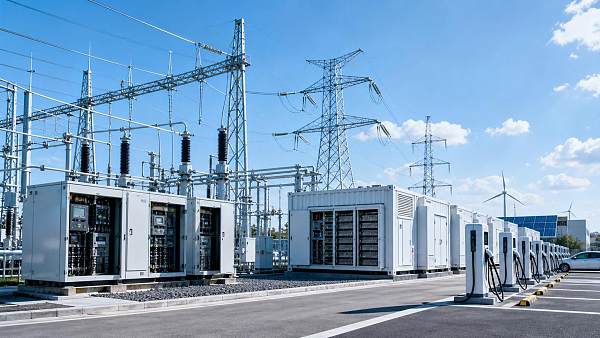
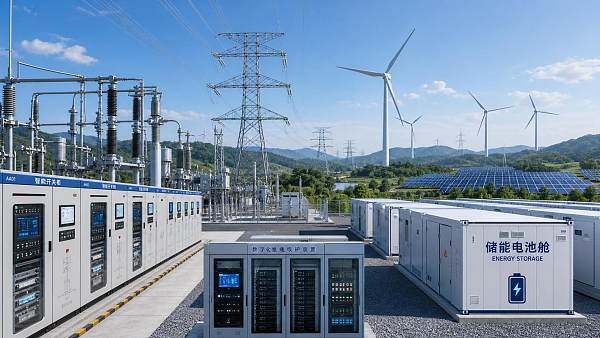
For BESS containers, digital twin grids can compare cell temperature distribution, cooling loop performance, insulation resistance, and charge-discharge patterns.
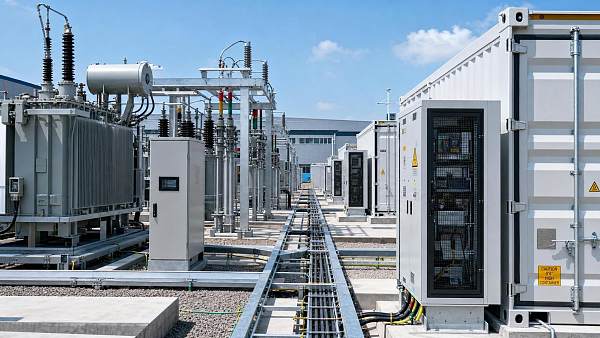
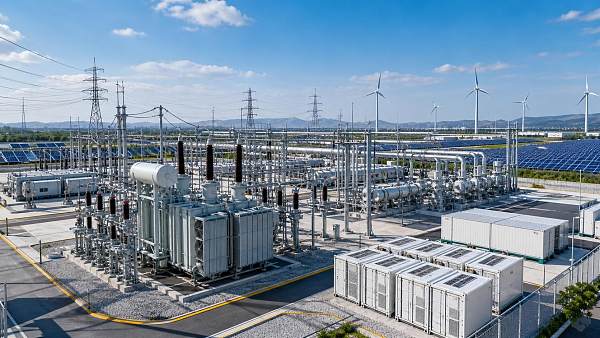
For UHV transformers, they correlate load history, oil temperature, partial discharge indicators, vibration, harmonics, and weather exposure.
For EV charging sites, they monitor peak demand, connector heat, feeder stress, harmonic distortion, and V2G response behavior.
The result is not only visualization. Digital twin grids create decision support for maintenance, dispatch, protection coordination, and emergency response.
Why Do Modern Energy Systems Need Predictive Digital Twins?
Modern grids are becoming faster, denser, and less forgiving.
Solar output can drop within minutes. Wind farms can surge overnight. EV supercharging can create sharp local load spikes.
Hydrogen electrolyzers add flexible demand, but they also introduce large power conversion loads and operational coupling with renewable availability.
Digital twin grids help manage this complexity by connecting asset health, network power flow, market dispatch, and protection logic.
A fault in one asset may not remain local.
A cooling fault in a BESS rack can reduce available capacity, disturb frequency support, and force compensating dispatch elsewhere.
A transformer thermal overload can limit UHV transfer capacity and trigger congestion across industrial load centers.
Digital twin grids expose these cross-asset effects before alarms become outages.
They also support safer operating envelopes for high-value infrastructure with strict availability requirements.
Key value points include:
- Earlier detection of thermal, electrical, mechanical, and communication anomalies.
- Better prioritization of maintenance based on risk, not calendar intervals.
- Improved dispatch confidence during renewable volatility and peak demand.
- Clearer root-cause analysis after relay actions or inverter trips.
- Lower probability of cascading failures across connected assets.
Which Assets Benefit Most from Digital Twin Grids?
Digital twin grids deliver the strongest value where assets are expensive, interconnected, safety-critical, or exposed to variable operating conditions.
Grid-scale BESS containers are a leading application.
Their fault signatures often begin as small deviations in temperature spread, impedance, coolant flow, or cell balancing behavior.
Digital twin grids can detect these weak signals before thermal runaway protection becomes the final barrier.
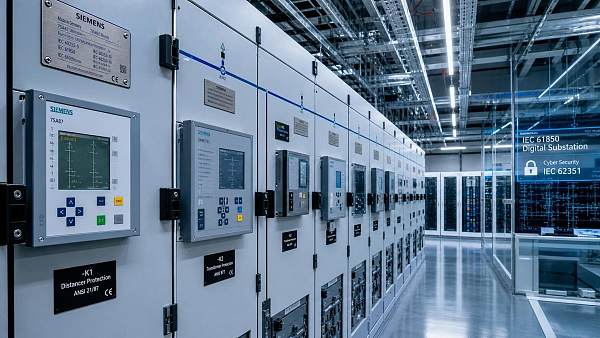
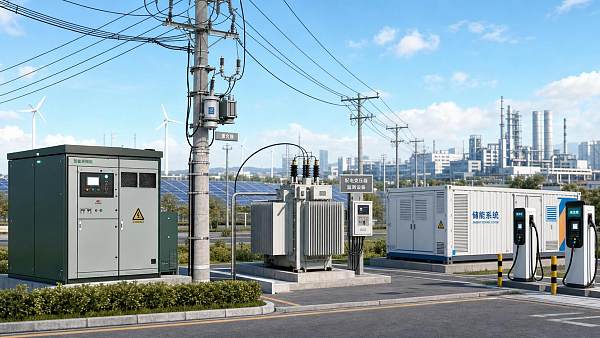
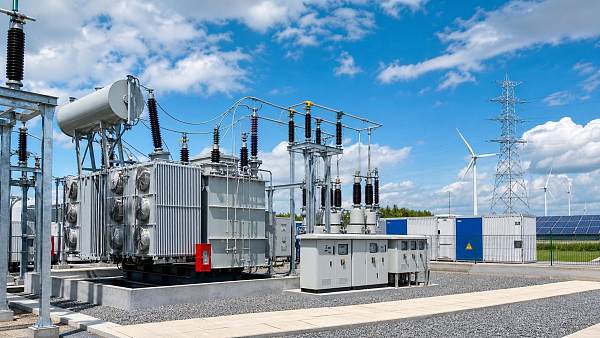
Smart grid T&D equipment also benefits because switchgear, GIS bays, protection relays, and HVDC valves operate in complex electromagnetic conditions.
A digital replica can test whether switching sequences, fault currents, and protection settings still match actual grid conditions.
UHV transformers require continuous risk tracking due to their long replacement cycles and high system impact.
Digital twin grids can combine dissolved gas trends, loading, cooling status, bushing condition, and weather data into actionable risk scores.
EV charging and swapping stations create another practical case.
High-current liquid-cooled charging cables, transformers, power modules, and local feeders must work safely under concentrated peak loads.
Hydrogen electrolyzers can also be included when power-to-X loads interact with renewable curtailment, storage dispatch, and grid balancing requirements.
How Do Digital Twin Grids Predict Faults Before They Escalate?
Effective fault prediction depends on three layers: data acquisition, model fidelity, and operational interpretation.
The data layer captures current, voltage, frequency, temperature, humidity, vibration, gas indicators, coolant status, breaker operations, and inverter events.
The model layer represents electrical topology, thermal transfer, asset degradation, protection coordination, and power conversion behavior.
The intelligence layer compares real behavior against predicted behavior and assigns risk levels.
Digital twin grids do not rely on one alarm threshold alone.
They connect patterns across time, equipment, and operating states.
For example, a transformer may appear normal by temperature limits.
Yet repeated overload periods, rising harmonics, slower cooling response, and abnormal bushing trends may reveal growing fault probability.
Similarly, a BESS rack may stay within temperature range.
However, widening cell temperature difference during identical charging cycles can indicate cooling imbalance or early cell degradation.
Common prediction techniques include:
- Physics-based simulation for power flow, heat transfer, and fault current behavior.
- Machine learning for anomaly detection and pattern recognition.
- Remaining useful life estimation for aging components.
- Scenario testing for dispatch changes, weather events, and protection actions.
- Root-cause correlation across EMS, BMS, PCS, relay, and IoT data.
How Should Digital Twin Grids Be Evaluated Before Deployment?
Selection should start with the operational problem, not the software interface.
A project focused on BESS safety needs different models than one focused on UHV transfer capacity.
Digital twin grids should support the assets, time resolution, and failure modes that matter most.
Millisecond protection analysis requires higher data speed than monthly asset health reporting.
Model transparency is also important.
Risk scores are useful only when teams can understand which signals influenced the warning.
Integration capability should be checked early.
Digital twin grids may need to connect with SCADA, EMS, BMS, CMMS, weather platforms, market systems, and cybersecurity monitoring tools.
Data quality must be treated as an engineering requirement.
Missing timestamps, inconsistent asset naming, sensor drift, and communication gaps can weaken prediction accuracy.
Practical evaluation checklist:
- Define target failure modes and economic consequences.
- Confirm supported asset classes and electrical topology depth.
- Test prediction accuracy using historical incidents and near-miss records.
- Verify cybersecurity controls for operational technology environments.
- Assess integration effort with existing data and maintenance systems.
- Measure whether alerts are explainable and operationally useful.
What Mistakes Reduce the Value of Digital Twin Grids?
One common mistake is treating digital twin grids as a dashboard project.
Visualization alone does not predict faults unless it is connected to validated models and high-quality data.
Another mistake is modeling too broadly at the beginning.
A narrow, high-value use case often performs better than a large model with shallow engineering detail.
Ignoring field workflows is also risky.
If alerts cannot trigger inspection tasks, dispatch changes, or protection reviews, they remain informational noise.
Overdependence on AI without physics validation can create false confidence.
Digital twin grids should blend machine learning with electrical engineering, thermal behavior, and asset degradation knowledge.
Cybersecurity is another critical point.
A connected twin must not become a new attack path into substations, storage plants, or charging infrastructure.
FAQ and Decision Table for Digital Twin Grids
How Can Implementation Start Without Overbuilding?
A practical rollout starts with a fault map.
List the failures that create the highest safety, availability, or financial exposure.
Then identify the signals that appear before those failures.
For BESS, that may include temperature spread, cell imbalance, coolant pressure, insulation resistance, and PCS trip history.
For transformers, it may include loading, dissolved gas analysis, oil temperature, cooling fan behavior, and bushing condition.
For charging hubs, it may include feeder loading, connector temperature, power module failures, and demand clustering.
Digital twin grids should then be tested against known events.
If the twin cannot explain previous incidents, it may not be ready for predictive operation.
Once validated, alert thresholds should be tied to response rules.
Examples include derating a storage block, scheduling inspection, adjusting dispatch, or reviewing protection coordination.
Conclusion: Turning Grid Signals into Preventive Action
Digital twin grids are becoming essential infrastructure for zero-carbon grids, carbon-neutral transport, and high-renewable power systems.
They connect BESS thermodynamics, UHV power transfer, smart switchgear, EV charging loads, and hydrogen production into one predictive view.
The strongest projects begin with clear fault scenarios, validated models, clean data, and response workflows.
Used well, digital twin grids reduce surprise failures and improve confidence in dispatch, maintenance, and investment decisions.
A practical next step is to select one critical asset group and build a measurable fault prediction pilot.
From there, digital twin grids can scale into a strategic intelligence layer for safer, more flexible, and more profitable energy systems.
Related News
 Substation Infrastructure Solution References: How to Judge Real Project FitSmart Grid StrategistInfrastructure solution references for substations should prove real project fit, not just installation history. Learn how to assess grid conditions, controls, safety, and lifecycle value before you decide.
 Real-Time Grid Digital Twins for Faster Fault ResponseSmart Grid StrategistReal time grid digital twins help utilities detect faults faster, isolate root causes, and improve response across BESS, substations, and EV charging assets.
 Grid Equipment Installation Guide: 7 Checks to Avoid Commissioning DelaysSmart Grid StrategistGrid equipment installation guide with 7 practical checks to prevent commissioning delays. Learn how to improve safety, reduce rework, and keep power projects on schedule.
 EU Sets Cybersecurity Rules for Digital SubstationsSmart Grid StrategistEU cybersecurity rules for digital substations become binding in 2026. Learn how ENISA certification, IEC 62443-4-2 compliance, and import-ban risks may affect bids, exports, and market access.
![]() Saudi Cybersecurity Rule Tightens NEOM Grid SupplySmart Grid StrategistSaudi cybersecurity rule tightens NEOM grid supply as SEC now requires IEC 62443-3-3 Level 2 and approved penetration testing, reshaping tender readiness, compliance planning, and delivery risk.
Saudi Cybersecurity Rule Tightens NEOM Grid SupplySmart Grid StrategistSaudi cybersecurity rule tightens NEOM grid supply as SEC now requires IEC 62443-3-3 Level 2 and approved penetration testing, reshaping tender readiness, compliance planning, and delivery risk. How to Evaluate a Smart Grid Neural Networks ProviderSmart Grid StrategistSmart grid neural networks provider evaluation starts with real-world performance. Learn how to assess reliability, integration, scalability, and control value before you choose.
 Digital Twin Grids Platform Use Cases for Substation VisibilitySmart Grid StrategistDigital twin grids platform use cases for substation visibility: explore real-time monitoring, predictive maintenance, faster fault response, and smarter grid decisions.
 Digital Grid Control vs Traditional SCADA: What Changes in Response TimeSmart Grid StrategistDigital grid control vs traditional SCADA: discover how faster response time improves grid stability, asset safety, and dispatch precision in modern power systems.
 Smart Grid Equipment Checklist for Modernizing Aging Distribution NetworksSmart Grid StrategistSmart grid equipment checklist for aging distribution networks: identify the right devices for urban, rural, industrial, EV, and BESS-heavy feeders to boost reliability, safety, and ROI.
 How to Compare Transmission and Distribution Equipment for Lifecycle CostSmart Grid StrategistTransmission and distribution equipment comparison should go beyond price. Learn how lifecycle cost reveals losses, risk, maintenance, and long-term value before you buy.
 Digital Twin Grids: 5 Ways to Improve Grid ResilienceSmart Grid StrategistDigital twin grids improve grid resilience with 5 practical strategies for BESS, transmission, EV charging, and hydrogen integration. Learn where twins deliver real operational value.
 Grid Modernization vs Expansion: Which Delivers Faster Payback?Smart Grid StrategistGrid modernization often delivers faster payback than expansion through lower capex, quicker deployment, and better asset use. Discover when each strategy creates the strongest ROI.