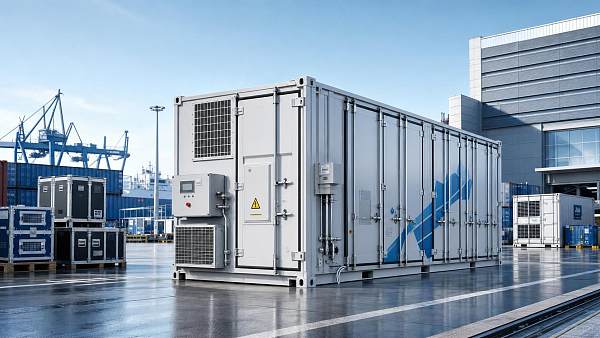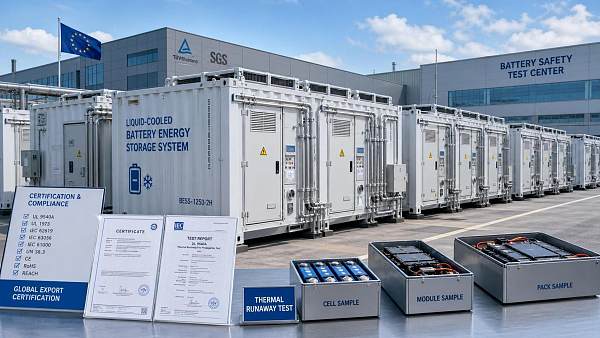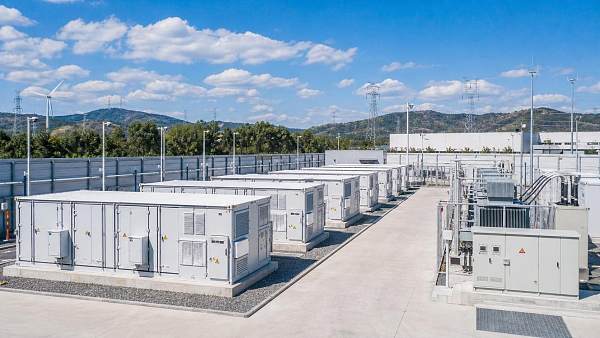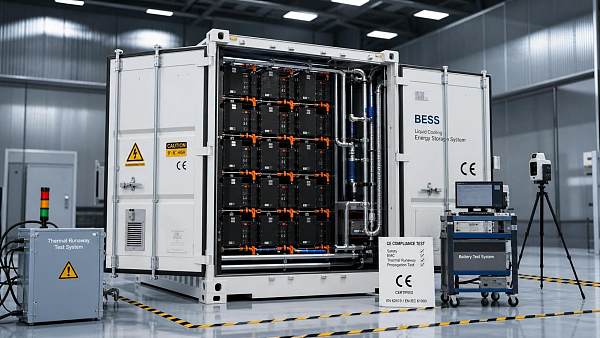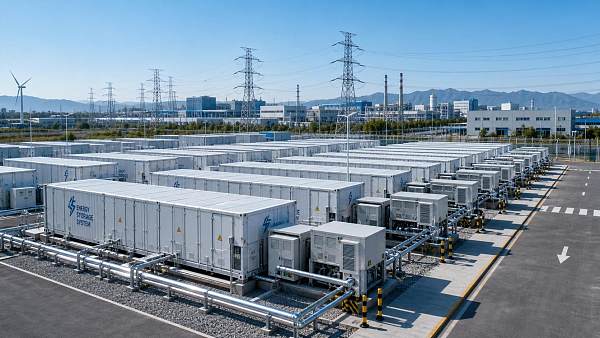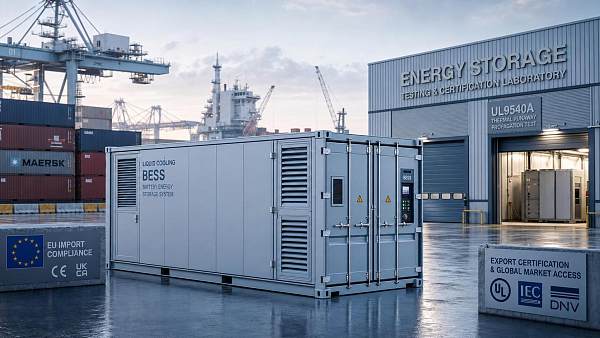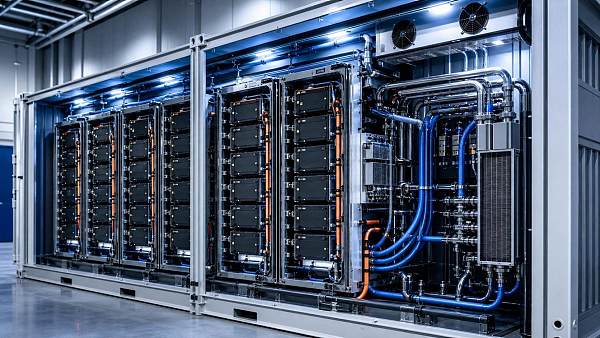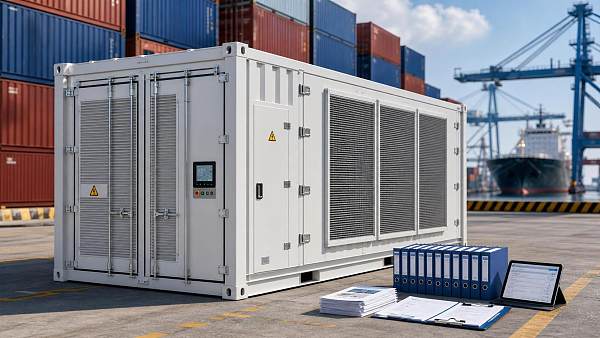
Lead: On May 30–31, 2026, Hongqiang Co., Ltd., a Chinese energy storage company, presented its liquid-cooled BESS container and intelligent PCS integrated solution at the International Cement and Building Materials Exhibition in Ho Chi Minh City, Vietnam. The development is relevant to containerized microgrid integrators, energy storage system suppliers, industrial power users, and cross-border delivery service providers because the disclosed inquiries point to practical demand for grid-adaptive, climate-resistant energy storage solutions in Vietnam.
Event Overview
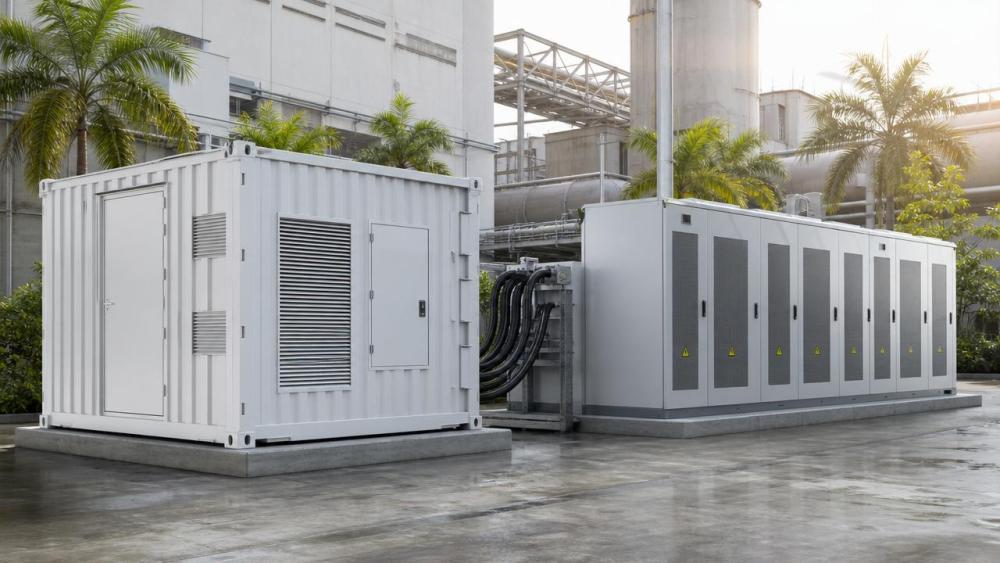
According to the available information, Hongqiang Co., Ltd. participated in Vietbuild HCMC on May 30–31, 2026, with a liquid-cooled BESS container and intelligent PCS integrated solution.
The disclosed solution was customized for Vietnam’s grid frequency fluctuation conditions of ±0.5 Hz and for high-temperature, high-humidity operating environments of 55°C and 95% RH. During the exhibition, six local containerized microgrid integrators, including Vinacontrol and EVN South, submitted batch technical inquiries totaling more than 200 MWh. The stated delivery requirement for these inquiries was no more than 14 weeks.
At this stage, the public information refers to batch technical inquiries rather than confirmed purchase orders. The confirmed facts are the exhibition participation, the technical positioning of the solution, the number and type of local companies submitting inquiries, the total inquiry scale, and the delivery-cycle requirement.
Subsectors and Industry Roles Affected
Containerized Microgrid Integrators in Vietnam
Containerized microgrid integrators are the most directly affected group because the disclosed inquiries came from local companies in this role. Their attention is likely focused on whether liquid-cooled BESS and PCS integrated systems can match local grid frequency conditions, high heat, and high humidity.
From an industry perspective, the impact is mainly reflected in technical selection, supplier evaluation, delivery-cycle planning, and project feasibility assessment. The explicit requirement of delivery within 14 weeks also means integrators may need to evaluate whether potential suppliers can align engineering design, manufacturing, testing, and logistics within a relatively compressed timeline.
BESS and PCS Solution Providers
Energy storage system and power conversion system providers may be affected because the event highlights demand for integrated solutions rather than isolated equipment. The combination of liquid-cooled BESS containers and intelligent PCS functions appears to be central to the technical inquiries disclosed at the exhibition.
Analysis shows that competing suppliers should pay attention to whether their products can demonstrate adaptation to local grid frequency fluctuation and environmental conditions. The influence is not only on product specifications, but also on how suppliers present application scenarios, testing parameters, and delivery commitments to overseas customers.
Industrial Power Users in Cement and Building Materials
The event took place at a cement and building materials exhibition, which makes industrial power users in these sectors an important audience for observation. While the disclosed inquiries came from containerized microgrid integrators, the exhibition setting indicates that energy storage solutions are being presented in an industrial context.
Observably, the potential impact for cement and building materials enterprises lies in how they assess power stability, onsite energy systems, and microgrid-related options. However, it should not be treated as confirmed adoption by end users in these sectors. It is more appropriate to understand this as a signal that energy storage suppliers are bringing grid-adaptive solutions closer to industrial application environments.
Cross-Border Supply Chain and Delivery Service Providers
Supply chain service providers may be affected because the disclosed inquiries included a clear delivery-cycle requirement of no more than 14 weeks. For cross-border energy storage projects, delivery timing can influence procurement coordination, shipping arrangements, customs-related preparation, site readiness, and installation scheduling.
From an industry perspective, the main impact is on service capability verification. Companies involved in logistics, project coordination, and technical documentation may need to prepare for more detailed delivery planning if similar inquiries move from technical communication to commercial execution.
What Companies and Practitioners Should Watch and How to Respond
Track Whether Technical Inquiries Become Confirmed Orders
What deserves closer attention now is the difference between batch technical inquiries and confirmed business results. The current information confirms more than 200 MWh of technical inquiries, but it does not confirm signed contracts, shipment schedules, or project commissioning.
Companies should monitor subsequent official statements from Hongqiang Co., Ltd., the relevant Vietnamese integrators, or exhibition-related channels. Procurement teams and business development teams should avoid treating inquiry volume as finalized market demand before further confirmation is available.
Review Grid and Environmental Adaptation Requirements
The disclosed solution specifically addressed Vietnam’s grid frequency fluctuation of ±0.5 Hz and high-temperature, high-humidity conditions of 55°C and 95% RH. These parameters are directly relevant to technical evaluation.
Energy storage suppliers and integrators should compare their own system designs, testing documents, cooling strategies, PCS response capabilities, and environmental protection specifications against these stated requirements. This response should be practical and evidence-based, focusing on documentation that can be presented during technical inquiry stages.
Prepare Delivery Plans Around the 14-Week Requirement
The stated requirement of delivery within no more than 14 weeks may become a key evaluation point if inquiries proceed to commercial discussions. This affects production scheduling, component availability, factory testing, shipping coordination, and customer communication.
From an industry perspective, companies should not simply promise shorter delivery cycles. They should first assess whether battery containers, PCS equipment, integration testing, and export preparation can be completed within the required window. If not, they should prepare transparent milestone plans and clarify possible constraints early in negotiations.
Distinguish Market Signals from Project Implementation
The exhibition response suggests that local integrators are actively assessing containerized energy storage solutions. However, the currently disclosed information remains at the inquiry stage.
It is more appropriate to understand this as a market signal that technical compatibility and delivery capability are becoming important discussion points in Vietnam-related BESS projects. Companies should use this signal to adjust market communication, product documentation, and partner screening, while waiting for further confirmed project information before making major resource commitments.
Editorial Perspective / Industry Observation
Analysis shows that this event is meaningful because it connects three concrete factors: localized grid adaptation, harsh-environment operation, and compressed delivery expectations. These factors are more specific than general overseas energy storage interest and may influence how suppliers compete for containerized microgrid projects in Vietnam.
Observably, the development is still more of a demand-side signal than a completed market result. The disclosed information confirms technical inquiries from six local integrators and an inquiry scale of more than 200 MWh, but it does not yet confirm contract conversion or final deployment.
From an industry perspective, the reason to keep watching is that similar inquiries can shape supplier qualification standards. If local integrators continue to emphasize frequency adaptability, high-temperature and high-humidity operation, and short delivery cycles, energy storage companies serving Vietnam may need to strengthen technical proof, delivery coordination, and localized project communication.
Conclusion
Hongqiang Co., Ltd.’s appearance at Vietbuild HCMC and the disclosed batch technical inquiries indicate that Vietnam-related containerized microgrid projects are paying close attention to integrated liquid-cooled BESS and PCS solutions. The industry significance lies not only in the inquiry scale, but also in the specific requirements around grid frequency fluctuation, harsh environmental conditions, and delivery timing.
The current development should be viewed in a balanced way. It is not yet confirmed as a completed order outcome, but it is a practical market signal for energy storage suppliers, local integrators, industrial power users, and delivery service providers. At this stage, the more appropriate approach is to treat the event as an indicator of emerging technical and execution priorities in Vietnam’s energy storage project discussions.
Source Note
Main source: Event information provided on Hongqiang Co., Ltd.’s participation in Vietbuild HCMC on May 30–31, 2026, including the disclosed liquid-cooled BESS container and intelligent PCS integrated solution, local integrator inquiries, stated inquiry scale, and delivery-cycle requirement.
Items for continued observation: Whether the technical inquiries are converted into signed orders, whether confirmed delivery schedules are announced, and whether additional official information is released by Hongqiang Co., Ltd. or the relevant Vietnamese companies.
Related News
 EU Sets UL 9540A Rule for Imported Liquid-Cooled BESSGrid Storage ArchitectEU sets UL 9540A rule for imported liquid-cooled BESS. Learn how the October 2026 EU requirement impacts compliance, certification timelines, costs, and delivery planning.
 EU Sets New Thermal Runaway Test Rule for Liquid-Cooled BESSGrid Storage ArchitectEU Sets New Thermal Runaway Test Rule for Liquid-Cooled BESS: learn how UL 9540A Tier 3 and EN 50620:2025 requirements may impact EU market access, timelines, and compliance costs.
 How to Evaluate a Containerized Battery Storage ManufacturerGrid Storage ArchitectContainerized battery storage manufacturer selection starts with safety, thermal control, and integration. Learn how to compare suppliers, cut lifecycle risk, and choose with confidence.
 EU CE Rule Takes Effect for Liquid-Cooled BESS TestingGrid Storage ArchitectEU CE rule for liquid-cooled BESS testing now requires UL 9540A thermal runaway reports for new filings. Learn how this impacts compliance, exports, and market access in Germany and the Netherlands.
 IEC 62933-5-2 Sets New EU Export Test Rule for Liquid-Cooled BESSGrid Storage ArchitectIEC 62933-5-2 introduces a new EU export test rule for liquid-cooled BESS. Learn how CE certification, UL 9540A-equivalent reports, and 2027 compliance deadlines may affect delivery plans.
 Top Utility-Scale Energy Storage Manufacturers in the USA for 2026 ProjectsGrid Storage ArchitectUtility scale energy storage manufacturers USA for 2026 projects: compare top suppliers by safety, grid controls, warranties, and service to choose a bankable BESS partner.
 EU Aligns CE Rules With UL 9540A for Liquid-Cooled BESSGrid Storage ArchitectEU Aligns CE Rules With UL 9540A for liquid-cooled BESS: learn how the new EU CE conformity update impacts compliance, procurement timing, and market access from Q4 2026.
 Thermal Runaway Protection: Common Gaps in BESS Safety DesignGrid Storage ArchitectThermal runaway protection in BESS: uncover the hidden safety design gaps behind compliance, from detection and isolation to venting and propagation control, before they impact uptime and project risk.
 How to Evaluate a Grid-Scale Battery Supplier for Long-Term Project RiskGrid Storage ArchitectGrid-scale battery supplier selection is a long-term risk decision. Learn how to assess safety, bankability, delivery, warranty, and service support before you commit.
 EU Tightens UL 9540A Path for Liquid-cooled BESS ImportsGrid Storage ArchitectEU Tightens UL 9540A Path for Liquid-cooled BESS Imports: learn how the new EU roadmap impacts certification, market access, delivery timelines, and compliance planning before the 2026 deadline.
 Battery Thermal Management System Design: Key Failure RisksGrid Storage ArchitectBattery thermal management system design shapes safety, uptime, and asset value. Explore key failure risks in BESS and fast-charging sites to improve reliability and performance.
 China Customs Adds New BESS Export Document ChecksGrid Storage ArchitectChina Customs adds new BESS export document checks for liquid-cooled BESS containers, raising 72-hour hold risks at Shanghai and Ningbo. Learn the new compliance files and how to avoid shipping delays.