Why Thermal Management Systems Matter in BESS Safety
For grid-scale storage, heat is rarely a side issue.
It often sits at the center of quality failures, safety incidents, and expensive downtime.
That is why thermal management systems deserve direct attention in every BESS risk review.
They do more than keep batteries cool.
They help control cell temperature, reduce imbalance, and slow the chain reaction behind thermal runaway propagation.
In practical terms, that means fewer hidden defects turning into major safety events.
It also means stronger compliance readiness and more predictable asset performance.
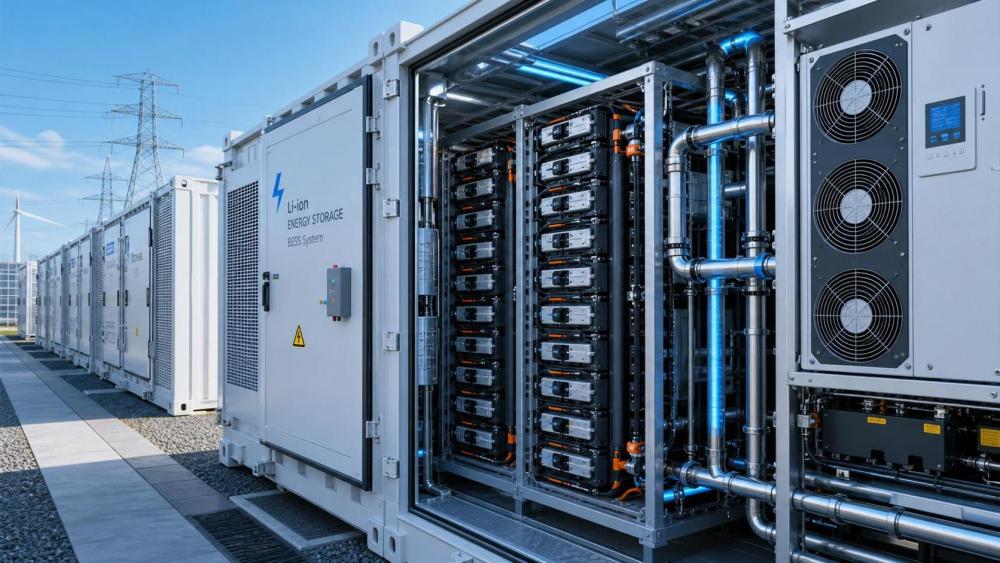
From recent market changes, one signal is clear.
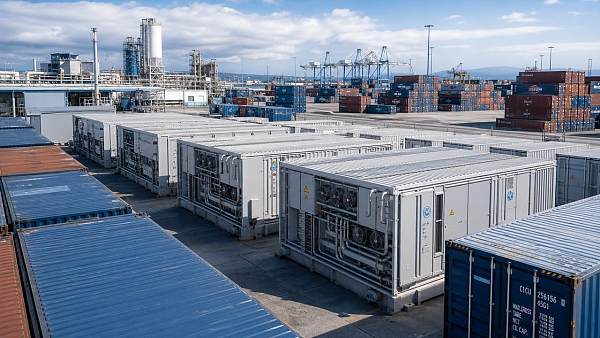
BESS containers are getting denser, faster, and more widely deployed.
As power density rises, the tolerance for thermal variation shrinks.
A small hotspot can become a large event if thermal management systems are undersized, poorly maintained, or badly integrated.
That makes thermal control a frontline safety barrier, not a background utility.
How Heat Builds Up Inside Battery Energy Storage Systems
To cut risk, it helps to start with the basic failure path.
Cells generate heat during charging, discharging, standby, and fault conditions.
Under normal conditions, that heat stays manageable.
The problem begins when heat cannot leave the system evenly.
Then internal temperatures drift apart across modules, racks, and strings.
Those thermal gradients accelerate uneven aging and change cell behavior.
In the real world, several triggers usually appear together.
- High ambient temperature during summer peaks
- Fast charge and discharge cycles
- Blocked airflow or poor coolant circulation
- Dust, corrosion, or pump degradation
- Cell inconsistency from production variation
- Weak enclosure design and poor sensor placement
When these factors overlap, local overheating becomes far more likely.
If one cell enters failure, nearby cells may absorb that heat.
This is where thermal management systems directly influence whether an issue stays local or spreads through the container.
How Thermal Management Systems Reduce Safety Risks
The strongest thermal management systems work on three levels at once.
They prevent heat buildup, detect abnormal patterns early, and limit propagation if failure begins.
1. They stabilize temperature across cells
Uniform temperature is a safety issue as much as a performance issue.
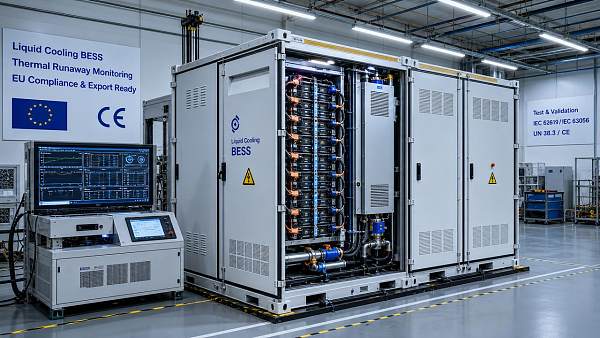
Advanced liquid cooling designs can keep cell-to-cell variation within a very narrow band.
That reduces stress on weaker cells and slows mismatch over time.
2. They lower the chance of thermal runaway
Thermal runaway rarely appears without warning conditions.
Rising heat, poor dissipation, and localized stress usually come first.
Well-designed thermal management systems interrupt that buildup early.
3. They support faster fault response
Sensors, controls, and alarms are only useful if thermal data is reliable.
Good thermal management systems provide clearer signals for intervention.
That helps teams isolate racks, reduce load, or trigger emergency sequences sooner.
4. They improve compliance confidence
Standards and fire testing expectations are becoming more demanding.
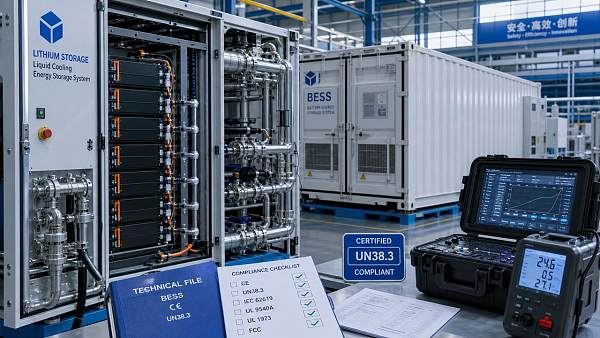
Thermal control quality affects how systems perform under UL 9540A-related safety scrutiny.
This also shapes insurance discussions, export readiness, and customer trust.
What to Check When Thermal Management Systems Underperform
In many projects, risk does not come from one dramatic failure.
It comes from small thermal warnings that go unresolved for too long.
That is why practical inspection points matter.
If thermal management systems seem unstable, these are the first areas worth reviewing.
- Compare inlet and outlet temperature trends, not just average rack temperature.
- Check whether hotspot locations repeat under similar load conditions.
- Inspect coolant flow balance, pump condition, and heat exchanger cleanliness.
- Review sensor calibration drift and missing data intervals.
- Look for firmware logic that delays fan, valve, or pump response.
- Verify enclosure sealing, dust exposure, and ambient heat impact.
These checks often reveal whether the issue is design-related, maintenance-related, or operational.
That distinction matters because the fix is not always hardware replacement.
Sometimes the biggest gain comes from control logic tuning, inspection frequency, or better thermal data interpretation.
Air Cooling vs Liquid Cooling in High-Density BESS
Not every project needs the same cooling strategy.
Still, as energy density rises, the limits of basic air cooling become more visible.
A simple comparison helps clarify where thermal management systems make the greatest difference.
This does not mean air cooling is automatically unsafe.
It means the thermal management systems must match the duty cycle, climate, and risk profile.
In high-throughput storage, liquid cooling often provides a stronger safety margin because thermal gradients stay tighter.
A Practical Risk-Control Checklist for Daily Operations
Thermal safety improves when monitoring and action rules are simple enough to use every day.
In actual operations, the most effective routines are usually consistent, not complicated.
- Track temperature spread by module, rack, and container every shift.
- Set alerts for abnormal temperature rise rate, not only high absolute temperature.
- Trend repeated hotspots against charge rate, weather, and state of charge.
- Review thermal management systems after firmware updates or capacity expansion.
- Inspect coolant quality and leak indicators on a fixed schedule.
- Align thermal alarms with site emergency isolation procedures.
- Use test data from thermal propagation scenarios to refine response plans.
This is also where intelligence-led operations become valuable.
For complex storage fleets, ESGS tracks how thermal control, power flow behavior, and compliance expectations increasingly connect.
That wider view matters because BESS safety is no longer isolated from dispatch strategy, asset returns, and export standards.
Thermal management systems now influence all three.
The Bottom Line for Safer BESS Operations
If one lesson stands out, it is this.
Thermal management systems cut BESS safety risks by controlling the conditions that let failures spread.
They reduce temperature imbalance, improve early warning quality, and strengthen containment when conditions turn abnormal.
For high-density storage, that is not an optional upgrade.
It is a core part of system safety architecture.
The practical next step is straightforward.
Review whether your thermal management systems are only cooling equipment, or actively reducing propagation risk.
That question often reveals the gap between basic operation and real safety readiness.
In a market moving toward denser storage and tighter compliance, closing that gap early is one of the smartest risk decisions available.
Related News
 How Thermal Management Systems Cut BESS Safety RisksGrid Storage ArchitectThermal management systems help cut BESS safety risks by reducing hotspots, slowing thermal runaway, and improving compliance readiness. Learn what to check for safer, smarter storage.
 How to Evaluate a Battery Management Systems Supplier in 2026Grid Storage ArchitectBattery management systems supplier evaluation in 2026 starts with safety, compliance, software, and lifecycle value. Learn the key checks to choose a reliable partner with confidence.
 Langfang Matchmaking Opens as Overseas Buyers Target NE EquipmentGrid Storage ArchitectLangfang matchmaking opens as overseas buyers target new energy equipment, signaling stronger demand for sample inspection, ODM cooperation, and local warehousing. See what suppliers should prepare now.
 Thermal Management Risks in Liquid-Cooled BESSGrid Storage ArchitectThermal management risks in liquid-cooled BESS can stay hidden until they threaten safety, uptime, and ROI. Learn the warning signs, causes, and smart controls before failures escalate.
 EU Rule Takes Effect for Liquid-Cooled BESS ExportsGrid Storage ArchitectEU Rule Takes Effect for Liquid-Cooled BESS Exports: learn how the new EU compliance rule adds UL 9540A-style monitoring, DCP reporting, and cost impacts for exporters.
 Storage+AI+Low-Altitude Demand Reshapes Buying PrioritiesGrid Storage ArchitectStorage, AI, and low-altitude demand are reshaping energy storage buying priorities. Discover how VPP compatibility, millisecond response, and integrated solutions are influencing global procurement.
 EU Tightens Battery Passport Checks for Liquid-Cooled BESSGrid Storage ArchitectEU Tightens Battery Passport Checks for Liquid-Cooled BESS: learn how new thermal safety data rules may affect customs clearance, supplier readiness, and export risk to the EU.
 Brazil Raises Tariffs on 1,252 Imports, Including Liquid-Cooled BESSGrid Storage ArchitectBrazil raises tariffs on 1,252 imports, including liquid-cooled BESS, C&I energy storage, transformers, and GIS switchgear. See how up to 18% duties may impact pricing, customs, and supply chains.
 Liquid-Cooled BESS Orders Surge as NCM Prices Jump 12%Grid Storage ArchitectLiquid-cooled BESS orders surge 68% as NCM811 prices jump 12.3%. Explore supply-chain risks, lead-time pressure, and what energy storage buyers should watch now.
 Liquid-Cooled BESS Prices Rise as NMC Inputs Jump 12%Grid Storage ArchitectLiquid-Cooled BESS Prices Rise as NMC inputs jump 12%, tightening FOB quotes, freight, and supply-chain planning. See what buyers and suppliers should review now.
 IEA Report Lifts the Bar for Liquid-Cooled BESS ExportsGrid Storage ArchitectIEA Report reveals how liquid-cooled BESS exports are being reshaped by thermal runaway prevention, LCOS, and 2°C verification standards—see what suppliers and buyers must do next.
 Japan Capacity Auction Picks 1.25GW of 6-Hour StorageGrid Storage ArchitectJapan Capacity Auction picks 1.25GW of 6-hour storage, signaling tougher market access in Japan. Learn what local content rules and 20-year contracts mean for BESS suppliers.