Choosing the right battery management systems supplier is a high-stakes decision affecting safety, lifecycle cost, compliance, and grid-scale performance.
For BESS containers, EV charging assets, and smart grid infrastructure, a low bid is never enough.
The real challenge is identifying partners with proven thermal safety logic, reliable balancing algorithms, certification support, and long-term engineering accountability.
Why Battery Management Systems Supplier Assessment Is Changing

The role of a battery management systems supplier has moved beyond monitoring voltage, current, and temperature.
Modern BMS platforms now influence thermal runaway prevention, asset dispatch, warranty exposure, and grid-code compliance.
This shift is visible across grid-scale storage, high-power charging, marine electrification, data centers, and industrial backup power.
Energy systems are becoming larger, faster, and more software-defined.
A weak battery management systems supplier can create hidden risks long before commissioning begins.
Faulty state estimation may reduce usable capacity, accelerate cell aging, or trigger unnecessary shutdowns.
Poor communication design can disrupt PCS control, EMS integration, and virtual power plant dispatch.
Trend Signals Behind Tougher BMS Evaluation
Several industry signals explain why assessing a battery management systems supplier requires deeper technical review.
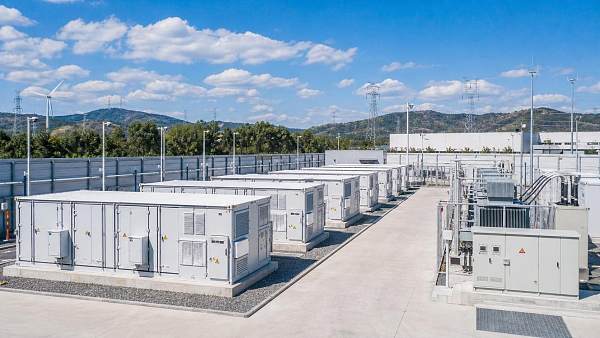
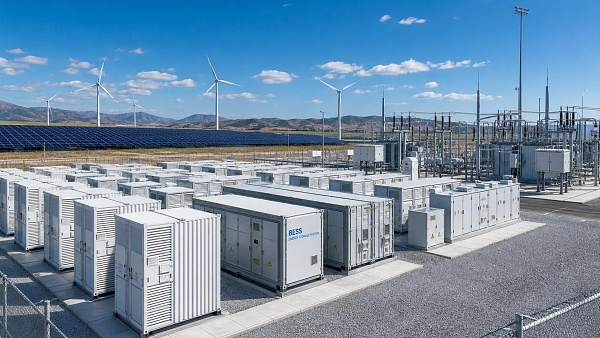
- BESS containers are scaling from megawatt-hour assets to multi-gigawatt-hour portfolios.
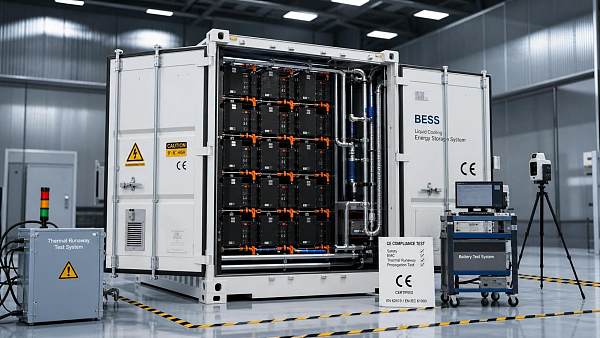
- Liquid cooling requires tighter BMS coordination with thermal management systems.
- UL 9540A, IEC 62619, and grid-connection rules are becoming more demanding.
- EV supercharging creates stronger transient loads and faster cycling stress.
- Asset owners increasingly measure storage returns through availability and LCOS.
These signals make supplier selection a strategic risk-control task.
The best battery management systems supplier should support safe chemistry use, predictable aging models, and stable operation under extreme duty cycles.
Core Drivers Raising the Bar for Supplier Selection
A serious battery management systems supplier should provide data showing how these drivers are addressed in real projects.
Marketing claims are insufficient without test logs, field records, and clear software version control.
Safety Logic Is the First Screening Point
Safety should be the first filter when comparing any battery management systems supplier.
A credible supplier must explain how the system detects abnormal temperature rise, insulation faults, overvoltage, undervoltage, and current deviation.
The explanation should include thresholds, time delays, redundancy, and escalation paths.
Strong BMS logic separates warning, derating, controlled shutdown, and emergency isolation.
This hierarchy prevents unnecessary downtime while still protecting the battery rack and surrounding equipment.
Questions That Reveal Safety Maturity
- How are sensor failures detected and isolated?
- Can the BMS coordinate with fire suppression and HVAC systems?
- What evidence supports thermal runaway propagation prevention?
- How are safety parameters protected from unauthorized changes?
The answers should be specific, documented, and linked to tested operating scenarios.
Algorithm Quality Determines Long-Term Asset Value
A battery management systems supplier should be assessed on algorithm performance, not only hardware specifications.
State of charge accuracy affects dispatch planning, reserve margins, and charge acceptance.
State of health accuracy influences warranty claims, replacement timing, and lifecycle cost modeling.
Cell balancing also matters because small deviations can compound across thousands of cells.
In large BESS containers, poor balancing may reduce available energy even when cells appear healthy.
A qualified battery management systems supplier should provide validation across temperature ranges, C-rates, aging stages, and different chemistries.
Prefer suppliers that support adaptive models and field calibration without disrupting normal operations.
Integration Capability Is Becoming a Competitive Divider
Energy storage no longer operates as an isolated battery cabinet.
The BMS must communicate with PCS, EMS, SCADA, fire systems, meters, and cloud platforms.
A battery management systems supplier should support common protocols, cybersecurity controls, and clear data mapping.
Modbus, CAN, Ethernet, IEC 61850, and other interfaces may be required depending on the project.
The key is not the protocol list alone.
The supplier must prove stable communication under high-noise electrical environments and abnormal operating conditions.
For EV charging hubs, BMS data may support charging limits, battery swapping logic, and V2G coordination.
For grid storage, accurate BMS data helps frequency regulation, peak shaving, and capacity leasing.
Certification Support Shows Real Export Readiness
A battery management systems supplier with global readiness should understand certification from the design stage.
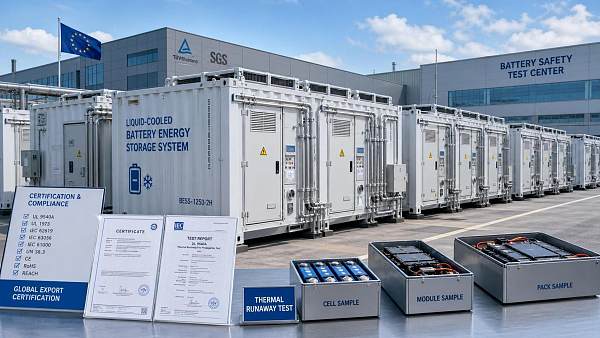
Relevant requirements may include UL 1973, UL 9540, UL 9540A, IEC 62619, CE, and local grid rules.
Certification support should include schematics, component traceability, firmware records, safety analysis, and test reports.
Documentation quality often reveals engineering discipline.
Disorganized files can delay approvals, increase lab costs, and weaken project bankability.
A mature battery management systems supplier should also support change management after certification.
Firmware updates, component substitutions, and production transfers must remain controlled and traceable.
Operational Impact Across Key Energy Assets
The effect of supplier choice varies across business scenarios, but the pattern is consistent.
Better BMS performance reduces uncertainty in safety, dispatch, maintenance, and asset valuation.
- BESS containers gain safer operation, stronger uptime, and more predictable degradation.
- EV charging stations improve charging reliability and battery protection.
- Microgrids gain better coordination between storage, solar, diesel backup, and loads.
- Industrial backup systems reduce nuisance trips and emergency failure risk.
A battery management systems supplier should therefore be evaluated as a lifecycle partner.
The initial device price is only one part of total project economics.
Key Evaluation Points That Deserve Priority
A practical assessment framework should compare suppliers across technical depth, project evidence, and support capability.
- Safety architecture, including redundancy and emergency isolation.
- SOC and SOH accuracy under real cycling conditions.
- Cell balancing speed, efficiency, and thermal impact.
- Compatibility with PCS, EMS, SCADA, HVAC, and fire systems.
- Cybersecurity protections and firmware access control.
- Manufacturing quality control and end-of-line testing.
- Field service response, spare parts, and update policy.
A strong battery management systems supplier will welcome these checks instead of avoiding technical scrutiny.
Warning Signs That Should Slow a Decision
Some signals indicate that a battery management systems supplier may not be ready for demanding applications.
- Unclear alarm logic or undocumented shutdown thresholds.
- No third-party test evidence for safety claims.
- Limited experience with high-voltage or containerized storage systems.
- Weak firmware version control and unclear update responsibility.
- Slow responses to integration questions or protocol details.
- No clear process for failure analysis and corrective action.
These issues can become expensive after installation, especially in grid-connected projects.
A Decision Matrix for Comparing Suppliers
This matrix helps compare a battery management systems supplier on evidence rather than presentation quality.
Weighting should reflect project risk, voltage level, local regulations, and expected cycling intensity.
What to Do Before Final Approval
Before selecting a battery management systems supplier, request a controlled technical review with real project assumptions.
The review should include battery chemistry, rack topology, cooling method, duty cycle, communication architecture, and certification pathway.
A pilot test is valuable when the application involves new chemistry, high C-rate operation, or harsh environmental conditions.
Factory audits should verify calibration procedures, incoming inspection, production traceability, and end-of-line testing.
Commercial terms should also match technical responsibility.
Warranty language, response times, spare parts, and software maintenance must be aligned with operational expectations.
Building a Safer and More Bankable Energy Asset
The best battery management systems supplier is not simply the lowest-cost device provider.
It is the partner that protects cells, supports certification, strengthens dispatch confidence, and reduces lifecycle uncertainty.
As energy storage becomes the reservoir of zero-carbon grids, BMS quality will define both safety and financial performance.
A disciplined assessment should start with safety evidence, then move into algorithms, integration, compliance, and field support.
For the next sourcing step, build a comparison file using test data, protocol documents, certification records, and lifecycle service commitments.
That evidence-based approach makes every battery management systems supplier discussion clearer, faster, and safer for long-term energy infrastructure.
Related News
 EU Sets UL 9540A Rule for Imported Liquid-Cooled BESSGrid Storage ArchitectEU sets UL 9540A rule for imported liquid-cooled BESS. Learn how the October 2026 EU requirement impacts compliance, certification timelines, costs, and delivery planning.
 EU Sets New Thermal Runaway Test Rule for Liquid-Cooled BESSGrid Storage ArchitectEU Sets New Thermal Runaway Test Rule for Liquid-Cooled BESS: learn how UL 9540A Tier 3 and EN 50620:2025 requirements may impact EU market access, timelines, and compliance costs.
 How to Evaluate a Containerized Battery Storage ManufacturerGrid Storage ArchitectContainerized battery storage manufacturer selection starts with safety, thermal control, and integration. Learn how to compare suppliers, cut lifecycle risk, and choose with confidence.
 EU CE Rule Takes Effect for Liquid-Cooled BESS TestingGrid Storage ArchitectEU CE rule for liquid-cooled BESS testing now requires UL 9540A thermal runaway reports for new filings. Learn how this impacts compliance, exports, and market access in Germany and the Netherlands.
 IEC 62933-5-2 Sets New EU Export Test Rule for Liquid-Cooled BESSGrid Storage ArchitectIEC 62933-5-2 introduces a new EU export test rule for liquid-cooled BESS. Learn how CE certification, UL 9540A-equivalent reports, and 2027 compliance deadlines may affect delivery plans.
 Top Utility-Scale Energy Storage Manufacturers in the USA for 2026 ProjectsGrid Storage ArchitectUtility scale energy storage manufacturers USA for 2026 projects: compare top suppliers by safety, grid controls, warranties, and service to choose a bankable BESS partner.
 EU Aligns CE Rules With UL 9540A for Liquid-Cooled BESSGrid Storage ArchitectEU Aligns CE Rules With UL 9540A for liquid-cooled BESS: learn how the new EU CE conformity update impacts compliance, procurement timing, and market access from Q4 2026.
 Thermal Runaway Protection: Common Gaps in BESS Safety DesignGrid Storage ArchitectThermal runaway protection in BESS: uncover the hidden safety design gaps behind compliance, from detection and isolation to venting and propagation control, before they impact uptime and project risk.
 How to Evaluate a Grid-Scale Battery Supplier for Long-Term Project RiskGrid Storage ArchitectGrid-scale battery supplier selection is a long-term risk decision. Learn how to assess safety, bankability, delivery, warranty, and service support before you commit.
 EU Tightens UL 9540A Path for Liquid-cooled BESS ImportsGrid Storage ArchitectEU Tightens UL 9540A Path for Liquid-cooled BESS Imports: learn how the new EU roadmap impacts certification, market access, delivery timelines, and compliance planning before the 2026 deadline.
 Battery Thermal Management System Design: Key Failure RisksGrid Storage ArchitectBattery thermal management system design shapes safety, uptime, and asset value. Explore key failure risks in BESS and fast-charging sites to improve reliability and performance.
 China Customs Adds New BESS Export Document ChecksGrid Storage ArchitectChina Customs adds new BESS export document checks for liquid-cooled BESS containers, raising 72-hour hold risks at Shanghai and Ningbo. Learn the new compliance files and how to avoid shipping delays.