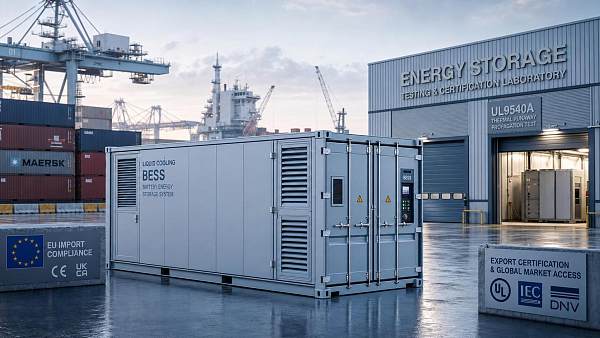
Choosing the right battery management systems supplier is critical for procurement teams balancing safety, scalability, compliance, and long-term ROI. In fast-growing energy storage and electrification markets, a poor supplier choice can increase technical risk and lifecycle costs. This guide explains how to compare suppliers with a practical, procurement-focused lens, helping you evaluate product quality, certifications, integration capability, delivery reliability, and after-sales support.
When buyers search for a battery management systems supplier, they usually are not looking for a basic definition of BMS technology. They want a reliable way to shortlist vendors, reduce project risk, and avoid expensive mistakes in qualification, deployment, and lifecycle support.
For procurement teams, the best supplier is rarely the one with the lowest unit price. It is the one that can prove safety, system compatibility, production consistency, compliance readiness, and long-term service capability across the full operating life of the battery asset.
This matters even more in utility storage, EV infrastructure, commercial energy systems, and other electrification projects where battery uptime, thermal stability, and warranty performance directly affect revenue, insurance exposure, and brand reputation.
What should procurement teams compare first?

Start with the factors that most strongly affect project success: safety architecture, certification status, integration capability, software maturity, supply reliability, and after-sales responsiveness. These are the areas where supplier differences create the biggest long-term impact.
A practical comparison should answer five questions. Can the supplier help you pass technical and regulatory requirements? Will its BMS work cleanly with your cells, PCS, EMS, and thermal system? Can it scale production? Can it support issues fast? Can it reduce total ownership cost?
If a supplier performs well in presentations but cannot provide hard evidence in these five areas, the commercial risk remains high. Procurement should treat unsupported claims as gaps, not advantages.
Why safety and compliance should come before price
In battery projects, safety is not a marketing feature. It is the basis for insurability, commissioning approval, and long-term operational stability. A battery management systems supplier should show how its design detects, isolates, reports, and mitigates abnormal battery behavior.
Ask for details on overvoltage, undervoltage, overcurrent, insulation monitoring, temperature sensing, cell imbalance handling, communication fault response, and fail-safe logic. A capable supplier should explain not only what protections exist, but how quickly they respond and how they are validated.
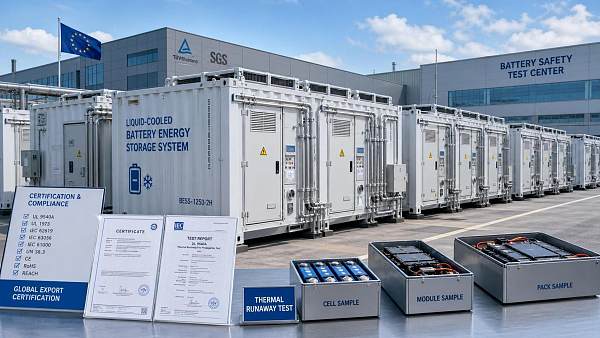
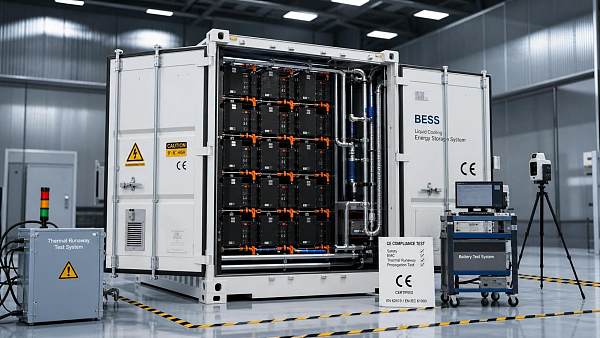
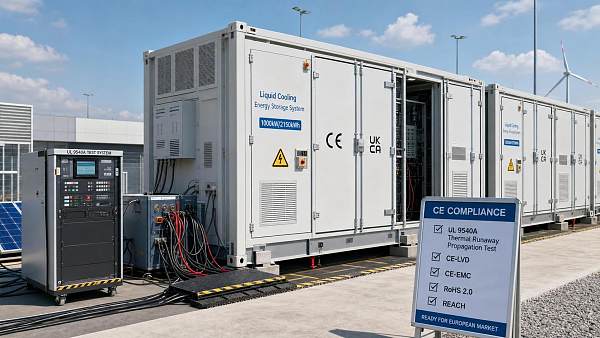
For energy storage and mobility applications, suppliers should also be ready to discuss support for relevant compliance pathways. Depending on your market and system type, this may include UL, IEC, UN, CE, EMC, and cybersecurity-related requirements.
Procurement teams should request current certificates, test reports, and traceable documentation rather than relying on future promises. If approvals are still pending, clarify timeline risk, responsibility allocation, and what happens if certification is delayed.
It is also smart to review the supplier’s safety record. Ask whether any field incidents occurred, how root cause analysis was handled, and what design or process changes were introduced afterward. A mature supplier is transparent about lessons learned.
How to assess technical fit, not just product features
A BMS can look strong on a datasheet and still create integration problems in the real system. Procurement should compare suppliers based on application fit, because the needs of grid-scale storage, industrial backup, and EV charging infrastructure are not identical.
Begin with battery chemistry and cell format compatibility. Confirm whether the supplier has proven experience with your target chemistry, such as LFP, NMC, LTO, or sodium-ion, and whether its algorithms are optimized for your operating window and degradation profile.
Next, examine sensing accuracy, balancing strategy, and state estimation performance. State of charge, state of health, and state of power calculations directly influence usable energy, dispatch confidence, warranty protection, and thermal risk management.
Integration with upper-layer controls is equally important. The battery management systems supplier should support stable communication with PCS, EMS, SCADA, vehicle controllers, or station controllers using the protocols your project actually requires.
Ask for interface documentation, sample communication maps, and previous integration references. If the vendor says integration is easy, request examples of completed projects with similar architectures, not just a generic statement.
Thermal coordination is another key checkpoint. In large battery systems, the BMS must work closely with cooling or heating controls to maintain tight temperature consistency. Poor coordination can reduce battery life, distort state estimation, and raise safety risk.
What software and data capabilities reveal supplier maturity
Many buyers focus on hardware specifications first, but software quality often determines long-term performance. A strong battery management systems supplier should offer stable firmware, disciplined version control, remote diagnostics, event logging, and secure update procedures.
Ask how the supplier handles firmware changes across product generations. Procurement should understand whether updates are backward compatible, how validation is performed, and whether field upgrades can be executed without unacceptable operational disruption.
Data visibility also matters. Good suppliers provide useful alarms, fault codes, trend data, and diagnostic tools that help operators identify issues early. This reduces downtime, shortens troubleshooting cycles, and improves accountability across integrators and operators.
Cybersecurity deserves attention as well, especially in connected energy systems. Review access control, encryption practices, update authentication, and incident response policies. As battery assets become more networked, software weakness becomes operational risk.
How to compare manufacturing quality and supply reliability
Procurement is not only buying a design. It is buying repeated execution at scale. Even a technically strong vendor can become a poor choice if manufacturing consistency, lead time control, or quality traceability is weak.
Request information about production capacity, factory audits, incoming quality control, end-of-line testing, supplier management, and process certifications. Buyers should know whether the company can support pilot volumes today and larger rollouts later.
Traceability is essential. The supplier should be able to link hardware batches, firmware versions, component lots, and test records. When field issues occur, strong traceability reduces investigation time and limits the scope of corrective action.
Lead time transparency is equally important. Ask for standard production lead times, buffer inventory policy, critical component exposure, and dual-sourcing strategy. In volatile electronics markets, supply resilience can matter as much as product performance.
Also compare change management discipline. Procurement should be informed before key component substitutions, PCB revisions, or firmware changes. Uncontrolled engineering changes can create recertification problems and field inconsistency across installed systems.
Which commercial terms actually affect total cost of ownership
Unit price is only one part of the decision. Procurement should compare total cost of ownership, including integration effort, installation complexity, diagnostics efficiency, service response, warranty coverage, replacement logistics, and expected performance over time.
For example, a cheaper BMS may require more engineering hours for commissioning, more site visits for troubleshooting, or more conservative battery operation that reduces usable energy. These hidden costs often exceed the initial hardware savings.
Warranty terms deserve close reading. Clarify warranty duration, exclusions, response times, spare parts policy, and whether software support is included. Also ask how the supplier handles no-fault-found returns and disputed root cause responsibility.
Commercial comparison should also include training, documentation quality, and technical support availability across your operating regions. A global project can suffer if support exists only in one language or one time zone.
When evaluating bids, use a weighted scorecard instead of relying on headline pricing. This helps procurement align decisions with project risk, operating economics, and long-term asset value rather than short-term budget pressure alone.
How to validate a supplier before signing a long-term deal
Desk research is useful, but it is not enough. Procurement teams should validate each battery management systems supplier through structured due diligence that combines document review, technical interviews, and evidence from real deployments.
Start by asking for a customer reference list relevant to your application. Prioritize references with similar battery chemistry, voltage range, environmental conditions, and market compliance needs. A supplier strong in e-mobility may not automatically fit utility storage.
Then request sample deliverables: FMEA summaries, validation plans, interface control documents, test reports, installation manuals, and maintenance procedures. The quality of these materials often reveals the supplier’s engineering discipline.
If the project value is significant, conduct a factory audit or remote manufacturing review. Confirm process control, testing methods, failure analysis workflow, and quality escalation mechanisms. This step is especially important before multi-year framework agreements.
Prototype testing is also valuable. A controlled pilot can verify communication stability, thermal coordination, alarm behavior, and commissioning efficiency before full deployment. Procurement should work with engineering teams to define pass-fail criteria in advance.
Red flags that should slow down vendor selection
Several warning signs should trigger deeper scrutiny. One is vague answers to technical questions, especially around fault handling, balancing logic, thermal response, or certification status. Another is refusal to share references or validation evidence.
Frequent product revisions without formal documentation are another risk indicator. If hardware or firmware appears to change often, ask whether the vendor has stable release management and whether previous customers have experienced compatibility issues.
Be cautious when a supplier focuses heavily on features but avoids discussing service structure, spare parts, or field issue response. Procurement success depends not only on what is sold, but on what happens after commissioning.
Another red flag is overcustomization early in the process. While flexibility can be useful, too much customization may increase lead times, validation work, and lifecycle support complexity. Standardized, proven platforms often create lower execution risk.
A practical supplier scorecard for procurement teams
To compare vendors consistently, build a scorecard with weighted categories. Typical sections include safety and compliance, technical fit, software capability, manufacturing quality, delivery reliability, service support, commercial terms, and strategic fit.
For each category, define measurable subcriteria. Under safety, for example, include protection functions, validation evidence, certification status, and field incident handling. Under supply reliability, include capacity, lead time stability, traceability, and change control.
Use a cross-functional review process. Procurement should own commercial structure, but engineering, quality, operations, and compliance teams should contribute scores in their respective areas. This reduces the chance of selecting a vendor on incomplete criteria.
It is also useful to distinguish between mandatory requirements and differentiators. Some items, such as compliance readiness or protocol support, may be non-negotiable. Others, such as advanced analytics features, can be evaluated as value-added options.
Final thought: the right supplier lowers risk across the full asset lifecycle
Comparing a battery management systems supplier is ultimately a risk management exercise. The strongest choice is the supplier that can support safe operation, smooth integration, scalable delivery, and dependable service over the life of the battery system.
For procurement teams, that means looking beyond brochures and price sheets. Verify evidence, test assumptions, score suppliers against operational priorities, and involve technical stakeholders early. Good supplier selection protects both project economics and system reliability.
In fast-moving storage and electrification markets, the right BMS partner helps turn battery assets into predictable infrastructure rather than uncertain technical exposure. That is the benchmark procurement should keep in view throughout the comparison process.
Related News
 EU Sets UL 9540A Rule for Imported Liquid-Cooled BESSGrid Storage ArchitectEU sets UL 9540A rule for imported liquid-cooled BESS. Learn how the October 2026 EU requirement impacts compliance, certification timelines, costs, and delivery planning.
 EU Sets New Thermal Runaway Test Rule for Liquid-Cooled BESSGrid Storage ArchitectEU Sets New Thermal Runaway Test Rule for Liquid-Cooled BESS: learn how UL 9540A Tier 3 and EN 50620:2025 requirements may impact EU market access, timelines, and compliance costs.
 How to Evaluate a Containerized Battery Storage ManufacturerGrid Storage ArchitectContainerized battery storage manufacturer selection starts with safety, thermal control, and integration. Learn how to compare suppliers, cut lifecycle risk, and choose with confidence.
 EU CE Rule Takes Effect for Liquid-Cooled BESS TestingGrid Storage ArchitectEU CE rule for liquid-cooled BESS testing now requires UL 9540A thermal runaway reports for new filings. Learn how this impacts compliance, exports, and market access in Germany and the Netherlands.
 IEC 62933-5-2 Sets New EU Export Test Rule for Liquid-Cooled BESSGrid Storage ArchitectIEC 62933-5-2 introduces a new EU export test rule for liquid-cooled BESS. Learn how CE certification, UL 9540A-equivalent reports, and 2027 compliance deadlines may affect delivery plans.
 Top Utility-Scale Energy Storage Manufacturers in the USA for 2026 ProjectsGrid Storage ArchitectUtility scale energy storage manufacturers USA for 2026 projects: compare top suppliers by safety, grid controls, warranties, and service to choose a bankable BESS partner.
 EU Aligns CE Rules With UL 9540A for Liquid-Cooled BESSGrid Storage ArchitectEU Aligns CE Rules With UL 9540A for liquid-cooled BESS: learn how the new EU CE conformity update impacts compliance, procurement timing, and market access from Q4 2026.
 Thermal Runaway Protection: Common Gaps in BESS Safety DesignGrid Storage ArchitectThermal runaway protection in BESS: uncover the hidden safety design gaps behind compliance, from detection and isolation to venting and propagation control, before they impact uptime and project risk.
 How to Evaluate a Grid-Scale Battery Supplier for Long-Term Project RiskGrid Storage ArchitectGrid-scale battery supplier selection is a long-term risk decision. Learn how to assess safety, bankability, delivery, warranty, and service support before you commit.
 EU Tightens UL 9540A Path for Liquid-cooled BESS ImportsGrid Storage ArchitectEU Tightens UL 9540A Path for Liquid-cooled BESS Imports: learn how the new EU roadmap impacts certification, market access, delivery timelines, and compliance planning before the 2026 deadline.
 Battery Thermal Management System Design: Key Failure RisksGrid Storage ArchitectBattery thermal management system design shapes safety, uptime, and asset value. Explore key failure risks in BESS and fast-charging sites to improve reliability and performance.
 China Customs Adds New BESS Export Document ChecksGrid Storage ArchitectChina Customs adds new BESS export document checks for liquid-cooled BESS containers, raising 72-hour hold risks at Shanghai and Ningbo. Learn the new compliance files and how to avoid shipping delays.