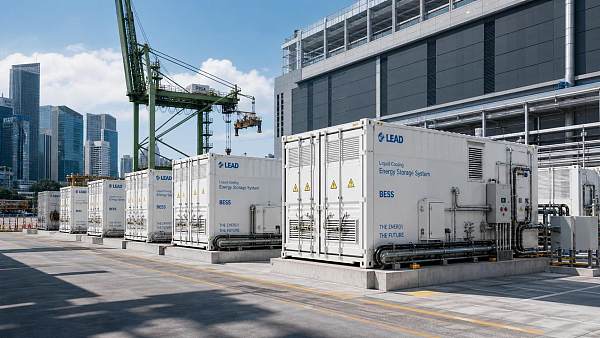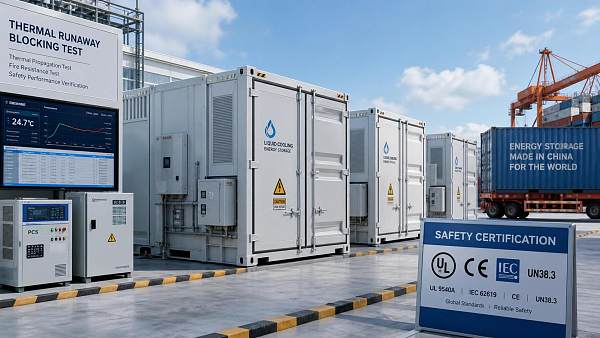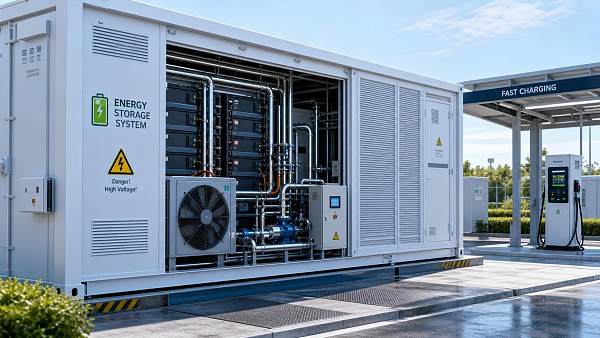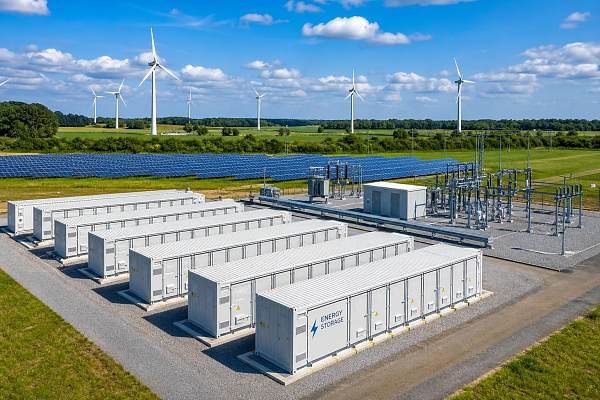
On 2026-06-28, Singapore’s Energy Market Authority (EMA) signaled a clear compliance shift for imported liquid-cooled BESS containers: systems entering the market after 1 January 2027 will need UL 9540A-based thermal propagation testing, including validation that inter-cell temperature difference remains at or below 1.5°C under 1C cycling. Because pre-certification is required before port entry, this change is relevant not only to BESS suppliers, but also to companies involved in export preparation, procurement review, technical documentation, testing coordination, and delivery scheduling for Singapore’s microgrid and datacenter backup segments.
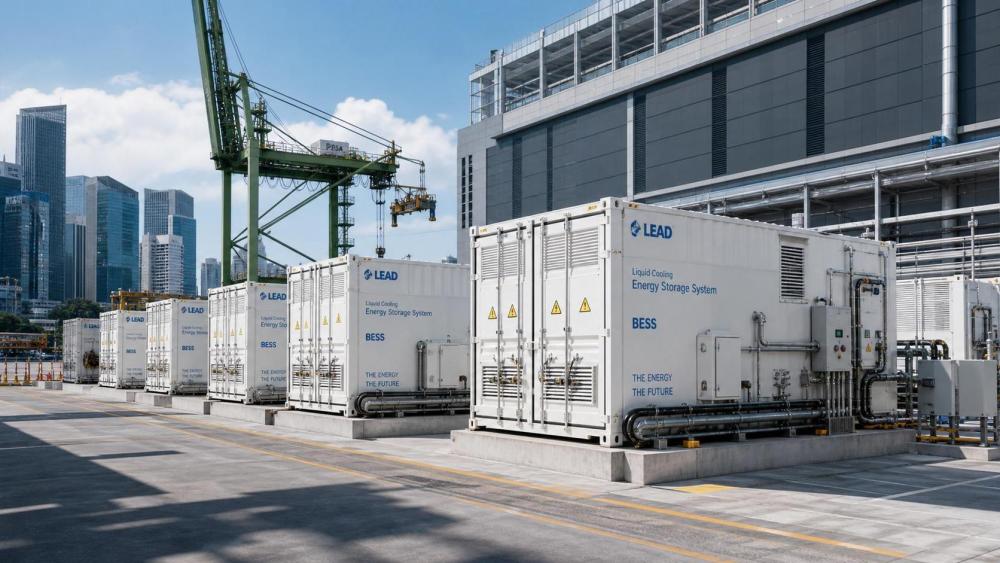
What the EMA announcement confirms
The confirmed facts are limited but material. Singapore’s EMA announced mandatory adoption of UL 9540A-based thermal propagation testing for all liquid-cooled BESS containers imported after 1 January 2027. The requirement includes a specific technical validation threshold of no more than 1.5°C inter-cell delta T under 1C cycling. The measure applies to all BESS suppliers targeting Singapore’s microgrid and datacenter backup markets. The summary also states that pre-certification must be completed before port entry.
These points indicate that the rule change is tied not only to product design and testing, but also to import timing and market access. In practical terms, compliance is being framed as an entry requirement rather than a post-arrival correction item.
Where the commercial and compliance pressure will show up first
Export-facing suppliers will face an earlier approval gate
From an industry perspective, suppliers shipping liquid-cooled BESS containers into Singapore are likely to feel the most direct impact. The reason is straightforward: pre-certification before port entry shifts compliance work forward in the transaction cycle. That affects testing readiness, technical file preparation, shipment release planning, and the ability to align delivery commitments with certification timing.
What deserves closer attention is whether suppliers already have documentation and test evidence organized around the EMA-announced requirement, especially where Singapore is treated as a target market rather than a secondary destination.
Procurement and project buyers may need tighter bid screening
For procurement teams serving microgrid or datacenter backup applications, the rule change may alter vendor screening and specification review. Analysis shows that buyers will need to pay closer attention to whether a supplier can demonstrate UL 9540A-based thermal propagation testing and the stated inter-cell delta T validation condition before shipment. This can affect tender qualification language, technical clarification rounds, and purchase order conditions.
The main operational effect is not only on product selection, but on reducing the risk of ordering equipment that cannot complete pre-entry compliance in time for project schedules.
Testing and certification coordination becomes part of delivery control
Certification-related service providers and internal compliance teams may also see a more central role in delivery management. Because the requirement is connected to port entry, testing status and certificate readiness are no longer separate regulatory matters; they become part of shipment control, customs-facing preparation, and documentary completeness.
Observably, this increases the importance of aligning test reports, technical declarations, and product configuration records before logistics milestones are locked in.
After-sales and traceability teams should not treat this as a one-time filing task
For companies already planning supply into Singapore, the change may also affect downstream service and quality traceability. Analysis shows that once a market introduces a clearly stated thermal safety certification threshold, after-sales teams, technical support staff, and quality functions may need to maintain stronger product traceability around the certified configuration used for import and deployment.
This is not yet evidence of any additional post-market requirement beyond the provided summary, but it is a practical area companies should watch when preparing records and service documentation.
What companies should review now
Check whether current certification work matches the announced threshold
Companies targeting Singapore should first review whether existing test programs for liquid-cooled BESS containers actually match the EMA-announced framework, rather than assuming broader battery safety documentation will be sufficient. The key issue is alignment with UL 9540A-based thermal propagation testing and the stated requirement of no more than 1.5°C inter-cell delta T under 1C cycling.
Revisit shipment planning against the pre-entry requirement
Because the summary states that pre-certification is required prior to port entry, businesses should examine whether internal export timing, customer delivery promises, and freight planning leave enough room for certification completion. Analysis shows that this is especially relevant where projects are scheduled tightly and where import timing is contract-sensitive.
Review tender files, technical submissions, and supplier qualification language
What deserves closer attention is the wording used in bids, procurement specifications, and supplier approval documents for Singapore-bound projects. If contract or bid materials lag behind the new requirement, companies may face mismatches between offered configurations and compliance expectations. At this stage, the prudent step is document alignment rather than assuming final market practice has already stabilized.
Keep watching for official execution detail and market interpretation
The provided information confirms the mandatory direction of the rule, but it does not set out the full operational detail around document format, review sequence, or enforcement handling beyond the pre-certification condition. Observably, companies should continue tracking how official wording, certification interpretation, and customer-side procurement requirements develop as implementation approaches.
Why this looks like an execution signal, not just a policy headline
Analysis shows that this announcement is more appropriately understood as an access-control signal for a defined product category, rather than a general safety statement. The combination of a named testing basis, a specific technical validation condition, and a pre-port-entry requirement gives the change practical weight for suppliers and buyers.
At the same time, it would be premature to treat every implementation detail as settled based only on the information provided here. The direction is clear, but industry participants still need to watch how the rule is applied in certification review, procurement documents, and shipment preparation.
How the market should read this development
In industry terms, the significance of this update lies in where compliance is being placed: before entry, before delivery completion, and likely before commercial closure in many transactions. That makes the rule relevant across certification, trade execution, procurement review, and supply-chain scheduling. A measured reading is that this is already a concrete compliance change for Singapore-bound liquid-cooled BESS containers, while the finer points of execution still warrant close monitoring.
Basis of this article and points still to verify
This article is generated based on the user-provided news title, event date, and event summary. For developments of this kind, relevant source types usually include official announcements, regulatory releases, trade or customs-related notices, industry association updates, standard-setting documents, certification communications, and reporting by authoritative trade media.
A specific official source link was not provided in the input, so the exact source document still needs to be verified on an ongoing basis. Further observation is also needed on detailed implementation language, certification interpretation, tender document updates, market feedback, and how companies execute compliance in practice.
Related News
 Singapore Tightens BESS Thermal Certification by 2027Grid Storage ArchitectSingapore Tightens BESS Thermal Certification by 2027: learn how EMA’s UL 9540A pre-entry rule and 1.5°C thermal threshold will impact BESS suppliers, buyers, and delivery planning.
 IEC 62933-5-2:2026 Sets New Export Test BarGrid Storage ArchitectIEC 62933-5-2:2026 sets a new compliance bar for liquid-cooled BESS exports, making thermal runaway blocking mandatory. See how it may affect certification, delivery timelines, and market access.
 Battery Cooling System Failures: Early Warning Signs and Practical FixesGrid Storage ArchitectBattery cooling system failures often begin with subtle warning signs. Learn how to spot thermal drift early, diagnose root causes, and apply practical fixes before downtime grows.
 Hithium Unveils 6.9MWh Long-Duration Liquid-Cooled BESSGrid Storage ArchitectHithium Unveils 6.9MWh Long-Duration Liquid-Cooled BESS for Europe, highlighting native 8-hour storage, 1300Ah cells, certifications, and faster localized deployment.
 Sunwoda’s UL 9540A Pass Speeds EU BESS ComplianceGrid Storage ArchitectSunwoda’s UL 9540A pass speeds EU BESS compliance, highlighting faster approvals, lower importer risk, and stronger procurement confidence for Europe’s energy storage market.
 Liquid-Cooled BESS Gains Compliance Focus in EuropeGrid Storage ArchitectLiquid-cooled BESS takes center stage in Europe as compliance, UL 9540A, and NFPA 855 reshape storage procurement. Discover why buyers and developers are watching this shift closely.
 Munich Show Opens With BESS and V2G in FocusGrid Storage ArchitectMunich Show opens with BESS and V2G in focus as European buyers prioritize 2026–2027 storage and charging projects. See what procurement, compliance, and local service signals mean for suppliers.
 LA Port Tightens BESS Clearance Data RulesGrid Storage ArchitectLA Port Tightens BESS Clearance Data Rules: learn how new UL 9540A raw-data checks for liquid-cooled BESS may delay customs 7–10 days and what exporters, buyers, and logistics teams should do now.
 Battery Energy Storage Containers: Key Safety and Cooling ChecksGrid Storage ArchitectBattery energy storage containers require strict safety and cooling checks. Learn how to reduce thermal runaway risk, improve compliance, and keep systems stable and audit-ready.
 POLA Tightens BESS Entry Checks on UL 9540A DataGrid Storage ArchitectUL 9540A data now plays a bigger role in POLA BESS inspections. Learn how stricter document checks on liquid-cooled BESS can affect clearance, lead times, and shipment readiness.
 Munich Trade Signal Shifts to Liquid-Cooled BESS and V2GGrid Storage ArchitectLiquid-cooled BESS and V2G are moving to the top of 2026 import plans after Munich’s trade signal. Explore why UL 9540A, IEC 62443-4-2, and PCS-EMS readiness now shape buyer decisions.
 Grid-Scale BESS Safety Risks: What to Check Before System IntegrationGrid Storage ArchitectGrid-scale BESS safety starts at integration. Learn the critical checks for thermal, fire, PCS, and compliance risks before energization to protect uptime and grid stability.