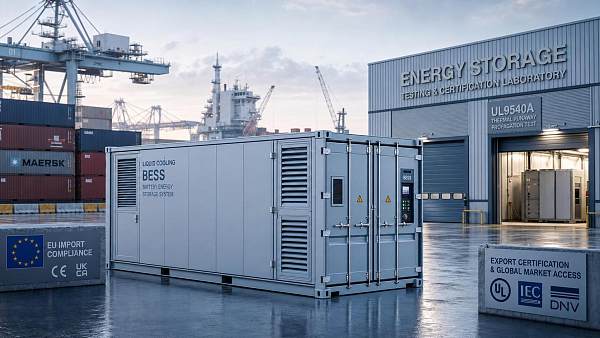
Why thermal management sits at the center of grid-scale BESS risk
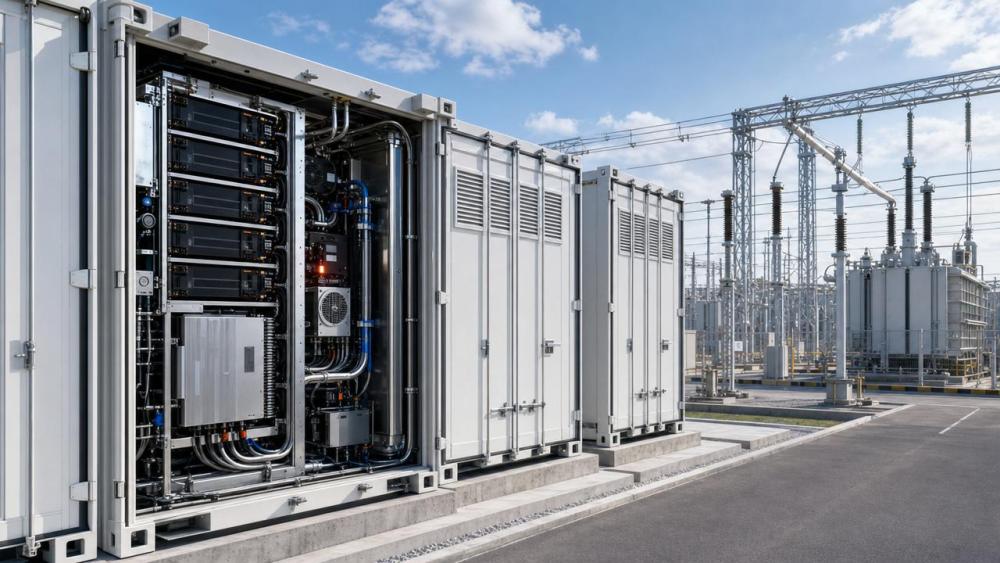
Thermal management in utility-scale storage is rarely a background topic anymore. It shapes safety, performance, compliance, and project bankability from the first design review onward.
In real projects, heat does not stay local. A small temperature drift in one rack can spread into uneven aging, reduced usable capacity, nuisance alarms, or a more serious propagation event.
That is why thermal management is now discussed alongside PCS behavior, fire strategy, control logic, and dispatch duty cycles, not as a separate mechanical issue.
Across the broader energy infrastructure landscape, this matters even more. Grid-scale BESS must interact with smart transmission assets, ultra-high-voltage networks, EV charging hubs, and flexible Power-to-X systems.
ESGS tracks these connections closely because battery thermodynamics and millisecond-level power flow control increasingly affect the same investment and safety decisions.
So the practical question is not whether thermal management matters. It is where the real risks appear, how they are detected, and what should be checked before those risks become expensive.
What usually goes wrong before a thermal event becomes visible?
The most common problems begin quietly. They often look like harmless temperature spread, unstable sensor readings, localized coolant imbalance, or rising auxiliary power consumption.
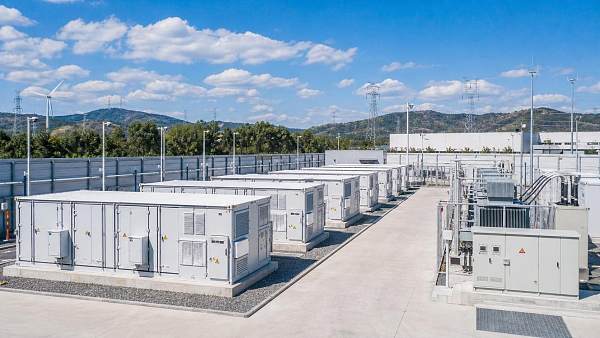
A grid-scale BESS container may still pass routine operating checks while internal thermal management is already drifting away from design assumptions.
Several triggers appear repeatedly in field analysis:
- Inconsistent cell or module temperature distribution during high C-rate charging.
- Cooling loop fouling, pump degradation, or poor liquid balancing between racks.
- Control software that reacts too slowly to fast ambient or load changes.
- Cabinet layouts that create hot spots near busbars, inverters, or cable penetrations.
- Sensor placement that captures average conditions but misses local overheating.
Needless to say, thermal runaway rarely begins as a dramatic event. More often, the warning period is long enough to act, but only if the monitoring architecture is designed for diagnosis rather than basic reporting.
A useful rule is simple: if a site shows widening temperature delta, declining round-trip efficiency, and unexplained maintenance alarms together, thermal management deserves immediate review.
Are all thermal management risks equally serious?
Not at all. Some risks mainly shorten asset life. Others threaten operational continuity. A smaller group directly affects fire safety, code compliance, and insurability.
The table below helps separate these risk layers in a more practical way.
This distinction matters because not every thermal management issue requires the same response. Some need design correction, while others call for tighter operating envelopes or a change in maintenance intervals.
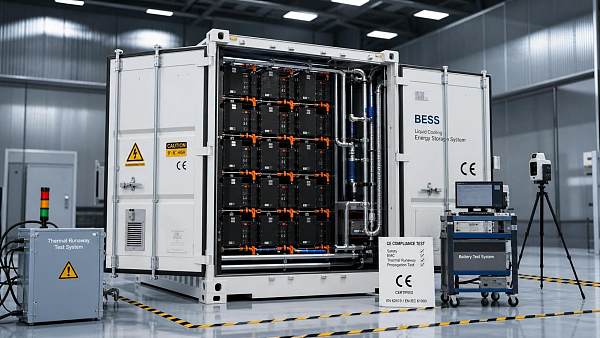
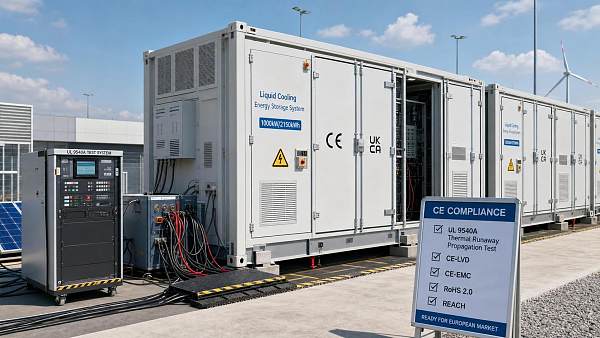
In global projects, UL 9540A results, local fire codes, and insurer expectations can raise the consequences of a thermal weakness far beyond simple equipment downtime.
How should thermal management be judged during design and procurement?
The usual mistake is to compare cooling solutions only by name. Air cooling, liquid cooling, and hybrid approaches are not enough as decision labels.
A better comparison focuses on performance under the actual duty profile. Frequency regulation, peak shaving, renewable smoothing, and EV fast-charging support create very different heat patterns.
In practice, these checkpoints are more revealing than brochure claims:
- Temperature uniformity across cells, modules, and racks during worst-case cycling.
- Cooling performance at high ambient temperature and partial-load conditions.
- Response speed of thermal controls during sudden dispatch ramps.
- Redundancy of pumps, valves, sensors, and controller logic.
- Parasitic energy consumption over annual operating hours.
- Serviceability without creating contamination or leak risk.
ESGS often highlights a broader systems view here. Thermal management quality cannot be judged separately from PCS behavior, site meteorology, enclosure density, and dispatch strategy.
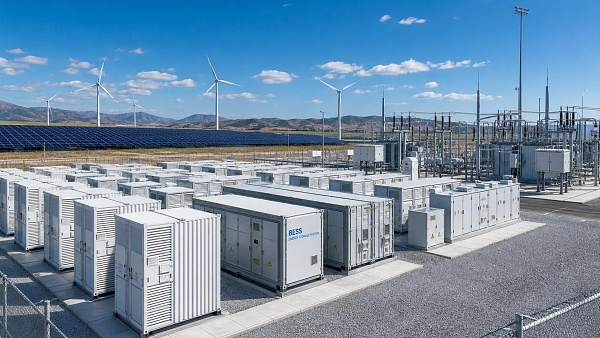
That is especially true when BESS assets are tied to UHV corridors, renewable clusters, or multi-asset hubs where short response times increase thermal stress.
Why do operating conditions change the thermal risk picture so much?
Because the same battery system can behave very differently under different grid roles. A site designed mainly for evening peak shifting sees a different thermal profile than one chasing fast ancillary revenue.
Ambient conditions also matter more than many teams expect. Desert heat, coastal salt exposure, dust loading, altitude, and seasonal humidity can all change thermal management effectiveness.
A few operating scenarios deserve closer attention:
- High-frequency cycling for grid balancing can outpace slow cooling control loops.
- Co-located solar and storage may create daytime heat stacking inside containers.
- EV charging hubs can impose sharp load spikes and repeated thermal swings.
- Microgrid and islanded operation may reduce tolerance for thermal derating.
More advanced sites now use digital twins, trend analytics, and predictive maintenance to connect thermal data with dispatch patterns. That approach is becoming less optional and more operationally necessary.
When thermal management is modeled together with grid behavior, hidden risk usually appears earlier, and corrective action becomes cheaper.
What are the most common misconceptions around thermal management?
One misconception is that passing factory tests guarantees field safety. It does not. Site layout, maintenance quality, software updates, and duty-cycle drift can change thermal outcomes significantly.
Another is that lower average temperature always means better control. In reality, thermal management is about stable and uniform temperature, not simply colder operation.
A third misconception is that compliance testing alone closes the issue. Standards are essential, but they cannot replace site-specific risk review.
The more grounded approach is to ask whether the system can maintain safe thermal behavior when real stresses overlap:
- high ambient heat,
- rapid dispatch commands,
- partial equipment degradation,
- and delayed maintenance windows.
If the answer is uncertain, the thermal management strategy is not mature enough yet, regardless of how polished the specification sheet looks.
What should be checked next before approving or expanding a BESS site?
A useful next step is to review thermal management as a cross-functional risk item, not just a subsystem parameter. That means linking design data, operating history, fire testing, and dispatch expectations.
For a focused review, confirm these points:
- Whether measured temperature delta stays within the intended design window.
- Whether alarm logic identifies local overheating early enough to isolate risk.
- Whether maintenance records show repeat cooling faults or sensor drift.
- Whether UL 9540A, fire strategy, and local permitting assumptions still align.
- Whether future dispatch plans increase thermal stress beyond the original basis.
Thermal management in grid-scale BESS is ultimately a reliability filter for the wider clean energy chain. If storage is expected to stabilize renewables, support UHV transmission value, and serve flexible charging or hydrogen ecosystems, thermal discipline cannot be treated as a secondary detail.
The strongest projects usually share one trait: they keep revisiting thermal assumptions as operating roles evolve. That is often the difference between a compliant installation and a resilient long-life asset.
When evaluating the next project phase, compare real thermal data, control response, and site conditions together. That is where the most useful decisions usually become clear.
Related News
 DOE Sets UL 9540A Rule for Liquid-Cooled BESS ImportsGrid Storage ArchitectDOE sets a new UL 9540A rule for liquid-cooled BESS imports to the U.S. Learn what changes on August 1, 2026, and how exporters can avoid delays, compliance gaps, and testing risks.
 EU Tightens EN 50641 for Liquid-Cooled BESSGrid Storage ArchitectEU Tightens EN 50641 for Liquid-Cooled BESS: learn how the new UL 9540A 4th edition test and third-party certification rule affects EU market access, compliance timelines, and export planning.
 EU Sets UL 9540A Rule for Imported Liquid-Cooled BESSGrid Storage ArchitectEU sets UL 9540A rule for imported liquid-cooled BESS. Learn how the October 2026 EU requirement impacts compliance, certification timelines, costs, and delivery planning.
 EU Sets New Thermal Runaway Test Rule for Liquid-Cooled BESSGrid Storage ArchitectEU Sets New Thermal Runaway Test Rule for Liquid-Cooled BESS: learn how UL 9540A Tier 3 and EN 50620:2025 requirements may impact EU market access, timelines, and compliance costs.
 How to Evaluate a Containerized Battery Storage ManufacturerGrid Storage ArchitectContainerized battery storage manufacturer selection starts with safety, thermal control, and integration. Learn how to compare suppliers, cut lifecycle risk, and choose with confidence.
 EU CE Rule Takes Effect for Liquid-Cooled BESS TestingGrid Storage ArchitectEU CE rule for liquid-cooled BESS testing now requires UL 9540A thermal runaway reports for new filings. Learn how this impacts compliance, exports, and market access in Germany and the Netherlands.
 IEC 62933-5-2 Sets New EU Export Test Rule for Liquid-Cooled BESSGrid Storage ArchitectIEC 62933-5-2 introduces a new EU export test rule for liquid-cooled BESS. Learn how CE certification, UL 9540A-equivalent reports, and 2027 compliance deadlines may affect delivery plans.
 Top Utility-Scale Energy Storage Manufacturers in the USA for 2026 ProjectsGrid Storage ArchitectUtility scale energy storage manufacturers USA for 2026 projects: compare top suppliers by safety, grid controls, warranties, and service to choose a bankable BESS partner.
 EU Aligns CE Rules With UL 9540A for Liquid-Cooled BESSGrid Storage ArchitectEU Aligns CE Rules With UL 9540A for liquid-cooled BESS: learn how the new EU CE conformity update impacts compliance, procurement timing, and market access from Q4 2026.
 Thermal Runaway Protection: Common Gaps in BESS Safety DesignGrid Storage ArchitectThermal runaway protection in BESS: uncover the hidden safety design gaps behind compliance, from detection and isolation to venting and propagation control, before they impact uptime and project risk.
 How to Evaluate a Grid-Scale Battery Supplier for Long-Term Project RiskGrid Storage ArchitectGrid-scale battery supplier selection is a long-term risk decision. Learn how to assess safety, bankability, delivery, warranty, and service support before you commit.
 EU Tightens UL 9540A Path for Liquid-cooled BESS ImportsGrid Storage ArchitectEU Tightens UL 9540A Path for Liquid-cooled BESS Imports: learn how the new EU roadmap impacts certification, market access, delivery timelines, and compliance planning before the 2026 deadline.