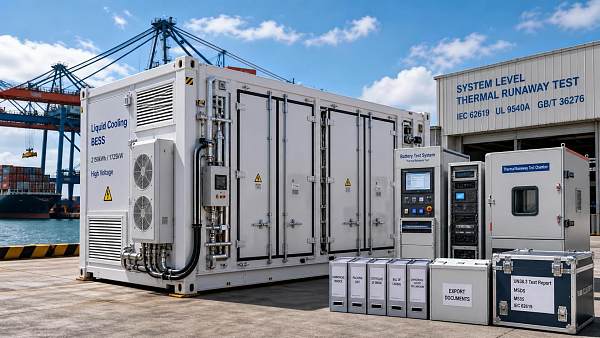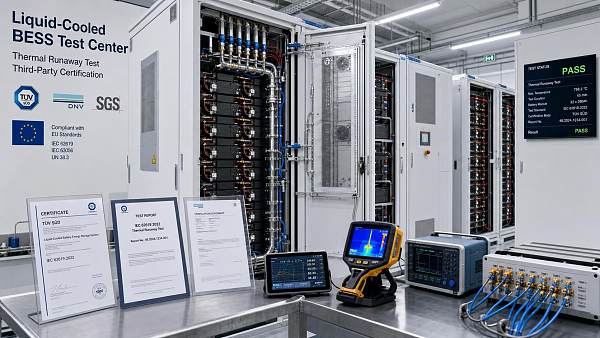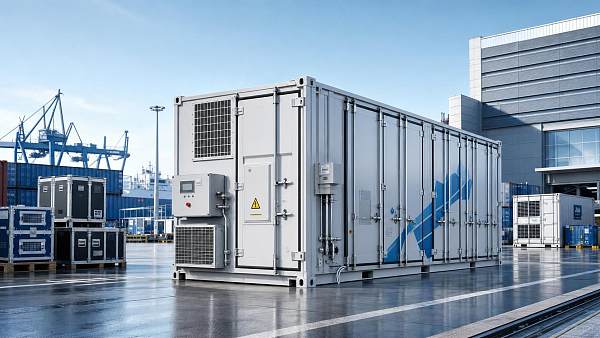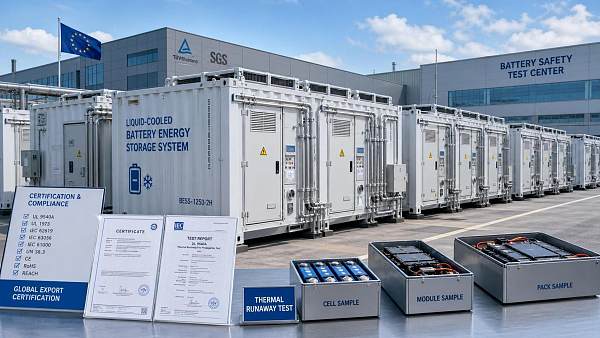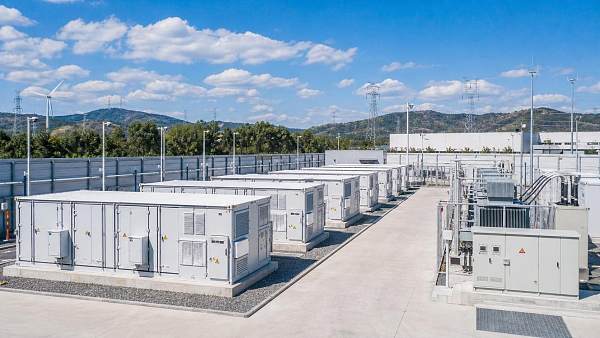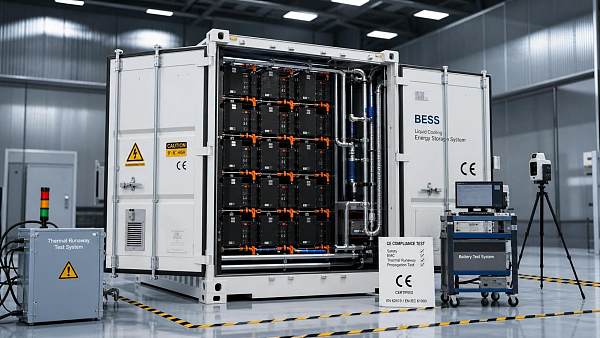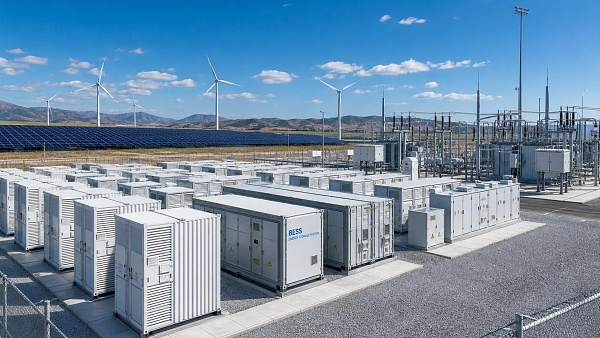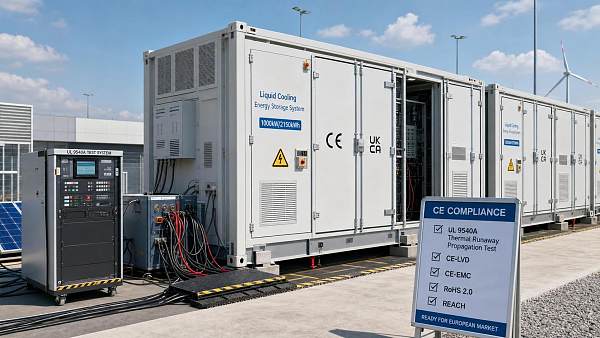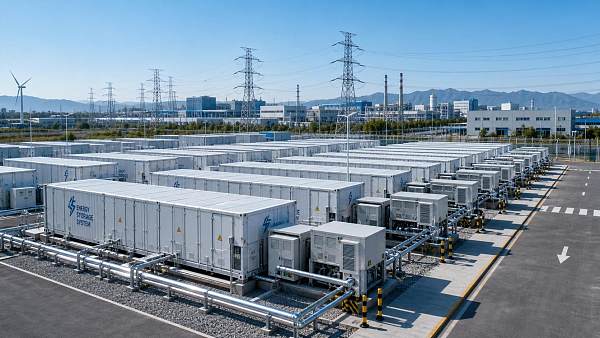
Thermal management systems sit at the center of BESS safety because heat is where performance risk and fire risk begin to overlap. In utility-scale storage, even a small temperature deviation can accelerate cell aging, weaken consistency, and increase the chance of propagation during a failure event.
That is why thermal control is no longer a secondary engineering choice. It has become a core safety discipline tied to compliance, uptime, insurance confidence, and asset protection across the wider clean energy infrastructure now shaping zero-carbon grids.
Why thermal control has become a frontline BESS issue
Grid-scale batteries operate under demanding cycles, variable climates, and fast charge-discharge commands from PCS, EMS, and grid dispatch systems. In that environment, heat does not stay local for long.
A hotspot in one module can influence neighboring cells, distort state estimation, and create uneven electrical stress. Once that imbalance grows, the system moves from reduced efficiency toward a more serious safety boundary.
This explains why thermal management systems matter far beyond comfort cooling. In BESS containers, they help maintain narrow temperature spread, stabilize electrochemical behavior, and reduce the conditions that can trigger thermal runaway.
Within the ESGS view of energy infrastructure, this is especially relevant. BESS acts as the grid’s fast-response reservoir, and its thermal discipline directly affects how safely renewable energy can be stored, shifted, and dispatched.
What thermal management systems actually do inside a BESS
At a basic level, thermal management systems control three things: average temperature, temperature uniformity, and heat removal speed. Each one influences safety in a different way.
Average temperature affects how hard the cells age and how stable internal reactions remain. Uniformity determines whether one rack or module carries more thermal burden than others. Heat removal speed decides how quickly the system can respond under rapid cycling.
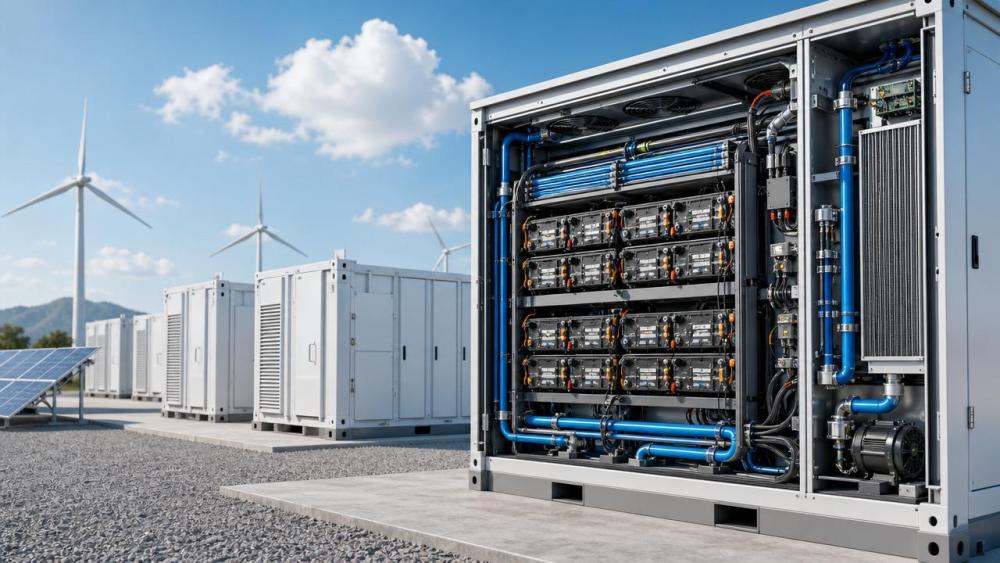
In practical terms, an effective design combines cooling hardware, sensors, controls, and enclosure strategy. The hardware may be air cooling, liquid cooling, refrigerant-assisted approaches, or hybrid architectures.
The control layer then turns raw temperature data into action. Fan speed, pump flow, valve logic, and alarm thresholds must react early enough to prevent unstable thermal conditions from developing.
In high-density containers, advanced liquid cooling often provides the tighter temperature control needed to keep cell deviation within very narrow limits. That consistency is one of the most important predictors of safe long-term operation.
Where the main safety risks appear
Thermal risk in BESS rarely starts with one dramatic event. It usually grows through smaller conditions that compound over time and become visible only when the operating margin has already narrowed.
Common early-stage warning patterns
- Rising temperature spread between modules under the same load.
- Persistent hotspot formation near busbars, connectors, or end cells.
- Cooling response lag during peak charging windows.
- Sensor drift that masks the true thermal condition.
- Airflow obstruction from dust, cable routing, or poor maintenance.
More serious issues appear when these conditions intersect with aggressive cycling, high ambient heat, or weak fault isolation. Then the thermal management system is no longer optimizing efficiency alone. It is actively containing escalation.
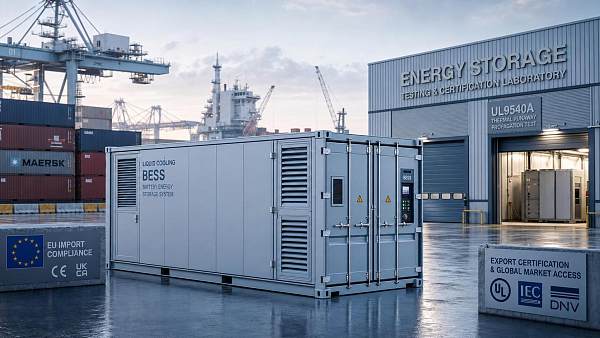
That is also why standards and fire testing receive so much attention. UL 9540A, for example, has pushed the market to focus not only on whether a cell fails, but on whether failure propagates through the pack, rack, or container.
Air cooling, liquid cooling, and how safety trade-offs differ
Not every project needs the same architecture. The right thermal management system depends on energy density, site climate, duty cycle, maintenance conditions, and the acceptable risk profile.
For many grid-scale projects, liquid-based thermal management systems are becoming the preferred route because they can hold tighter thermal spread across large cell populations. That matters when fast response and long-duration cycling happen in the same asset.
Still, better cooling capacity alone does not guarantee safer results. Poor manifold design, inconsistent flow balancing, or weak coolant monitoring can introduce a different class of failure risk.
Why this matters beyond the battery container
BESS no longer operates as an isolated box on a fenced site. It is part of a broader energy chain that includes smart grid equipment, UHV transmission, EV charging hubs, and even hydrogen production linked to renewable oversupply.
When storage absorbs surplus solar or wind and returns power at peak demand, it supports grid stability in the same way a reservoir supports water supply. If thermal performance degrades, dispatch confidence drops with it.
This wider systems view is central to ESGS. Battery thermodynamics, grid power flow, and asset economics are increasingly connected. A weak thermal design can lower cycle value, complicate export compliance, and affect financing assumptions such as LCOS and availability guarantees.
In other words, thermal management systems influence not only fire safety, but also how credible the entire storage asset appears to grid operators, insurers, and project investors.
What to review when assessing thermal risk
A useful review starts with operational evidence rather than brochure claims. Thermal management systems should be judged by measurable behavior under realistic duty conditions.
Priority checkpoints
- Cell-to-cell and module-to-module temperature deviation during high load.
- Cooling performance under worst-case ambient temperature.
- Response time after sudden power ramp events.
- Sensor redundancy and fault detection logic.
- Leak detection, condensation control, and enclosure sealing.
- Evidence from abuse testing and propagation mitigation measures.
It is also worth checking how thermal data connects with the BMS, EMS, and site-level alarm strategy. A strong cooling design loses value if abnormal trends are not visible early or acted on quickly.
Digital twins and trend analytics are becoming more useful here. They help identify drift, forecast thermal imbalance, and support maintenance before a visible fault appears.
Practical decisions that improve safety outcomes
The safest thermal management systems are usually the ones designed as part of a complete risk framework, not added as a late efficiency upgrade.
That framework should connect thermal design with enclosure spacing, fire suppression logic, ventilation paths, maintenance access, and emergency isolation procedures. Each layer reduces the chance that one fault becomes a site event.
From a project review perspective, several decisions tend to create stronger outcomes:
- Set a strict temperature uniformity target, not only a maximum temperature target.
- Validate performance under real dispatch cycles, not steady laboratory conditions.
- Treat maintenance access and monitoring accuracy as safety features.
- Review test evidence for propagation resistance, not just nominal cooling capacity.
As storage projects become larger and more integrated with transport electrification and smart grids, these details become harder to ignore. Thermal control is where engineering discipline, compliance pressure, and commercial reliability increasingly meet.
A sensible next step is to compare thermal management systems against the actual duty profile, site climate, and safety objectives of the project, then map those findings against test evidence and monitoring strategy. That approach creates a more reliable basis for design review, vendor evaluation, and long-term risk control.
Related News
 DOE Sets UL 9540A Rule for Liquid-Cooled BESS ImportsGrid Storage ArchitectDOE sets a new UL 9540A rule for liquid-cooled BESS imports to the U.S. Learn what changes on August 1, 2026, and how exporters can avoid delays, compliance gaps, and testing risks.
 EU Tightens EN 50641 for Liquid-Cooled BESSGrid Storage ArchitectEU Tightens EN 50641 for Liquid-Cooled BESS: learn how the new UL 9540A 4th edition test and third-party certification rule affects EU market access, compliance timelines, and export planning.
 EU Sets UL 9540A Rule for Imported Liquid-Cooled BESSGrid Storage ArchitectEU sets UL 9540A rule for imported liquid-cooled BESS. Learn how the October 2026 EU requirement impacts compliance, certification timelines, costs, and delivery planning.
 EU Sets New Thermal Runaway Test Rule for Liquid-Cooled BESSGrid Storage ArchitectEU Sets New Thermal Runaway Test Rule for Liquid-Cooled BESS: learn how UL 9540A Tier 3 and EN 50620:2025 requirements may impact EU market access, timelines, and compliance costs.
 How to Evaluate a Containerized Battery Storage ManufacturerGrid Storage ArchitectContainerized battery storage manufacturer selection starts with safety, thermal control, and integration. Learn how to compare suppliers, cut lifecycle risk, and choose with confidence.
 EU CE Rule Takes Effect for Liquid-Cooled BESS TestingGrid Storage ArchitectEU CE rule for liquid-cooled BESS testing now requires UL 9540A thermal runaway reports for new filings. Learn how this impacts compliance, exports, and market access in Germany and the Netherlands.
 IEC 62933-5-2 Sets New EU Export Test Rule for Liquid-Cooled BESSGrid Storage ArchitectIEC 62933-5-2 introduces a new EU export test rule for liquid-cooled BESS. Learn how CE certification, UL 9540A-equivalent reports, and 2027 compliance deadlines may affect delivery plans.
 Top Utility-Scale Energy Storage Manufacturers in the USA for 2026 ProjectsGrid Storage ArchitectUtility scale energy storage manufacturers USA for 2026 projects: compare top suppliers by safety, grid controls, warranties, and service to choose a bankable BESS partner.
 EU Aligns CE Rules With UL 9540A for Liquid-Cooled BESSGrid Storage ArchitectEU Aligns CE Rules With UL 9540A for liquid-cooled BESS: learn how the new EU CE conformity update impacts compliance, procurement timing, and market access from Q4 2026.
 Thermal Runaway Protection: Common Gaps in BESS Safety DesignGrid Storage ArchitectThermal runaway protection in BESS: uncover the hidden safety design gaps behind compliance, from detection and isolation to venting and propagation control, before they impact uptime and project risk.
 How to Evaluate a Grid-Scale Battery Supplier for Long-Term Project RiskGrid Storage ArchitectGrid-scale battery supplier selection is a long-term risk decision. Learn how to assess safety, bankability, delivery, warranty, and service support before you commit.
 EU Tightens UL 9540A Path for Liquid-cooled BESS ImportsGrid Storage ArchitectEU Tightens UL 9540A Path for Liquid-cooled BESS Imports: learn how the new EU roadmap impacts certification, market access, delivery timelines, and compliance planning before the 2026 deadline.