Why grid dispatch intelligence changes renewable peak-shaving outcomes

Grid dispatch intelligence has moved from a control-room feature to a project-level decision layer.
In renewable peak-shaving, that shift matters because excess solar and wind rarely appear where demand rises.
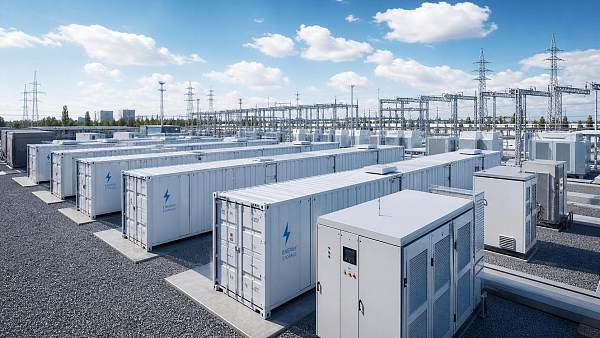
A battery container alone cannot solve that mismatch.
Neither can a fast charger cluster, an electrolyzer, or a long-distance transmission line operating in isolation.
The real value comes from how these assets are dispatched together, second by second and season by season.
That is why grid dispatch intelligence now sits at the center of modern low-carbon infrastructure planning.
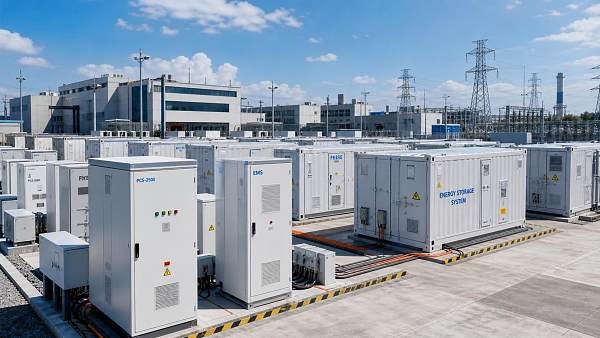
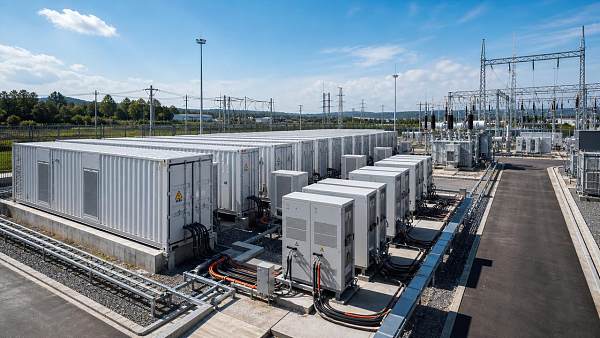
Across the ESGS ecosystem, this means linking BESS thermal discipline, smart T&D routing, UHV transfer capacity, V2G flexibility, and hydrogen conversion logic.
The common goal is simple to describe but difficult to execute.
Absorb volatile green power, release it at the right node, and keep safety, frequency, and asset returns inside acceptable boundaries.
Actual demand differs before the dispatch engine is even selected
In practice, renewable peak-shaving projects look similar on paper but behave very differently on site.
A coastal wind corridor faces ramp volatility and marine corrosion.
A desert PV base faces midday oversupply, long transmission distance, and transformer loading stress.
An urban charging hub sees steep evening peaks, fast response requirements, and distribution bottlenecks.
A green hydrogen cluster values curtailed power differently because conversion windows are longer.
These differences shape what grid dispatch intelligence must optimize.
Sometimes the priority is millisecond frequency support.
Sometimes it is battery life preservation, congestion relief, or minimum curtailment cost.
More advanced systems can do all four, but only when the dispatch logic matches the application context.
A useful way to compare scenario priorities
When solar oversupply meets long-distance transmission
One common peak-shaving case starts far from the consumption center.
Large PV fields can flood the local grid at noon, while industrial demand rises elsewhere hours later.
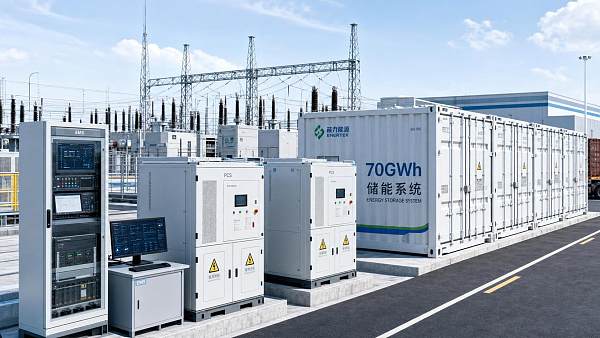
Here, grid dispatch intelligence must coordinate storage charging, transformer loading, and UHV export scheduling together.
The critical mistake is sizing BESS only against generation surplus.
In reality, dispatch quality depends on corridor congestion, substation flexibility, and the thermal limits of transmission equipment.
A well-designed strategy often reserves part of battery capacity for late ramp control instead of filling everything at noon.
That preserves headroom when cloud movement or downstream constraints suddenly change export conditions.
This is also where digital-twin modeling becomes useful.
It helps test whether dispatch commands still hold when ambient heat, PCS efficiency, and transformer stress shift at the same time.
Wind-linked storage needs faster judgment than many plans assume
Wind-heavy systems challenge grid dispatch intelligence in a different way.
The issue is not just surplus energy volume.
It is the speed of fluctuation and the way repeated ramps shorten useful battery life.
For this reason, dispatch logic should not chase every micro-variation with the same aggression.
A better approach separates response bands.
Ultra-fast actions stabilize frequency, while slower cycles manage energy balancing and market participation.
ESGS often frames this as a balance between absolute grid stability and high asset returns.
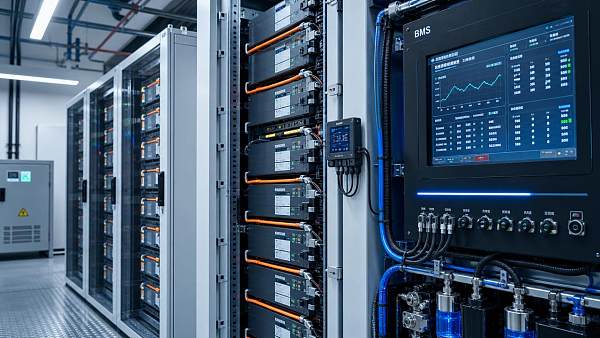
That balance only works when thermal management is treated as part of dispatch, not a separate maintenance topic.
If cell temperature spread widens, usable power and safety margin both narrow.
In peak-shaving terms, poor cooling discipline eventually becomes poor dispatch performance.
Urban charging hubs create a different kind of peak-shaving pressure
Fast-charging and swapping infrastructure may look like a demand problem, but it is really a dispatch coordination problem.
Even where total daily consumption is manageable, synchronized charging can overload feeders within minutes.
Grid dispatch intelligence in this setting must read charger occupancy, queue behavior, time-of-use signals, and local BESS state together.
The more mature sites also add V2G resources, turning parked vehicles into distributed flexibility.
That sounds attractive, but adaptation is not automatic.
Bidirectional availability depends on connection duration, user behavior, tariff design, and inverter compatibility.
A common misread is assuming charger count equals dispatchable capacity.
In reality, the better measure is controllable simultaneity under grid constraints.
Projects that model this early tend to avoid expensive cable upgrades and underused storage assets.
What deserves closer review before deployment
- Check whether dispatch commands include feeder, transformer, and PCS limits in one logic chain.
- Confirm that SOC policy protects reserve margin for faults, not only energy arbitrage.
- Review cooling performance under local climate, especially where summer peaks coincide with maximum cycling.
- Map control latency from sensor to execution, because slow data makes good algorithms look ineffective.
- Test compliance assumptions, including UL 9540A pathways and regional grid code requirements.
Hydrogen-linked dispatch works best when flexibility is valued correctly
Hydrogen projects widen the peak-shaving toolkit, but they change the dispatch rhythm.
Electrolyzers can absorb curtailed power that batteries may not want to cycle through repeatedly.
Still, grid dispatch intelligence should not treat them as a perfect substitute for storage.
PEM and ALK systems differ in ramp behavior, operating efficiency, and start-stop tolerance.
The practical question is not whether hydrogen can use surplus electricity.
It is when conversion creates more system value than preserving electrons for later discharge.
That judgment depends on curtailment frequency, storage degradation cost, power prices, and hydrogen offtake certainty.
Where these variables are unstable, dispatch rules need explicit switching thresholds rather than broad policy statements.
Common misjudgments that weaken grid dispatch intelligence
Several weak decisions appear repeatedly across renewable peak-shaving projects.
They usually come from treating connected assets as separate procurement packages instead of one operating system.
- Choosing battery duration without checking how UHV transfer schedules reshape discharge windows.
- Estimating revenue from peak-valley arbitrage while ignoring auxiliary service commitments.
- Judging response quality by inverter nameplate speed, not end-to-end communication latency.
- Assuming one dispatch model fits EV hubs, remote renewables, and hydrogen clusters equally well.
- Overlooking compliance and fire-safety constraints until export or permitting stages become delayed.
The stronger approach is to define dispatch value by site condition, control speed, safety margin, and revenue stack together.
A practical path for matching scenario conditions with dispatch logic
The most reliable projects usually begin with a narrow question.
Which problem is most expensive when the grid is stressed?
From there, grid dispatch intelligence can be matched to the right control stack.
If curtailment dominates, evaluate export corridors, BESS reserve logic, and hydrogen diversion thresholds together.
If urban peak spikes dominate, focus on charger simultaneity, feeder bottlenecks, and localized storage placement.
If ancillary services matter most, verify latency, telemetry quality, and temperature-controlled dispatch endurance.
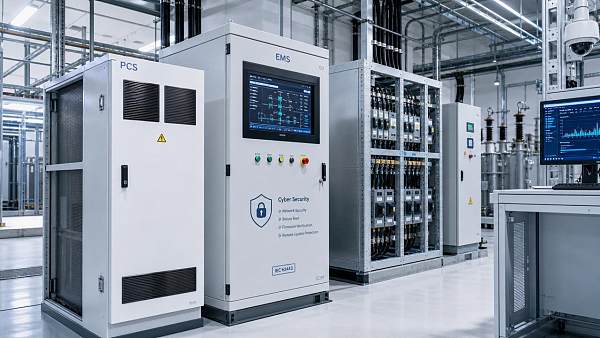
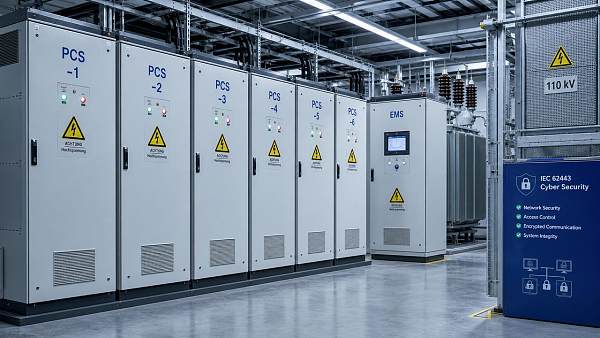
ESGS reflects this wider view by treating BESS containers, smart T&D equipment, UHV transformers, EV hubs, and hydrogen electrolyzers as one coordinated infrastructure fabric.
That perspective helps turn scattered assets into a controllable system rather than a collection of impressive hardware.
The next useful step is to map operating scenarios, rank dispatch priorities, and test them against real limits on safety, cost, and control speed.
That is where grid dispatch intelligence stops being a concept and starts becoming a durable peak-shaving advantage.
Related News
 Technical Comparison Resources for PCS and EMS Selection in BESS ProjectsGrid Storage ArchitectTechnical comparison resources for PCS and EMS selection in BESS projects: compare control logic, thermal safety, grid compliance, and lifecycle value to choose smarter, bankable storage solutions.
 Grid Dispatch Intelligence in Renewable Peak-Shaving ApplicationsGrid Storage ArchitectGrid dispatch intelligence drives smarter renewable peak-shaving by coordinating storage, transmission, EV charging, and hydrogen loads to cut curtailment, protect assets, and boost grid value.
 Can Smart Grid Neural Networks Improve EMS Forecast Accuracy?Grid Storage ArchitectSmart grid neural networks can improve EMS forecast accuracy by refining dispatch, storage timing, and grid response. See where real operational gains and ROI appear.
 DOE Safe Harbor Update Triggers PCS and EMS BuyingGrid Storage ArchitectDOE Safe Harbor Update reshapes PCS and EMS buying for 32 federally funded storage projects. See how new certification and VPP interface rules affect supplier access, procurement, and compliance planning.
 DOE Safe Harbor Update Triggers 70GWh PCS and EMS BuyingGrid Storage ArchitectDOE Safe Harbor update triggers 70GWh energy storage buying, putting PCS and EMS suppliers under new UL 1741 SA and FERC 2222 requirements. See who can bid now.
 DOE Safe Harbor Update Drives 70GWh PCS, EMS BuyingGrid Storage ArchitectDOE Safe Harbor update drives 70GWh PCS and EMS buying as projects enter procurement. Learn how UL 1741 SA, IEEE 1547-2024, and FERC 2222 shape vendor readiness.
 DOE Safe Harbor List Update Triggers 70GWh PCS and EMS BuyingGrid Storage ArchitectDOE Safe Harbor List update triggers 70.2GWh PCS and EMS buying in 2026 Q3-Q4. See how certifications, prequalification, and procurement timing can shape supplier access.
 Battery Management Systems: Common Faults and FixesGrid Storage ArchitectBattery management systems common faults and fixes: learn how to diagnose sensor drift, thermal imbalance, and communication loss across BESS, EV charging, and microgrid sites.
 DOE Safe Harbor Update Speeds PCS and EMS BuyingGrid Storage ArchitectDOE Safe Harbor update speeds PCS and EMS buying as 70–75GWh of U.S. storage projects move closer to procurement. See how FCC, IEEE 1547-2024, and VPP requirements reshape bids and delivery.
 Grid Resilience Technologies Compared: Which Options Perform Best in Outages?Grid Storage ArchitectGrid resilience technologies compared: discover how BESS, smart controls, UHV, V2G, and hydrogen perform in outages, and find the best fit for faster recovery and stronger grid reliability.
 Germany Enforces TR-03122 Cyber Certification for PCS and EMSGrid Storage ArchitectGermany enforces TR-03122 cyber certification for PCS and EMS, making compliance essential before the October 1, 2026 cutoff. Learn how this rule impacts sales, grid access, procurement, and delivery.
 Germany Moves Toward Mandatory PCS and EMS Cybersecurity CertificationGrid Storage ArchitectGermany moves toward mandatory PCS and EMS cybersecurity certification under draft TR-03122. Learn key deadlines, 90-day certification risks, and what exporters to Germany should prepare now.