Battery management systems fail differently when the operating context changes
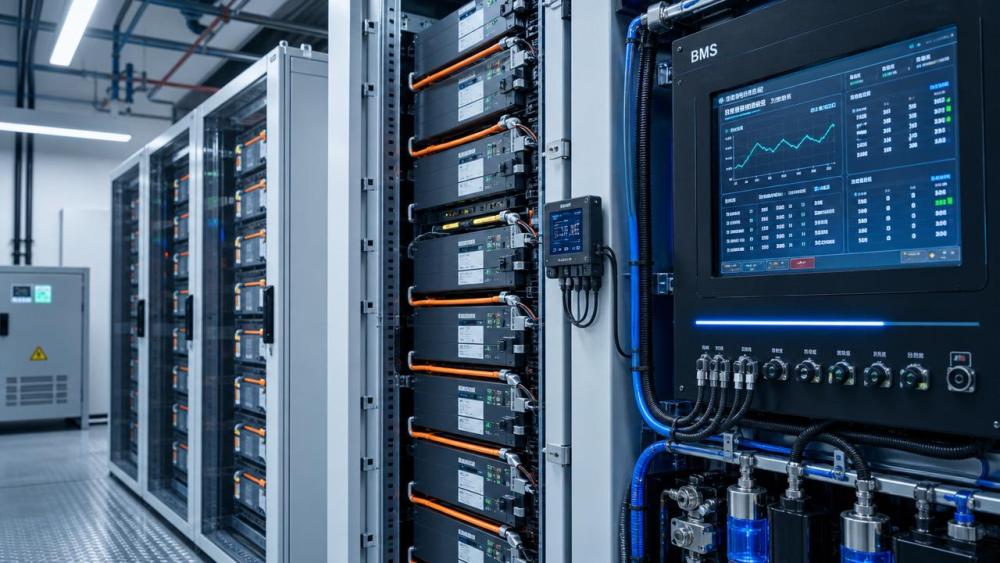
Battery management systems sit at the safety edge of modern electrification. They protect cells, preserve usable energy, and keep larger assets within safe operating limits.
That sounds universal, yet faults rarely look universal in the field. A warning inside a grid-scale BESS container does not carry the same urgency as one inside a fast-charging hub.
In practical service work, the real question is not only what failed. It is where the battery management systems failed, under what load profile, and what downstream equipment depends on them.
This matters across the ESGS landscape. Battery thermodynamic control, millisecond-level dispatch, liquid cooling stability, and asset uptime all converge on how battery management systems sense, interpret, and act.
Common faults such as sensor drift, communication loss, thermal imbalance, and false alarms often begin as small data quality issues. Left uncorrected, they distort dispatch decisions, stress cells, and expand maintenance risk.
A useful troubleshooting approach starts with scenario judgment. The same voltage deviation may indicate connector corrosion in one site, calibration drift in another, or cooling asymmetry somewhere else.
Why the same battery management systems fault leads to different priorities
Different applications shape fault behavior because duty cycles are different. Grid storage, EV charging support, microgrids, and hybrid renewable systems stress batteries in distinct ways.
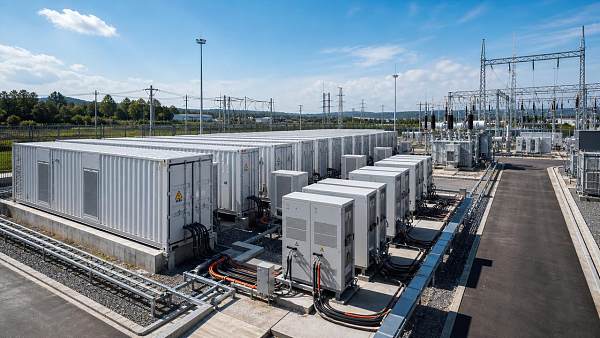
A utility-scale BESS container often sees frequent cycling, peak shaving, and PCS interaction. Here, battery management systems must track consistency across many racks, not just single-module health.
At a charging and swapping hub, fast transients dominate. Voltage sag, bus communication delay, or a delayed contactor response can quickly interrupt service and trigger protective shutdowns.
In renewable smoothing projects, ambient variation matters more. Large daytime heating, cold nights, and irregular charging windows often expose weak thermal mapping or poor SOC estimation logic.
The better field practice is to rank faults by operational consequence. Safety first, then cell protection, then dispatch availability, and only after that, convenience alarms or reporting gaps.
A quick comparison helps narrow the diagnostic path
Inside BESS containers, thermal imbalance is often the fault behind the alarm
In large storage containers, battery management systems rarely fail in isolation. They interact continuously with HVAC, liquid cooling loops, PCS commands, and fire safety logic.
One common pattern is recurring high-temperature spread alarms without obvious overcurrent events. On paper, cells still look healthy. In operation, temperature delta keeps widening during charge windows.
This usually points to uneven heat extraction, blocked coolant paths, aging thermal pads, or temperature sensor drift. Replacing a board too early often misses the root cause.
Another frequent issue is false imbalance reporting after firmware changes. If sampling timing, balancing thresholds, or rack addressing changed, battery management systems can flag normal variance as a fault.
In real sites, the strongest diagnostic move is correlation. Compare alarm timestamps against coolant pump status, ambient swings, PCS dispatch pulses, and rack-level voltage spread.
Where UL 9540A risk awareness is high, any thermal anomaly deserves faster escalation. The goal is not just to clear alarms, but to stop slow pathways toward thermal runaway propagation.
What usually fixes the issue
- Validate sensor readings with an external calibrated reference before replacing modules.
- Inspect coolant flow balance, valve position, and pump response under peak thermal load.
- Review balancing parameters after software updates or rack expansion.
- Check whether the fault appears only during specific dispatch windows.
At charging and swapping hubs, communication loss can look like a battery fault
Battery management systems in mobility energy hubs work under sharper power ramps. The operating window is tighter because service interruption becomes visible almost immediately.
A site may report sudden battery isolation, yet the cells are not the problem. The deeper issue may be CAN instability, poor shielding, grounding noise, or an intermittent connector.
These environments combine chargers, converters, thermal equipment, and often V2G controls. Electromagnetic complexity increases the chance that battery management systems lose clean communication during stress events.
A useful clue is timing. If alarms appear exactly when high-voltage charging ramps begin, investigate signal integrity before assuming internal battery deterioration.
Another clue is asymmetry between logs. If the charger, EMS, and battery management systems disagree about current or contactor state, the fault may be coordination rather than chemistry.
This is where quick fixes can create future failures. Clearing codes without checking cable routing, grounding continuity, and firmware compatibility usually invites repeat downtime.
Remote and hybrid energy sites depend on accurate estimation more than dramatic alarms
In islanded microgrids or renewable-coupled storage, battery management systems often face irregular cycling rather than continuous high throughput. That shifts the weak point toward estimation quality.
SOC drift is especially disruptive here. The site may shut down loads early, refuse available charge, or keep too much reserve because the battery management systems model no longer reflects real battery aging.
The symptoms can be misleading. Operators may suspect capacity loss, while the actual issue is stale calibration, poor coulomb counting recovery, or temperature compensation errors.
In these cases, a clean alarm log is not proof of healthy control. Battery management systems can be wrong quietly, especially after months of partial cycling and long standby periods.
A stronger field method is to compare estimated SOC, delivered energy, and open-circuit recovery behavior over several operating windows. One snapshot rarely tells the whole story.
Where misjudgment happens most often
- Assuming low available energy always means cell degradation.
- Treating all partial-cycle sites like daily full-cycle systems.
- Ignoring seasonal temperature effects on battery management systems estimation.
- Focusing on replacement cost before checking calibration logic.
Different faults demand different verification depth
Not every fault deserves the same response time, but every fault needs the right verification depth. That is where many troubleshooting routines either waste time or accept hidden risk.
For battery management systems, a practical rule is to separate protection faults from information faults. Protection faults affect safe operation directly. Information faults degrade decision quality first.
What teams often overlook before replacing battery management systems hardware
Hardware replacement is sometimes necessary, but it is often used too early. Many recurring battery management systems faults begin outside the controller itself.
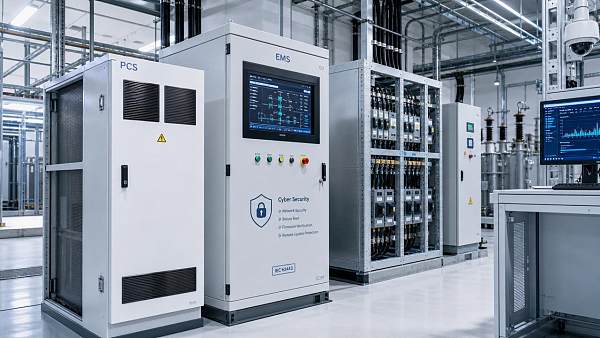
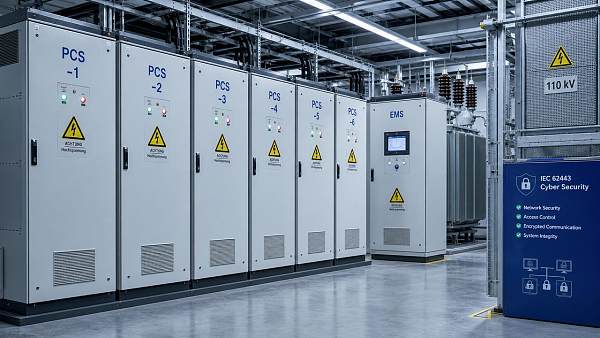
Connector oxidation, grounding inconsistency, coolant distribution errors, and version mismatch between BMS, EMS, and PCS can all mimic a failing board.
Another blind spot is history. A site that recently expanded capacity, updated firmware, or changed dispatch strategy should be reviewed as a changed system, not the old baseline.
That is especially relevant in ESGS-monitored infrastructure, where battery behavior is linked with digital twins, VPP coordination, and high-value grid services. Small data errors can distort larger control decisions.
The more reliable sequence is simple: confirm the symptom, map the conditions, validate measurements, then replace parts only after the surrounding control chain makes sense.
A practical next step is to build fault judgment around operating conditions
Battery management systems become easier to troubleshoot when the site keeps a condition-based checklist instead of a generic alarm list. That reduces repeat visits and unnecessary module swaps.
Start by grouping recent faults by context: charging surge, cooling transition, dispatch ramp, idle standby, or ambient shift. Then compare which measurements stayed credible and which did not.
Next, define what must be verified each time. For example, reference temperature checks, communication quality snapshots, balancing status, and firmware consistency can be standardized across sites.
Where battery management systems support critical BESS containers or charging infrastructure, include thermal propagation risk, uptime impact, and control-chain compatibility in the final judgment.
That approach turns fault handling into an operational discipline. It also fits the broader energy transition reality, where storage assets, grid flexibility, and safe high-power operation are tightly connected.
A good next move is to map your own applications, compare fault patterns by operating scenario, and refine a battery management systems checklist that matches real site conditions rather than generic assumptions.
Related News
 Battery Management Systems: Common Faults and FixesGrid Storage ArchitectBattery management systems common faults and fixes: learn how to diagnose sensor drift, thermal imbalance, and communication loss across BESS, EV charging, and microgrid sites.
 DOE Safe Harbor Update Speeds PCS and EMS BuyingGrid Storage ArchitectDOE Safe Harbor update speeds PCS and EMS buying as 70–75GWh of U.S. storage projects move closer to procurement. See how FCC, IEEE 1547-2024, and VPP requirements reshape bids and delivery.
 Grid Resilience Technologies Compared: Which Options Perform Best in Outages?Grid Storage ArchitectGrid resilience technologies compared: discover how BESS, smart controls, UHV, V2G, and hydrogen perform in outages, and find the best fit for faster recovery and stronger grid reliability.
 Germany Enforces TR-03122 Cyber Certification for PCS and EMSGrid Storage ArchitectGermany enforces TR-03122 cyber certification for PCS and EMS, making compliance essential before the October 1, 2026 cutoff. Learn how this rule impacts sales, grid access, procurement, and delivery.
 Germany Moves Toward Mandatory PCS and EMS Cybersecurity CertificationGrid Storage ArchitectGermany moves toward mandatory PCS and EMS cybersecurity certification under draft TR-03122. Learn key deadlines, 90-day certification risks, and what exporters to Germany should prepare now.
 SNEC 2026 Signals Storage-Led Procurement ShiftGrid Storage ArchitectSNEC 2026 signals a storage-led procurement shift as AI dispatch, grid-forming PCS, and integrated BESS solutions replace hardware-only bids. Discover what buyers and suppliers must do next.
 How Energy Intelligence Platforms Reduce Dispatch Blind SpotsGrid Storage ArchitectEnergy intelligence platforms reduce dispatch blind spots by unifying grid, BESS, charging, and market data. Learn how they improve visibility, reliability, and faster operational decisions.
 PCS Systems Sizing Mistakes That Hurt Storage PerformanceGrid Storage ArchitectPCS systems sizing mistakes can quietly cut storage output, speed, and revenue. Learn the key risks, warning signs, and smart evaluation steps to improve BESS performance.
![]() DOE Tightens PCS Entry Rules for U.S. C&I StorageGrid Storage ArchitectDOE tightens PCS entry rules for U.S. C&I storage from Oct. 1, 2026. Learn how IEEE 1547-2024 impacts certification, ENERGY STAR, procurement, and incentives.
DOE Tightens PCS Entry Rules for U.S. C&I StorageGrid Storage ArchitectDOE tightens PCS entry rules for U.S. C&I storage from Oct. 1, 2026. Learn how IEEE 1547-2024 impacts certification, ENERGY STAR, procurement, and incentives.![]() China and Germany Sign PCS/EMS Certification MOUGrid Storage ArchitectChina and Germany sign PCS/EMS certification MOU, enabling mutual recognition for energy storage exports. Learn how faster 1MW+ certification can boost market access and delivery timelines.
China and Germany Sign PCS/EMS Certification MOUGrid Storage ArchitectChina and Germany sign PCS/EMS certification MOU, enabling mutual recognition for energy storage exports. Learn how faster 1MW+ certification can boost market access and delivery timelines. Grid-Scale Energy Storage: When PCS and EMS Matter MostGrid Storage ArchitectGrid-scale energy storage succeeds when PCS and EMS optimize safety, dispatch, revenue, and grid stability. Learn what to evaluate before investing.
![]() China Cracks Down on Offshore Securities Cross-Border OperationsGrid Storage ArchitectChina cracks down on offshore securities cross-border operations—impacting energy tech, VPPs & fintech. Key insights on compliance, penalties & strategic pivots.
China Cracks Down on Offshore Securities Cross-Border OperationsGrid Storage ArchitectChina cracks down on offshore securities cross-border operations—impacting energy tech, VPPs & fintech. Key insights on compliance, penalties & strategic pivots.