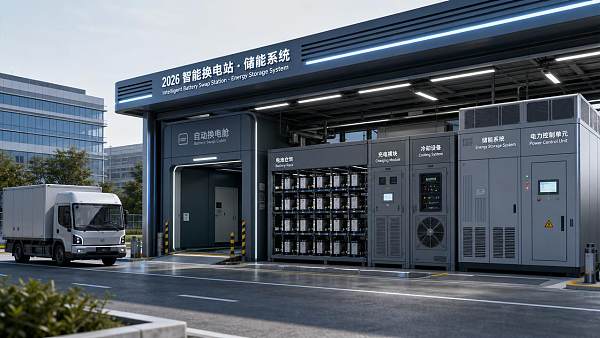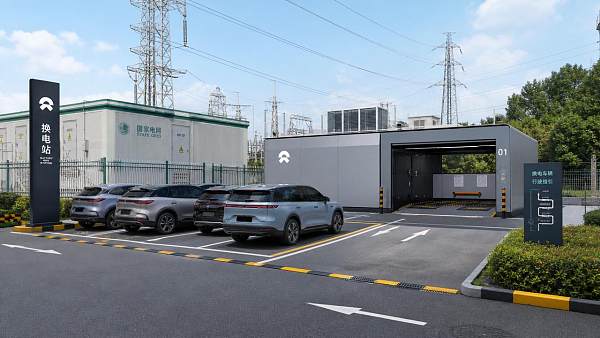
In battery swapping infrastructure, uptime and safety are won or lost in the details of heat control, contact integrity, automation precision, fire protection, and power quality. For quality control and safety managers, the key question is not whether swapping is fast, but whether every swap can remain repeatable, traceable, and safe under heavy operating cycles.
The core search intent behind this topic is practical evaluation. Readers want to know which engineering and operational factors most directly determine station availability, failure rates, incident risk, and compliance readiness. They are looking for a framework to assess real-world performance, not just headline swap speed.
For this audience, the biggest concerns are usually connector wear, battery alignment accuracy, thermal runaway prevention, emergency response design, software interlocks, and the ability of the station to maintain stable service during demand peaks. They also need to understand which indicators should be monitored before small faults become service interruptions or safety events.
The most useful way to answer that need is to focus on the systems that actually govern uptime and safety: battery thermal management, mechanical and electrical interfaces, automation and sensing, fire and ventilation design, preventive maintenance, and coordination with the grid. Broader market narratives matter less here and should remain secondary.
Why uptime and safety in battery swapping infrastructure are inseparable

In practice, uptime and safety are not separate goals. The same weaknesses that create hazards also cause downtime. A misaligned pack, degraded connector, overheating module, or sensor drift issue can first appear as a minor service error, then escalate into a station shutdown or a serious event.
That is why battery swapping infrastructure should be assessed as a tightly coupled system. Mechanical handling, battery diagnostics, enclosure cooling, suppression equipment, software controls, and power conversion all interact. When one layer underperforms, the station often compensates by slowing operations, increasing alarms, or reducing usable capacity.
For quality and safety teams, the right objective is controlled repeatability. A high-performing station is not simply one that swaps in minutes. It is one that can complete thousands of cycles with low deviation in contact resistance, pack temperature, robotic positioning, and fault response behavior.
This perspective changes procurement and inspection priorities. Instead of asking only how many swaps per day a site can claim, managers should ask how the system behaves after months of connector cycling, during summer heat, under battery state-of-charge variation, and during grid disturbances or communication failures.
Thermal management is often the first determinant of reliable operation
Temperature control sits at the center of both safety and uptime. In a battery swapping station, packs may arrive with different temperatures, states of health, and charging histories. If the station cannot stabilize those differences, performance variability increases and the risk of accelerated degradation or thermal incidents rises.
The challenge is not limited to the battery pack itself. Heat also builds in charge-discharge electronics, busbars, connectors, and enclosed storage racks. Even modest thermal imbalance can create repeated derating, longer charging times, sensor alarms, and premature component wear, all of which reduce station availability.
For this reason, quality control teams should verify whether the thermal design manages both steady-state and transient loads. It should maintain narrow temperature spread across stored packs, keep electronics within rated limits, and respond quickly when ambient conditions or charging intensity change.
Useful inspection points include temperature uniformity between rack positions, coolant or airflow redundancy, hotspot detection logic, and the accuracy of thermal sensors under different operating modes. If thermal readings are unstable or poorly calibrated, operators may either miss a real hazard or trigger unnecessary shutdowns.
Thermal strategy also affects recovery after abnormal events. Stations with stronger thermal isolation and monitoring can quarantine a suspect pack without suspending the whole operation. That directly improves uptime while reducing the chance that one abnormal battery propagates risk across adjacent inventory.
Connector reliability and mechanical precision decide whether every swap is repeatable
Battery swapping infrastructure depends on repeated high-current connection and disconnection. Over time, connector surfaces degrade, contact force changes, and contamination accumulates. Even small shifts in resistance can increase heat generation, create intermittent faults, and reduce confidence in the swap process.
Mechanical precision matters just as much. Robotic systems must position heavy battery packs within tight tolerances while compensating for vibration, wear, vehicle variation, and imperfect alignment in real-world use. A station that performs well in demonstration conditions may struggle once cycle counts rise.
Safety managers should pay close attention to the design margin of guide rails, locking systems, mating interfaces, and anti-misalignment features. Good hardware design prevents partial insertion, false locking, and connector damage. Good control logic verifies that the physical state matches the commanded state before energization.
Inspection programs should include contact resistance trending, visual checks for pitting and discoloration, torque or locking-force verification, and review of swap error logs tied to alignment corrections. These records often reveal failure patterns long before a station experiences visible service disruption.
It is also important to distinguish between recoverable faults and structural weakness. An occasional retry may be acceptable. Frequent retries, rising connection temperatures, or increasing alignment offsets usually indicate the system is consuming its reliability margin and moving toward either downtime or a safety incident.
Automation, sensing, and interlocks are the control layer that protects the station
Modern battery swapping infrastructure is only as safe as its control architecture. Sensors, software, and interlocks determine whether the station can correctly identify battery condition, confirm vehicle positioning, detect foreign objects, prevent unsafe energization, and isolate a fault before it spreads.
For QC teams, the critical issue is not the number of sensors but the trustworthiness of the decision chain. A safe station should cross-check key states rather than rely on a single signal. Pack identification, connector status, insulation monitoring, temperature alarms, and access-door states should all be validated in sequence.
Automation accuracy directly influences uptime. If vision systems, proximity sensors, or battery management communication are unstable, the station will produce nuisance alarms, repeated retries, and unnecessary service interruption. Poor signal quality often looks like an operations problem when it is really a controls quality issue.
Safety review should therefore include functional testing of interlocks, fail-safe defaults during communication loss, event logging granularity, and response times for abnormal condition detection. The question is simple: when one part of the system fails, does the station fail safely and recover predictably?
Data quality is especially important. Without reliable timestamps, fault categorization, and root-cause tagging, even well-equipped stations become difficult to improve. A mature swapping operation treats logs and diagnostic data as safety assets, because they turn recurring small anomalies into actionable preventive maintenance.
Fire protection and abnormal battery isolation define the station’s last line of defense
Even with strong preventive design, battery swapping stations must be prepared for abnormal packs. A damaged, overcharged, internally shorted, or thermally unstable battery may enter the station through normal service flow. The infrastructure must therefore assume that hazardous conditions can arrive from outside.
The most robust stations are designed to detect, isolate, and contain such events without cascading impact. That means separating suspect batteries from healthy inventory, controlling ventilation paths, limiting thermal propagation, and ensuring operators can trigger emergency procedures without entering dangerous zones.
Quality and safety managers should review whether the station’s fire strategy is matched to lithium battery risk rather than generic electrical fire assumptions. Detection, suppression, smoke handling, exhaust design, and emergency shutdown logic should work together. A station that only adds extinguishers without integrated isolation logic is not enough.
Emergency drills should also reflect realistic scenarios. These include a battery arriving hot, a thermal alarm during storage, off-gas detection before visible flame, failed pack communication during charging, or a robot stopping with a pack mid-transfer. Response plans must be timed, documented, and repeatedly tested.
What matters most is containment performance. A well-designed site may still experience a battery defect, but it should prevent pack-to-pack propagation, maintain clear evacuation logic, and protect adjacent systems. In risk terms, that is the difference between a manageable event and a multi-system shutdown.
Grid coordination and power system stability are hidden drivers of station uptime
Battery swapping infrastructure is often discussed as a mobility asset, but from an operational perspective it is also a dense power node. Multiple batteries charging simultaneously, auxiliary cooling loads, and rapid demand swings can expose weaknesses in distribution capacity, harmonics management, and backup power design.
If the local grid interface is unstable, the station may see repeated trips, slower charging, or reduced battery readiness, even if the swapping machinery itself is functioning correctly. That is why uptime analysis must include transformer sizing, switchgear reliability, protection coordination, and power quality performance.
For safety managers, poor grid coordination can also create indirect risk. Voltage instability, grounding problems, or switching transients may stress charging electronics and insulation systems. Over time, these issues can contribute to hidden degradation that later appears as equipment failure or abnormal heating.
Useful checkpoints include demand profile matching, redundancy for critical loads, harmonic filtering effectiveness, black-start or backup strategies, and the station’s ability to prioritize essential systems during partial power loss. A station should degrade gracefully rather than collapse into full outage when utility conditions fluctuate.
In advanced deployments, software can improve this picture by scheduling battery charging against tariff windows, feeder constraints, and battery temperature status. That kind of coordination supports both economics and equipment protection, but only when data visibility and dispatch logic are robust.
Maintenance quality is what turns good design into sustained performance
Many battery swapping stations begin with strong specifications but lose performance because maintenance regimes are too generic. High-cycle electromechanical systems need targeted inspection intervals based on stress points, not broad calendar-based routines that ignore the actual wear profile of the station.
For quality teams, the most valuable maintenance approach is condition-based and trend-driven. Connector temperature rise, contact resistance drift, fan or pump current changes, actuator cycle counts, retry frequency, insulation readings, and alarm recurrence all provide early warning of declining reliability.
These indicators should be tied to action thresholds. If metrics are collected but not linked to maintenance decisions, the station gains visibility without gaining control. Effective programs define what constitutes normal drift, what requires planned intervention, and what demands immediate shutdown or pack quarantine.
Supplier management is also part of maintenance quality. Replacement parts must maintain the same tolerances, electrical ratings, and traceability as original components. Inconsistent spare quality can undermine a station faster than apparent overuse, especially in connectors, sealing elements, sensors, and thermal interfaces.
Documentation closes the loop. Every abnormal event, replaced part, software update, and recalibration should be linked to asset history. This allows teams to identify whether problems cluster around a component family, a battery batch, an environmental condition, or an operating shift.
What quality control and safety managers should measure first
When evaluating battery swapping infrastructure, managers should start with a compact set of indicators that connect directly to uptime and safety. These include successful swap rate, mean recovery time after fault, connector temperature trend, contact resistance drift, pack temperature spread, and abnormal battery isolation frequency.
They should also monitor false alarm rate, retry frequency per swap, actuator positioning deviation, insulation fault occurrence, communication loss events, and charging derating hours. Together, these metrics reveal whether the station is operating with stable margins or merely appearing available on the surface.
From a safety perspective, incident-free days alone are not enough. Leading indicators are more useful than lagging ones. A station that has no major events but shows rising hotspot frequency, repeated interlock overrides, or expanding alignment correction may already be moving toward unacceptable risk.
For investment or procurement decisions, ask vendors to provide cycle-life data for connectors and moving parts, abnormal scenario test results, thermal propagation mitigation methods, and actual fault recovery logic. The quality of these answers often says more than headline throughput numbers.
Ultimately, the best battery swapping infrastructure is not the one with the most aggressive marketing claim. It is the one that demonstrates stable, auditable, and repeatable performance across thousands of cycles while preserving clear safety margins in thermal, electrical, mechanical, and software domains.
Conclusion: the best battery swapping infrastructure is engineered for controlled consistency
For quality control and safety managers, the main takeaway is clear: uptime and safety in battery swapping infrastructure are determined by system discipline, not by swap speed alone. Thermal control, connector durability, automation reliability, fire readiness, maintenance quality, and grid coordination all decide whether a station performs safely at scale.
If one of these layers is weak, the station will eventually pay through nuisance alarms, lower availability, accelerated wear, or serious incidents. If these layers are designed and managed together, swapping can become a highly reliable part of EV energy infrastructure rather than a high-speed operational risk.
The right evaluation mindset is therefore practical and evidence-based. Look for repeatability, fault tolerance, traceable maintenance, and real abnormal-condition handling. In the end, safe uptime is not an extra feature of battery swapping infrastructure. It is the proof that the infrastructure is genuinely mature.
Related News
 Battery Swapping Stations: Cost and Uptime Trade-Offs in 2026EV Infrastructure ExpertBattery swapping stations in 2026 face a real test: balancing cost, uptime, and grid integration. Explore where swapping delivers durable value and where fast charging may win.
 Battery Swapping Infrastructure: What Determines Uptime and SafetyEV Infrastructure ExpertBattery swapping infrastructure uptime and safety depend on thermal control, connector reliability, automation, and fire protection. Learn what to assess before failures disrupt service.
 Battery Swapping Stations: Site Selection Mistakes to AvoidEV Infrastructure ExpertBattery swapping stations succeed or fail on location. Discover the site selection mistakes that hurt safety, utilization, grid access, and ROI—and how to choose smarter sites.