Why are 2026 grid resilience standards drawing so much attention?
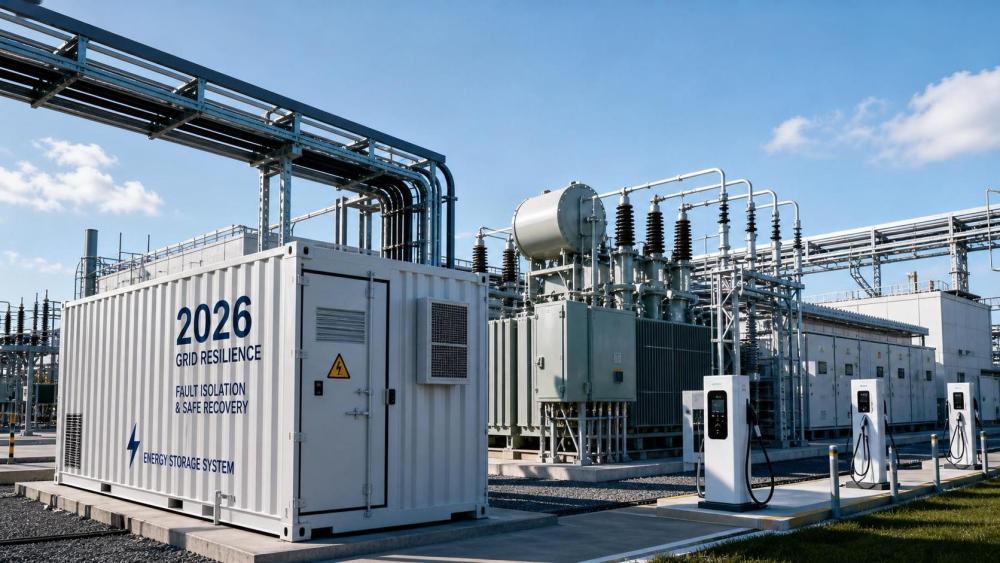
Grid resilience is no longer a narrow utility topic. It now affects storage sites, substations, charging hubs, hydrogen projects, and long-distance transmission assets.
The pressure comes from several directions at once. Weather events are harsher, cyber incidents are more frequent, and electrification is pushing networks harder than many designs expected.
That is why 2026 matters. A new wave of requirements is tightening expectations around fault isolation, thermal event response, backup architecture, and recovery time.
In practical terms, grid resilience standards are moving from broad policy language into auditable technical criteria. That shift changes how compliance is checked and how risk is documented.
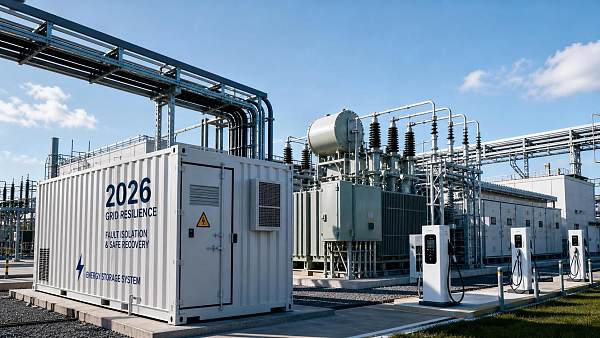
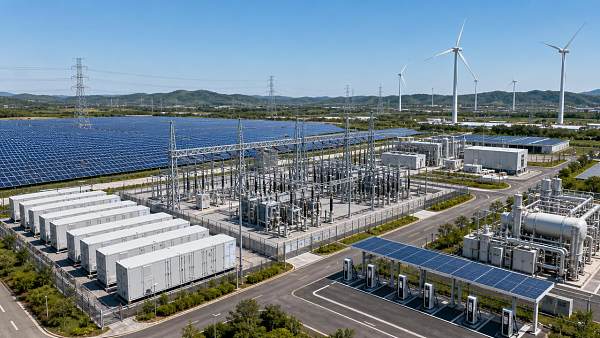
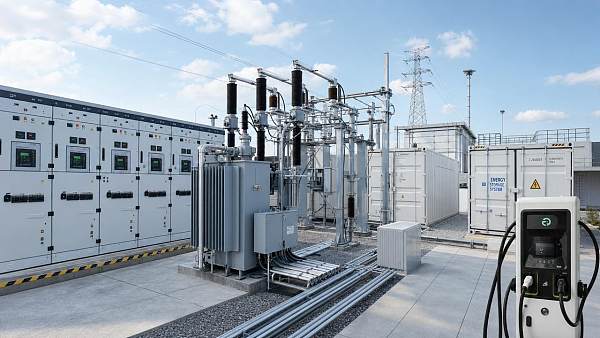
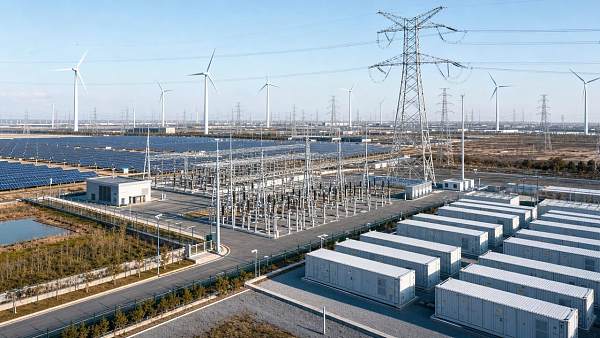
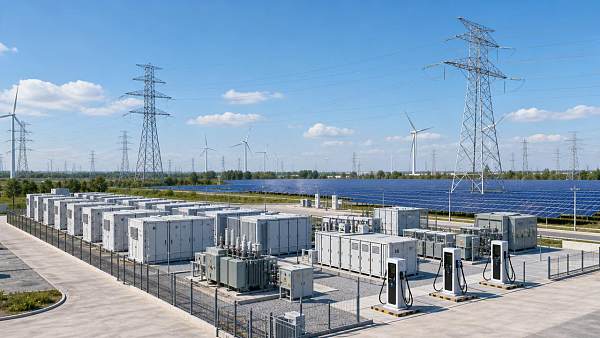
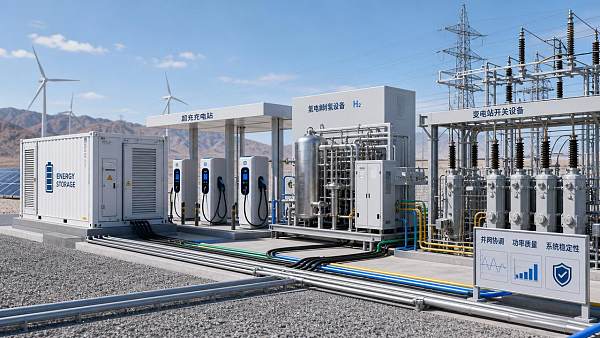
This is especially relevant across the systems tracked by ESGS. Grid-scale BESS containers, UHV transformers, HVDC equipment, V2G charging networks, and electrolyzer-linked loads all depend on resilient operating boundaries.
A weak point in one layer can ripple into another. A battery thermal event can affect feeder stability. A control software outage can reduce dispatch visibility. A transformer protection misconfiguration can delay restoration.
So when people search for grid resilience in 2026, they are often asking a deeper question: which standards will actually change inspection, design approval, and incident readiness?
Which standards are most likely to shape grid resilience decisions in 2026?
There is no single master standard. Grid resilience is built through overlapping electrical, fire, cyber, and operational frameworks.
The most watched set includes utility reliability rules, battery safety test methods, substation automation guidance, and cyber security baselines for critical infrastructure.
For BESS projects, UL 9540 and UL 9540A remain central because they influence fire protection design, separation strategy, and emergency response planning.
For bulk power and transmission, NERC reliability standards continue to matter, especially where disturbance response, critical asset management, and cyber controls intersect with grid resilience goals.
IEC standards also deserve close attention. IEC 61850 affects communication reliability inside substations. IEC 62443 supports industrial cyber security architecture. IEC 62933 influences electrical energy storage system guidance.
More local codes also matter. NFPA 855, fire authority rules, utility interconnection requirements, and regional transmission policies often decide what is acceptable on the ground.
A useful way to track them is not by title alone, but by what they force a team to prove.
The pattern is clear. Stronger grid resilience depends on proof, not intention.
How do these standards affect BESS, UHV transmission, EV charging, and hydrogen systems differently?
The phrase grid resilience sounds universal, but the failure modes vary a lot by asset type. That is where many compliance plans become too generic.
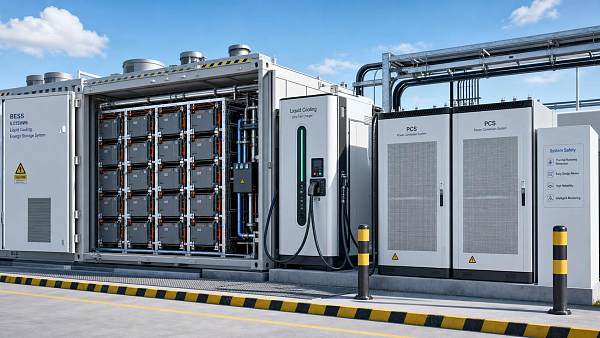
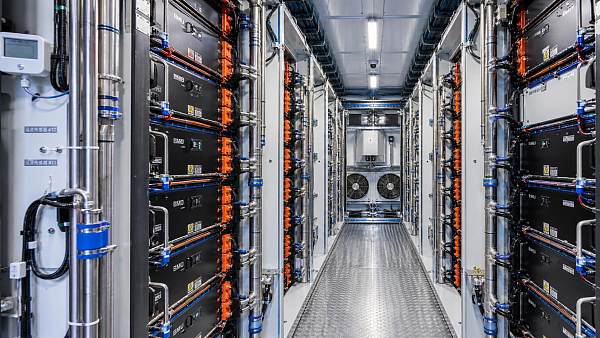
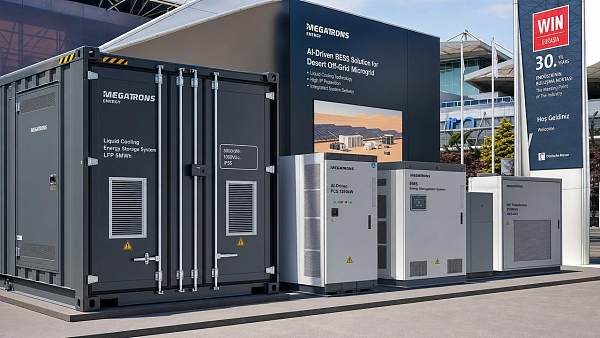
For grid-scale BESS containers, the focus is usually thermal containment, battery management integrity, enclosure ventilation, and coordinated shutdown logic.
In actual deployment, liquid cooling performance becomes part of resilience. A narrow cell temperature spread helps avoid hidden stress that later appears during peak dispatch.
For UHV power transformers and HVDC equipment, the concern shifts toward insulation health, protection selectivity, surge endurance, and black-start or re-energization sequencing.
With EV charging and swapping infrastructure, the question is less about one charger failing. The bigger issue is aggregated control behavior during demand spikes, communication loss, or V2G dispatch errors.
Hydrogen electrolyzers add another layer. They are flexible loads, but they can also amplify instability if ramp rates, power quality tolerances, or protection coordination are poorly defined.
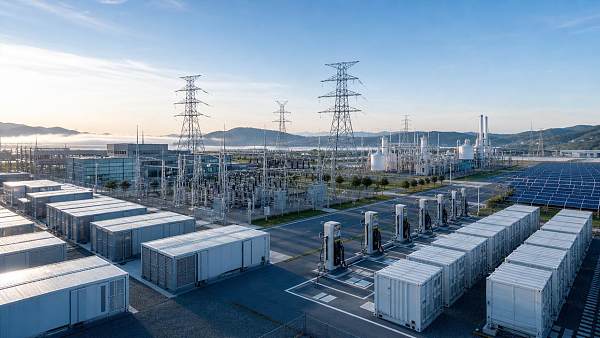
ESGS often frames these assets as connected parts of the same energy circulation system. That view is useful because resilience failures increasingly cross technology boundaries.
A site may pass equipment-level tests and still fail system-level resilience. That usually happens when interfaces are not validated with real operating scenarios.
What should be checked first when evaluating grid resilience compliance?
A good starting point is to separate paper compliance from operational resilience. Certificates matter, but they do not automatically prove recoverability under stress.
The first check is system boundaries. Many incidents escalate because ownership of controls, alarms, or trip logic is split across vendors.
The second check is event sequence clarity. If a fault occurs, who detects it, who isolates it, and how quickly can normal service resume?
The third check is evidence quality. Test reports should reflect operating conditions, not only laboratory best cases.
- Verify whether grid resilience claims include both steady-state and transient conditions.
- Review protection coordination across batteries, inverters, transformers, breakers, and EMS layers.
- Confirm cyber recovery steps, not only preventive cyber controls.
- Check whether thermal, electrical, and software alarms are time-synchronized.
- Look for restoration drills, not only design documents.
A practical review often reveals a familiar gap. The site may be well protected against single failures, but poorly prepared for compound events.
That matters in 2026 because grid resilience standards are increasingly asking whether systems fail safely, recover predictably, and communicate clearly during abnormal conditions.
Where do teams usually misread the new grid resilience trend?
One common mistake is treating grid resilience as a synonym for redundancy. Backup equipment helps, but resilience also depends on detection quality, control logic, and trained response.
Another mistake is focusing only on physical assets. In modern energy systems, communications, firmware governance, and remote command integrity are part of resilience too.
There is also a timing problem. Some teams wait for final code adoption before preparing. By then, design choices may already be costly to reverse.
This is especially true for BESS exports and multi-country projects. Test expectations, fire authority interpretation, and cyber documentation formats can diverge even when standard names look familiar.
A quieter risk sits in performance data. If monitoring systems cannot correlate heat, power flow, and control actions at useful resolution, post-event analysis becomes guesswork.
That is why ESGS places so much emphasis on stitching together thermal management, millisecond-level dispatch behavior, and asset-level safety evidence.
Grid resilience is not just about surviving disruption. It is about proving why the system behaved the way it did.
How can organizations prepare now without overbuilding?
The best approach is selective readiness. Build a compliance map around the failures most likely to interrupt service, trigger safety escalation, or delay restoration.
Start with the assets that carry the most system consequence. For some sites, that is the BESS block. For others, it is a transformer bay, a control gateway, or a charger aggregation platform.
Then compare current evidence against likely 2026 expectations. The gaps are often less about buying equipment and more about documentation, testing scope, and response coordination.
A simple planning framework can help.
If there is one takeaway, it is this: the most valuable grid resilience work in 2026 will be cross-functional, scenario-based, and evidence-driven.
Before the next audit cycle or project gate, review which standards influence your asset mix, where recovery assumptions remain untested, and which interfaces carry the highest consequence.
That kind of preparation is usually more effective than adding blanket redundancy. It creates a clearer path to safer operations, faster restoration, and stronger grid resilience under real-world stress.
Related News
 Grid Resilience Standards to Watch in 2026Dr. Valeria ThorneGrid resilience standards to watch in 2026: explore UL 9540, NERC, IEC 61850, IEC 62443, and NFPA 855 shaping BESS, EV charging, hydrogen, and transmission compliance.
 Thermal Runaway Prevention: 7 Design Risks to Check EarlyDr. Valeria ThorneThermal runaway prevention starts early. Discover 7 design risks in BESS, charging hubs, and grid systems to improve safety, compliance, and uptime.
 Smart Grid Technology Standards That Matter for Grid ComplianceDr. Valeria ThorneSmart grid technology standards shape compliance, safety, interoperability, and project bankability. Learn which standards matter most and how to reduce grid approval risk.
 What Grid Stability Means for New Energy Storage ProjectsDr. Valeria ThorneGrid stability shapes the success of new energy storage projects, affecting safety, interconnection, dispatch value, and returns. Learn what developers must assess before investing.
 Thermal Management Failures in BESS and How to Prevent ThemDr. Valeria ThorneThermal management failures in BESS can trigger safety, uptime, and compliance risks. Learn the early warning signs and practical steps to prevent costly heat-related events.
 Zero-Carbon Grids: Key Stability Gaps and FixesDr. Valeria ThorneZero-carbon grids face hidden stability gaps beyond renewable capacity. Learn how BESS, transmission, EV charging, and hydrogen fixes improve resilience and grid performance.
 Smart Grid Technology Standards: Key Compliance Risks to CheckDr. Valeria ThorneSmart grid technology standards: discover the key compliance risks in protection, interoperability, thermal safety, grid codes, and cybersecurity to avoid costly delays and system failures.
 Grid Stability Risks: Common Weak Points in High-Renewable Power SystemsDr. Valeria ThorneGrid stability risks are rising in high-renewable power systems. Explore weak points, project delivery impacts, and practical fixes to cut curtailment, delay, and compliance risk.
 Turkey Fair Signals New Entry Rules for Smart BESSDr. Valeria ThorneTurkey Fair signals new entry rules for Smart BESS as Middle Eastern buyers prioritize IEC 62443-3-3, IP65+IK10, and integrated BESS+PCS+EMS delivery. Discover what exporters must prepare now.
 Grid Stability Challenges in 2026: What Changes With More Renewables?Dr. Valeria ThorneGrid stability is being redefined in 2026 as renewables scale. Discover how storage, transmission, smart charging, and hydrogen can protect reliability and unlock long-term value.
 Clean Energy Integration Risks: Grid Code Gaps to Check EarlyDr. Valeria ThorneClean energy integration starts failing before commissioning when grid code gaps go unchecked. Learn the early risks, costly failure points, and smart review steps to protect project timelines.
 Smart Grid Technology Standards to Watch in 2026Dr. Valeria Thornesmart grid technology standards are reshaping 2026 energy strategy—discover key rules for storage, EV charging, cybersecurity, interoperability, and bankable grid projects.