Zero-carbon grids look stable on paper, but field conditions change the equation
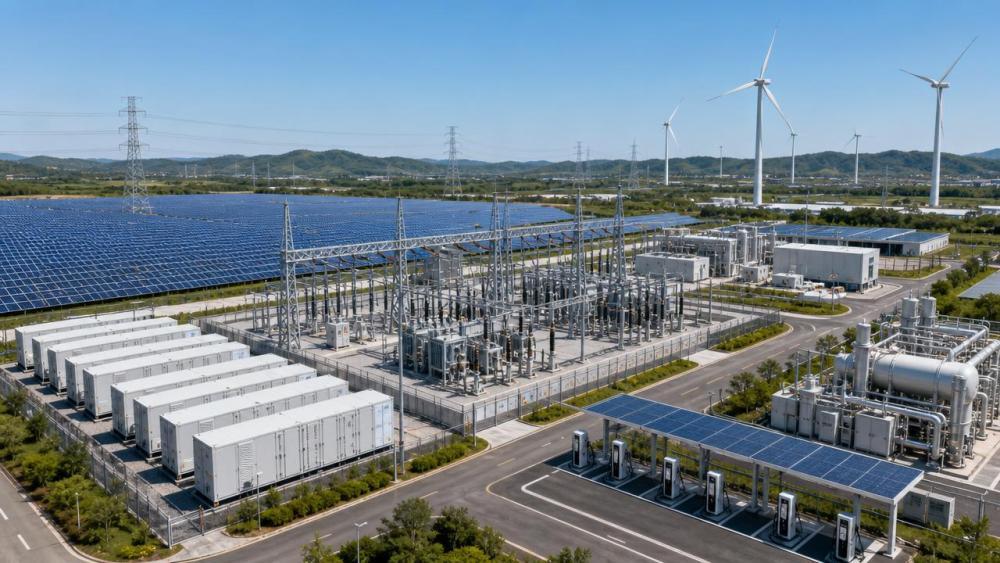
Zero-carbon grids depend on much more than renewable capacity growth. Stability now hinges on how storage, transmission, charging, and hydrogen assets behave under fast, uneven, and sometimes conflicting operating signals.
In practical deployment, the biggest gaps rarely come from one device failing alone. They appear when variable generation, long-distance power transfer, and flexible loads move faster than local coordination rules.
That is why zero-carbon grids are increasingly judged by response quality, not just by installed megawatts. Operators need to know where instability starts, how it spreads, and which fixes work in different network conditions.
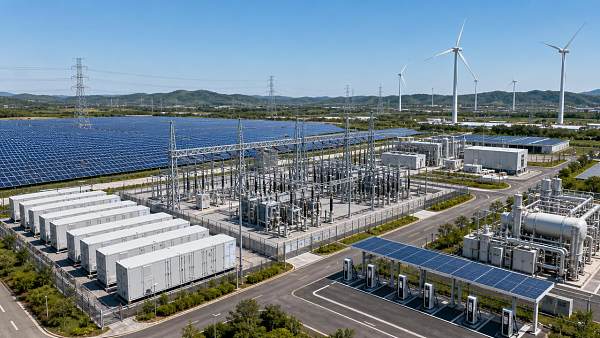
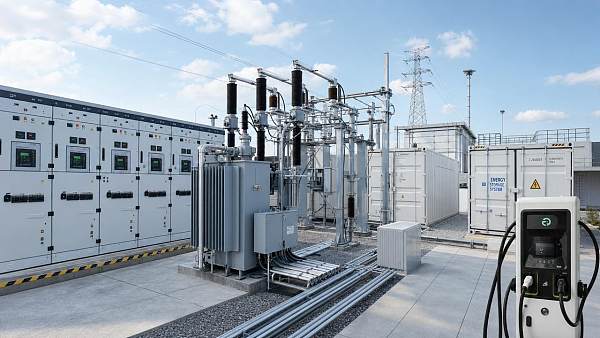
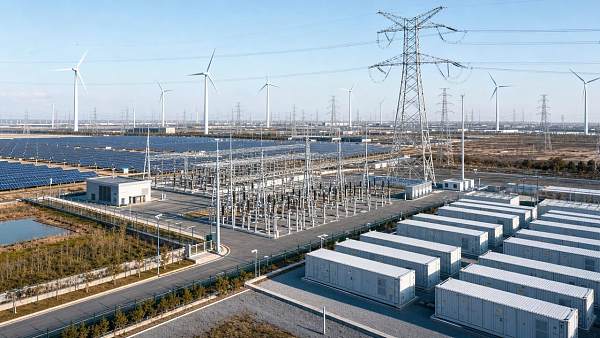
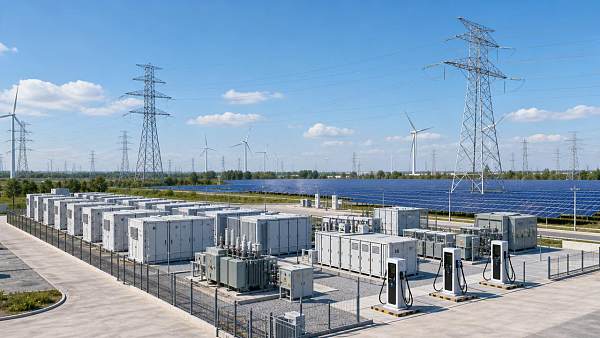
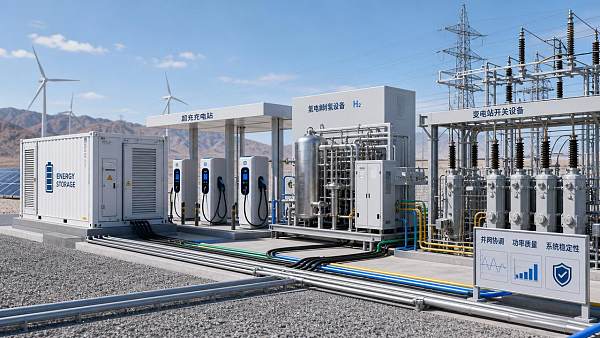
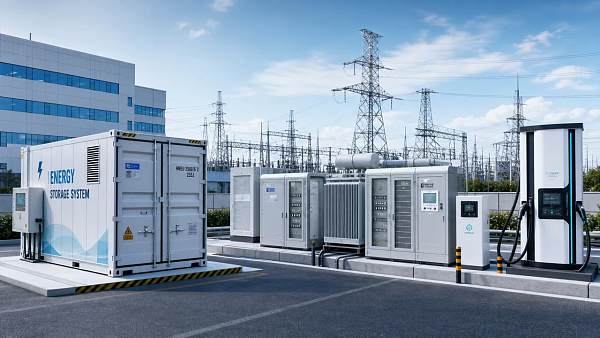
This matters across the wider energy chain tracked by ESGS, where grid-scale BESS containers, UHV transformers, smart T&D equipment, EV charging hubs, and hydrogen electrolyzers must act like one coordinated system.
Different zero-carbon grids fail for different reasons
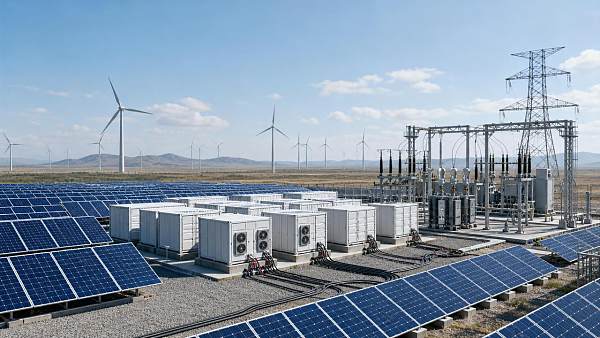
A coastal grid with offshore wind faces different stress than an inland industrial corridor fed by desert solar and UHV links. The same stability target can require very different control priorities.
More common failures come from three patterns. Renewable output swings too quickly, demand ramps arrive without warning, or dispatch data arrives too slowly to support a clean correction.
In one network, frequency support is the urgent issue. In another, thermal loading, fault isolation, or state-of-charge visibility matters more. Treating these environments as identical often leads to expensive underperformance.
A useful way to assess zero-carbon grids is to look at the actual operating scene first, then match assets and control logic to that scene.
Where the judgment focus usually changes
When storage carries the first burden, response speed is not enough
BESS is often the first tool used to stabilize zero-carbon grids. That makes sense, but short response time alone does not guarantee reliable support.
In grids with sharp solar ramps, the real issue is sustained control quality. A battery that reacts in milliseconds still struggles if thermal imbalance, weak PCS tuning, or poor SOC forecasting limits repeatable dispatch.
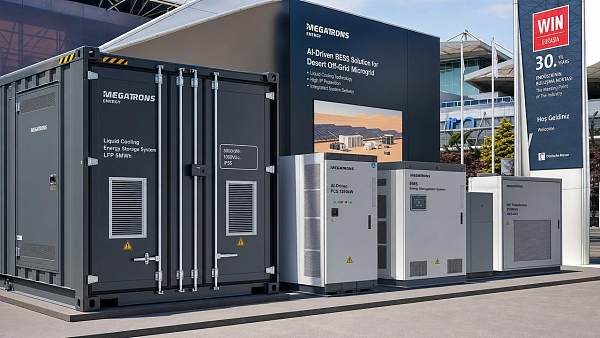
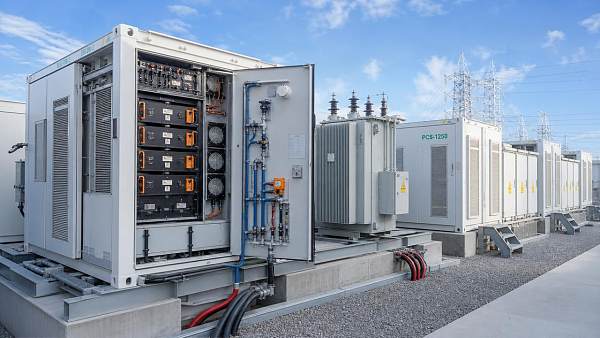
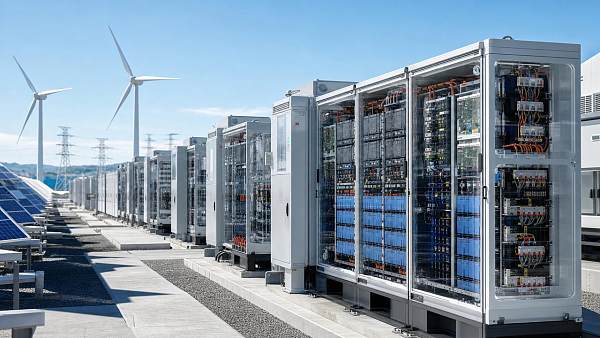
This is where container design matters. Liquid cooling uniformity, cell temperature spread, and fire propagation limits directly affect whether flexibility remains available after repeated cycles.
A common misjudgment is to compare only rated power and duration. In zero-carbon grids, it is usually smarter to compare ramp continuity, degradation under high-throughput use, and compliance with tests such as UL 9540A.
- Check whether dispatch software can reserve capacity for both peak shaving and frequency events.
- Review cooling system performance under hot ambient and dense cycling conditions.
- Match fire safety design to export, insurance, and site spacing requirements.
Transmission-heavy zero-carbon grids need visibility, not only bigger corridors
In regions moving renewable energy over long distances, stability gaps often sit between generation abundance and delivery precision. Power exists, yet the path is not always controllable enough.
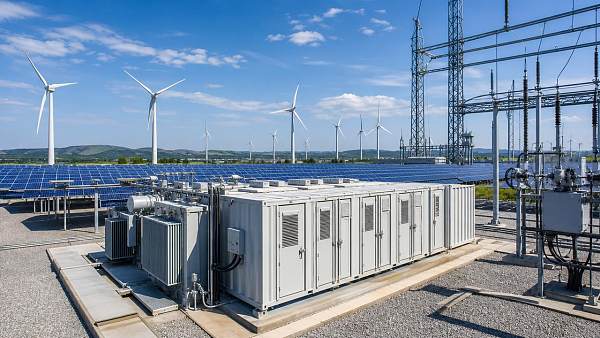
UHV transformers and HVDC links reduce losses and unlock remote resources. Still, zero-carbon grids become fragile when switching, protection, and reactive support are not aligned at substation level.
This shows up during contingency events. A fault may be cleared quickly, but recovery can remain uneven if GIS gear, valves, and local automation do not share the same timing assumptions.
The better practice is to assess the corridor as a controlled system. That means combining equipment ratings with power-flow studies, oscillation risk review, and digital twin validation of dispatch scenarios.
In actual projects, oversized hardware without synchronized data often creates a false sense of security. Zero-carbon grids need observability as much as transfer capacity.
Charging hubs change the load profile faster than many grids expect
Mega charging and swapping stations are no longer passive endpoints. In dense mobility corridors, they behave like rapid power nodes that can destabilize feeders or support them, depending on control quality.
The pressure increases with 800V liquid-cooled supercharging. Fast sessions compress demand into short periods, which means voltage dips and transformer stress can appear before traditional planning models react.
At the same time, this scene can become a strength for zero-carbon grids. V2G and coordinated charging allow thousands of connected vehicles to act as distributed balancing assets during evening peaks.
The key judgment is whether the site is primarily a mobility service point or a grid-flexibility node. The answer affects storage sizing, transformer selection, software architecture, and revenue stacking logic.
- Transit-heavy sites usually need queue resilience and local buffering first.
- Fleet depots often benefit more from scheduled charging and VPP integration.
- Swapping sites require stricter battery inventory timing and thermal discipline.
Hydrogen helps zero-carbon grids when flexibility is designed in early
Hydrogen electrolyzers are often discussed as long-duration decarbonization tools. In operational terms, their value inside zero-carbon grids depends on how well they absorb surplus power without creating new control problems.
A PEM system may suit faster response, while ALK can fit different economics and operating envelopes. The decision should reflect curtailment patterns, water supply conditions, and the intended hydrogen offtake rhythm.
One overlooked issue is dispatch granularity. If the grid sends coarse instructions but the renewable profile changes every few minutes, electrolyzer utilization falls and balancing value is overstated.
The better approach is to treat hydrogen as a flexible sink tied to market and grid signals. That includes ramp testing, startup cost modeling, and coordination with nearby BESS or industrial demand.
The most common mistakes appear between systems, not inside them
Many zero-carbon grids underperform because each asset is optimized alone. Batteries are sized for arbitrage, charging hubs for throughput, and transmission for bulk delivery, yet no shared operating logic is defined.
ESGS has good reason to emphasize intelligence stitching across these layers. Millisecond-level power flow control only works when field devices, market signals, thermal constraints, and protection settings are interpreted together.
Typical blind spots include:
- Assuming similar renewable sites need the same BESS control strategy.
- Focusing on capex while ignoring cycle wear, outage penalties, and safety retrofits.
- Using static load forecasts for EV hubs with highly variable traffic patterns.
- Treating hydrogen loads as infinitely flexible without water, ramp, or offtake limits.
- Skipping digital coordination tests between substations, storage, and VPP platforms.
A practical way to strengthen zero-carbon grids before expansion
Before adding more assets, map the network by disturbance type. Separate renewable ramps, charging spikes, transmission constraints, and curtailment windows instead of treating flexibility demand as one number.
Then compare which tool responds best in each scene. Short events may favor BESS and V2G. Longer balancing windows may justify hydrogen conversion or transmission rescheduling.
It also helps to define a minimum data layer for all zero-carbon grids. That normally includes SOC visibility, thermal alarms, feeder loading, power quality events, and dispatch latency tracking.
Where projects are already operating, review whether current controls reward the right behavior. Many systems appear stable until frequent cycling, heat stress, or mixed-use demand reveals hidden limits.
A sensible next step is to build a scene-based evaluation standard. Rank assets by response speed, safety margin, compatibility, maintenance burden, and economic resilience under real grid conditions.
That is usually the point where zero-carbon grids move from ambitious design to dependable operation.
Related News
 Zero-Carbon Grids: Key Stability Gaps and FixesDr. Valeria ThorneZero-carbon grids face hidden stability gaps beyond renewable capacity. Learn how BESS, transmission, EV charging, and hydrogen fixes improve resilience and grid performance.
 Smart Grid Technology Standards: Key Compliance Risks to CheckDr. Valeria ThorneSmart grid technology standards: discover the key compliance risks in protection, interoperability, thermal safety, grid codes, and cybersecurity to avoid costly delays and system failures.
 Grid Stability Risks: Common Weak Points in High-Renewable Power SystemsDr. Valeria ThorneGrid stability risks are rising in high-renewable power systems. Explore weak points, project delivery impacts, and practical fixes to cut curtailment, delay, and compliance risk.
 Turkey Fair Signals New Entry Rules for Smart BESSDr. Valeria ThorneTurkey Fair signals new entry rules for Smart BESS as Middle Eastern buyers prioritize IEC 62443-3-3, IP65+IK10, and integrated BESS+PCS+EMS delivery. Discover what exporters must prepare now.
 Grid Stability Challenges in 2026: What Changes With More Renewables?Dr. Valeria ThorneGrid stability is being redefined in 2026 as renewables scale. Discover how storage, transmission, smart charging, and hydrogen can protect reliability and unlock long-term value.
 Clean Energy Integration Risks: Grid Code Gaps to Check EarlyDr. Valeria ThorneClean energy integration starts failing before commissioning when grid code gaps go unchecked. Learn the early risks, costly failure points, and smart review steps to protect project timelines.
 Smart Grid Technology Standards to Watch in 2026Dr. Valeria Thornesmart grid technology standards are reshaping 2026 energy strategy—discover key rules for storage, EV charging, cybersecurity, interoperability, and bankable grid projects.
 Grid-Scale BESS Safety: Thermal Risks That Need Early ReviewDr. Valeria ThorneGrid-scale BESS safety starts with early thermal risk review. Explore key checks for cooling, detection, controls, and commissioning to protect asset performance.
 Renewable Integration: Grid Code Risks Before ConnectionDr. Valeria ThorneRenewable integration starts with grid code risk control. Learn key checks for stability, fault ride-through, voltage support, BESS, and faster connection approval.
 Smart Grid Technology Standards to WatchDr. Valeria ThorneSmart grid technology standards are reshaping interoperability, cybersecurity, and ROI. Discover the key frameworks to watch and how they reduce risk in BESS, EV charging, UHV, and hydrogen projects.
 Battery Management Systems for Renewable Energy: Key Safety Specs That MatterDr. Valeria ThorneBattery management systems for renewable energy: discover the key safety specs that reduce thermal runaway risk, improve uptime, and help you choose a compliant, high-reliability BMS.
 Clean Energy Intermittency: 2026 Grid Code Risks for Storage ProjectsDr. Valeria ThorneClean energy intermittency is reshaping 2026 grid code compliance for storage projects. Discover 10 critical risks, revenue impacts, and practical actions to protect approvals and returns.