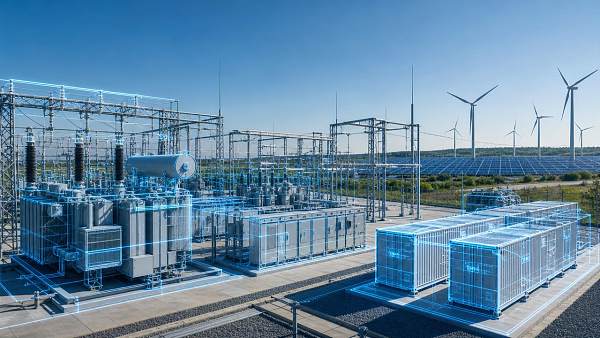
Grid Digital Twins for Smarter Substation Planning
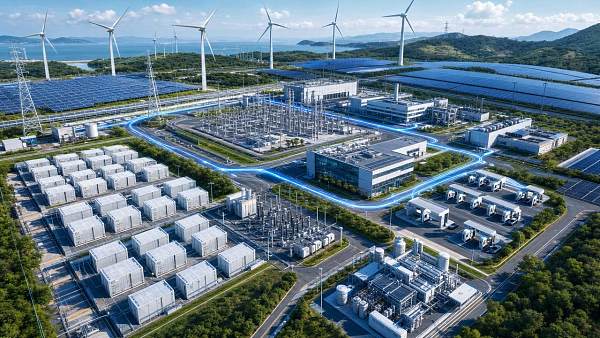
As substations evolve into data-rich nodes for renewable integration, BESS dispatch, UHV transmission, and EV charging loads, grid digital twins are becoming essential for smarter planning.
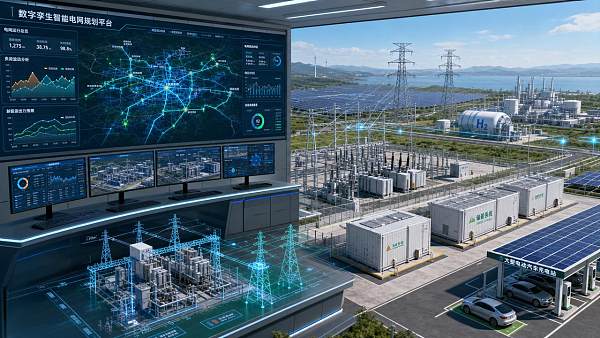
By linking real-time equipment models, protection logic, thermal behavior, and power-flow simulations, technical evaluators can test expansion, fault response, and asset risk before deployment.
This article explores how digital twin intelligence helps utilities and power equipment stakeholders design safer, more flexible, and investment-ready substations for zero-carbon grids.
What Technical Evaluators Need to Validate First
When evaluators search for grid digital twins, they are usually not looking for another abstract digital transformation concept.
They want to know whether a twin can improve planning decisions for substations exposed to faster load growth and more volatile generation.
The central question is practical: can the model reveal constraints, risks, and investment priorities earlier than conventional studies?
For modern substations, that question matters because planning errors are becoming more expensive and harder to correct after commissioning.
BESS containers can reverse power flow within milliseconds, EV charging hubs can create sharp peaks, and renewable feeders can change ramping profiles daily.
Traditional planning tools still matter, but they often work in isolated studies rather than continuous, equipment-aware operational environments.
A useful digital twin must therefore connect electrical behavior, asset condition, protection response, thermal margins, and scenario economics.
Technical evaluators should judge solutions by decision quality, model fidelity, data governance, integration effort, and cybersecurity resilience.
Why Substation Planning Has Outgrown Static Models
Substations were once planned around relatively predictable load curves, unidirectional power flow, and long equipment replacement cycles.
That environment has changed as distributed solar, offshore wind, utility-scale storage, hydrogen production, and high-power charging reshape grid behavior.
A feeder that looked sufficient under annual peak analysis may become constrained during simultaneous EV charging and BESS recharge periods.
A transformer that passes steady-state loading checks may experience accelerated aging under repeated thermal cycling and harmonic stress.
Protection coordination can also become less straightforward when inverter-based resources reduce fault current or alter directional current patterns.
These planning challenges require more than nameplate capacity checks or single-scenario load-flow snapshots.
Grid digital twins help by creating a living planning environment where assumptions can be tested against operational signals and equipment limits.
Instead of asking whether a substation survives one forecast, evaluators can test hundreds of credible futures with traceable assumptions.
What a Grid Digital Twin Should Actually Include
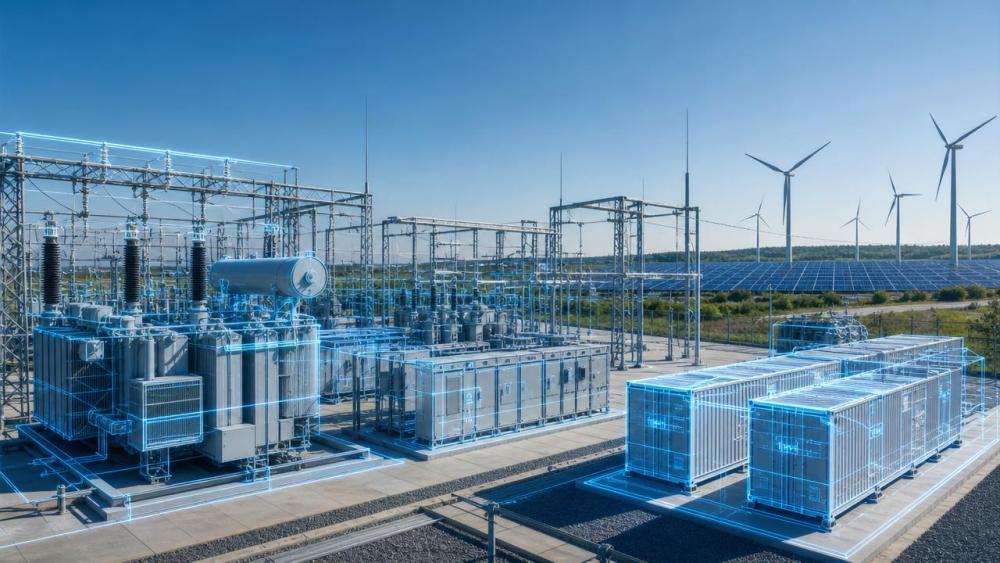
A planning-grade twin is not merely a 3D model or dashboard showing breaker positions and transformer temperatures.
It should represent the functional behavior of the substation across electrical, thermal, mechanical, communications, and protection domains.
At the electrical layer, it needs accurate topology, impedances, transformer parameters, switchgear ratings, grounding systems, and feeder interconnections.
At the dynamic layer, it should model inverter behavior, BESS power conversion systems, voltage control devices, and reactive power capability.
At the protection layer, it should simulate relay settings, breaker clearing times, fault scenarios, interlocking logic, and miscoordination risks.
At the asset layer, it should connect sensor data from transformers, GIS equipment, cables, batteries, cooling systems, and auxiliary systems.
At the planning layer, it should run scenarios for load growth, renewable curtailment, contingency events, and maintenance constraints.
The strongest grid digital twins combine these layers without forcing engineers to abandon validated power-system analysis methods.
Key Planning Questions a Twin Can Answer
The first planning question is whether the existing substation can absorb new capacity without unacceptable thermal, voltage, or protection impacts.
For example, a utility may need to connect a grid-scale BESS near a renewable export corridor.
The twin can compare charging schedules, discharge profiles, transformer loading, busbar limits, and short-circuit contributions before design approval.
The second question is where bottlenecks will appear when EV charging depots, swapping stations, or industrial electrification loads accelerate.
Instead of overbuilding every asset, planners can identify which feeders, transformers, breakers, or control upgrades create the highest resilience gain.
The third question concerns contingency performance during N-1 or N-2 events, especially under renewable intermittency or peak charging demand.
A twin can simulate forced outages, delayed breaker operations, communication failures, and abnormal inverter responses under different dispatch states.
The fourth question is whether planned automation improves operations or introduces new dependencies requiring cybersecurity and fail-safe design.
How Digital Twins Improve BESS and Renewable Integration
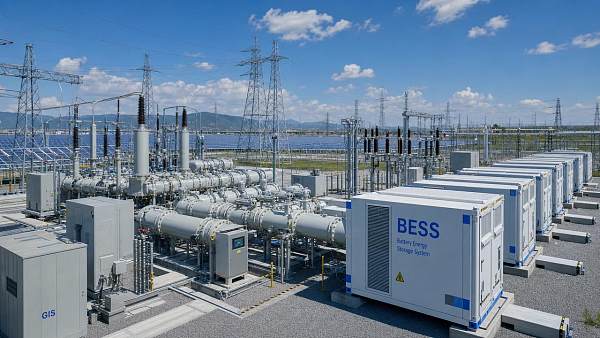
BESS integration is one of the clearest use cases for substation digital twins because storage changes both planning and operation.
A battery plant may behave like load during charging, generation during discharge, and a fast frequency-response asset during disturbances.
The twin allows engineers to evaluate these modes against transformer thermal margins, bus voltage stability, and protection coordination.
It can also examine liquid-cooled container behavior where cell temperature uniformity affects availability, degradation, and safety assumptions.
For renewable integration, the twin helps quantify curtailment reduction, congestion relief, voltage support, and export capability under variable generation.
This is especially valuable where solar or wind resources are far from load centers and connected through high-voltage transmission corridors.
Planning teams can test whether local storage, STATCOM support, transformer upgrades, or dispatch changes produce the best system-level outcome.
For investors and equipment suppliers, these studies turn technical uncertainty into measurable capacity, reliability, and revenue assumptions.
Evaluating Protection, Fault Response, and Safety
Protection performance is a critical evaluation area because modern substations are no longer dominated by synchronous-machine fault behavior.
Inverter-based resources may limit fault current, ride through disturbances, or disconnect according to firmware and grid-code requirements.
A credible twin should help engineers test relay sensitivity, directionality, breaker duty, reclosing sequences, and fault-clearing coordination.
For GIS switchgear, transformers, and cable systems, the model should reflect equipment ratings and realistic failure consequences.
For BESS-connected substations, safety analysis should consider thermal runaway separation, emergency isolation, ventilation, and firefighting access constraints.
Although UL 9540A and other test data are system-specific, the twin can incorporate validated safety boundaries into planning scenarios.
This does not replace compliance engineering, but it helps planners see how safety choices affect layout, capacity, and operational flexibility.
The best outcome is not only faster fault response, but clearer evidence that the substation remains controllable under credible abnormal conditions.
Data Quality Determines Whether the Twin Is Trustworthy
Many digital twin projects fail because organizations focus on visualization before establishing reliable data architecture and model governance.
For technical evaluators, the first concern should be whether data sources are complete, synchronized, and mapped to the physical asset hierarchy.
SCADA, protection records, PMU data, condition monitoring, maintenance logs, weather data, and market dispatch signals may all be relevant.
However, more data does not automatically mean better planning if timestamps, naming conventions, and equipment references are inconsistent.
A planning-grade twin needs version control for network models, clear assumptions, calibration records, and validation against field measurements.
Engineers should know which model elements are measured, estimated, vendor-supplied, or derived from historical operating patterns.
This transparency is essential when results are used to justify transformer replacement, BESS interconnection, or substation automation investment.
A twin without model confidence scoring can become a sophisticated interface for uncertain decisions rather than a trustworthy engineering tool.
Integration with Existing Engineering and Utility Systems
A substation twin should not become another isolated platform competing with established engineering workflows.
It should integrate with power-flow tools, protection setting software, asset management systems, GIS databases, SCADA, EMS, ADMS, and maintenance platforms.
The practical value increases when planners can move from study assumptions to operational verification without rebuilding the model manually.
Open interfaces, standard data formats, and documented APIs reduce vendor lock-in and improve long-term maintainability.
For utilities operating UHV transmission or multi-region networks, scalability and latency requirements become especially important.
The twin may need to support both offline planning simulations and near-real-time operational awareness for critical nodes.
Technical evaluators should also assess whether the solution can handle hybrid assets such as BESS, hydrogen electrolyzers, and EV hubs.
These assets blur the boundary between load, generation, storage, and controllable flexibility, so rigid classifications can limit planning accuracy.
Business Value: Where the Return Comes From
Although technical accuracy is essential, grid digital twins also need a clear investment case.
The return usually comes from avoided overbuilding, deferred upgrades, fewer outages, faster interconnection studies, and better asset utilization.
For example, a twin may show that operational flexibility and targeted cooling improvements defer transformer replacement for several years.
It may also identify that a smaller BESS, paired with improved voltage control, delivers similar congestion relief to a larger installation.
In high-growth EV charging zones, the twin can compare feeder reinforcement, local storage, demand management, and tariff-driven load shifting.
These comparisons help planners choose investments based on lifecycle performance rather than initial equipment cost alone.
For manufacturers, a validated twin can support technical sales by proving equipment behavior inside realistic grid conditions.
For investors, it improves confidence in capacity leasing, ancillary service revenue, and peak-valley arbitrage assumptions.
Cybersecurity and Operational Risk Cannot Be Secondary
As digital twins become connected to operational data and control environments, cybersecurity becomes a core planning requirement.
A read-only planning twin carries different risks from a twin connected to dispatch optimization or automated switching recommendations.
Evaluators should examine identity management, network segmentation, encryption, access logging, patching processes, and incident response procedures.
They should also ask how the platform handles corrupted data, missing telemetry, model drift, and adversarial manipulation.
Operational risk includes human factors as well, especially when dashboards simplify complex power-system behavior into attractive visual signals.
Engineers need explainable recommendations, confidence intervals, and clear boundaries showing when manual review is required.
A secure twin should strengthen engineering judgment, not conceal assumptions behind automated outputs.
This is particularly important for substations supporting critical transmission corridors, large storage plants, and transport electrification infrastructure.
A Practical Evaluation Checklist
Technical evaluators can begin by defining the planning decisions the twin must support within the next three to five years.
These may include BESS interconnection, transformer loading management, EV charging expansion, renewable curtailment reduction, or protection modernization.
Next, they should identify required model fidelity for each decision rather than demanding maximum detail everywhere.
A high-resolution thermal model may be essential for transformers, while a simplified feeder model may be sufficient elsewhere.
Evaluators should then verify data availability, integration complexity, cybersecurity posture, and alignment with existing engineering standards.
Pilot projects should focus on a real substation constraint, not a demonstration environment with limited operational relevance.
Success metrics should include study time reduction, forecast accuracy, constraint identification, avoided capital expenditure, and operational validation.
Finally, teams should plan governance early, including model ownership, update cycles, audit trails, and cross-department responsibilities.
Common Mistakes to Avoid
The most common mistake is treating the digital twin as a visualization project rather than an engineering decision system.
Beautiful interfaces can create stakeholder interest, but they do not prove loading margins, fault response, or investment timing.
A second mistake is building a highly detailed model without knowing which planning decisions require that detail.
This increases cost, slows deployment, and can distract teams from the constraints that actually drive substation performance.
A third mistake is underestimating model maintenance after commissioning, especially when assets, relay settings, and operating practices change.
A stale twin can be worse than no twin because it encourages confidence in outdated assumptions.
A fourth mistake is excluding field engineers, protection specialists, and asset managers from the design process.
Their practical knowledge often determines whether the twin reflects real equipment behavior or only idealized engineering diagrams.
Conclusion: Smarter Planning Requires Evidence, Not Hype
Grid digital twins are becoming valuable because substation planning now requires continuous evidence across electrical, thermal, protection, and asset domains.
For technical evaluators, the best solutions are not the most visually impressive, but the most decision-ready and verifiable.
A strong twin helps answer where capacity is constrained, how faults propagate, which investments matter, and what risks remain.
It also creates a shared technical language for utilities, equipment manufacturers, storage developers, and infrastructure investors.
As zero-carbon grids expand, substations will become active control nodes rather than passive transfer points.
Planning those nodes intelligently requires models that learn from operation, test future scenarios, and expose uncertainty before capital is committed.
Used well, grid digital twins turn complex substation decisions into structured, auditable, and investment-ready engineering choices.