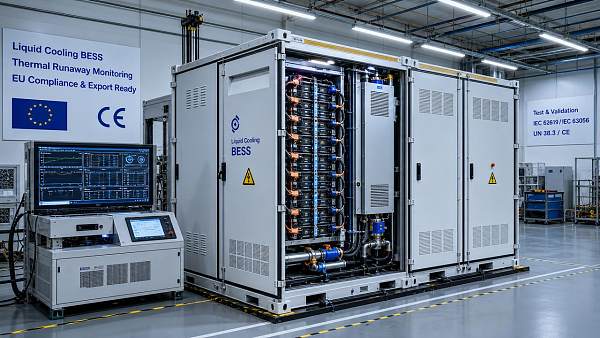
On June 19, 2026, Chinese company Yuanxin Energy Storage received what was described as the world’s first NB certificate issued under the EU Battery Regulation (EU) 2023/1542. The certificate covers lifecycle carbon footprint verification for an LFP liquid-cooled BESS under ISO 14067, a recycled content declaration, and a QR-code traceability system. For companies involved in exporting energy storage systems to the EU, this development is worth close attention because it points directly to market access, customs documentation, and delivery timing.
What Was Confirmed on June 19
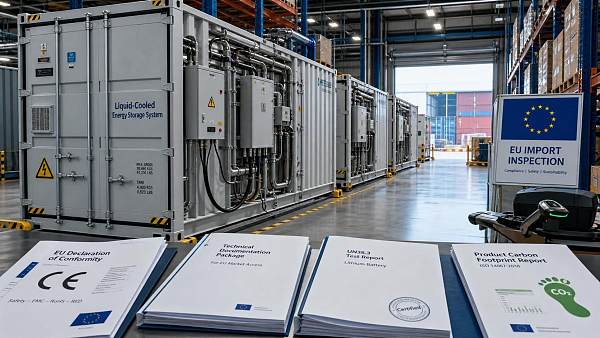
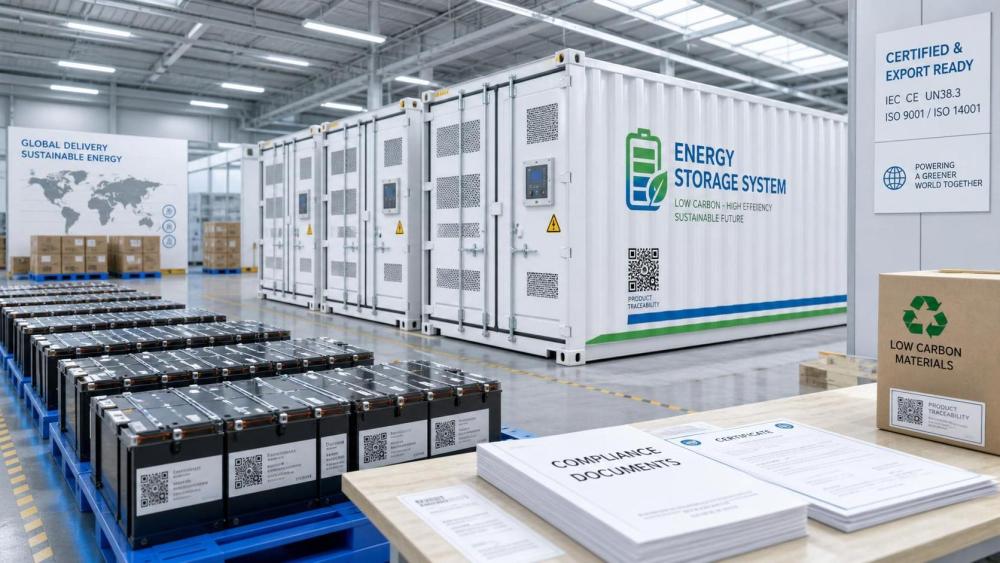
According to the provided event information, the certificate was issued by an EU Notified Body and granted to Yuanxin Energy Storage on June 19, 2026. The certification relates to requirements under the EU Battery Regulation (EU) 2023/1542 and specifically covers three areas: lifecycle carbon footprint verification for an LFP liquid-cooled battery energy storage system, aligned with ISO 14067; a declaration concerning recycled materials; and a QR-code traceability system.
The same event summary states that the certificate serves as mandatory market-access support for exporting energy storage systems to the EU and is expected to reduce customs clearance time by more than 45 days.
Why the Signal Matters Across the Supply Chain
For exporters, compliance is moving closer to shipment readiness
From an industry perspective, the immediate relevance for direct trading companies and system exporters lies in the connection between regulatory compliance and entry into the EU market. If certification becomes a practical gate for customs and delivery, the impact is likely to be felt first in export documentation, customer acceptance materials, and shipment scheduling.
What deserves closer attention is whether companies are structurally prepared to present carbon footprint records, recycled-material declarations, and traceability evidence as part of normal export operations rather than as ad hoc paperwork.
For manufacturers, product design now meets document design
Analysis shows that processing and manufacturing companies may be affected not only at the product level but also at the data level. The event highlights that a battery system entering the EU market may need support from lifecycle carbon accounting, recycled-material statements, and QR-based traceability.
That means the pressure point may sit in how product information is organized, verified, and handed over across production, quality, and compliance teams. The issue is not simply whether a product performs technically, but whether its compliance record can travel with it.
For supply chain and service providers, timing risk may become a selling point
Supply chain service providers, documentation specialists, and related service firms may also be affected because the summary links the certificate to a potential reduction of more than 45 days in customs clearance time. Observably, when regulatory documentation has a direct bearing on delivery cycles, service quality is no longer limited to transport execution; it also extends to document readiness, traceability support, and communication with downstream buyers.
For procurement teams and end users, this could also influence supplier selection, especially where delivery certainty and compliance transparency matter as much as technical specifications.
What Companies Should Watch Next
Track how certification language is used in business practice
Analysis shows that companies should pay close attention to how this certificate is referenced in contracts, customer inquiries, tender documents, and customs procedures. A regulatory certificate may have one meaning in formal policy terms and another in day-to-day transaction requirements.
Review whether traceability materials are ready for handover
The event specifically mentions a QR-code traceability system. For companies serving the EU market, a practical point of attention is whether traceability records can be delivered in a clear and customer-usable format, not just stored internally.
Check supplier inputs behind carbon and recycled-content claims
Because the certificate covers lifecycle carbon footprint verification and a recycled-material declaration, related businesses may need to look upstream at supplier qualifications and document consistency. What deserves closer attention is whether procurement and supplier management processes can support claims that are expected to appear in compliance files.
Build more realistic delivery communication
The summary notes an expected customs-clearance reduction of more than 45 days. Companies should treat this as a business-relevant signal, while still distinguishing between a certification milestone and the actual performance of each shipment. Customer communication, internal planning, and contingency preparation should reflect that difference.
How This Development Is Best Understood
Observably, this is more than a single-company certification update, but it should not be overstated as a complete market conclusion. Based on the provided facts, the stronger interpretation is that compliance under the EU Battery Regulation is becoming more operational for energy storage exports, especially where carbon footprint verification, recycled-material statements, and traceability are concerned.
It is more appropriate to understand this as an early but concrete signal of how market access requirements may be executed in practice. The event indicates direction and urgency, while the wider pace of adoption, replication, and enforcement still requires continued observation.
What the Industry Can Take From It Now
At this stage, the clearest takeaway is that EU-facing battery energy storage business may need to treat compliance evidence as part of product deliverability, not as a secondary administrative step. For exporters, manufacturers, procurement teams, and service providers, the news is less about celebration and more about preparation.
It is more appropriate to read this development as a practical compliance marker with immediate operational relevance and longer-term strategic implications, while keeping room for further verification as more implementation details emerge.
Basis of This Report
This article is based on the user-provided news title, event date, and event summary. The input does not include a specific official source link, so the exact official reference still needs continued verification.
For this type of development, source categories that are typically relevant include official announcements, company disclosures, industry association updates, authoritative media coverage, and standard or regulatory documents. What deserves closer attention going forward is whether additional official wording, implementation guidance, or follow-up disclosures clarify how this type of certificate will be applied in actual EU export workflows.
Related News
 Grid-Scale BESS Safety Risks: What to Check Before System IntegrationGrid Storage ArchitectGrid-scale BESS safety starts at integration. Learn the critical checks for thermal, fire, PCS, and compliance risks before energization to protect uptime and grid stability.
 POLA Tightens UL 9540A Checks for Liquid-Cooled BESSGrid Storage ArchitectPOLA tightens UL 9540A checks for liquid-cooled BESS imports, raising port delay risks. Learn the new 6-month report rule, clearance impact, and how to avoid costly shipment disruptions.
 EU Tightens Battery Entry Rules for Liquid-Cooled BESSGrid Storage ArchitectEU Tightens Battery Entry Rules for Liquid-Cooled BESS: learn how EU Battery Regulation, type certification, and LCA carbon footprint rules will impact C&I Energy Storage exports before 2027.
 First EU Battery Rule NB Certificate IssuedGrid Storage ArchitectFirst EU Battery Rule NB Certificate Issued marks a major compliance shift for EU battery exports. Learn how carbon footprint, recycled content, and QR traceability could speed customs and protect delivery timelines.
 Grid-Scale Storage Solutions: How to Compare Safety, Efficiency, and Lifecycle CostGrid Storage ArchitectGrid-scale storage solutions compared: learn how to evaluate safety, real-world efficiency, and lifecycle cost to choose a bankable system with lower risk and stronger long-term returns.
 Grid-Scale Energy Storage: Cost Drivers and Payback in 2026Grid Storage ArchitectGrid-scale energy storage in 2026 is driven by LCOS, safety, EPC, software, and revenue certainty. Discover key cost drivers, payback factors, and how to evaluate stronger-return projects.
 How Thermal Management Systems Cut BESS Safety RisksGrid Storage ArchitectThermal management systems help cut BESS safety risks by reducing hotspots, slowing thermal runaway, and improving compliance readiness. Learn what to check for safer, smarter storage.
 How to Evaluate a Battery Management Systems Supplier in 2026Grid Storage ArchitectBattery management systems supplier evaluation in 2026 starts with safety, compliance, software, and lifecycle value. Learn the key checks to choose a reliable partner with confidence.
 Langfang Matchmaking Opens as Overseas Buyers Target NE EquipmentGrid Storage ArchitectLangfang matchmaking opens as overseas buyers target new energy equipment, signaling stronger demand for sample inspection, ODM cooperation, and local warehousing. See what suppliers should prepare now.
 Thermal Management Risks in Liquid-Cooled BESSGrid Storage ArchitectThermal management risks in liquid-cooled BESS can stay hidden until they threaten safety, uptime, and ROI. Learn the warning signs, causes, and smart controls before failures escalate.
 EU Rule Takes Effect for Liquid-Cooled BESS ExportsGrid Storage ArchitectEU Rule Takes Effect for Liquid-Cooled BESS Exports: learn how the new EU compliance rule adds UL 9540A-style monitoring, DCP reporting, and cost impacts for exporters.
 Storage+AI+Low-Altitude Demand Reshapes Buying PrioritiesGrid Storage ArchitectStorage, AI, and low-altitude demand are reshaping energy storage buying priorities. Discover how VPP compatibility, millisecond response, and integrated solutions are influencing global procurement.