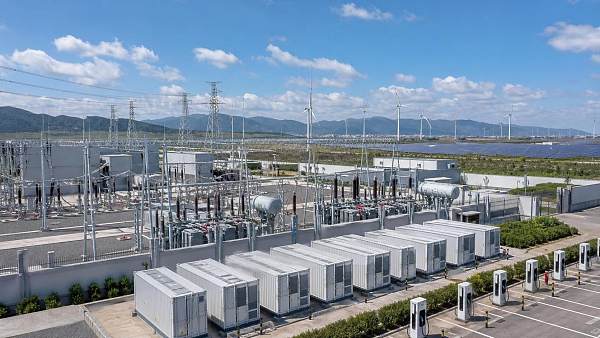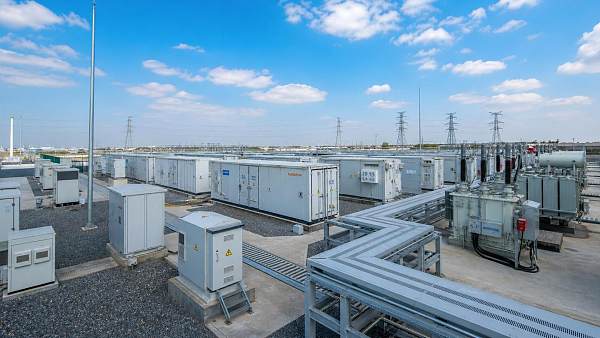
PCS systems sit at the control point between battery energy and grid demand, so sizing errors rarely stay isolated. A project can look balanced on paper, yet lose response speed, usable capacity, thermal margin, and revenue once real dispatch starts.
That matters more now because grid-scale BESS is no longer judged only by nameplate power. It is judged by how reliably it supports frequency regulation, renewable smoothing, peak shifting, EV charging loads, and wider grid stability targets.
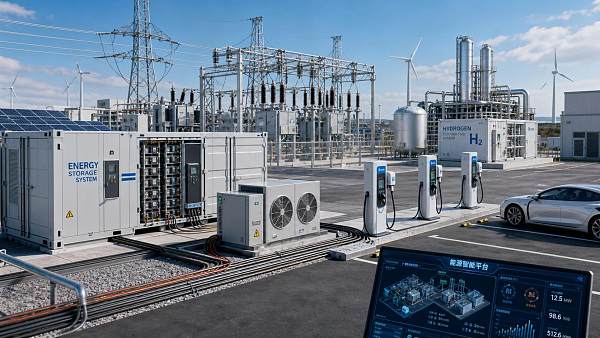
Across the ESGS landscape, from containerized storage to smart transmission and VPP-linked charging hubs, undersized or mismatched PCS systems can become the hidden bottleneck that limits the value of the entire asset.
Why PCS sizing is more than a nameplate exercise
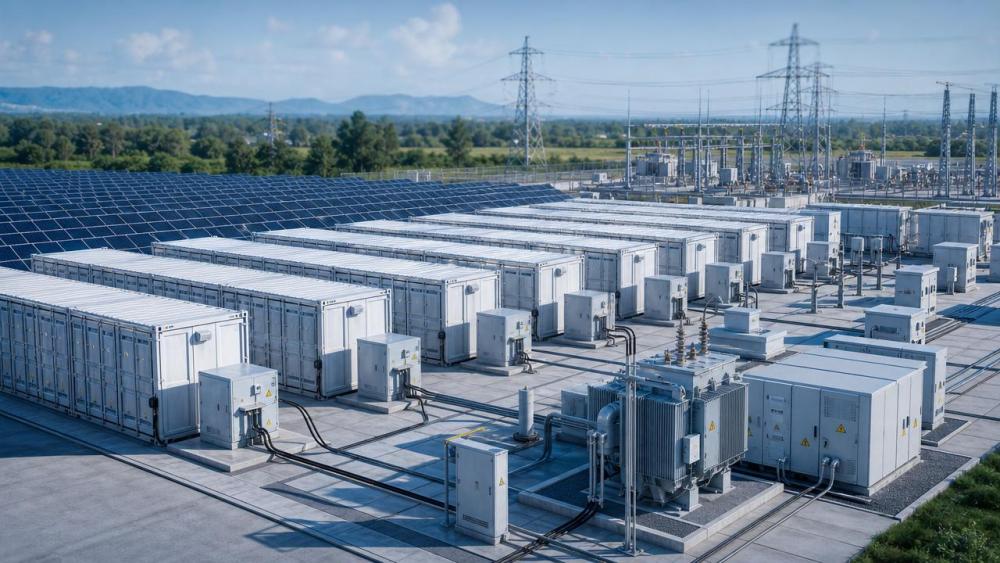
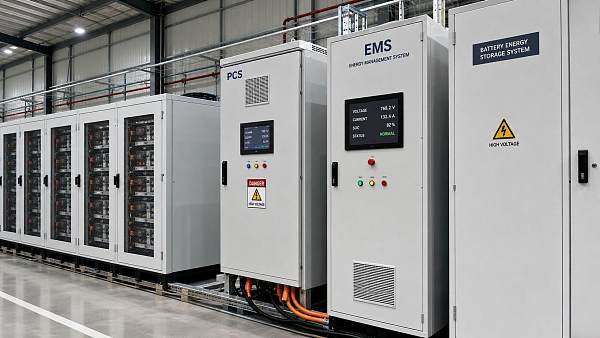
A power conversion system is not just an inverter block. In practical terms, it shapes how fast a storage plant charges, discharges, ramps, recovers, and interacts with upstream and downstream equipment.
When PCS systems are sized well, battery modules, transformers, thermal controls, EMS logic, and grid interconnection rules work in alignment. When sizing is wrong, problems appear as clipping, curtailment, heat buildup, DC oversupply, AC shortfall, and unstable dispatch behavior.
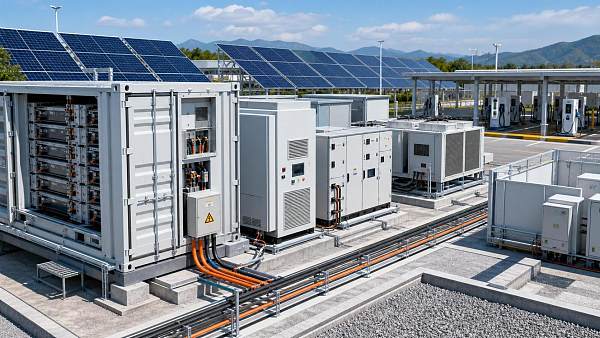
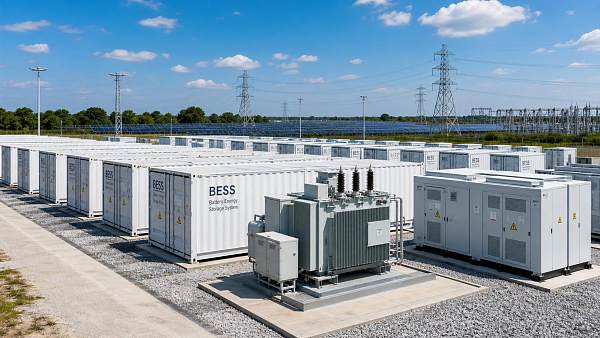
In large BESS containers, this issue is tightly linked to cell temperature control and cycle economics. In EV charging or hybrid renewable sites, it also affects transient power support and local voltage behavior.
The mistakes that most often hurt storage performance
Most sizing failures do not come from one bad parameter. They usually come from treating PCS systems as standard hardware, instead of part of a dispatch-driven energy architecture.
Matching PCS only to battery rated power
A common shortcut is to align PCS capacity with battery rated power and stop there. That ignores dispatch peaks, overload windows, state-of-charge limits, and round-trip conversion losses.
The result is often a plant that meets brochure values but misses actual market duty. It cannot hold target output long enough, or it throttles during the moments that matter most.
Ignoring charge and discharge asymmetry
Many projects assume charging and discharging demands are symmetrical. Real sites rarely behave that way. Solar-coupled storage may need aggressive midday charging, while grid support may require shorter but sharper discharge bursts.
PCS systems sized around a single balanced ratio can underperform in one direction. That creates avoidable curtailment on the charging side or missed capacity commitments on the discharge side.
Overlooking ambient and thermal derating
High ambient temperatures, altitude, enclosure density, and ventilation constraints all change effective PCS output. A system rated for one condition may deliver less during summer peaks or continuous cycling periods.
This is especially important in liquid-cooled BESS containers, where battery thermal uniformity may be tightly managed, yet the PCS still faces separate thermal stress.
Sizing without grid code behavior
Reactive power support, fault ride-through, power factor obligations, and ramp-rate limits can all consume usable PCS headroom. If the sizing model looks only at active power, the available operating envelope shrinks in practice.
This becomes more visible in weak grids, renewable export corridors, and fast-response ancillary service markets.
Forgetting lifecycle economics
A lower PCS capex can look attractive during procurement. Yet undersized PCS systems may reduce annual throughput, stretch charge windows, and limit arbitrage cycles. That can worsen LCOS even if initial equipment cost looks lower.
Where sizing errors show up first
The operational symptoms are often clearer than the design documents. Watching where those symptoms emerge helps narrow the real sizing problem.
These effects can extend beyond storage. In the broader ESGS context, poorly sized PCS systems can also weaken transformer loading strategy, dispatch coordination, and digital twin accuracy.
A better way to evaluate PCS systems
A strong evaluation starts with operating intent, not hardware catalogs. The right question is not only how many megawatts are needed, but under which duty cycle, temperature window, grid condition, and commercial obligation.
Model duty cycles realistically
Use actual dispatch cases, not average-day assumptions. Include short bursts, partial-load efficiency zones, standby losses, and consecutive cycling hours.
Check DC and AC ratios together
Battery energy, battery power, PCS power, MV transformer limits, and interconnection caps must be reviewed as one chain. A balanced DC/AC design avoids hidden clipping and stranded capacity.
Reserve control headroom
If the plant must provide reactive power, fast regulation, or grid-forming functions, preserve headroom for those services. A fully saturated PCS cannot respond gracefully when the grid changes suddenly.
Treat thermal limits as operating limits
Do not assume nominal output is continuously available. Evaluate enclosure cooling, harmonic stress, site altitude, and seasonal temperature profiles early in the design stage.
What deserves closer attention in current projects
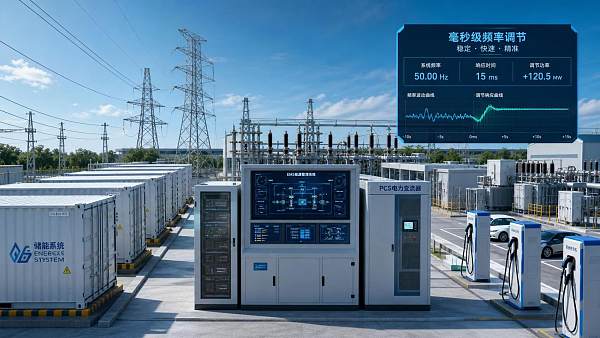
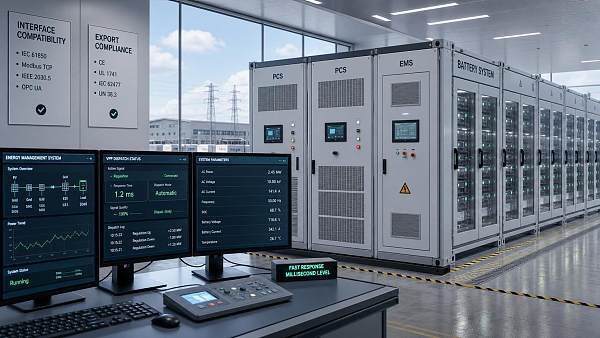
Today’s storage assets are asked to do more than shift energy from one hour to another. They increasingly support millisecond-level power flow control, VPP aggregation, renewable integration, and flexible charging infrastructure.
That broader role changes how PCS systems should be judged. Efficiency at one load point is no longer enough. Evaluators need visibility into transient response, overload duration, harmonic behavior, control interoperability, and derating under repeated cycling.
For sites connected to UHV-linked transmission corridors or renewable-heavy regional grids, the PCS may influence how well distant clean energy is converted into stable local capacity. That makes sizing a system-level issue, not just a storage cabinet decision.
Practical checkpoints before final selection
Before locking a design, it helps to pressure-test the assumptions behind PCS systems with a short, disciplined checklist.
- Compare rated output with continuous output under site temperature conditions.
- Verify overload capability against the actual revenue service profile.
- Map reactive power obligations and control reserves into usable power headroom.
- Check partial-load efficiency, not only peak conversion efficiency.
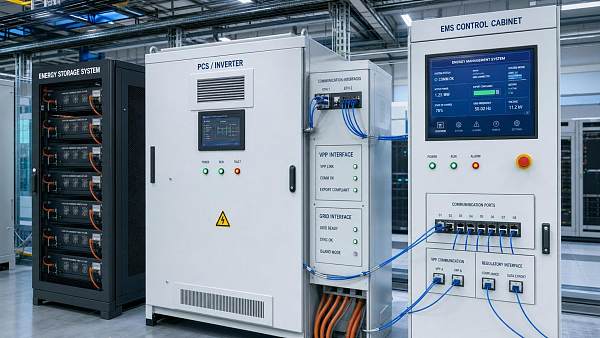
- Review compatibility with EMS, BMS, transformer, and grid code requirements.
- Test whether battery, PCS, and interconnection limits force avoidable clipping.
If any one of these checkpoints is weak, the sizing discussion is probably incomplete. In many cases, the design problem is not lack of power, but lack of alignment between duty, controls, and thermal reality.
Turning sizing into a better investment decision
Well-sized PCS systems protect more than performance metrics. They protect dispatch credibility, asset longevity, safety margin, and the revenue logic behind the project.
That is why the best next step is usually a scenario-based review. Rebuild the sizing case around actual operating modes, seasonal extremes, grid support obligations, and economic targets.
When PCS systems are evaluated in that wider frame, it becomes easier to see whether the design will truly support stable storage performance or quietly cap the project before commercial operation even begins.
Related News
 Grid Stability for Weak Grids: Key Design Risks and Mitigation StepsGrid Storage ArchitectGrid stability for weak grids: learn the top design risks, early warning signs, and proven mitigation steps to protect BESS, EV charging, hydrogen, and converter-heavy projects.
 Millisecond Grid Control for Frequency Regulation: Response Speed, Stability, and EMS IntegrationGrid Storage ArchitectMillisecond grid control for frequency regulation explained: compare response speed, stability, and EMS integration to choose safer, higher-value grid control solutions.
 IEC 62933-5-2:2026 Makes VPP Interfaces MandatoryGrid Storage ArchitectIEC 62933-5-2:2026 makes VPP interfaces mandatory for newly certified PCS and EMS products, reshaping compliance in 32 export markets. Learn what manufacturers, integrators, and distributors must do now.
 Energy Storage Systems Integration: Common Failures and FixesGrid Storage ArchitectEnergy storage systems integration often fails at control, thermal, and commissioning interfaces. Discover common faults, practical fixes, and how to improve BESS reliability and project ROI.
 IEC 62933-5-2:2026 Sets VPP Interface Rules for PCS and EMSGrid Storage ArchitectIEC 62933-5-2:2026 sets new VPP interface rules for PCS and EMS, requiring IEEE 1547.4a-2026 parsing and millisecond response. Learn how this may impact exports, tenders, firmware planning, and compliance.
 C&I Storage Tenders Jump 47% as PCS and EMS Gain WeightGrid Storage ArchitectC&I storage tenders jump 47% as PCS and EMS gain weight, signaling a shift toward AGC response, VPP compatibility, and compliance. See what buyers now value most.
 Energy Intelligence Platforms: Which Data Features Matter Most in Daily Operations?Grid Storage ArchitectEnergy intelligence platforms work best when real-time, decision-grade data drives safer dispatch, faster fault response, and stronger asset returns across storage, grids, EV charging, and hydrogen.
 PCS Selection Power Rating: How to Size for Peak Load and Battery ThroughputGrid Storage ArchitectPCS selection power rating explained: learn how to size PCS for peak load, battery throughput, thermal limits, and grid performance to improve BESS uptime, revenue, and project value.
 Smart Grid Equipment in North America: Cost and Upgrade PrioritiesGrid Storage ArchitectSmart grid equipment North America buying guide: compare cost, resilience, and upgrade priorities across substations, automation, AMI, and renewables to make smarter utility investment decisions.
![]() Power Conversion System Manufacturer Checklist for Reliable BESS IntegrationGrid Storage ArchitectPower conversion system manufacturer checklist for reliable BESS integration. Compare compliance, performance, thermal control, lifecycle cost, and service strength to shortlist lower-risk suppliers.
Power Conversion System Manufacturer Checklist for Reliable BESS IntegrationGrid Storage ArchitectPower conversion system manufacturer checklist for reliable BESS integration. Compare compliance, performance, thermal control, lifecycle cost, and service strength to shortlist lower-risk suppliers.![]() EU Revises CE Guidance for VPP-Linked PCS and EMSGrid Storage ArchitectEU revises CE guidance for VPP-linked PCS and EMS, making EN 50549-3:2026 testing critical. See how exporters can avoid customs risk, delays, and lost EU deliveries.
EU Revises CE Guidance for VPP-Linked PCS and EMSGrid Storage ArchitectEU revises CE guidance for VPP-linked PCS and EMS, making EN 50549-3:2026 testing critical. See how exporters can avoid customs risk, delays, and lost EU deliveries. Power Conversion Systems Manufacturer Checklist for Grid-Scale ProjectsGrid Storage ArchitectPower conversion systems manufacturer checklist for grid-scale projects: compare compliance, thermal design, integration, safety, and service to reduce risk and improve long-term returns.