How Energy Intelligence Platforms Reduce Dispatch Blind Spots
Dispatch blind spots rarely start as dramatic failures. They usually begin as missing context, delayed signals, or disconnected systems.
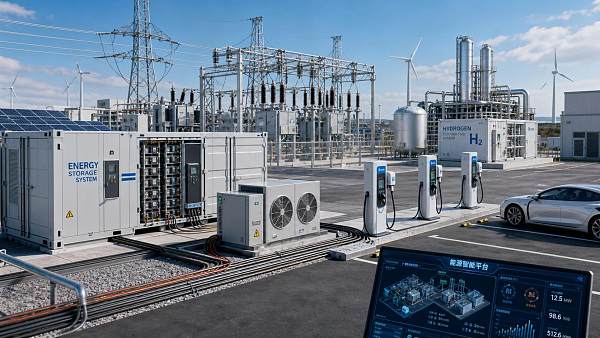
For operators managing BESS, charging hubs, hydrogen loads, and transmission assets, that gap quickly becomes expensive.
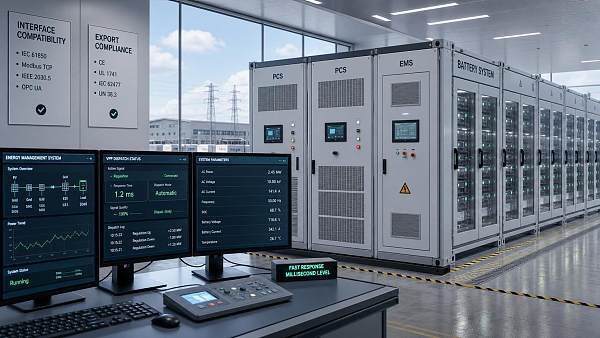
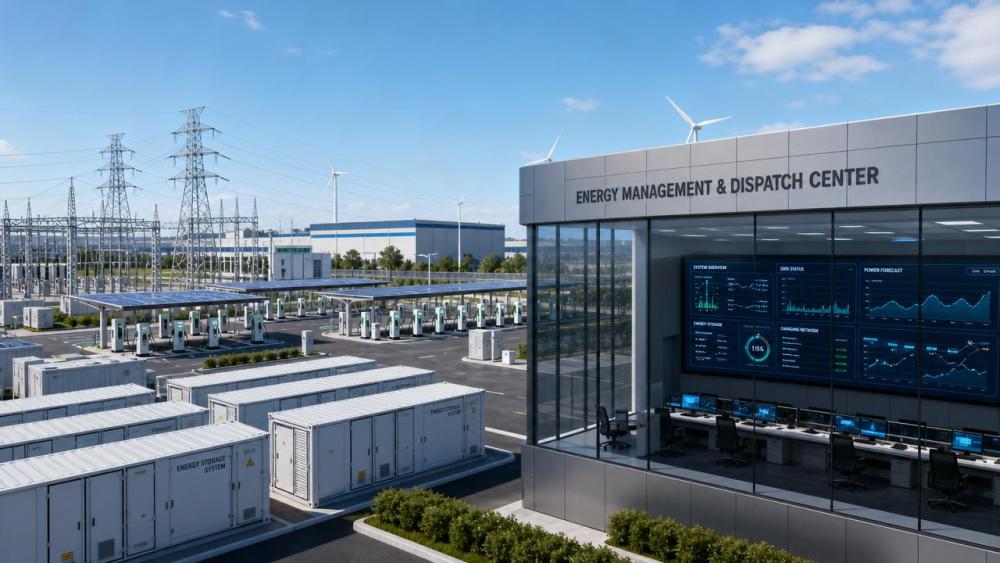
This is where energy intelligence platforms change the game. They turn scattered operational data into one coordinated dispatch picture.
Instead of reacting after an overload, curtailment event, or charging spike, teams can see pressure building early and act with confidence.
In practice, energy intelligence platforms connect grid telemetry, battery conditions, asset constraints, weather inputs, and market signals.
That unified view matters even more in large infrastructure programs where every dispatch choice affects safety, revenue, and schedule.
Why Dispatch Blind Spots Keep Growing
Modern energy systems are no longer linear. Power now moves through storage, charging networks, digital substations, and flexible industrial demand.
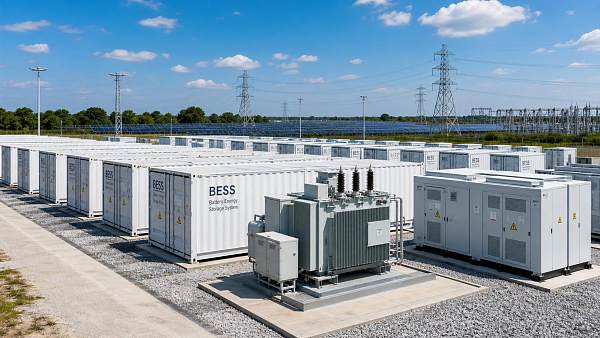
A single BESS container can respond in milliseconds. An electrolyzer may ramp differently. A UHV corridor has another operational logic entirely.
Without energy intelligence platforms, those assets are often monitored in separate dashboards with inconsistent timestamps and incomplete alarm priorities.
That fragmentation creates several blind spots:
- Battery state of charge appears healthy, but thermal limits are already narrowing dispatch flexibility.
- Charging demand surges locally, while upstream transformer loading remains invisible to the field team.
- Hydrogen production schedules ignore real-time renewable volatility and create avoidable balancing stress.
- Transmission constraints are discovered too late, forcing rushed redispatch or renewable curtailment.
More importantly, these issues do not stay isolated. They cascade across schedules, contracts, compliance, and asset life.
What Energy Intelligence Platforms Actually Do
At their core, energy intelligence platforms provide situational awareness plus decision support.
They do not simply collect data. They translate raw signals into dispatch actions that teams can trust.
A strong platform usually combines five capabilities:
- Real-time data fusion across EMS, SCADA, PCS, charging systems, substations, and market feeds.
- Constraint visibility covering thermal limits, ramp rates, maintenance windows, and grid code boundaries.
- Forecasting for load, renewable generation, price signals, and likely congestion events.
- Optimization logic that ranks dispatch options by reliability, cost, and response speed.
- Closed-loop coordination that pushes recommended actions back into operating workflows.
This matters because dispatch quality depends on timing, not just accuracy. Good decisions delivered too late still fail.
Energy intelligence platforms reduce that delay by aligning engineering data with operational urgency.
Where They Deliver Immediate Value
The strongest use cases are not theoretical. They appear wherever flexible assets interact with tight grid conditions.
BESS Dispatch With Thermal Awareness
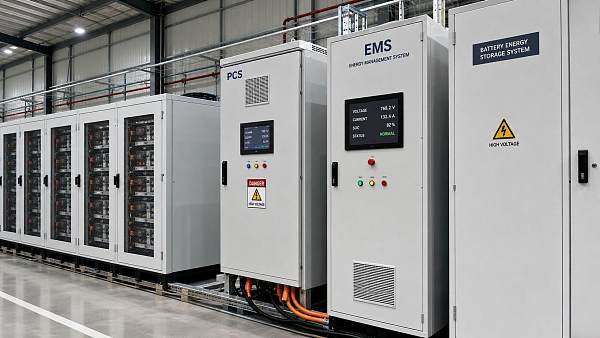
A battery may have available megawatt capacity on paper, yet cell temperature spread can quietly limit safe discharge.
Energy intelligence platforms connect state of charge with thermal behavior, cooling performance, and degradation risk.
That allows dispatch teams to prioritize the right containers, protect lifespan, and avoid pushing stressed modules too hard.
Charging Hubs and V2G Coordination
Fast charging networks create sharp local peaks. Those peaks become harder to manage when fleets arrive in clusters.
With energy intelligence platforms, operators can see charger utilization, feeder stress, and V2G response options in one place.
That supports controlled load shaping instead of emergency throttling.
Hydrogen and Flexible Industrial Loads
Electrolyzers can absorb surplus renewable energy, but only when dispatch logic recognizes timing, pricing, and water-side constraints.
Energy intelligence platforms make those tradeoffs visible, helping teams turn curtailed power into useful production windows.
UHV and Grid Transfer Planning
Long-distance transmission adds another layer. Line capacity, substation status, and receiving-end demand must stay synchronized.
Here, energy intelligence platforms help teams anticipate congestion before it blocks a clean transfer path.
How to Evaluate an Energy Intelligence Platform
Not every platform reduces blind spots equally. Some visualize data well but stop short of usable dispatch guidance.
A practical evaluation should focus on operational fit, not presentation quality alone.
A good rule is simple. If the platform cannot explain why a dispatch recommendation is safe, it is not ready.
Implementation Priorities That Prevent Failure
Most rollout problems come from governance gaps, not software features.
Energy intelligence platforms work best when operational rules are clarified before integration begins.
- Define dispatch authority across grid operations, storage teams, charging operations, and industrial load managers.
- Map critical data sources and confirm timestamp consistency before building dashboards.
- Set hard safety boundaries for BESS thermal events, overload conditions, and communication loss scenarios.
- Start with one high-value workflow, such as peak shaving or congestion avoidance, before scaling platform scope.
- Use post-event reviews to improve alarm thresholds, forecasts, and dispatch playbooks.
From recent deployments, the clearest signal is this: phased adoption beats big-bang deployment almost every time.
That approach limits risk while proving operational value early.
A More Resilient Dispatch Model
As energy systems become more distributed, dispatch can no longer rely on siloed visibility and manual coordination alone.
Energy intelligence platforms give operators a practical way to close the gap between asset flexibility and operational control.
They reduce dispatch blind spots by linking battery thermodynamics, charger behavior, transmission capacity, and flexible load response.
The result is not just better visibility. It is faster intervention, stronger reliability, and better use of every megawatt already built.
For organizations expanding across BESS, UHV networks, smart grids, and hydrogen infrastructure, that shift is becoming essential.
The next step is clear: identify where your current dispatch process loses context, then align energy intelligence platforms to that exact gap first.
Related News
 Grid Stability for Weak Grids: Key Design Risks and Mitigation StepsGrid Storage ArchitectGrid stability for weak grids: learn the top design risks, early warning signs, and proven mitigation steps to protect BESS, EV charging, hydrogen, and converter-heavy projects.
 Millisecond Grid Control for Frequency Regulation: Response Speed, Stability, and EMS IntegrationGrid Storage ArchitectMillisecond grid control for frequency regulation explained: compare response speed, stability, and EMS integration to choose safer, higher-value grid control solutions.
 IEC 62933-5-2:2026 Makes VPP Interfaces MandatoryGrid Storage ArchitectIEC 62933-5-2:2026 makes VPP interfaces mandatory for newly certified PCS and EMS products, reshaping compliance in 32 export markets. Learn what manufacturers, integrators, and distributors must do now.
 Energy Storage Systems Integration: Common Failures and FixesGrid Storage ArchitectEnergy storage systems integration often fails at control, thermal, and commissioning interfaces. Discover common faults, practical fixes, and how to improve BESS reliability and project ROI.
 IEC 62933-5-2:2026 Sets VPP Interface Rules for PCS and EMSGrid Storage ArchitectIEC 62933-5-2:2026 sets new VPP interface rules for PCS and EMS, requiring IEEE 1547.4a-2026 parsing and millisecond response. Learn how this may impact exports, tenders, firmware planning, and compliance.
 C&I Storage Tenders Jump 47% as PCS and EMS Gain WeightGrid Storage ArchitectC&I storage tenders jump 47% as PCS and EMS gain weight, signaling a shift toward AGC response, VPP compatibility, and compliance. See what buyers now value most.
 Energy Intelligence Platforms: Which Data Features Matter Most in Daily Operations?Grid Storage ArchitectEnergy intelligence platforms work best when real-time, decision-grade data drives safer dispatch, faster fault response, and stronger asset returns across storage, grids, EV charging, and hydrogen.
 PCS Selection Power Rating: How to Size for Peak Load and Battery ThroughputGrid Storage ArchitectPCS selection power rating explained: learn how to size PCS for peak load, battery throughput, thermal limits, and grid performance to improve BESS uptime, revenue, and project value.
 Smart Grid Equipment in North America: Cost and Upgrade PrioritiesGrid Storage ArchitectSmart grid equipment North America buying guide: compare cost, resilience, and upgrade priorities across substations, automation, AMI, and renewables to make smarter utility investment decisions.
![]() Power Conversion System Manufacturer Checklist for Reliable BESS IntegrationGrid Storage ArchitectPower conversion system manufacturer checklist for reliable BESS integration. Compare compliance, performance, thermal control, lifecycle cost, and service strength to shortlist lower-risk suppliers.
Power Conversion System Manufacturer Checklist for Reliable BESS IntegrationGrid Storage ArchitectPower conversion system manufacturer checklist for reliable BESS integration. Compare compliance, performance, thermal control, lifecycle cost, and service strength to shortlist lower-risk suppliers.![]() EU Revises CE Guidance for VPP-Linked PCS and EMSGrid Storage ArchitectEU revises CE guidance for VPP-linked PCS and EMS, making EN 50549-3:2026 testing critical. See how exporters can avoid customs risk, delays, and lost EU deliveries.
EU Revises CE Guidance for VPP-Linked PCS and EMSGrid Storage ArchitectEU revises CE guidance for VPP-linked PCS and EMS, making EN 50549-3:2026 testing critical. See how exporters can avoid customs risk, delays, and lost EU deliveries. Power Conversion Systems Manufacturer Checklist for Grid-Scale ProjectsGrid Storage ArchitectPower conversion systems manufacturer checklist for grid-scale projects: compare compliance, thermal design, integration, safety, and service to reduce risk and improve long-term returns.