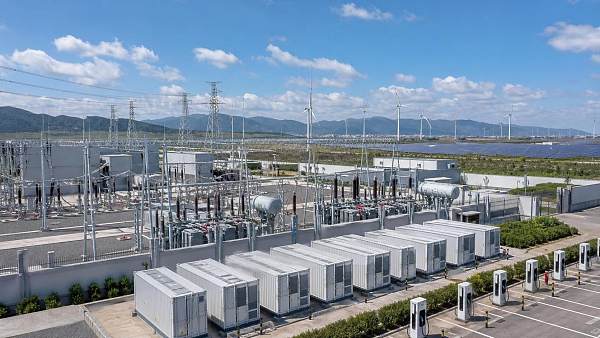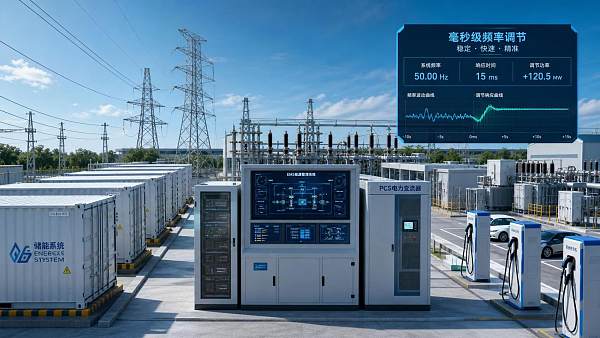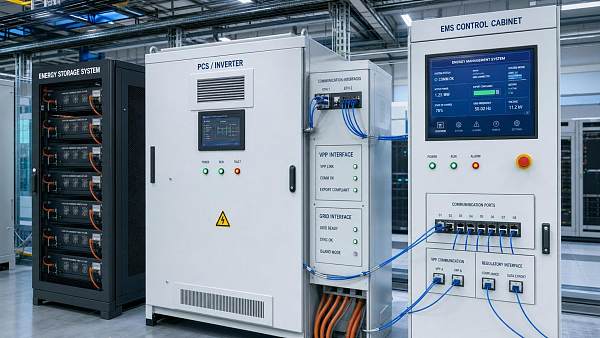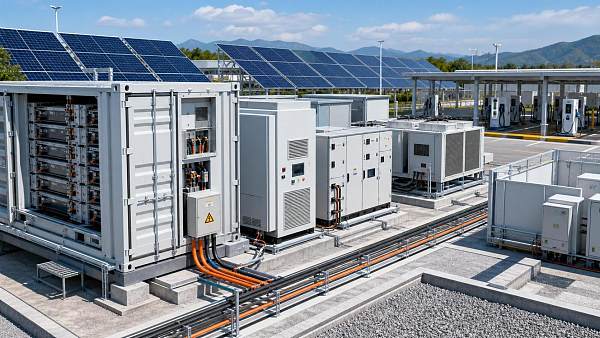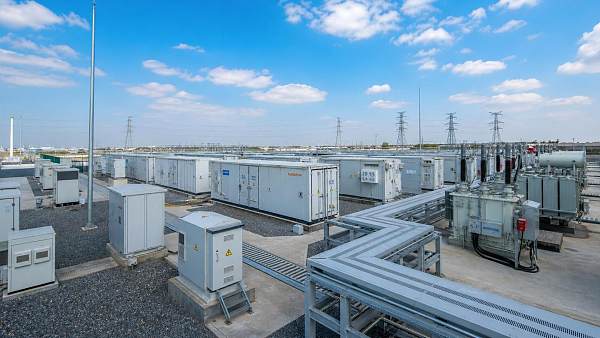
At SNEC 2026, held from June 3 to June 5 and reported on June 5, one detail stood out beyond product launches: storage-themed halls outnumbered photovoltaic halls for the first time. At the same event, Envision, Huawei, and Sungrow presented integrated solutions combining AI dispatch, grid-forming PCS, and 8-hour liquid-cooled BESS. For distributors, system integrators, commercial and industrial project developers, and procurement teams in Europe and North America, the message is worth close attention because distributor feedback from several European markets indicates that a standalone BESS hardware quote is no longer enough to reach tender shortlists.
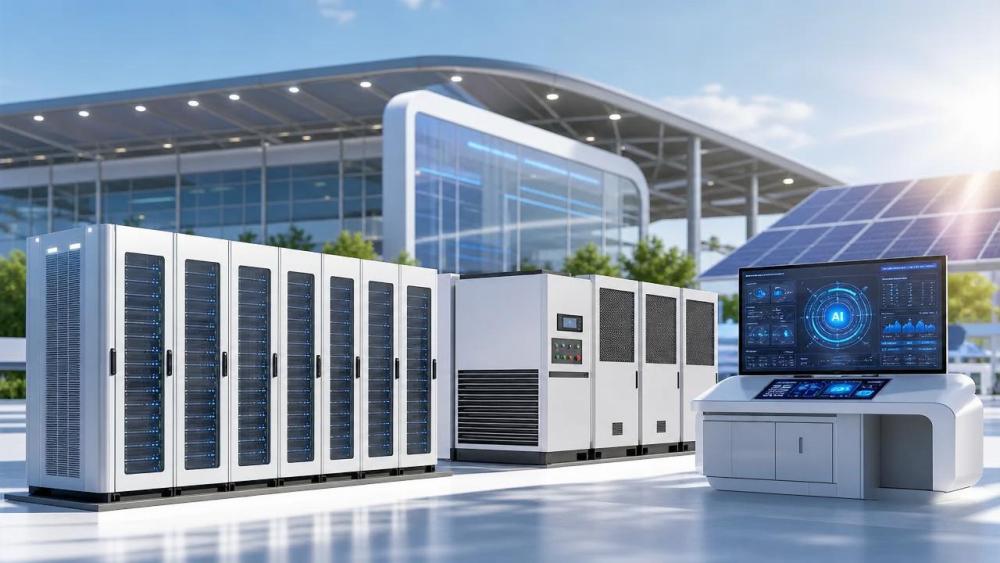
What the event confirmed at SNEC 2026
The confirmed facts are limited but clear. During the 19th SNEC exhibition, storage-themed halls exceeded photovoltaic halls in number for the first time. In parallel, Envision, Huawei, and Sungrow concentrated their product messaging on integrated architectures that combine AI-based dispatch, grid-forming PCS, and 8-hour liquid-cooled BESS.
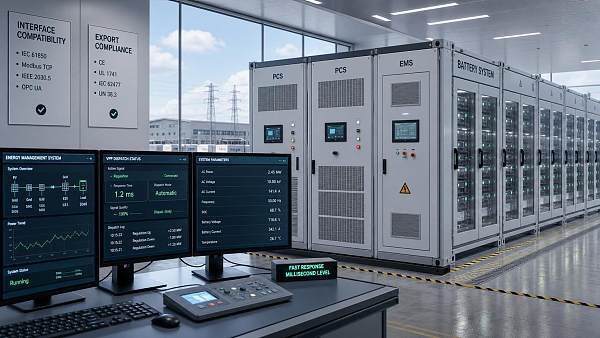
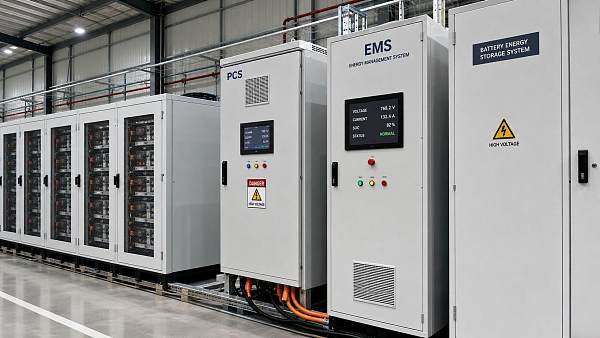
Another confirmed point came from distributor feedback across multiple European countries: bids centered only on BESS hardware are no longer entering tender shortlists. In commercial and industrial projects, delivery built around an integrated “AI + PCS + EMS” package is becoming a standard requirement in procurement discussions.
Why this matters across the value chain
For equipment manufacturers, the benchmark is moving beyond hardware
From an industry perspective, battery and inverter suppliers may be affected first because the competitive frame described in this event is shifting from individual equipment pricing to system-level capability. The business impact is likely to appear in bid design, solution packaging, technical documentation, and how suppliers present the interaction between BESS, PCS, and EMS.
For distributors and channel partners, shortlist criteria are tightening
Distributors and channel operators may see the change most directly in customer screening and tender participation. If procurement teams increasingly expect an integrated stack rather than a hardware-only offer, channel partners will need to pay closer attention to whether upstream suppliers can support system delivery, not just product shipment.
For C&I buyers, evaluation is shifting toward operational capability
Commercial and industrial project buyers may be influenced through procurement criteria and project risk assessment. Observably, the issue is no longer only whether a storage unit is available, but whether AI dispatch, PCS capability, and EMS integration can be delivered together in a usable project framework.
For service and integration firms, delivery scope is expanding
Service providers and integrators may need to focus on a broader delivery boundary. Analysis shows that if “AI + PCS + EMS” is increasingly treated as a package expectation, project execution, commissioning coordination, and supplier matching become more important parts of the commercial offer.
What companies should watch next
How integrated solutions are described in future tenders
What deserves closer attention is whether procurement documents and customer communication increasingly specify system-level functions rather than listing battery hardware alone. That distinction matters because it affects qualification strategy, quotation structure, and how vendors prepare supporting materials.
Whether grid-forming PCS becomes a standard discussion point
The repeated appearance of grid-forming PCS in major SNEC launches suggests that this function is becoming more central in market communication. Analysis shows companies should watch how often it appears in technical exchanges, bid requirements, and solution comparisons, rather than assuming it is only a trade-show theme.
How AI dispatch is translated into project delivery
There is a practical difference between launch-stage product messaging and project-ready implementation. Companies should therefore pay attention to how AI dispatch is framed in customer-facing proposals, contractual scope, and system coordination, especially where tenders expect a complete “AI + PCS + EMS” response.
How sales and delivery teams prepare for system-level questions
For commercial teams, the immediate issue is not abstract strategy but readiness in quotations, technical clarifications, supplier coordination, and delivery commitments. If hardware-only pricing is losing effectiveness in shortlist decisions, internal alignment between product, engineering, and sales becomes more important.
How this signal should be interpreted now
Analysis shows this development is more than a routine exhibition talking point, because it combines two signals in the same time frame: a visible shift in exhibition emphasis toward storage and direct distributor feedback that procurement expectations are changing in Europe. At the same time, it is more appropriate to understand this as a market direction signal rather than a fully settled outcome across every region and project type.
Observably, the strongest implication is not that every buyer has already adopted a uniform standard, but that the center of competition is moving toward integrated delivery logic. That is why the event matters not only for manufacturers, but also for channels, integrators, and end users that need to decide how to frame upcoming projects.
What the update points to for the industry
In practical terms, this news suggests that storage is gaining a more central role in market attention and that integrated system capability is becoming harder to separate from procurement competitiveness in C&I applications. A neutral reading is that the event should be treated as an important directional indicator: not yet a final market conclusion, but no longer a marginal theme either.
Basis of this article and points for follow-up
This article is based on the user-provided news title, event date, and event summary. For this type of industry update, commonly relevant source categories include official exhibition releases, company announcements, industry association updates, authoritative media reports, and technical or standards-related documents.
No specific official source link was provided in the input, so the underlying details still require ongoing verification against future public materials. Follow-up attention should remain on subsequent official wording, procurement requirement changes, and whether system-level “AI + PCS + EMS” expectations continue to appear in actual commercial and industrial project processes.
Related News
 Grid Stability for Weak Grids: Key Design Risks and Mitigation StepsGrid Storage ArchitectGrid stability for weak grids: learn the top design risks, early warning signs, and proven mitigation steps to protect BESS, EV charging, hydrogen, and converter-heavy projects.
 Millisecond Grid Control for Frequency Regulation: Response Speed, Stability, and EMS IntegrationGrid Storage ArchitectMillisecond grid control for frequency regulation explained: compare response speed, stability, and EMS integration to choose safer, higher-value grid control solutions.
 IEC 62933-5-2:2026 Makes VPP Interfaces MandatoryGrid Storage ArchitectIEC 62933-5-2:2026 makes VPP interfaces mandatory for newly certified PCS and EMS products, reshaping compliance in 32 export markets. Learn what manufacturers, integrators, and distributors must do now.
 Energy Storage Systems Integration: Common Failures and FixesGrid Storage ArchitectEnergy storage systems integration often fails at control, thermal, and commissioning interfaces. Discover common faults, practical fixes, and how to improve BESS reliability and project ROI.
 IEC 62933-5-2:2026 Sets VPP Interface Rules for PCS and EMSGrid Storage ArchitectIEC 62933-5-2:2026 sets new VPP interface rules for PCS and EMS, requiring IEEE 1547.4a-2026 parsing and millisecond response. Learn how this may impact exports, tenders, firmware planning, and compliance.
 C&I Storage Tenders Jump 47% as PCS and EMS Gain WeightGrid Storage ArchitectC&I storage tenders jump 47% as PCS and EMS gain weight, signaling a shift toward AGC response, VPP compatibility, and compliance. See what buyers now value most.
 Energy Intelligence Platforms: Which Data Features Matter Most in Daily Operations?Grid Storage ArchitectEnergy intelligence platforms work best when real-time, decision-grade data drives safer dispatch, faster fault response, and stronger asset returns across storage, grids, EV charging, and hydrogen.
 PCS Selection Power Rating: How to Size for Peak Load and Battery ThroughputGrid Storage ArchitectPCS selection power rating explained: learn how to size PCS for peak load, battery throughput, thermal limits, and grid performance to improve BESS uptime, revenue, and project value.
 Smart Grid Equipment in North America: Cost and Upgrade PrioritiesGrid Storage ArchitectSmart grid equipment North America buying guide: compare cost, resilience, and upgrade priorities across substations, automation, AMI, and renewables to make smarter utility investment decisions.
![]() Power Conversion System Manufacturer Checklist for Reliable BESS IntegrationGrid Storage ArchitectPower conversion system manufacturer checklist for reliable BESS integration. Compare compliance, performance, thermal control, lifecycle cost, and service strength to shortlist lower-risk suppliers.
Power Conversion System Manufacturer Checklist for Reliable BESS IntegrationGrid Storage ArchitectPower conversion system manufacturer checklist for reliable BESS integration. Compare compliance, performance, thermal control, lifecycle cost, and service strength to shortlist lower-risk suppliers.![]() EU Revises CE Guidance for VPP-Linked PCS and EMSGrid Storage ArchitectEU revises CE guidance for VPP-linked PCS and EMS, making EN 50549-3:2026 testing critical. See how exporters can avoid customs risk, delays, and lost EU deliveries.
EU Revises CE Guidance for VPP-Linked PCS and EMSGrid Storage ArchitectEU revises CE guidance for VPP-linked PCS and EMS, making EN 50549-3:2026 testing critical. See how exporters can avoid customs risk, delays, and lost EU deliveries. Power Conversion Systems Manufacturer Checklist for Grid-Scale ProjectsGrid Storage ArchitectPower conversion systems manufacturer checklist for grid-scale projects: compare compliance, thermal design, integration, safety, and service to reduce risk and improve long-term returns.