Why does hydrogen electrolyzers ISO certification matter so much now?
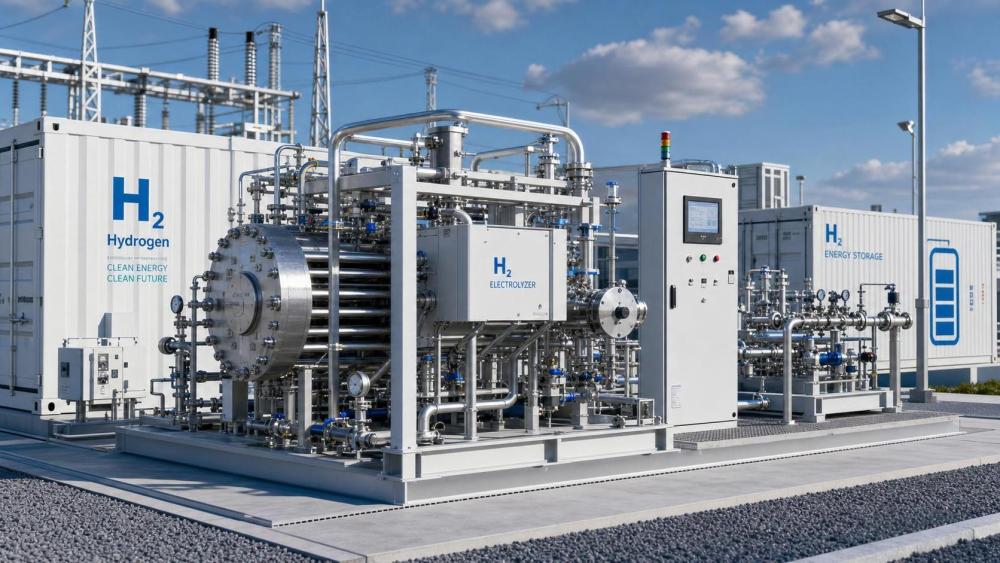
Hydrogen electrolyzers ISO certification now shapes market access, financing confidence, and long-term operating credibility across energy infrastructure projects.
For many teams, certification starts as a compliance task.
In practice, it quickly becomes a design-control issue, a safety issue, and a documentation discipline issue.
That is especially true for electrolyzer systems connected to renewable generation, BESS containers, smart substations, or large charging hubs.
Hydrogen equipment does not operate in isolation.
It sits inside a wider grid modernization chain where electrical stability, thermal control, gas purity, and shutdown logic must all align.
This is also why ESGS tracks hydrogen electrolyzers alongside BESS, UHV transmission, and EV energy infrastructure.
The common thread is controlled energy flow under demanding conditions.
A strong checklist helps turn hydrogen electrolyzers ISO certification into a repeatable engineering process rather than a last-minute audit scramble.
Which ISO-related standards usually sit behind the certification checklist?
A common misunderstanding is expecting one single ISO certificate to cover the entire electrolyzer package.
More often, hydrogen electrolyzers ISO certification involves a standards matrix.
That matrix combines management systems, product safety expectations, testing methods, and traceability requirements.
The exact combination depends on project scope, technology route, and export destination.
- ISO 9001 for quality management consistency across design, sourcing, production, and corrective action.
- ISO 45001 where occupational health and safety controls must be formally structured.
- ISO 14001 when environmental management obligations affect plant approval and customer review.
- ISO 22734 as the most recognized reference for hydrogen generators using water electrolysis.
- ISO 14687 when hydrogen purity requirements influence downstream mobility or industrial use.
- IEC and regional electrical standards for control cabinets, protection logic, EMC, and grid interfaces.
The useful question is not, “Which certificate looks best?”
The better question is, “Which standards control the real risks in this system architecture?”
PEM and alkaline systems may face different pressure profiles, material compatibility issues, and control strategies.
Those differences should be reflected in the checklist from the beginning.
What should be on a practical hydrogen electrolyzers ISO certification checklist?
A useful checklist is not just a document index.
It should connect evidence, risk points, and acceptance criteria.
In real projects, missing links between those three areas cause most delays.
The best hydrogen electrolyzers ISO certification files read like a controlled story.
Every requirement points to evidence, and every risk has a tested control.
That is what gives buyers, insurers, and project developers confidence.
Where do certification projects usually fail, even when the equipment is technically strong?
The most common failure is not poor core technology.
It is weak integration between engineering, safety, procurement, and document control.
A stack may perform well in factory trials, yet still struggle in certification review.
One reason is that hydrogen systems combine electrical, mechanical, chemical, and software risks.
Evidence must therefore be coherent across disciplines.
- Alarm logic exists in the PLC, but response time was never formally verified.
- Pressure vessel certificates are available, but tag numbers do not match assembly records.
- Hydrogen purity claims look acceptable, yet sampling methods are not defined.
- Ventilation design is documented, but room-level gas dispersion assumptions were never challenged.
- Suppliers changed a valve, seal, or sensor without re-running the affected validation tests.
In broader energy systems, this pattern is familiar.
BESS projects face similar pressure around thermal management evidence and propagation controls.
Hydrogen electrolyzers ISO certification demands the same discipline: no undocumented assumptions, no floating revisions, no unverified safety claims.
How should you judge cost, timing, and scope before starting?
This is where many planning discussions become unrealistic.
Certification cost is rarely just the audit fee.
It includes engineering revisions, additional tests, supplier follow-up, translation work, and delayed shipment risk.
A practical timing estimate should consider three layers.
- Readiness time: closing document gaps, confirming standards scope, and cleaning revision history.
- Verification time: running tests, reviewing failures, and issuing corrected reports.
- Approval time: auditor review cycles, clarifications, and formal certificate release.
For new platforms, hydrogen electrolyzers ISO certification can expand quickly if the checklist starts too late.
For mature platforms, timelines become more predictable once document discipline is already embedded.
More advanced projects also assess downstream value.
Better certification readiness can improve project bankability, simplify export review, and reduce technical disputes during commissioning.
That matters in sectors where hydrogen production is linked to grid balancing, renewable curtailment recovery, or port-scale fuel logistics.
What does a sensible next-step plan look like?
Start by mapping the exact certification boundary.
Is the review covering the stack, the skid, the full balance of plant, or the integrated control package?
That single definition prevents weeks of rework.
Then build the checklist around evidence ownership.
Every line item should have one responsible source, one document path, and one acceptance status.
It also helps to review hydrogen electrolyzers ISO certification through the same systems lens used in modern grid infrastructure.
ESGS often frames this as coordinated reliability across storage, transmission, charging, and hydrogen conversion assets.
The point is simple: strong compliance follows strong system thinking.
- Confirm applicable ISO, IEC, and regional requirements before final design freeze.
- Recheck hazard analysis after any change to pressure, materials, controls, or ventilation.
- Validate supplier traceability for critical valves, sensors, membranes, and pressure parts.
- Prepare integrated test records, not only component-level certificates.
- Treat manuals and emergency procedures as controlled compliance evidence.
A good hydrogen electrolyzers ISO certification checklist does not just help pass an audit.
It creates a cleaner path for safer operation, stronger tenders, and fewer surprises after delivery.
The practical next move is to review current files against the real project boundary, then close the highest-risk evidence gaps first.
Related News
 Hydrogen Electrolyzers ISO Certification ChecklistHydrogen Tech ScientistHydrogen electrolyzers ISO certification checklist: learn key standards, audit gaps, and practical steps to speed approval, reduce risk, and strengthen project credibility.
 Alkaline Electrolyzer Efficiency vs CAPEX: What Matters Most in Project PlanningHydrogen Tech ScientistAlkaline electrolyzer project planning starts with more than efficiency alone. Discover how CAPEX, power cost, utilization, and bankability shape smarter hydrogen investment decisions.
 NEOM Starts ALK Assembly Program, Grants First China LicensesHydrogen Tech ScientistNEOM starts its ALK assembly program with first China licenses, setting a $2.1/kg LCOH cap and ISO 22734-2:2025 interface rule. Learn what it means for suppliers, bids, compliance, and project delivery.
 Brazil ANP Sets PCS Integration Rule for ALK ExportsHydrogen Tech ScientistBrazil ANP sets PCS integration rule for ALK exports, requiring shared-cabinet control and on-site validation. Learn how electrolyzer makers and buyers can prepare for Brazil compliance.
 Brazil Mandates PCS-Integrated ALK ElectrolyzersHydrogen Tech ScientistBrazil mandates PCS-integrated ALK electrolyzers for new orders, requiring IEEE 1547-2018 Rev.2 support and joint certification. Learn what exporters, buyers, and project teams must do now.
 Brazil Sets Integrated PCS Rule for ALK Hydrogen BidsHydrogen Tech ScientistBrazil Sets Integrated PCS Rule for ALK Hydrogen Bids: discover how ANP’s new co-architecture and IEC 61850-7-42 requirements could reshape bidding, compliance, and market access.
 Brazil ANP Tender Sets New Entry Rules for ALK BidsHydrogen Tech ScientistBrazil ANP tender sets new entry rules for ALK bids, requiring PCS integration, IEC 62443-3-3 interfaces, and extra compliance files. See what suppliers must prepare before December.
 Brazil ANP Opens First 1.2GW ALK TenderHydrogen Tech ScientistBrazil ANP opens its first 1.2GW ALK tender, spotlighting PCS co-architecture and IEC 62864-2 grid interface rules. See what suppliers and integrators must prepare now.
 Chile Sets First Grid Code for Green Hydrogen-Storage PlantsHydrogen Tech ScientistChile sets the first grid code for green hydrogen-storage plants, reshaping ALK electrolyzer, PCS/EMS, and BESS integration. Learn what it means for compliance, bidding, and project delivery.
 Chile Sets Grid Rules for Green Hydrogen-BESS PlantsHydrogen Tech ScientistChile sets new grid rules for green hydrogen-BESS plants, requiring shared PCS and EMS control. Learn how the Chile standard could reshape compliance, system design, and Latin America market strategy.
 Chile Sets Grid Rules for ALK-BESS Hybrid PlantsHydrogen Tech ScientistChile Sets Grid Rules for ALK-BESS Hybrid Plants: learn how Chile’s new grid standard reshapes PCS, EMS, and SCADA design, compliance, and project delivery before the July 2026 deadline.
 Chile Sets Grid Rule for ALK-BESS Hybrid PlantsHydrogen Tech ScientistChile Sets Grid Rule for ALK-BESS Hybrid Plants: learn how Chile’s new shared-PCS standard impacts ALK electrolyzers, BESS integration, procurement compliance, and project delivery.