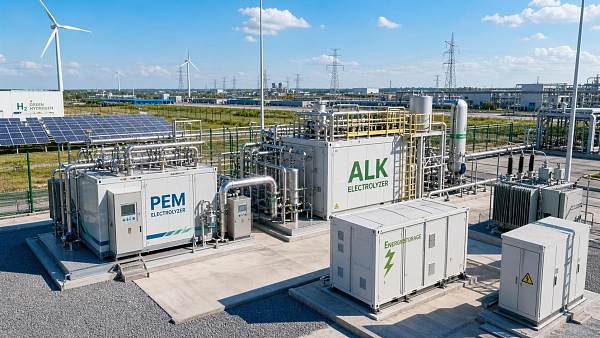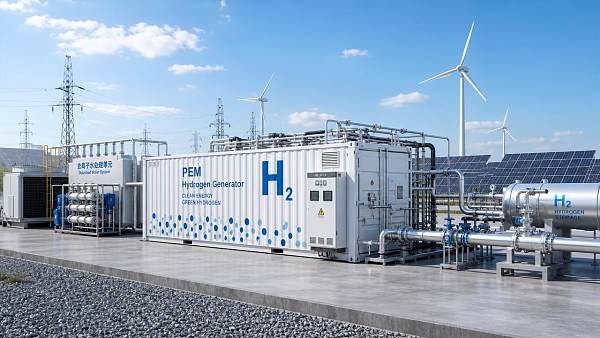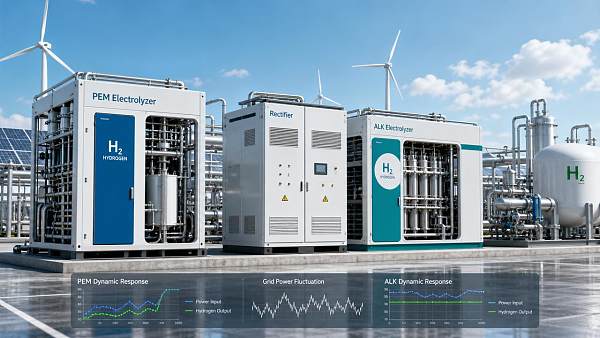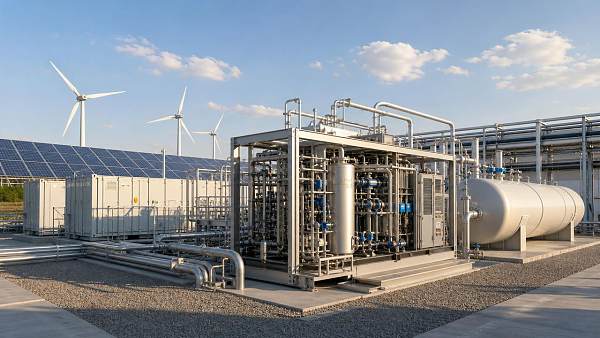
Fast-response hydrogen projects are forcing a sharper comparison between PEM electrolysis and alkaline systems. When power input changes by the minute, technology choice affects not only efficiency, but also ramping behavior, system stability, water management, and lifetime economics.
That matters across the wider energy chain tracked by ESGS, where BESS containers, smart grids, EV charging hubs, and hydrogen assets increasingly operate as one coordinated flexibility stack. In that setting, PEM electrolysis is often evaluated not as a standalone machine, but as part of a dynamic grid-response architecture.
Why this comparison has become more urgent
The older question was simple: which electrolyzer produces hydrogen at lower cost? The newer question is more demanding: which platform keeps value when renewable input is unstable, electricity prices are volatile, and dispatch windows are short?
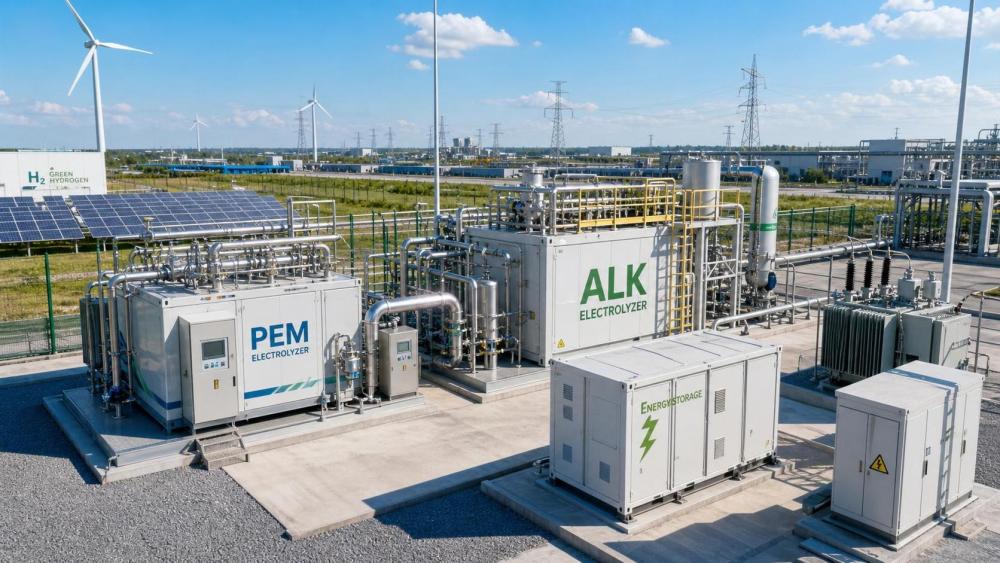
This is why PEM electrolysis is receiving more attention in projects linked to curtailed wind, utility-scale solar, microgrids, and power-to-X plants with flexible operating schedules. The conversation is no longer only about nameplate efficiency. It is about response quality.
ALK remains highly relevant, especially where power supply is stable and large hydrogen volumes dominate the business case. Yet fast-response operation can expose design limits that are less visible in baseload conditions.
The core technical difference behind PEM electrolysis and ALK
PEM electrolysis uses a solid polymer membrane and typically operates with high current density and compact cell design. It can respond quickly to load changes and usually offers cleaner hydrogen output with a smaller physical footprint.
ALK uses a liquid alkaline electrolyte, usually potassium hydroxide, and has a long industrial track record. It is mature, familiar to many operators, and often attractive for large installations where dynamic performance is not the first priority.
In practical terms, PEM electrolysis is often stronger when projects need frequent starts, stops, and sharp ramping. ALK can be more comfortable in steadier operating bands, where long continuous runs support cost recovery.
A quick operating comparison
Where fast-response projects gain from PEM electrolysis
Not every hydrogen project needs second-level agility. However, several emerging configurations clearly reward it.
One example is co-location with solar and wind plants facing curtailment. In these cases, PEM electrolysis can absorb fluctuating power without waiting for a long stabilization window. That improves renewable utilization and reduces lost generation.
Another example is hybrid integration with BESS. A battery may smooth millisecond-level disturbances, while PEM electrolysis handles broader load-following over minutes and hours. This layered approach mirrors the ESGS view of energy infrastructure as linked reservoirs and control channels rather than isolated assets.
PEM electrolysis also fits projects tied to dynamic power tariffs. If cheap electricity appears in short windows, response speed can influence hydrogen cost as much as stack efficiency. Missing low-price intervals can erase the apparent capex advantage of slower systems.
Typical use cases where response speed matters
- Grid-connected plants balancing highly variable renewable generation.
- Ports and e-fuels hubs using intermittent green electricity.
- Industrial sites seeking flexible hydrogen production beside demand-response programs.
- Microgrids combining electrolyzers with storage, EV charging, and local generation.
- Projects planning future participation in ancillary services or virtual power plant schemes.
Why ALK still makes sense in many business cases
The case for PEM electrolysis becomes weaker when operating conditions are stable. If a project has predictable baseload power, long runtime, and enough land, ALK can remain very competitive.
That is especially true in conventional industrial hydrogen supply, where daily load variation is limited and hydrogen throughput is the dominant metric. In these cases, operators may accept slower ramping in exchange for lower upfront cost and established maintenance practices.
There is also a scale effect. Large plants with firm power contracts may prioritize bankability, supply chain familiarity, and standardized engineering. ALK often aligns well with that profile, even if PEM electrolysis looks technically superior under dynamic conditions.
The real evaluation point is system behavior, not stack labels
A common mistake is comparing PEM electrolysis and ALK only at cell or stack level. Fast-response projects should instead be assessed at system level.
That means reviewing the rectifier, water treatment, compression train, thermal management, controls, startup logic, safety layers, and grid interconnection behavior. A fast stack does not guarantee a fast plant.
This is where the broader ESGS perspective becomes useful. Electrolyzers increasingly sit beside PCS units, transformers, GIS equipment, and digital dispatch systems. The value of PEM electrolysis often depends on how well the full asset package handles variable power flow.
Questions that sharpen the decision
- How often will the plant cycle each day or week?
- What minimum load is realistic without harming product quality or uptime?
- How much value comes from capturing short-duration low-price electricity?
- Will the plant operate with BESS, VPP controls, or renewable curtailment recovery?
- Which balance-of-plant components become bottlenecks during ramping?
- What are the implications for safety, purity, and downstream compression?
Economics change when variability enters the model
On paper, ALK may show lower initial capex. In reality, project economics depend on utilization pattern, electricity sourcing, degradation behavior, and dispatch strategy.
PEM electrolysis may justify higher capex if it increases renewable capture, improves operating hours under variable input, or reduces the need for oversized buffering equipment. Faster response can convert volatility into usable production time.
At the same time, dynamic duty cycles should not be romanticized. Frequent ramping must be tested against stack durability, maintenance intervals, and control system maturity. A responsive plant only creates value if availability remains strong over time.
A practical decision lens
How to move from comparison to project judgment
A sound decision starts with the power profile, not the electrolyzer brochure. Map hourly and sub-hourly electricity behavior first. Then test how PEM electrolysis and ALK perform against the actual dispatch pattern.
Next, separate stack metrics from plant metrics. Review startup time, minimum stable load, hydrogen purity under part load, water quality requirements, thermal transients, and integration with transformers, converters, and storage.
Finally, model the project as part of a broader flexibility portfolio. In many modern energy systems, hydrogen production, battery storage, grid equipment, and charging infrastructure are economically linked. That wider context often clarifies whether PEM electrolysis creates measurable operating value.
For the next step, build a comparison matrix around ramp rate, part-load efficiency, annual cycling, balance-of-plant constraints, and electricity market exposure. That approach reveals whether PEM electrolysis is a premium option, or the more rational fit for fast-response deployment.
Related News
 PEM Electrolysis vs ALK: Which Fits Fast-Response Projects?Hydrogen Tech ScientistPEM electrolysis vs ALK: discover which technology fits fast-response hydrogen projects best, with insights on ramping, flexibility, cost, and real-world grid integration.
 PEM Electrolysis Efficiency: What Really Impacts Hydrogen Output?Hydrogen Tech ScientistPEM electrolysis efficiency depends on more than stack ratings. Learn what drives real hydrogen output, from water quality to thermal control, and compare systems with confidence.
 PEM Electrolysis vs ALK: Which Lowers Ramp-Time Risk in 2026?Hydrogen Tech ScientistPEM electrolysis vs ALK in 2026: discover which technology better reduces ramp-time risk, improves renewable integration, and boosts dispatch reliability for hydrogen projects.
 PEM Electrolysis Efficiency: When Higher Capex Pays OffHydrogen Tech ScientistPEM electrolysis can justify higher capex when flexibility, purity, and renewable integration improve lifetime returns. See when the premium pays off.
 Green Hydrogen Production Cost: ALK vs PEM in PracticeHydrogen Tech ScientistGreen hydrogen production cost in practice: compare ALK vs PEM across CAPEX, flexibility, efficiency, and real project risk to choose the bankable path.