PEM Electrolysis Is Moving From Technical Debate to Capital Discipline
For financial decision-makers, PEM electrolysis is not just a technology choice but a capital allocation question.
Higher upfront investment often draws immediate scrutiny.
Yet the real comparison is not capex alone.
It is lifetime value under volatile power prices, renewable intermittency, and stricter hydrogen quality expectations.
PEM electrolysis has gained attention because energy systems are changing fast.
Grid-scale batteries, UHV transmission, and flexible charging networks are reshaping how electricity is produced, moved, and consumed.
In that environment, hydrogen assets must react quickly and integrate cleanly with unstable renewable supply.
That is where PEM electrolysis can justify premium spending.
When properly matched to project conditions, the technology can improve utilization, reduce conversion losses from curtailment, and lower system-level risk.
The Market Signal Is Clear: Flexibility Now Carries Monetary Value
The old hydrogen investment model favored the cheapest installed equipment.
That logic weakens when electricity input is increasingly variable.
Solar oversupply, wind ramps, congestion, and negative pricing create a new profit map.
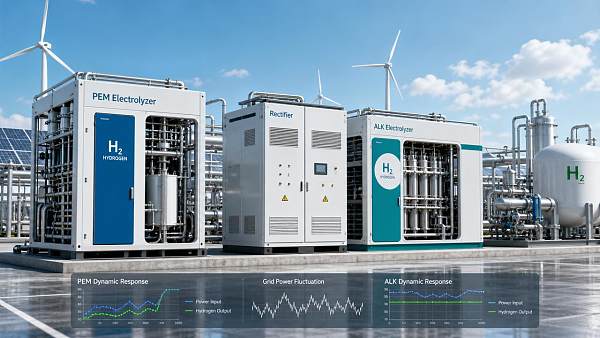
PEM electrolysis aligns with that map because it starts fast, ramps fast, and handles dynamic load changes better than slower alternatives.
This matters for projects linked to curtailed renewables, behind-the-meter industrial decarbonization, and grid balancing strategies.
In many regions, project economics now depend on capturing short windows of cheap electricity.
PEM electrolysis can convert those windows into higher-value hydrogen more effectively.
Why this shift is accelerating
- Renewable penetration is increasing intraday power volatility.
- Hydrogen offtakers want stable purity for refining, mobility, and electronics uses.
- Grid operators value flexible loads that can absorb surplus generation.
- Carbon reduction targets are pushing cleaner feedstocks and more traceable production.
- Investors are placing greater weight on resilience, dispatchability, and downside protection.
Where Higher PEM Electrolysis Capex Starts to Pay Back
Not every hydrogen project needs PEM electrolysis.
The premium makes the most sense when flexibility has direct economic value.
The table below shows the typical conditions where higher capex can be rational.
This is why PEM electrolysis appears more often in integrated energy strategies.
It works especially well alongside BESS, digital dispatch platforms, and renewable-heavy power portfolios.
The True Drivers Behind PEM Electrolysis Economics
Capex is visible on day one.
Value leakage happens over many years.
A serious investment case for PEM electrolysis should test broader variables than equipment price alone.
Key value drivers to model
- Electricity price volatility and frequency of very low-price intervals.
- Curtailment volume available for conversion into hydrogen.
- Hydrogen selling price by purity tier and end use.
- Utilization rate under real dispatch behavior, not ideal assumptions.
- Water treatment, compression, storage, and balance-of-plant costs.
- Degradation, maintenance windows, and replacement cycle assumptions.
- Potential revenue from flexibility or avoided grid charges.
PEM electrolysis often wins when the system boundary is drawn correctly.
A cheaper electrolyzer can look attractive in procurement spreadsheets.
It may underperform once power supply becomes intermittent and quality penalties appear.
That difference becomes critical in large-scale projects linked to green ammonia, mobility corridors, or steel decarbonization.
Impacts Across the Energy Chain Are Becoming More Interconnected
The rise of PEM electrolysis is not isolated.
It is tied to broader infrastructure changes across power and transport systems.
As grids digitize, batteries scale, and ultra-high-voltage links move renewable electricity farther, flexible hydrogen production becomes more valuable.
How the effect spreads across business links
- Renewable generation gains a sink for oversupply and curtailment reduction.
- Grid systems gain a controllable load that can support balancing strategies.
- Industrial users gain cleaner molecules for heat, feedstock, and process decarbonization.
- Mobility infrastructure gains access to high-purity hydrogen for fuel-cell applications.
- Energy storage portfolios gain another pathway for long-duration value capture.
This interconnected value is central to the ESGS view of modern infrastructure.
Hydrogen assets should be evaluated as part of a wider green power architecture.
That architecture now includes BESS containers, smart dispatch, charging hubs, and advanced transmission assets.
What Deserves the Closest Attention Before Backing PEM Electrolysis
The strongest projects usually share several practical traits.
They do not rely on technology optimism alone.
They build a bankable case around operational reality.
Core points to examine
- Whether renewable supply patterns actually favor flexible operation.
- Whether hydrogen offtake rewards purity, reliability, or low carbon intensity.
- Whether interconnection constraints create value for responsive loads.
- Whether water availability and treatment economics are fully understood.
- Whether stack life assumptions match expected cycling behavior.
- Whether the project can monetize flexibility beyond hydrogen sales alone.
- Whether digital controls can coordinate PEM electrolysis with storage and grid conditions.
A Practical Framework for Deciding When PEM Electrolysis Is Worth It
A disciplined approach can separate promising opportunities from expensive misalignment.
This framework helps avoid the common mistake of comparing technologies in isolation.
The better test is strategic fit under future operating conditions.
The Next Move Should Be Evidence-Based, Not Cost-Headline Driven
PEM electrolysis becomes attractive when flexibility, purity, and renewable integration carry measurable value.
Higher capex does not automatically mean better economics.
But in the right operating context, it can mean lower lifetime risk and stronger strategic returns.
The next practical step is to model PEM electrolysis against real power data, offtake quality needs, and system-level flexibility revenues.
That is where investment clarity emerges.
As clean power networks grow more dynamic, PEM electrolysis will increasingly be judged not by price tags alone, but by total infrastructure value.
Related News
 PEM Electrolyzer Spot Prices Drop on JV Output ShiftHydrogen Tech ScientistPEM electrolyzer spot prices drop as JV output in Jiangsu reshapes FOB China benchmarks. See how Korean MEA-linked production affects contracts, sourcing, and green hydrogen project costs.
 DOE Unveils $840M PEM Electrolyzer PushHydrogen Tech ScientistDOE Unveils $840M PEM Electrolyzer Push: learn how new U.S. sourcing rules, 75% domestic content, and ITAR audits could reshape hydrogen supply chains and procurement decisions.
 PEM Electrolysis Stack Life: Key Failure Risks to Check FirstHydrogen Tech ScientistPEM electrolysis stack life depends on early detection of membrane, seal, water purity, pressure, and thermal risks. Learn the first checks that help prevent failure and cut operating costs.
 EU Extends CBAM to PEM ElectrolyzersHydrogen Tech ScientistEU Extends CBAM to PEM Electrolyzers: learn what verified embedded emissions, third-party checks, EN 15316-4-7:2026, and TÜV-accredited LCA now mean for EU-bound shipments.
 Deionized Water Specs for Water Electrolysis SystemsHydrogen Tech ScientistWater electrolysis systems deionized water specs directly affect stack life, hydrogen purity, and uptime. Discover key limits, OEM review points, and practical checks for reliable performance.
 PEM Electrolyzer Degradation Rates: How to Judge Lifetime and Stack Replacement RiskHydrogen Tech ScientistPEM electrolyzer degradation rates shape lifetime, hydrogen cost, and stack replacement risk. Learn how to assess real-world aging signals and make smarter planning decisions.
 PEM Electrolysis vs ALK: Which Fits Fast-Response Projects?Hydrogen Tech ScientistPEM electrolysis vs ALK: discover which technology fits fast-response hydrogen projects best, with insights on ramping, flexibility, cost, and real-world grid integration.
 PEM Electrolysis Efficiency: What Really Impacts Hydrogen Output?Hydrogen Tech ScientistPEM electrolysis efficiency depends on more than stack ratings. Learn what drives real hydrogen output, from water quality to thermal control, and compare systems with confidence.
 PEM Electrolysis vs ALK: Which Lowers Ramp-Time Risk in 2026?Hydrogen Tech ScientistPEM electrolysis vs ALK in 2026: discover which technology better reduces ramp-time risk, improves renewable integration, and boosts dispatch reliability for hydrogen projects.
 PEM Electrolysis Efficiency: When Higher Capex Pays OffHydrogen Tech ScientistPEM electrolysis can justify higher capex when flexibility, purity, and renewable integration improve lifetime returns. See when the premium pays off.
 Green Hydrogen Production Cost: ALK vs PEM in PracticeHydrogen Tech ScientistGreen hydrogen production cost in practice: compare ALK vs PEM across CAPEX, flexibility, efficiency, and real project risk to choose the bankable path.