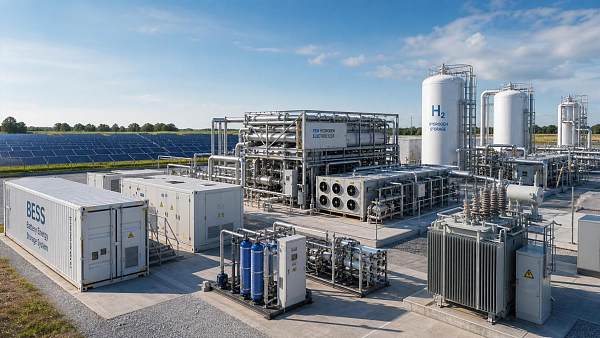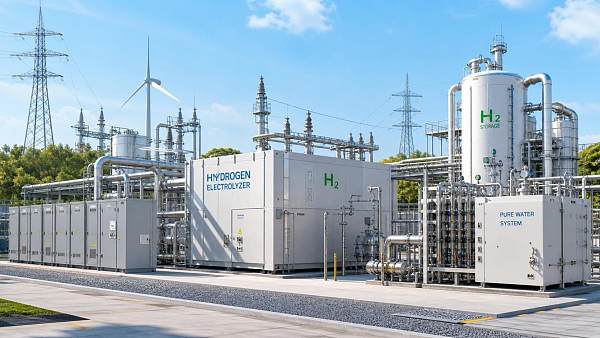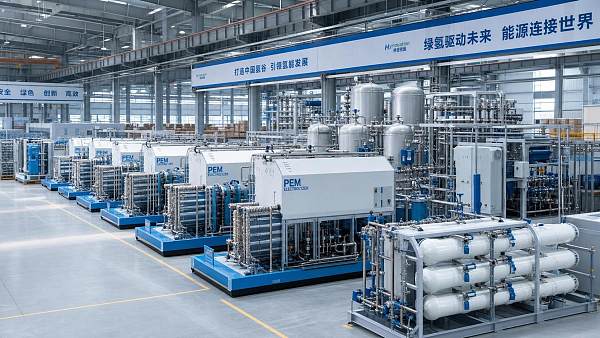
PEM electrolysis efficiency is often reduced to one headline figure, yet hydrogen output never comes from one variable alone. In real projects, stack behavior, water quality, thermal control, pressure strategy, and power electronics all interact. That matters across the wider clean-energy chain, where hydrogen systems now sit beside BESS containers, smart grid equipment, UHV transmission assets, and fast-charging hubs as practical tools for balancing renewable power and converting surplus electricity into transportable fuel.
Why efficiency deserves closer inspection
A PEM electrolyzer can look efficient on paper and still disappoint in daily operation. Rated performance is usually measured under stable conditions. Field output rarely is.
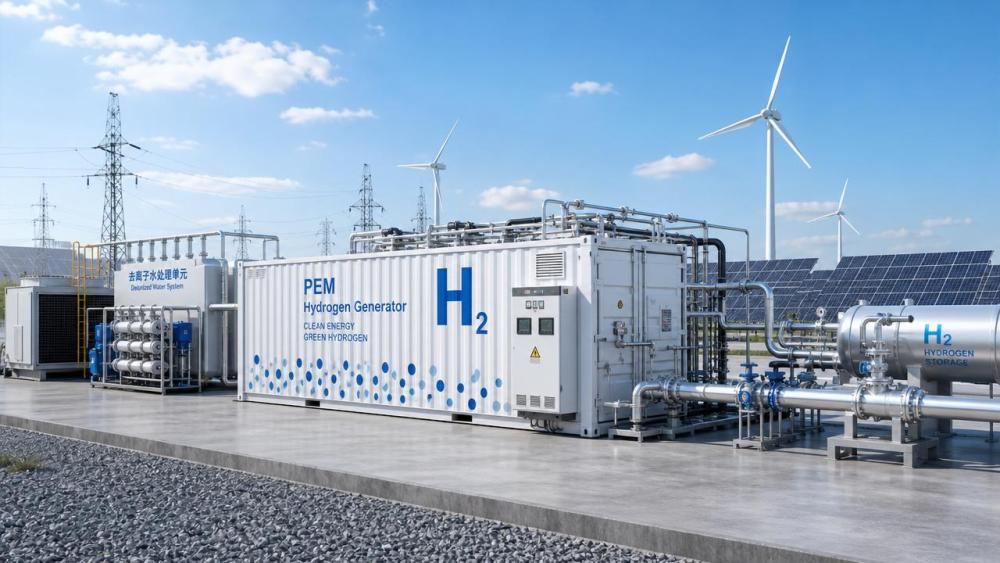
This is especially relevant in energy systems shaped by variable solar and wind generation. When input power swings, the true question becomes how efficiently the unit converts fluctuating electricity into consistent hydrogen.
For grid-connected projects, PEM electrolysis is no longer an isolated process unit. It behaves more like a responsive node inside a broader infrastructure network.
That is why ESGS tracks hydrogen electrolyzers alongside storage, transmission, and EV charging systems. In each case, the real value lies in stable energy flow under changing operating conditions.
What PEM electrolysis efficiency actually means
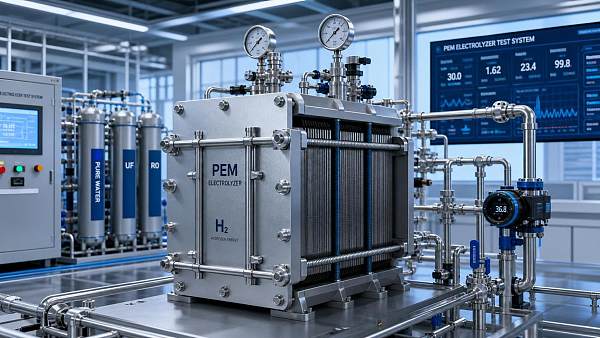
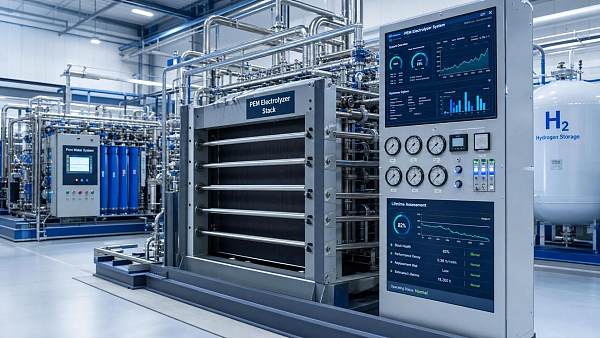
At the simplest level, PEM electrolysis splits purified water into hydrogen and oxygen using electricity, a proton exchange membrane, catalysts, and controlled flow paths.
Efficiency can be viewed from several angles. One is electrical energy consumed per kilogram of hydrogen. Another is stack conversion performance at a defined current density.
A third perspective is system efficiency, which includes pumps, cooling loops, power conversion, water treatment, gas drying, and controls. This broader view is usually more useful.
In practice, hydrogen output depends on whether the stack can sustain favorable electrochemical conditions while the balance of plant prevents hidden losses.
Stack efficiency is not system efficiency
Many assessments fail because they compare stack numbers with plant-level results. A strong stack can be undermined by poor thermal management or oversized auxiliary loads.
That gap becomes larger in partial-load operation, where auxiliary systems may consume a higher share of total input energy.
The variables that most directly shape hydrogen output
The most important influences are tightly linked. Changing one often shifts several others.
Current density sets the first trade-off
Higher current density usually increases hydrogen production per unit area. It also raises cell voltage and associated losses.
That means PEM electrolysis can deliver more output, but not always with the best energy efficiency. The best operating point depends on power cost, footprint limits, and duty cycle.
Membrane health shapes both output and reliability
The membrane is not a passive separator. Its hydration state, thickness, aging profile, and chemical stability directly affect resistance and crossover behavior.
When membrane performance declines, the effect is not just lower efficiency. It can also trigger purity concerns, uneven stack loading, and shortened service intervals.
Water quality is a process variable, not a utility detail
PEM electrolysis requires highly purified water. Trace ions and contaminants can poison catalysts, damage membranes, and create long-term output losses that are difficult to reverse.
This becomes a project risk in remote renewable sites, where water treatment stability may be harder to maintain than stack performance itself.
Why thermal and pressure management often decide real efficiency
Temperature is one of the clearest examples of hidden complexity. Warmer stacks generally improve kinetics and reduce resistance, but excessive heat accelerates wear.
The goal is not simply higher temperature. It is stable temperature distribution across the stack and repeatable control during load changes.
This mirrors the logic seen in liquid-cooled BESS containers, where small thermal differences can strongly influence safety and useful life. Hydrogen systems face a different chemistry, but similar discipline.
Pressure strategy matters in the same way. Producing hydrogen at higher pressure can reduce downstream compression work, yet it may also shift stack stress and system losses.
A project therefore needs to compare total energy use across the full process path, not just the electrolyzer nameplate.
The overlooked role of balance-of-plant design
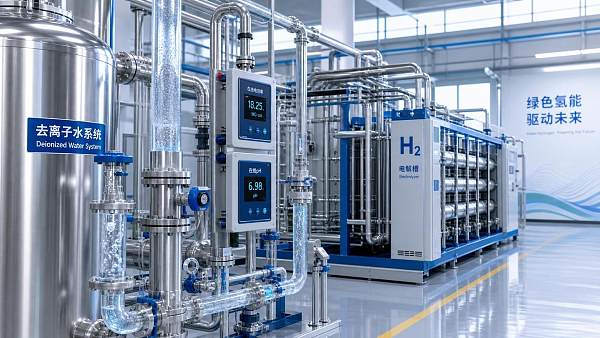
In many evaluations, the stack receives most of the attention. Real-world performance often depends just as much on rectifiers, pumps, deionized water systems, cooling units, separators, dryers, and control logic.
For variable renewable integration, balance-of-plant behavior becomes even more important. Fast ramping sounds attractive, but repeated cycling can expose weak control coordination.
That is why PEM electrolysis fits naturally into the broader ESGS view of energy infrastructure. The electrolyzer is part electrochemical device, part power system asset, and part process plant.
- Check auxiliary power draw at full load and part load, not only at rated conditions.
- Review ramp response together with gas purity and thermal recovery behavior.
- Ask how controls handle intermittent input from solar, wind, or hybrid storage systems.
- Compare maintenance intervals for water treatment, seals, filters, and dryers.
Where the strongest business value appears
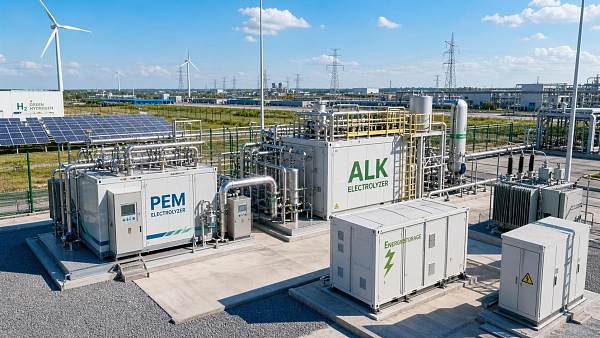
The value of PEM electrolysis grows where electricity is abundant, variable, or geographically mismatched with demand. This makes it relevant across several infrastructure scenarios.
Renewable curtailment recovery
Hydrogen can convert otherwise curtailed wind or solar generation into a tradable energy carrier. In that setting, flexibility and ramp quality may matter as much as peak efficiency.
Grid-balancing and storage ecosystems
Electrolyzers can complement BESS assets. Batteries absorb short-duration volatility. Hydrogen covers longer-duration storage and fuel needs beyond the practical reach of batteries alone.
Industrial fuel and transport supply
Where downstream users need clean hydrogen for mobility, refining, ammonia, or backup generation, output stability and pressure integration become central evaluation points.
A practical framework for comparing options
A useful comparison goes beyond single efficiency claims. It connects electrochemical performance with project context.
- Define the duty profile: baseload, variable renewable following, or mixed operation.
- Separate stack metrics from full-system metrics before comparing suppliers.
- Map water quality requirements to actual site conditions and treatment costs.
- Review degradation curves, not only beginning-of-life performance data.
- Estimate energy consumption across compression, drying, cooling, and controls.
- Check how PEM electrolysis performs during transient events and repeated cycling.
If the project sits inside a larger green-power corridor, also examine upstream and downstream interfaces. Grid quality, transformer behavior, storage coordination, and hydrogen offtake constraints can all affect effective output.
What to watch next
The next stage of PEM electrolysis evaluation will likely focus less on isolated stack benchmarks and more on integrated operating intelligence.
As projects connect with VPP logic, digital twins, and multi-asset energy platforms, the best systems will be those that sustain hydrogen output while cooperating with the grid around them.
A sound next step is to build a comparison sheet around current density, water specification, thermal stability, part-load efficiency, and auxiliary energy use. That usually reveals more than a brochure headline and gives a clearer basis for judging project viability.
Related News
 PEM Hydrogen Electrolyzer Sizing: Key Factors That Affect Efficiency and CostHydrogen Tech ScientistPEM hydrogen electrolyzer sizing directly affects efficiency, CAPEX, and hydrogen cost. Learn the key factors shaping smarter, scalable system decisions.
 DOE Adds PEM Export Pre-Screening to H2Export PortalHydrogen Tech ScientistDOE Adds PEM Export Pre-Screening to H2Export Portal, giving exporters faster visibility into compliance, labeling, and material risks across 32 markets—see what it means for PEM electrolyzer shipments.
 Japan Tightens PEM Electrolyzer Import CertificationHydrogen Tech ScientistJapan tightens PEM electrolyzer import certification under METI’s new rule. See JIS B 8451:2026, NITE test report requirements, customs delays, and what importers should review now.
 Hydrogen Electrolyzer Standards: What to Review Before Project ApprovalHydrogen Tech ScientistHydrogen electrolyzer standards shape safety, permitting, grid readiness, and bankability. Learn the key review points to avoid approval delays and hidden project risks.
 PEM Electrolyzer Spot Price Falls 9.3% on Joint OutputHydrogen Tech ScientistPEM electrolyzer spot price falls 9.3% as joint output boosts supply. Discover what lower 1 MW costs, faster lead times, and stricter specs mean for buyers and suppliers.
 PEM Electrolyzer Spot Prices Drop on JV Output ShiftHydrogen Tech ScientistPEM electrolyzer spot prices drop as JV output in Jiangsu reshapes FOB China benchmarks. See how Korean MEA-linked production affects contracts, sourcing, and green hydrogen project costs.
 DOE Unveils $840M PEM Electrolyzer PushHydrogen Tech ScientistDOE Unveils $840M PEM Electrolyzer Push: learn how new U.S. sourcing rules, 75% domestic content, and ITAR audits could reshape hydrogen supply chains and procurement decisions.
 PEM Electrolysis Stack Life: Key Failure Risks to Check FirstHydrogen Tech ScientistPEM electrolysis stack life depends on early detection of membrane, seal, water purity, pressure, and thermal risks. Learn the first checks that help prevent failure and cut operating costs.
 EU Extends CBAM to PEM ElectrolyzersHydrogen Tech ScientistEU Extends CBAM to PEM Electrolyzers: learn what verified embedded emissions, third-party checks, EN 15316-4-7:2026, and TÜV-accredited LCA now mean for EU-bound shipments.
 Deionized Water Specs for Water Electrolysis SystemsHydrogen Tech ScientistWater electrolysis systems deionized water specs directly affect stack life, hydrogen purity, and uptime. Discover key limits, OEM review points, and practical checks for reliable performance.
 PEM Electrolyzer Degradation Rates: How to Judge Lifetime and Stack Replacement RiskHydrogen Tech ScientistPEM electrolyzer degradation rates shape lifetime, hydrogen cost, and stack replacement risk. Learn how to assess real-world aging signals and make smarter planning decisions.
 PEM Electrolysis vs ALK: Which Fits Fast-Response Projects?Hydrogen Tech ScientistPEM electrolysis vs ALK: discover which technology fits fast-response hydrogen projects best, with insights on ramping, flexibility, cost, and real-world grid integration.