Micro-grid integration can unlock resilience, efficiency, and cleaner energy use, but costly mistakes in planning, controls, compliance, and asset coordination can undermine project outcomes. For project managers and engineering leaders, understanding the most common pitfalls is essential to keeping timelines, budgets, and grid performance on track. This article highlights the micro-grid integration mistakes to avoid for safer deployment and stronger long-term returns.
For industrial parks, ports, campuses, transport hubs, remote facilities, and utility-linked commercial sites, micro-grid integration is no longer a narrow electrical exercise. It now sits at the intersection of BESS containers, smart T&D equipment, EV charging loads, hydrogen-ready flexibility, cybersecurity, and real-time dispatch logic. When one layer is missed, the result is often a 3- to 12-month delay, underperforming assets, or expensive retrofit work.
For project leaders evaluating CAPEX, delivery risk, safety exposure, and long-term operating returns, the biggest value often comes not from adding more hardware, but from avoiding predictable integration failures early. That is especially true when projects combine solar PV, diesel backup, PCS, EMS, SCADA, transformers, protection relays, and multi-vendor communications in one operating envelope.
Why Micro-Grid Integration Fails More Often in Execution Than in Design
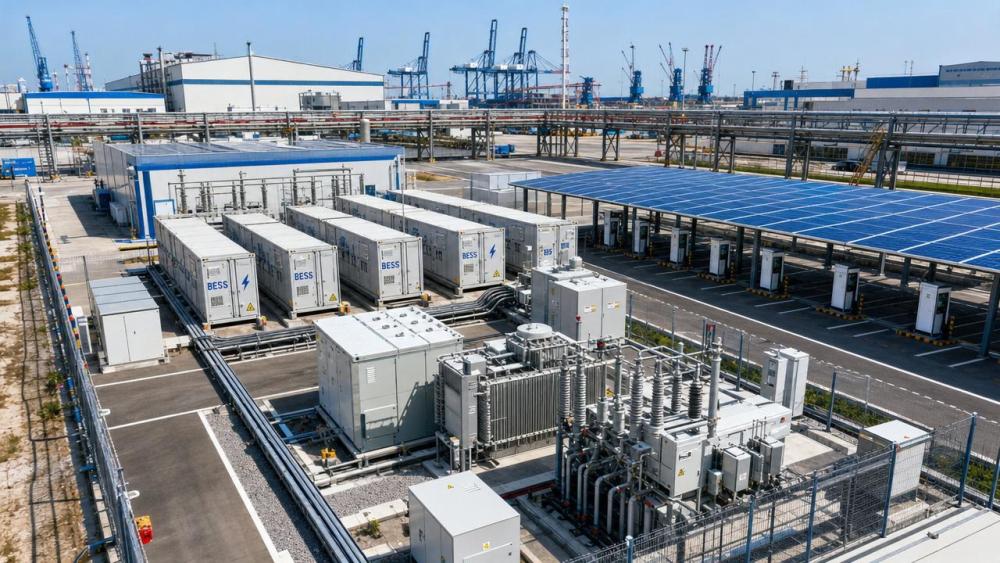
Many micro-grid concepts look strong in feasibility studies because single-line diagrams and energy simulations capture only part of reality. Problems usually appear during commissioning, load transitions, grid-forming tests, or fault events measured in milliseconds rather than minutes. A system that appears balanced on paper may still fail during a 20% load step or a sudden feeder isolation event.
In practical terms, micro-grid integration becomes difficult when teams treat generation, storage, switching, and control software as separate procurement packages instead of one coordinated operating system. That gap is common in projects where EPC, OEM, local utility, protection engineer, and controls integrator work to different assumptions or incompatible delivery milestones.
The most common root causes
- Incomplete load profiling, especially for motor starts, harmonic loads, and EV fast charging peaks
- Weak interoperability planning between EMS, PCS, SCADA, relays, and utility communication gateways
- Late-stage compliance review for fire safety, islanding logic, grounding, and interconnection studies
- Undersized transformers, breakers, cables, or thermal management relative to 10-year growth scenarios
- Control strategies that optimize energy cost but ignore resilience, black start, or fault ride-through behavior
For ESGS-focused sectors such as grid-scale BESS, mega charging depots, and smart substation-linked systems, these issues intensify because power flows are bidirectional, ramp rates are high, and operating modes can change several times per day. A charging and storage hub can move from import mode to peak shaving to island operation within 1 to 5 seconds if the site is designed for resilience.
Mistake 1: Starting Without a Real Load and Power Flow Baseline
One of the most expensive micro-grid integration mistakes is sizing the system from monthly utility bills alone. Bills cannot reveal 15-minute peaks, sub-second transients, motor inrush, power quality events, or feeder-level imbalance. For engineering teams, at least 30 to 90 days of interval data is often the minimum baseline for a serious design review, while complex industrial sites may need 12 months of seasonal data.
Without that baseline, battery capacity, inverter power rating, transformer selection, and protection settings are likely to be mismatched. A site may install a 2 MWh BESS when the real economic need is 4-hour duration, or it may specify high PCS power without enough thermal headroom for sustained dispatch during evening peaks.
What project teams should measure early
Before final procurement, gather interval demand, feeder topology, critical versus non-critical loads, harmonic content, starting currents, outage history, and expected future additions such as 800V chargers or electrolyzer skids. For sites expecting growth above 15% to 25% in three years, design assumptions should include expansion paths rather than static nameplate sizing.
The table below shows a practical checklist for baseline data that should be confirmed before system architecture is frozen.
The key takeaway is simple: if the data granularity is weak, the micro-grid integration strategy will usually be weak as well. Better metering upfront is far less expensive than resizing PCS, replacing switchgear, or rewriting control logic after FAT and SAT stages.
Mistake 2: Underestimating Controls, Communications, and Interoperability
Hardware gets attention because it is visible and capital intensive. Yet many underperforming micro-grid integration projects fail at the software and controls layer. A BESS container, PV inverter, charger cluster, and backup generator may each operate correctly on their own, while the site still performs poorly because setpoints, protocols, and dispatch priorities are not aligned.
Project managers should assume that communications mapping, protocol conversion, and sequence-of-operations testing will consume more time than first expected. In multi-vendor environments, 10 to 20 interface points are common, and each one can create delay if data tags, time stamps, fail-safe states, or command authority are unclear.
Typical interoperability gaps
EMS and PCS logic conflict
The EMS may prioritize tariff arbitrage while the PCS firmware prioritizes battery protection or reactive power support. If these priorities are not harmonized, the site can miss peak shaving windows or cycle the battery unnecessarily, reducing usable life and economic return.
Protocol mismatch across subsystems
Micro-grid integration often relies on Modbus TCP, IEC 61850, DNP3, CAN, or proprietary gateways. Even when devices “support” the same protocol, register maps, update rates, and command hierarchies may differ. A 500-millisecond delay may be acceptable for metering but not for fast load rejection or frequency regulation.
Poor alarm and event design
If alarms are not prioritized, operators receive noise rather than intelligence. During a fault, teams need to know within seconds whether the issue is thermal, communication, breaker status, grounding, or utility-side instability. Event logs should be synchronized and retained long enough for root-cause analysis.
- Define a full point list and data ownership matrix before procurement closes.
- Freeze sequence of operations before software integration begins.
- Run FAT for communications and controls, not only for hardware functionality.
- Allocate 2 to 6 weeks for tuning after initial commissioning.
For sites linked to EV charging plazas, utility substations, or VPP-ready aggregation, the controls stack should also account for latency, cybersecurity segmentation, and fallback modes. If communications fail, the site must know whether to hold last command, shift to local autonomous control, or disconnect selected assets.
Mistake 3: Treating Safety, Compliance, and Grid Codes as Late-Stage Tasks
Another recurring micro-grid integration error is postponing safety and interconnection review until equipment has already been specified. That approach can trigger redesign of BESS spacing, fire suppression, ventilation, relay settings, transformer grounding, or utility protection requirements. For complex facilities, those changes can add 8 to 16 weeks and materially affect CAPEX.
This issue is especially important when projects include liquid-cooled battery containers, fast charging infrastructure, or hydrogen-linked loads. Thermal propagation risk, arc flash boundaries, ventilation rates, fault current contribution, and emergency shutoff logic must all be addressed as system-level topics, not as separate equipment documents.
Compliance areas that often get missed
- Utility interconnection and anti-islanding requirements
- Fire detection, suppression, and thermal runaway mitigation planning
- Grounding, bonding, and arc flash coordination studies
- Emergency response procedures and operator training records
- Cybersecurity controls for remote access and asset command layers
The table below outlines a practical view of where delays usually emerge and how project managers can reduce them during micro-grid integration planning.
The broader lesson is that compliance is not paperwork after engineering. In successful micro-grid integration, compliance shapes engineering from day 1, especially for export markets, utility-facing systems, and high-energy-density installations.
Mistake 4: Ignoring Thermal, Spatial, and Lifecycle Constraints
Micro-grid integration can fail even when electrical diagrams are correct, simply because the physical site cannot support thermal performance, maintenance access, or future expansion. This is common in containerized BESS yards, charging depots, and retrofitted industrial plants where the available footprint looks sufficient until cable routing, fire lanes, crane access, and airflow are considered.
For battery-heavy projects, thermal management is not a secondary detail. Cell temperature spread, cooling redundancy, ambient extremes, dust loading, and service intervals directly affect availability and degradation. In many commercial and grid-support systems, keeping temperature variance within a narrow operating band can have a measurable impact on cycle stability and fault prevention.
Physical design questions to resolve early
- Can the site accommodate present capacity plus one future expansion block without reworking the MV yard?
- Are fire separation distances and emergency access paths practical for local code enforcement?
- Will ambient temperatures, altitude, or coastal corrosion reduce inverter or transformer derating margins?
- Can maintenance teams safely access PCS, switchgear, chillers, and cable trenches within normal shutdown windows?
Project managers should also examine lifecycle cost, not just initial EPC pricing. A layout that saves 3% on land use but adds repeated maintenance complexity over 10 years may be the more expensive option. This is particularly relevant for sites expected to cycle daily, provide backup reserve, or participate in demand response programs.
Mistake 5: Designing for One Use Case Instead of Multi-Mode Operation
A frequent micro-grid integration mistake is assuming the system will do just one job, such as backup power or bill reduction. In reality, many owners want at least three operating modes: normal grid-connected optimization, islanded resilience, and coordinated dispatch with flexible loads. If the architecture is not built for mode switching, future value streams become difficult or impossible to capture.
For example, a depot with solar, BESS, and ultra-fast EV charging may initially prioritize demand charge reduction. Within 12 to 24 months, the same site may need feeder support, backup for critical chargers, or participation in a local flexibility market. If transformer loading, EMS logic, and protection design were built only for one scenario, the upgrade path becomes expensive.
A practical operating-mode framework
Mode 1: Economic dispatch
Peak shaving, time-of-use arbitrage, and PV self-consumption are the main drivers. Here, dispatch accuracy, tariff integration, and cycle strategy matter most.
Mode 2: Resilience and black start
The system must support critical loads for a defined duration, often 30 minutes to 4 hours depending on site type. Load shedding priorities and autonomous restart logic become essential.
Mode 3: Grid services or flexible aggregation
Where regulation permits, the micro-grid may provide voltage support, frequency response, or controllable charging behavior. This requires stronger telemetry, faster controls, and more disciplined data governance.
If these modes are identified during front-end engineering, the project can reserve I/O capacity, communication bandwidth, and switchgear flexibility for later monetization rather than forcing a redesign.
How Project Managers Can De-Risk Micro-Grid Integration
The most effective response is a staged integration plan that links technical design, procurement sequencing, and operational acceptance criteria. Strong projects do not wait until installation to discover control conflicts or compliance gaps. They define them as decision gates.
A five-step execution approach
- Establish the baseline: collect interval data, fault levels, load priorities, and growth assumptions.
- Lock the system architecture: define DER roles, single-line diagrams, control hierarchy, and protection philosophy.
- Validate compliance: review interconnection, fire safety, grounding, access, and cyber requirements before procurement release.
- Test integration early: perform FAT for hardware, communications, and sequence-of-operations logic.
- Tune and monitor: allocate post-commissioning support for 30 to 90 days with KPI tracking.
KPIs worth tracking after go-live
- Transition time between grid-connected and island mode
- BESS availability and thermal alarm frequency
- Peak demand reduction compared with target baseline
- Charger curtailment hours or unserved critical load events
- Communications uptime across EMS, PCS, and SCADA layers
For organizations managing BESS containers, smart grid equipment, EV charging hubs, or hydrogen-linked electrical loads, disciplined integration management creates two outcomes that matter most: stronger grid stability and more bankable asset returns. Those outcomes depend on detail, not just ambition.
Avoiding micro-grid integration mistakes starts with accurate data, coordinated controls, early compliance alignment, and realistic lifecycle planning. For project managers and engineering leads, these steps reduce rework, improve commissioning success, and preserve long-term flexibility across storage, charging, and distributed energy assets.
ESGS supports decision-makers navigating the technical and commercial complexity behind BESS, smart T&D, ultra-high-voltage infrastructure, EV charging ecosystems, and energy flexibility strategies. If you are planning a new project or upgrading an existing site, contact us to discuss your micro-grid integration roadmap, request a tailored intelligence brief, or explore solution options aligned with your operating and investment goals.
Related News
 ACWA Power Opens 500MW NEOM Power-to-X TenderHydrogen Tech ScientistACWA Power opens a 500MW NEOM Power-to-X tender, spotlighting green hydrogen microgrid integration, ALK electrolyzers, UHV grid connection, and PCS-EMS control. Explore what bidders must prepare.
 Zero Carbon Grids for Critical Infrastructure: Main Risks to Plan ForHydrogen Tech ScientistZero carbon grids for critical infrastructure demand more than clean power. Explore the main risks, site-specific planning priorities, and resilient strategies before investing.
 Power-to-X Systems Price Trend in 2026: What Is Driving Cost Changes?Hydrogen Tech ScientistPower to x systems price trend in 2026 shows why cheaper electrolyzers do not always mean lower project costs. Explore grid access, power prices, supply chains, and financing drivers.
 Skid Mounted Hydrogen Production Systems: Site Limits to Check FirstHydrogen Tech ScientistHydrogen production system skid mounted projects succeed when site limits are checked first. Learn key risks in access, utilities, zoning, and permitting before delays grow.
 Green Hydrogen System for Solar Power Sizing GuideHydrogen Tech ScientistGreen hydrogen system for solar power sizing guide covering PV-electrolyzer ratios, storage, grid integration, and utility loads to reduce risk, improve economics, and build bankable projects.
 Hydrogen Energy Infrastructure: Common Cost Gaps in Early Project PlanningHydrogen Tech ScientistHydrogen energy infrastructure often looks affordable early on, but hidden costs in grid access, water, compression, storage, and safety can reshape budgets. Learn what to check first.
 Energy Transition Infrastructure Trends Reshaping Power ProjectsHydrogen Tech ScientistEnergy transition infrastructure is redefining power projects—discover how storage, grid, EV charging, and hydrogen trends are shaping safer, smarter, and more bankable energy assets.
 Energy Hubs for Smart Cities: Best Use Cases and ROI SignalsHydrogen Tech ScientistEnergy hubs for smart cities: explore the best use cases, ROI signals, and design priorities for EV charging, resilience, tariff savings, and scalable urban energy growth.
 Energy Hubs for Smart Cities: Key Design Choices and PitfallsHydrogen Tech ScientistEnergy hubs for smart cities require smarter design than ever. Explore key architecture choices, common pitfalls, and how to improve resilience, efficiency, and ROI.
 Power-to-X Technology in Microgrids: Best Use CasesHydrogen Tech ScientistPower-to-X technology in microgrids: explore the best use cases for remote sites, ports, and export-limited campuses to turn surplus renewable energy into flexible, high-value returns.
 Chile Sets Grid Rule for Hydrogen-BESS PCS DesignHydrogen Tech ScientistChile Sets Grid Rule for Hydrogen-BESS PCS Design: learn how Chile’s new shared-PCS mandate reshapes hydrogen microgrid compliance, sourcing, and project delivery after July 2026.
 How Renewable Energy Hubs Reduce Curtailment in MicrogridsHydrogen Tech ScientistRenewable energy hubs cut microgrid curtailment by coordinating storage, flexible loads, and smart controls. Discover how they boost resilience, efficiency, and ROI.