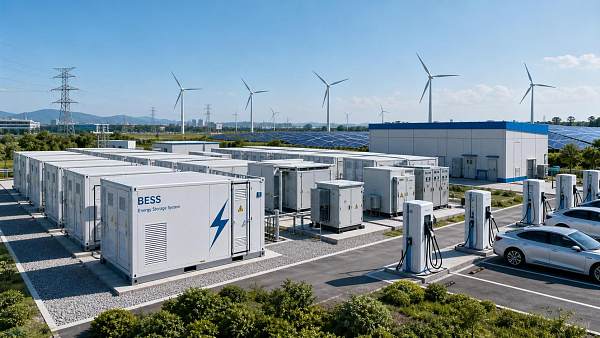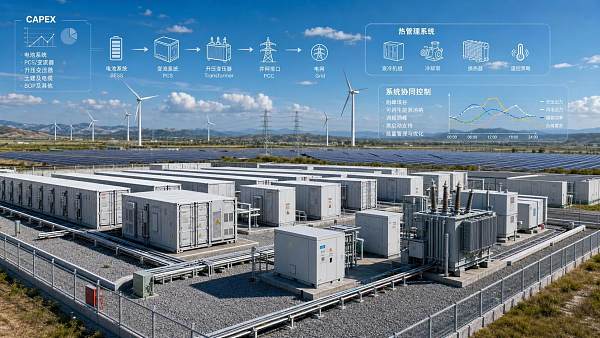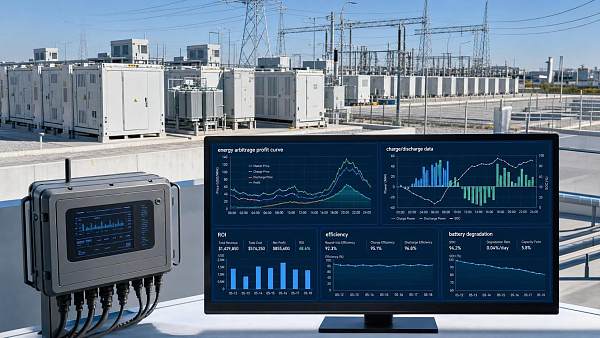
Energy arbitrage sounds simple, so why do returns vary so much?

Energy arbitrage is often described as buying electricity cheaply and selling it later at a higher price.
That definition is correct, but it hides the real question.
What matters is not the headline spread alone, but the spread that remains after losses, constraints, and dispatch timing.
In grid-scale storage, especially BESS containers, that difference can decide whether a project looks bankable or disappointing.
This is why energy arbitrage stays central across modern power systems.
It connects battery thermodynamic control, PCS response, market design, and transmission flexibility into one revenue logic.
For a platform like ESGS, which tracks BESS, UHV transmission, EV charging hubs, and hydrogen conversion, the topic matters because all these assets reshape price spreads.
A battery may capture intraday volatility directly.
A UHV corridor may reduce regional spread by moving remote solar and wind faster.
A V2G-enabled charging network may create flexible demand that changes the shape of peaks.
So when people ask whether energy arbitrage is profitable, the better answer is always, “Profitable under which operating conditions?”
What actually creates an energy arbitrage opportunity in power markets?
The core driver is price spread.
When electricity prices differ across hours, locations, or market products, flexible assets can exploit that difference.
The most familiar case is time-shifting.
Charge during midday oversupply, then discharge during evening peaks.
In practice, several forces create those spreads:
- High solar output can push midday prices down, sometimes below zero.
- Wind ramps can create short-duration volatility overnight.
- Transmission congestion can separate one node from another.
- Thermal plant outages can tighten reserve margins quickly.
- EV fast-charging clusters can intensify local evening demand.
This is where energy arbitrage becomes more than a battery story.
Grid equipment, switching speed, transformer capacity, and dispatch software all influence whether a spread can be reached and monetized.
A BESS container with excellent thermal management may cycle harder and more safely.
Yet if interconnection limits or market rules block dispatch, the spread remains theoretical.
That is why experienced analysts track physical and market access together.
Is a wide price spread enough, or do efficiency and timing change everything?
A wide spread helps, but it is never the full story.
Real energy arbitrage revenue depends on how much energy returns to the grid after charging losses.
Round-trip efficiency, auxiliary loads, degradation, and missed dispatch windows all reduce realized margin.
A simple comparison makes this easier to judge.
In actual operations, a battery with weaker timing can underperform a smaller asset with sharper controls.
Millisecond-level response is valuable for ancillary services, but it also improves arbitrage execution when peaks are brief.
That is one reason ESGS often links storage economics with dispatch intelligence rather than viewing them separately.
The battery chemistry matters, but the operating brain matters too.
Where does energy arbitrage work best beyond standalone batteries?
The strongest energy arbitrage cases usually appear in systems with repeated volatility, flexible controls, and visible curtailment.
Standalone BESS is the clearest example, but it is not the only one.
More often, value improves when assets are connected across the grid chain.
Common high-potential settings include:
- Solar-heavy regions with steep midday discounts and evening ramps.
- Wind corridors where congestion creates frequent nodal separation.
- Industrial load pockets near constrained substations.
- Mega charging and swapping hubs with predictable high-power peaks.
- Hybrid sites combining storage with hydrogen electrolyzers or curtailable loads.
A useful example is the interaction between BESS and hydrogen.
When short-term spreads are attractive, batteries can cycle for energy arbitrage.
When oversupply lasts longer, electrolyzers may absorb surplus power that batteries cannot economically hold.
Likewise, UHV transmission can reduce one kind of arbitrage while opening another.
If remote renewables reach demand centers more smoothly, local spreads may shrink.
At the same time, regional balancing strategies may become more sophisticated and more tradable.
So the best question is not whether one asset “wins.”
It is how several flexible assets interact inside one market design.
What mistakes usually distort an energy arbitrage business case?
The most common mistake is using average prices instead of operational spreads.
Average daily power prices may look attractive, while actual charge and discharge windows are too narrow.
Another mistake is assuming a battery can cycle every day at ideal depth without cost.
Thermal stress, warranty limits, and augmentation needs quickly change that picture.
Several warning signs deserve attention:
- Ignoring auxiliary consumption from cooling, controls, and standby systems.
- Treating settlement rules as fixed when market reform is active.
- Overlooking curtailment risk on the charging side.
- Assuming safety compliance has no effect on project timing.
- Counting on arbitrage alone when stacked revenues are available.
The safety point is often underestimated.
If UL 9540A-related design choices affect enclosure spacing, fire strategy, or insurance treatment, the revenue start date may slip.
That delay changes project economics even when the spread forecast was right.
Another blind spot appears in VPP-linked assets.
A charger fleet or C&I storage portfolio may earn more from frequency response at some hours than from pure energy arbitrage.
If the dispatch model cannot switch priorities dynamically, revenue leaks away.
How should energy arbitrage be evaluated before committing capital?
A practical evaluation starts with spread quality, not just spread size.
Repeated, forecastable spreads are usually more valuable than occasional dramatic spikes.
From there, the assessment should move through technology, market access, and lifecycle economics.
A compact screening approach can help:
This broader view explains why ESGS tracks not only storage containers, but also transformers, switchgear, EV hubs, and hydrogen systems.
Energy arbitrage is shaped by the whole grid organism.
If power cannot move, if assets cannot respond, or if heat cannot be controlled, the spread does not become cash.
The clearest next step is to map one target market in detail.
Review nodal price behavior, charging constraints, expected cycling, safety requirements, and revenue-stacking options together.
That approach leads to better judgments than relying on a single average spread or a generic battery payback claim.
In other words, energy arbitrage rewards precision.
The more closely the asset, market, and dispatch logic are stitched together, the more dependable the revenue becomes.
Related News
 EV Charging Infrastructure Projects: Cost Risks and Site Planning BasicsMr. Orion SterlingEV charging infrastructure projects succeed when costs, power access, and site planning are validated early. Learn practical ways to reduce budget risk and build scalable, profitable charging sites.
 Grid Resilience Solution Price: Cost Drivers and ROI BenchmarksMr. Orion SterlingGrid resilience solution price explained: compare cost drivers, hidden risks, and ROI benchmarks to choose a safer, higher-value energy resilience investment.
 Millisecond Grid Control Cost: What Drives ROI in Fast-Response Storage?Mr. Orion SterlingMillisecond grid control cost directly affects ROI in fast-response storage. Discover what drives returns, lowers risk, and improves revenue, uptime, and bankability.
 Renewable Power Storage Solution Cost: What Drives CAPEX and PaybackMr. Orion SterlingRenewable power storage solution cost explained: discover what drives CAPEX, thermal design, PCS, safety compliance, and payback to make smarter, lower-risk storage investment decisions.
 Electrical Infrastructure Materials That Affect Lifecycle CostMr. Orion SterlingElectrical infrastructure materials directly shape lifecycle cost through losses, maintenance, downtime, and risk. Discover how smarter material choices protect ROI.
 Supplier Capability Evaluation Checklist for High-Risk Energy ProjectsMr. Orion SterlingSupplier capability evaluation checklist for high-risk energy projects. Learn how to assess safety, compliance, quality, and delivery resilience to reduce risk and improve sourcing decisions.
 Peak Shaving Solution Europe: When the ROI Works in 2026Mr. Orion SterlingPeak shaving solution Europe: discover when ROI works in 2026, which sites profit first, and how to compare BESS options for faster payback, lower grid costs, and scalable energy flexibility.
![]() Zero Carbon Grid Solution Integration: Key Design Choices and Cost RisksMr. Orion SterlingZero carbon grid solution integration explained: discover key design choices, hidden interface cost risks, and how storage, EV charging, transmission, and hydrogen affect project value.
Zero Carbon Grid Solution Integration: Key Design Choices and Cost RisksMr. Orion SterlingZero carbon grid solution integration explained: discover key design choices, hidden interface cost risks, and how storage, EV charging, transmission, and hydrogen affect project value. Energy Arbitrage Calculator: What Inputs Change ROI the Most?Mr. Orion SterlingEnergy arbitrage calculator insights: discover which inputs most affect ROI, from price spreads and efficiency to degradation, demand charges, and dispatch risk.
 Grid-Scale Storage Systems: Cost Drivers, Revenue Paths, and Payback RisksMr. Orion SterlingGrid-scale storage systems explained: uncover key cost drivers, revenue streams, and payback risks to evaluate projects smarter and invest with greater confidence.
 Energy Intelligence Platforms for Sourcing: What to Compare Before You BuyMr. Orion SterlingEnergy intelligence platforms for sourcing: compare supplier depth, technical compliance, market signals, and lifecycle cost tools before you buy to reduce risk and choose with confidence.
 LCOS Benchmarking Methods That Expose Hidden Storage CostsMr. Orion SterlingLCOS benchmarking methods that reveal hidden storage costs, from augmentation and thermal losses to downtime and compliance, helping buyers compare BESS projects with confidence.