Where Energy Transition Solutions Pay Back First
For finance-led decisions, energy transition solutions only make sense when cash flow appears early, risk stays visible, and expansion remains practical.
That is why the first question is usually simple: which asset starts returning value fastest, without creating new operational headaches?
Across grid infrastructure, the answer is rarely “the most advanced technology.” It is usually the option with the clearest revenue stack, the shortest approval path, and the easiest fit with existing assets.
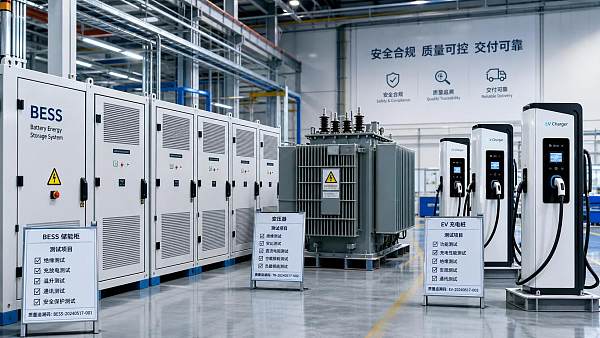
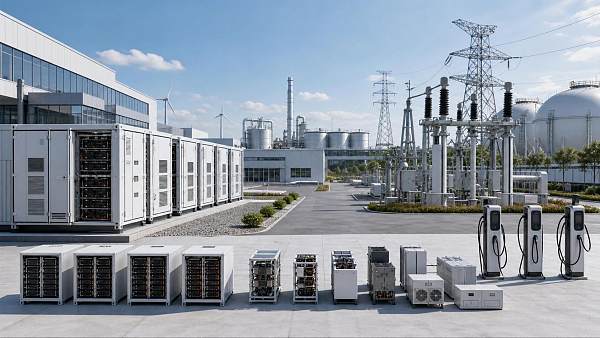
For most projects, energy transition solutions deliver ROI first in this order: grid-scale BESS, EV charging hubs with strong utilization, selective smart grid upgrades, targeted UHV-related expansion, and hydrogen only in very specific conditions.
The practical value of ESGS intelligence is exactly here. It connects BESS thermal safety, grid dispatch behavior, transmission economics, charging demand, and electrolyzer logic into one capital allocation view.
Before comparing technologies, it helps to look at what tends to move returns earlier in real operating environments.
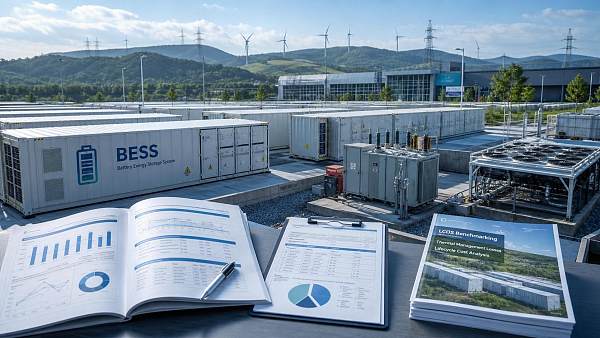
[Image 01: ROI ranking framework for BESS, smart grid, UHV, EV charging, and hydrogen electrolyzers]
What usually unlocks early returns
- Start with energy transition solutions that stack revenues. BESS often combines peak-valley arbitrage, capacity leasing, frequency response, and deferred grid upgrades, which usually shortens payback more than single-use assets.
- Favor assets that plug into existing demand. EV charging hubs near busy fleets or logistics corridors monetize faster because utilization, power demand, and site economics are easier to verify.
- Check approval and compliance timelines early. A technically strong project can still lose ROI if fire testing, interconnection, land permits, or export certification delay commercial operation.
- Prioritize energy transition solutions with dispatch visibility. If operators cannot measure response time, thermal behavior, and asset availability, forecasted returns usually look better on paper than in practice.
- Use location as a financial filter. Congested grids, volatile tariffs, renewable curtailment zones, and high-demand transport corridors often create the fastest and most defensible returns.
The ROI Order Most Projects See
Not every market behaves the same way, but a pattern appears again and again across energy transition solutions.
When decision speed matters, this order keeps capital planning grounded in operating reality rather than headlines.
1) Grid-scale BESS usually leads
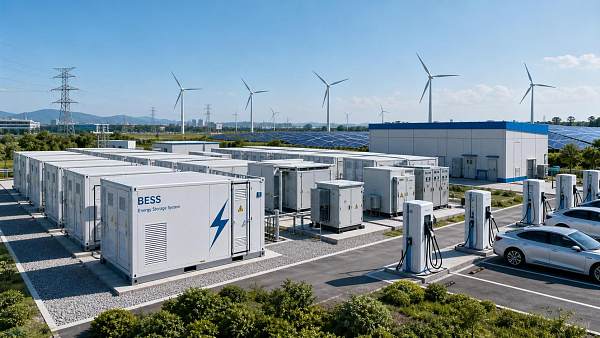
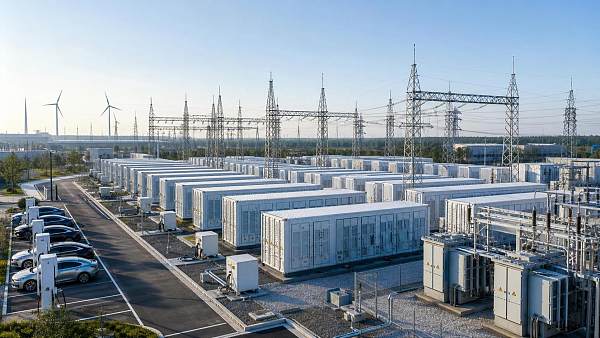
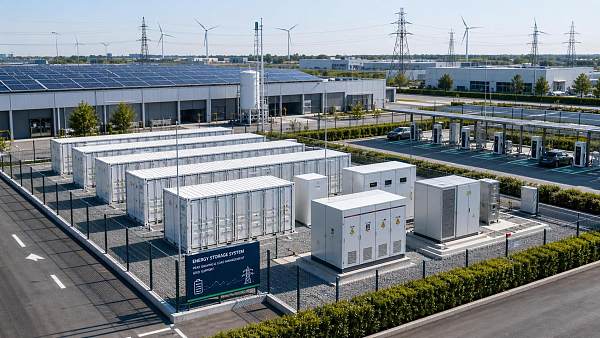
BESS containers often show the earliest ROI because they solve several problems at once. They absorb excess renewable power, support frequency control, shift energy into peak pricing windows, and reduce curtailment losses.
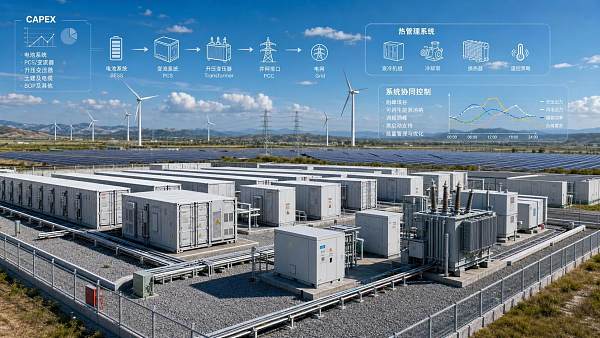
The key is not battery capacity alone. Returns depend on dispatch software, PCS performance, liquid cooling quality, warranty terms, and the ability to keep cell temperature spread tightly controlled.
ESGS tracks this closely because thermal management and grid response are where many optimistic models break. If a container cannot maintain safe consistency across thousands of cells, revenue risk rises fast.
2) EV charging hubs can move quickly
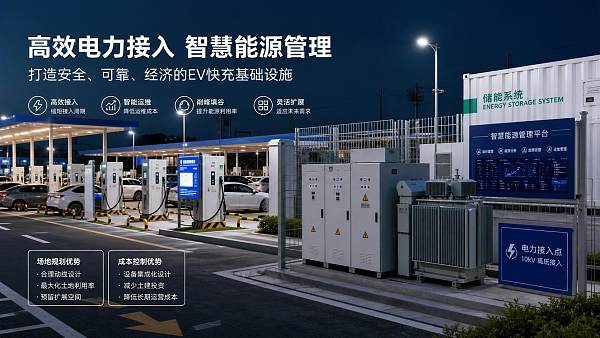
High-power EV charging works well when utilization is predictable. Fleet depots, highway corridors, ports, and dense urban zones can create strong early returns, especially with 800V liquid-cooled systems.
The best-performing sites do more than sell electricity. They combine charging revenue, demand management, optional V2G capability, and in some cases on-site storage to reduce grid penalties.
3) Smart grid upgrades often win quietly
GIS switchgear, HVDC control elements, and digital grid equipment may not look flashy, but they often protect ROI elsewhere. They reduce outages, improve routing, and make renewable-heavy systems usable at scale.
These energy transition solutions are frequently justified by avoided losses rather than visible new revenue, which means the business case must be modeled carefully.
4) UHV pays back through scale, not speed
UHV transformers and related transmission assets are critical for moving remote wind and solar power into industrial demand centers. They matter enormously, but the payback cycle is usually longer.
These projects become attractive when line losses, congestion costs, and stranded renewable potential are already large enough to justify major infrastructure commitments.
5) Hydrogen needs the tightest filter
Hydrogen electrolyzers can be powerful energy transition solutions, but they rarely deliver the fastest ROI unless low-cost renewable power, curtailment, industrial offtake, and policy support already line up.
Without those conditions, hydrogen can become a strategic long-term bet rather than an early-return asset.
A Practical Comparison Before Capital Is Approved
What to Check Before Saying Yes
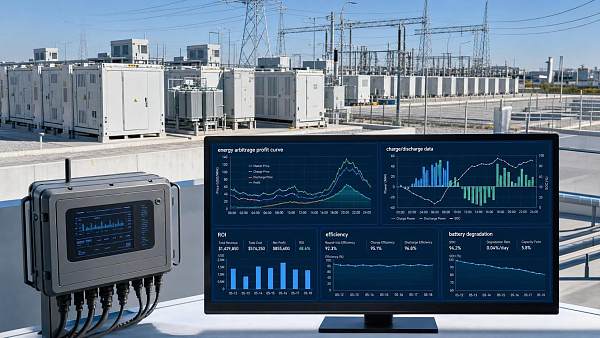
- For BESS-based energy transition solutions, ask whether the return model includes real degradation, augmentation costs, auxiliary loads, and fire compliance. Missing any of these can distort ROI very quickly.
- For charging projects, validate session forecasts against actual fleet behavior, dwell time, grid connection charges, and upgrade needs. Good hardware cannot rescue a weak traffic assumption.
- For smart grid investments, quantify avoided curtailment, reduced fault exposure, and operational continuity. These benefits are often real, but they need hard numbers to survive approval review.
- For UHV-related energy transition solutions, test the project against future power flows, not today’s averages. Transmission economics improve when renewable buildout and load migration are modeled together.
- For hydrogen, require evidence of cheap clean electricity, clear offtake contracts, water access, and logistics. If one link is weak, the full project return usually becomes speculative.
Three Situations Where Priorities Change
A renewable-heavy grid with curtailment
In this setting, BESS is usually the first serious move. It captures wasted energy, supports dispatch, and creates revenue from price spreads and ancillary services.
If curtailment is severe and transmission is constrained, smart grid equipment and selected UHV expansion may become the second phase, not hydrogen.
A transport corridor with rising EV load
Here, charging infrastructure can outperform other energy transition solutions early, especially when fleet contracts or recurring traffic already exist.
The hidden check is grid cost. Sites that add storage or smart load control often protect margins far better than sites relying on raw charging demand alone.
An industrial cluster needing long-duration decarbonization
This is where hydrogen starts to make more sense. If curtailed renewables, process demand, and policy support already exist, electrolyzers can move from “future option” to “targeted investment.”
Even then, phased development is safer. Many successful energy transition solutions begin with a pilot scale tied to confirmed offtake instead of an oversized first build.
The Mistakes That Slow ROI
One common mistake is buying technology before buying certainty. Strong equipment matters, but project economics depend just as much on site conditions, dispatch logic, tariff design, and compliance timing.
Another mistake is treating all energy transition solutions as if they create value in the same way. BESS earns through flexibility. UHV earns through scale. Charging earns through use. Hydrogen earns through system alignment.
A third mistake is ignoring safety as a financial variable. ESGS repeatedly highlights this point in BESS projects. UL 9540A interpretation, thermal propagation risk, and export compliance can change project bankability.
The same logic applies to smart grid and charging systems. Millisecond-level control, equipment reliability, and digital visibility are not technical extras. They are part of the return profile.
How to Move from Interest to Approval
A practical next step is to rank energy transition solutions using five filters: revenue diversity, utilization certainty, interconnection complexity, compliance risk, and expansion value.
If two options look similar, choose the one with faster data feedback. Assets that reveal performance quickly are easier to scale, refinance, or correct.
In many cases, that means starting with BESS or a high-confidence charging site, then using operating evidence to support larger grid or hydrogen decisions later.
The smartest energy transition solutions strategy is rarely about backing a single technology. It is about placing capital where operational proof appears first, then building outward with discipline.
That is where ESGS adds real decision value: connecting grid stability, asset safety, dispatch intelligence, and return logic so each next move is based on measurable performance, not optimism.
Related News
 EV Charging Infrastructure Projects: Cost Risks and Site Planning BasicsMr. Orion SterlingEV charging infrastructure projects succeed when costs, power access, and site planning are validated early. Learn practical ways to reduce budget risk and build scalable, profitable charging sites.
 Grid Resilience Solution Price: Cost Drivers and ROI BenchmarksMr. Orion SterlingGrid resilience solution price explained: compare cost drivers, hidden risks, and ROI benchmarks to choose a safer, higher-value energy resilience investment.
 Millisecond Grid Control Cost: What Drives ROI in Fast-Response Storage?Mr. Orion SterlingMillisecond grid control cost directly affects ROI in fast-response storage. Discover what drives returns, lowers risk, and improves revenue, uptime, and bankability.
 Renewable Power Storage Solution Cost: What Drives CAPEX and PaybackMr. Orion SterlingRenewable power storage solution cost explained: discover what drives CAPEX, thermal design, PCS, safety compliance, and payback to make smarter, lower-risk storage investment decisions.
 Electrical Infrastructure Materials That Affect Lifecycle CostMr. Orion SterlingElectrical infrastructure materials directly shape lifecycle cost through losses, maintenance, downtime, and risk. Discover how smarter material choices protect ROI.
 Supplier Capability Evaluation Checklist for High-Risk Energy ProjectsMr. Orion SterlingSupplier capability evaluation checklist for high-risk energy projects. Learn how to assess safety, compliance, quality, and delivery resilience to reduce risk and improve sourcing decisions.
 Peak Shaving Solution Europe: When the ROI Works in 2026Mr. Orion SterlingPeak shaving solution Europe: discover when ROI works in 2026, which sites profit first, and how to compare BESS options for faster payback, lower grid costs, and scalable energy flexibility.
![]() Zero Carbon Grid Solution Integration: Key Design Choices and Cost RisksMr. Orion SterlingZero carbon grid solution integration explained: discover key design choices, hidden interface cost risks, and how storage, EV charging, transmission, and hydrogen affect project value.
Zero Carbon Grid Solution Integration: Key Design Choices and Cost RisksMr. Orion SterlingZero carbon grid solution integration explained: discover key design choices, hidden interface cost risks, and how storage, EV charging, transmission, and hydrogen affect project value. Energy Arbitrage Calculator: What Inputs Change ROI the Most?Mr. Orion SterlingEnergy arbitrage calculator insights: discover which inputs most affect ROI, from price spreads and efficiency to degradation, demand charges, and dispatch risk.
 Grid-Scale Storage Systems: Cost Drivers, Revenue Paths, and Payback RisksMr. Orion SterlingGrid-scale storage systems explained: uncover key cost drivers, revenue streams, and payback risks to evaluate projects smarter and invest with greater confidence.
 Energy Intelligence Platforms for Sourcing: What to Compare Before You BuyMr. Orion SterlingEnergy intelligence platforms for sourcing: compare supplier depth, technical compliance, market signals, and lifecycle cost tools before you buy to reduce risk and choose with confidence.
 LCOS Benchmarking Methods That Expose Hidden Storage CostsMr. Orion SterlingLCOS benchmarking methods that reveal hidden storage costs, from augmentation and thermal losses to downtime and compliance, helping buyers compare BESS projects with confidence.