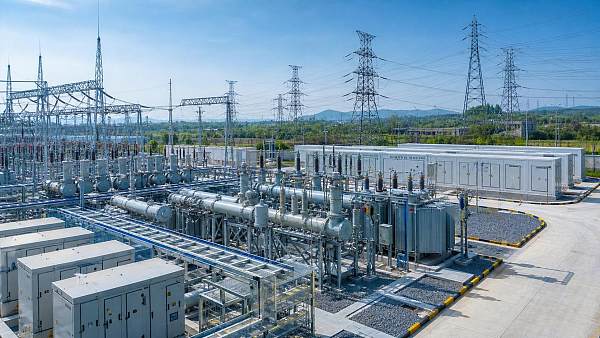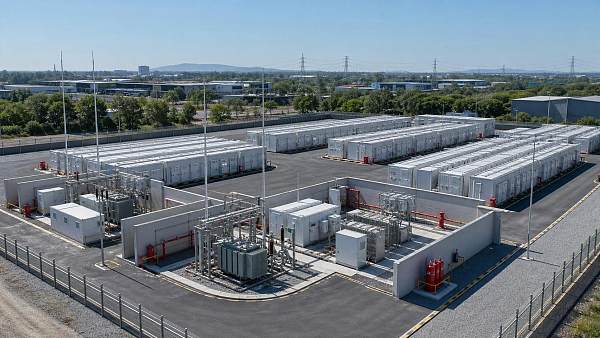
Before a wind, solar, BESS, or hybrid project can energize, technical evaluators must prove that renewable integration will not weaken grid stability, protection coordination, voltage control, or frequency response. Grid code compliance is no longer a paperwork checkpoint; it is a risk filter that can expose hidden issues in inverter behavior, fault ride-through, harmonic performance, reactive power capability, and dispatch control. This article highlights the critical grid code risks to assess before connection, helping teams reduce approval delays, avoid redesign costs, and strengthen confidence in safe, bankable clean-energy infrastructure.
Why Grid Code Risk Has Become a Front-End Engineering Decision

Renewable integration has moved from single-asset connection studies to system-level risk evaluation. A project may pass energy yield analysis yet fail interconnection because its controls interact poorly with weak grids, protection schemes, or dispatch requirements.
For technical evaluators, the main pressure is timing. Grid code findings often appear late, when equipment orders, EPC schedules, and financing assumptions are already fixed. That creates redesign costs and approval uncertainty.
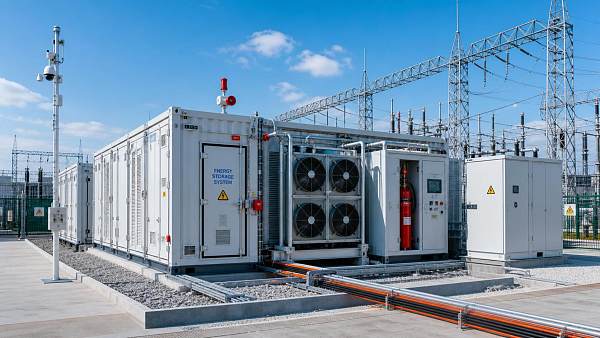
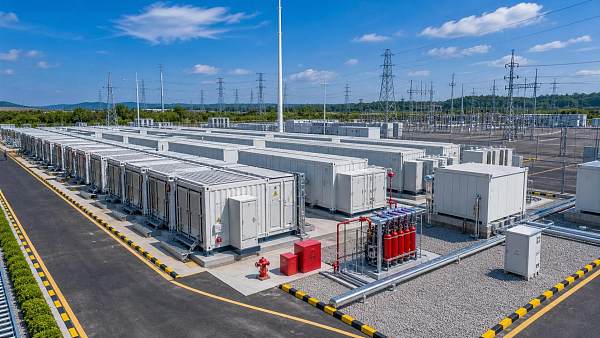
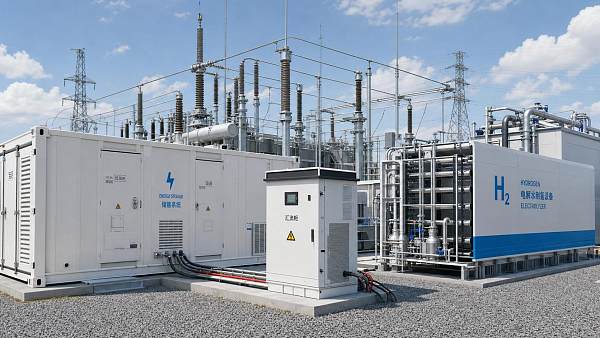
ESGS views renewable integration through the full green power infrastructure chain: grid-scale BESS containers, smart T&D equipment, UHV transmission, mega EV charging hubs, and hydrogen electrolyzers. Each asset changes power flow, fault current, and control behavior.
The practical risk filter
- Can the plant remain connected during voltage dips, frequency excursions, and grid disturbances without unsafe control oscillation?
- Can inverters deliver reactive current and voltage support within the response window required by the local grid code?
- Can protection settings distinguish between grid faults, inverter current limits, transformer inrush, and BESS operating transitions?
- Can the dispatch interface coordinate renewable generation, storage, EV charging, and electrolyzer loads without violating ramp-rate limits?
The earlier these questions are tested, the more room evaluators have to adjust PCS settings, transformer selection, relay logic, filter design, and grid-forming or grid-following control strategies.
Critical Renewable Integration Risks Before Connection
The following risk areas usually determine whether renewable integration proceeds smoothly or enters repeated clarification rounds with utilities, independent engineers, and lenders.
This table shows why renewable integration is not only an inverter issue. Transformers, switchgear, protection systems, communication links, and control hierarchy must be evaluated as one operating system.
The hidden problem: model credibility
Many delays occur because simulation models do not match installed equipment. Evaluators should request validated RMS and EMT models, parameter lists, firmware versions, control block diagrams, and limitation notes.
For BESS-led renewable integration, model accuracy is especially important. PCS controls, battery management limits, thermal derating, state-of-charge logic, and plant controller response may all affect grid code performance.
Which Assets Create the Highest Compliance Pressure?
Different clean-energy assets stress the grid in different ways. A solar farm, a battery container park, an EV charging depot, and a hydrogen electrolyzer plant may share a substation, but their risk profiles are not identical.
Technical evaluators should compare operating modes rather than only nameplate capacity. The most demanding renewable integration cases often appear during fast ramping, low short-circuit ratio, reverse power flow, or emergency dispatch.
The comparison confirms a key procurement lesson: a compliant component does not automatically create a compliant plant. Renewable integration depends on interfaces between assets.
Technical Parameters Evaluators Should Freeze Before Procurement
Procurement teams often ask vendors for a price before technical assumptions are stable. For renewable integration projects, that sequence is risky because small parameter changes can alter PCS sizing, transformer impedance, filters, and protection design.
Minimum technical inputs for bankable evaluation
- Point of interconnection voltage, short-circuit level, X/R ratio, grounding method, and expected network operating scenarios.
- Active power range, reactive power range, ramp-rate limits, frequency response requirements, and curtailment philosophy.
- BESS energy duration, charge and discharge C-rate, PCS overload allowance, SOC operating window, and auxiliary consumption.
- Power quality limits, including harmonic distortion boundaries, flicker limits, resonance concerns, and measurement methodology.
- Communication requirements, including SCADA protocols, cybersecurity expectations, telemetry refresh rate, and fail-safe behavior.
ESGS encourages evaluators to link these inputs to commercial terms. If a vendor cannot state the assumptions behind a compliance claim, the price may not include the required engineering scope.
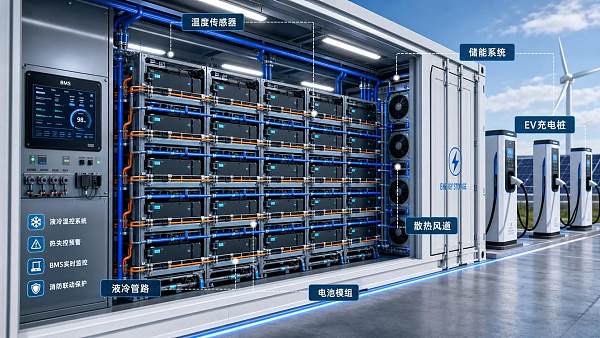
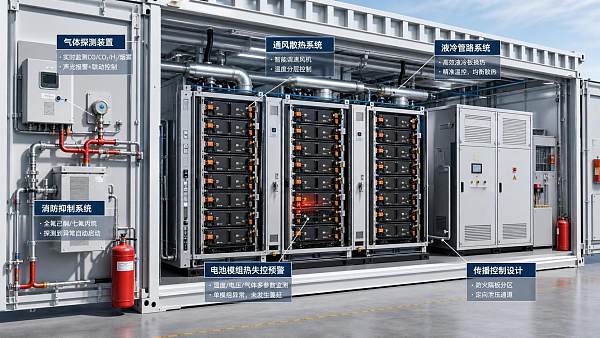
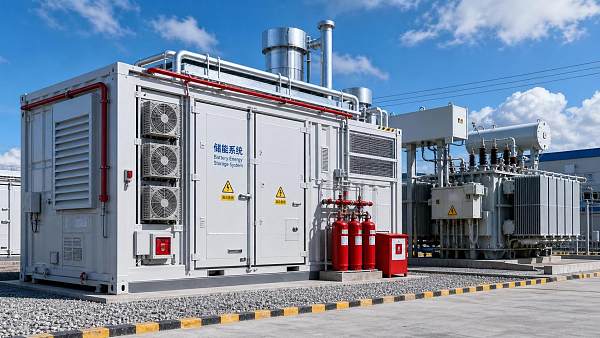
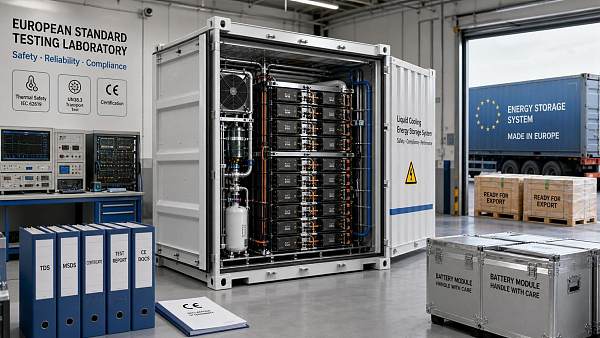
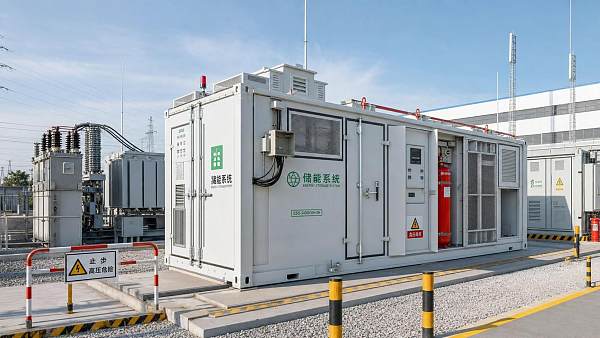
For renewable integration involving BESS containers, thermal design also matters. Liquid cooling that keeps cell temperature deviation tightly controlled supports predictable derating behavior, which improves dispatch reliability during high-load grid events.
Standards, Grid Codes, and Evidence Packages That Reduce Approval Delays
Grid code requirements vary by country and network operator. Still, the evidence expected from renewable integration projects is increasingly consistent: validated models, test reports, protection studies, power quality analysis, and commissioning procedures.
A strong evidence package shortens technical dialogue. It also gives lenders and asset owners greater confidence that renewable integration risks are known, quantified, and assigned to responsible parties.
Procurement Decisions: What Should Be Compared Beyond Price?
Budget pressure is real, but the cheapest equipment can become expensive if it triggers redesign. For renewable integration, technical evaluators should compare the cost of compliance, not only the purchase order amount.
A practical vendor evaluation checklist
- Confirm whether dynamic models are available before contract award and whether updates are included after firmware changes.
- Ask for reactive power capability curves at realistic voltage, temperature, and active power operating points.
- Review response times for plant controller commands, telemetry reporting, fallback modes, and communication failure behavior.
- Check whether PCS, transformer, switchgear, and protection suppliers have clarified interface responsibilities.
- Evaluate the vendor’s support for grid code clarification rounds, witness testing, and post-commissioning tuning.
For hybrid projects, an integrated view is essential. BESS may solve curtailment and frequency response, but it can also introduce bidirectional protection complexity and additional control hierarchy.
ESGS helps technical teams examine these trade-offs across storage, transmission, charging, and hydrogen infrastructure. The goal is not to over-specify every asset, but to avoid underestimating grid code exposure.
Implementation Workflow for Lower-Risk Connection Approval
A disciplined workflow can prevent late surprises. The following sequence helps renewable integration teams convert uncertain grid requirements into a manageable engineering program.
Recommended pre-connection workflow
- Start with a grid code gap review that maps local requirements to equipment capabilities, models, and missing data.
- Run preliminary load flow, short-circuit, dynamic stability, harmonic, and protection studies before freezing equipment design.
- Hold an interface workshop covering PCS, transformer, MV switchgear, relays, SCADA, EMS, and utility communication points.
- Create a compliance matrix with evidence owner, due date, acceptance criterion, and risk status for each requirement.
- Prepare a commissioning test plan that validates key renewable integration functions under realistic site conditions.
This process gives evaluators a defensible basis for decisions. It also helps procurement teams negotiate clearer scope boundaries, warranty assumptions, delivery milestones, and technical support obligations.
Common Misconceptions and FAQ for Technical Evaluators
Does inverter certification guarantee grid code acceptance?
No. Certification may confirm product-level capability, but renewable integration approval depends on site conditions, plant controller settings, transformer characteristics, network strength, and utility-specific requirements.
When should EMT studies be considered?
EMT studies are useful for weak grids, high inverter penetration, HVDC proximity, resonance concerns, or complex BESS and solar hybrids. They reveal fast control interactions that RMS studies may not capture.
Can BESS fix all renewable integration problems?
BESS can improve ramp control, frequency response, curtailment absorption, and peak shaving. It cannot automatically solve poor protection coordination, inadequate reactive range, weak communication design, or incorrect grid models.
What is often underestimated in EV charging hubs?
Evaluators often focus on peak demand but miss step-load behavior, harmonic contribution, transformer thermal loading, charger diversity assumptions, and V2G export protection. These factors can affect feeder approval.
How can electrolyzers support grid stability?
Electrolyzers can act as flexible loads when coordinated with renewable surplus and grid signals. Their value depends on ramp capability, rectifier power quality, process constraints, and dispatch agreements.
Why Choose ESGS for Renewable Integration Intelligence?
ESGS connects technical intelligence across the assets that shape modern grids: BESS containers, smart T&D equipment, UHV transformers, EV charging and swapping infrastructure, and hydrogen electrolyzers.
Our Strategic Intelligence Center supports evaluators who need to turn complex requirements into practical decisions. We focus on grid stability, safe energy flow, compliance evidence, and asset-return logic.
Contact ESGS when you need support with parameter confirmation, renewable integration risk screening, BESS and PCS selection logic, grid code evidence review, certification requirement mapping, delivery risk questions, or quotation comparison.
If your project is approaching connection application, procurement freeze, lender review, or commissioning, ESGS can help clarify the technical questions that determine whether clean-energy infrastructure is safe, compliant, and bankable.
Related News
 Battery Energy Storage Safety Compliance: Key Standards and RisksDr. Valeria ThorneBattery energy storage safety compliance explained: key standards, major risks, and practical review points to reduce approval delays, improve safety, and protect long-term BESS performance.
 Battery Thermal Management Guidance to Reduce Thermal Runaway RiskDr. Valeria ThorneBattery thermal management guidance for thermal runaway prevention: learn practical monitoring, cooling, and response strategies to reduce battery risk, improve safety, and protect asset uptime.
 Energy Storage Fire Safety Compliance: What Changes in 2026 StandardsDr. Valeria ThorneEnergy storage fire safety compliance in 2026 will reshape BESS finance, insurance, and market access. Discover the key standard changes, risks, and practical readiness steps.
 Thermal Runaway Safety Guidance: Key Gaps That Raise Fire RiskDr. Valeria ThorneThermal runaway safety guidance reveals the hidden testing, cooling, propagation, and response gaps that raise BESS fire risk—learn how to reduce failures before incidents escalate.
 Grid Resilience Solutions Standards: What Matters in New Substation ProjectsDr. Valeria ThorneGrid resilience solutions standards shape safer, smarter substation projects from day one. Learn what to check for protection, cyber readiness, future expansion, and long-term ROI.
 Grid Code Checks for Renewable Integration SolutionsDr. Valeria ThorneRenewable integration solutions grid code checks now shape design, compliance, and project timelines. Learn key risks, study priorities, and smart steps to avoid delays.
 UL 9540A for Battery Containers: Key Test Results That Change Site RiskDr. Valeria ThorneUL 9540A for battery containers explained: discover which test results truly change site risk, insurance, permitting, and project value before final design.
![]() UL 9540A for Battery Containers: Test Scope, Fire Risk, and Compliance GapsDr. Valeria ThorneUL 9540A for battery containers explained: understand test scope, fire risk, and hidden compliance gaps to improve project approval, safety reviews, and export readiness.
UL 9540A for Battery Containers: Test Scope, Fire Risk, and Compliance GapsDr. Valeria ThorneUL 9540A for battery containers explained: understand test scope, fire risk, and hidden compliance gaps to improve project approval, safety reviews, and export readiness. Thermal Runaway Protection Under IEC: Common Gaps in BESS PlanningDr. Valeria ThorneThermal runaway protection IEC gaps can derail BESS projects. Learn the most common planning failures in layout, detection, ventilation, and controls before they delay approval.
 EU Draft Tightens Thermal Safety for Liquid-cooled BESSDr. Valeria ThorneEU Draft Tightens Thermal Safety for Liquid-cooled BESS: learn how mandatory UL 9540A cell-level testing, Annex ZB checks, and Q1 2027 EU customs risk could impact certification, imports, and shipments.
 Energy Transition Standards Compared: Which Ones Matter for Project Approval?Dr. Valeria ThorneEnergy transition standards compared: learn which codes and tests truly influence project approval for BESS, grid, hydrogen, and EV charging assets.
 Containerized Battery Storage Fire Rated: Key Codes, Test Standards, and GapsDr. Valeria ThorneContainerized battery storage fire rated: learn the key codes, UL 9540A limits, enclosure vs. thermal runaway risks, and the compliance gaps that can delay BESS approval.