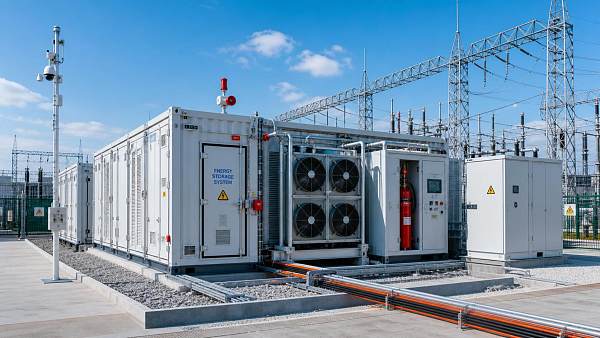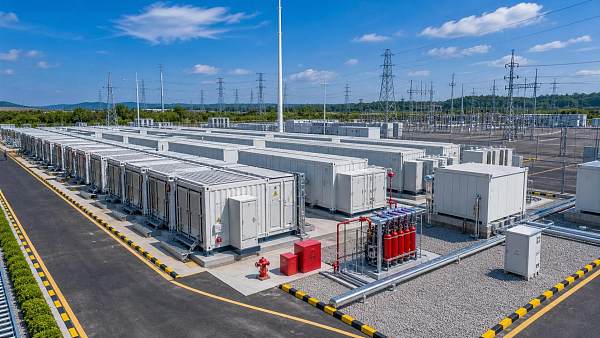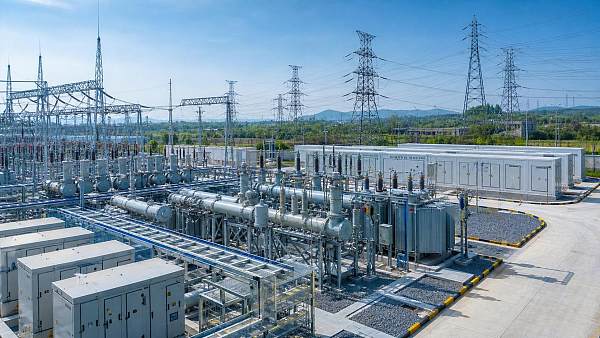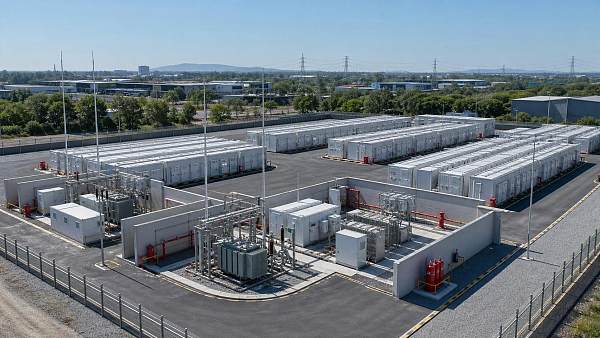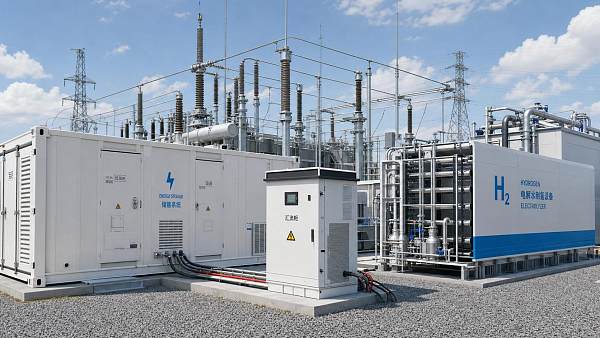
As power systems become more digital, distributed, and high-stakes, smart grid technology standards are moving from technical reference points to strategic business priorities. For decision-makers across storage, transmission, charging, and hydrogen infrastructure, understanding the standards shaping interoperability, cybersecurity, safety, and real-time control is essential to reducing risk, protecting investment, and staying competitive in the next phase of global grid modernization.
For enterprises planning BESS containers, UHV transmission assets, EV charging hubs, hydrogen electrolyzer integration, or virtual power plant participation, standards now influence far more than engineering compliance. They affect bid eligibility, insurance conditions, cross-border market access, commissioning timelines, and long-term upgrade costs over 10 to 20 years.
In practical terms, smart grid technology standards determine whether devices from 3 to 5 vendors can communicate reliably, whether millisecond-level dispatch signals remain trustworthy, and whether a project can scale from a 20MW pilot to a 500MW regional platform without expensive redesign. That is why leadership teams increasingly review standards at the same stage as capex, site risk, and return modeling.
Why Smart Grid Technology Standards Have Become a Board-Level Issue
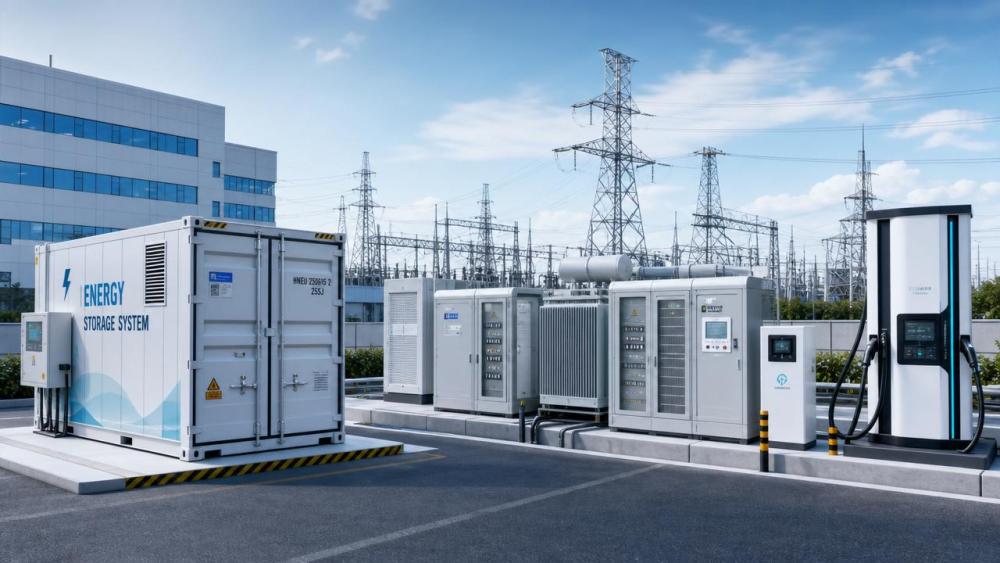
Smart grid technology standards sit at the intersection of operational technology, digital infrastructure, and physical energy assets. In older grid environments, many standards were treated as engineering details. In modern networks with distributed energy resources, that approach is no longer sufficient.
A single utility-scale project may combine power conversion systems, battery management systems, SCADA, substation automation, protection relays, EMS software, charger controllers, and cloud analytics. If these layers use incompatible protocols or inconsistent data models, integration risk rises sharply during the final 5% of project delivery, where delays often become most expensive.
Four business pressures driving standards adoption
- Interoperability across mixed fleets of storage, charging, transmission, and control equipment
- Cybersecurity obligations as grid assets connect through IP-based networks and remote access tools
- Safety compliance for high-energy systems, especially where thermal, arc, and fault risks converge
- Future-proofing against software updates, grid code changes, and cross-border procurement requirements
Why decision-makers should care early
When standards are reviewed only at FAT or SAT stage, companies may discover gateway limitations, undocumented data points, latency issues above 100ms, or cybersecurity controls that fail local utility policy. These are not minor technical defects. They can shift energization dates by 4 to 12 weeks and alter total project economics.
For ESGS-focused sectors, the issue is even broader. BESS requires safe thermal management and dispatch integration. UHV and smart T&D equipment depend on precision protection and control. EV charging and V2G need reliable communication. Hydrogen facilities increasingly need coordinated load response. Standards are the common language connecting all four.
Core Smart Grid Technology Standards to Watch Across the Value Chain
Not every standard carries the same weight for every project. A 132kV digital substation, a 1GWh battery energy storage park, and a 300-bay megacharging hub each emphasize different layers. The table below highlights the standards families most relevant to strategic planning.
The key takeaway is that smart grid technology standards are no longer concentrated in the substation alone. They now extend from field devices to enterprise software, from charger ports to dispatch algorithms, and from local protection logic to cloud-based optimization layers.
IEC 61850: still central, but now far beyond traditional substations
IEC 61850 remains one of the most important smart grid technology standards because it provides structured communication models rather than simple point-to-point signal mapping. For operators, this can reduce engineering rework when integrating IEDs, PCS units, and gateway devices from multiple suppliers.
In BESS projects above 50MW, using consistent naming and event structures can shorten troubleshooting windows during commissioning. Instead of chasing undocumented tags across separate vendor systems, teams can diagnose alarms, breaker status, and dispatch commands within a unified logic framework.
IEC 62351: security is now operational, not optional
As assets connect through Ethernet, VPNs, edge gateways, and cloud historians, cybersecurity standards are becoming basic operational requirements. IEC 62351 is especially relevant where storage systems, charging platforms, and dispatch centers exchange commands in intervals as short as 1 second to 5 seconds.
Decision-makers should not assume that standard IT controls automatically protect OT environments. Authentication, message integrity, certificate handling, and role-based access need to be validated against actual plant workflows, especially where remote firmware updates or third-party service access are involved.
IEEE 1547 and DER integration standards
For distributed projects, IEEE 1547 shapes how DER assets behave at the grid edge. That includes voltage ride-through, frequency response, reactive power functions, and communications expectations. These requirements directly affect inverter settings, control strategies, and acceptance testing plans.
If an industrial park plans to combine rooftop PV, a 10MWh storage cabinet cluster, and EV charging, non-compliant DER settings can lead to curtailment, nuisance trips, or interconnection study revisions. In many markets, that can delay energization by one quarter or more.
OCPP and ISO 15118 in charging and V2G ecosystems
For charging infrastructure, OCPP helps charger hardware communicate with management platforms, while ISO 15118 supports higher-value features such as Plug & Charge and bidirectional energy exchange. In fleets targeting 350kW to 1MW charging scenarios, these standards influence both customer experience and grid participation revenue.
Where charging hubs are expected to join demand response or VPP programs, protocol choice should be reviewed alongside transformer loading, battery buffering, and tariff strategy. The communication layer can either unlock flexible monetization or become a bottleneck.
How Standards Shape Procurement, Integration, and Asset Value
For enterprise buyers, the most costly standards mistake is assuming compliance claims are equal across vendors. In practice, one supplier may support a protocol at a basic gateway level, while another supports full object modeling, event handling, cybersecurity controls, and documented interoperability testing.
A procurement team evaluating smart grid technology standards should compare not just certificates, but implementation depth. That is especially important in utility-scale storage, EV charging aggregation, and digital substations, where hidden integration costs often appear after contract award.
Five procurement questions to ask suppliers
- Which protocol versions are supported, and are they native or gateway-based?
- What is the tested latency range for command, status, and event reporting?
- How are firmware updates, certificates, and user permissions managed?
- What interoperability tests have been performed with third-party systems?
- Which functions are standard, and which require custom engineering hours?
These questions matter because projects can meet the letter of a standard but still fail at operational scale. For instance, a charger platform might support OCPP, yet expose only limited telemetry. A BESS EMS might map IEC 61850 signals, yet require custom middleware for dispatch event handling. That difference changes both lifecycle cost and vendor dependence.
The following framework can help executives compare suppliers more consistently across storage, transmission, and charging projects.
A strong standards position usually translates into more predictable delivery. In many projects, that means fewer custom interfaces, less vendor lock-in, and lower risk during expansion from one site to a multi-site portfolio. For investors and infrastructure operators, that improves both resilience and asset liquidity.
The hidden cost of weak standards alignment
Poor alignment can show up in several ways: duplicated gateways, manual data reconciliation, delayed utility approval, patching conflicts, and limited VPP participation. Each issue may look manageable in isolation, but together they can erode project IRR through additional engineering, downtime, or reduced market revenue.
For example, if a 200MWh storage site cannot reliably execute real-time dispatch commands inside required response windows, it may be excluded from ancillary service markets. If a charging network cannot support secure and standardized data exchange, fleet optimization and settlement accuracy may suffer across hundreds of charging sessions per day.
Implementation Priorities for BESS, UHV, Charging, and Hydrogen Projects
Different energy infrastructure segments share the same standards logic, but implementation priorities differ. Decision-makers should map standards to physical risk, control complexity, and commercial use case rather than treating every project with the same checklist.
BESS containers
For BESS, the first priority is safe integration of battery systems, PCS, EMS, fire protection, and utility-facing controls. That means combining communication standards with safety protocols and clear acceptance criteria. In liquid-cooled systems, temperature deviation targets such as within 2°C can be operationally meaningful only when monitoring and alarms are correctly integrated.
Buyers should also check whether dispatch, fault reporting, and thermal events are available in structured data points suitable for SCADA and analytics. This becomes critical when a portfolio grows from one 50MWh installation to several sites totaling 1GWh or more.
Smart grid T&D and UHV assets
For transmission and UHV applications, reliability and timing discipline are central. Protection, status indication, breaker control, and disturbance recording must operate consistently under complex electromagnetic conditions. Even small timing mismatches can complicate root-cause analysis after faults.
In these environments, executives should insist on detailed testing plans covering interoperability, cybersecurity hardening, and configuration management. On long-life assets expected to operate for 25 years or more, standards alignment reduces modernization friction during future digital upgrades.
EV charging and swapping hubs
At charging sites, standards choice affects uptime, billing accuracy, load management, and future V2G opportunities. High-power charging infrastructure, particularly 800V liquid-cooled systems, places greater pressure on communication quality because charging loads can ramp quickly and cluster densely in fleets or logistics depots.
If a site plans battery buffering or participation in local flexibility markets, charger communication standards should be reviewed together with transformer loading, energy management software, and settlement logic. A technically fast charger can still underperform commercially if the control layer is fragmented.
Hydrogen electrolyzer integration
Hydrogen projects are increasingly linked to renewable balancing strategies, especially where curtailed wind or solar can be converted into long-duration energy carriers. For electrolyzers, standards matter in grid connection, plant control, safety interfaces, and data exchange with upstream energy management systems.
Where operators want dynamic operation tied to electricity price windows or renewable availability, response logic must be clearly coordinated. If ramping decisions, power quality limits, and protection signals are poorly integrated, the plant may lose flexibility value or face avoidable operational stress.
A Practical Roadmap for Decision-Makers
A workable strategy does not require mastering every technical clause. It requires structuring decisions in the right sequence. Most organizations can improve standards control through a 4-step approach that aligns engineering, procurement, cybersecurity, and asset management teams early.
Step 1: define the operating model
Clarify whether the asset will operate as a standalone facility, a utility-connected dispatchable resource, a fleet-managed charging network, or part of a VPP. This determines which smart grid technology standards matter most and what performance thresholds must be verified.
Step 2: translate standards into bid requirements
Tender documents should specify protocol versions, data points, cybersecurity expectations, test evidence, and integration scope. A one-line request for “IEC 61850 compatible” is usually too vague. Clear bid language prevents interpretation gaps and post-award change orders.
Step 3: test before site pressure peaks
Interoperability issues are cheaper to solve in lab environments than during energized commissioning. FAT should include real communication scenarios, not only document checks. For complex projects, a digital twin or staged integration test can save significant field time during the last 2 to 6 weeks before operation.
Step 4: plan the upgrade path
Standards compliance should not freeze the system at day one. Buyers should confirm how future firmware, cybersecurity patches, charger additions, battery augmentation, or dispatch platform changes will be managed. The long-term value of a standards-based architecture lies in controlled evolution, not static conformity.
For companies navigating BESS safety, smart T&D modernization, UHV integration, EV charging expansion, or hydrogen-linked flexibility, smart grid technology standards are now a practical lever for lowering risk and increasing asset performance. They influence project bankability, interoperability, operational resilience, and the ability to scale across markets and technologies.
ESGS supports decision-makers by connecting technical standards, dispatch logic, safety priorities, and commercial outcomes across the new energy infrastructure chain. If you are evaluating grid-scale storage, advanced charging networks, substation digitalization, or hydrogen-ready power systems, now is the time to review your standards strategy with the same rigor as your capex model.
Contact us to discuss your project requirements, request a tailored standards intelligence brief, or explore solution pathways that strengthen both grid stability and long-term asset returns.
Related News
 Battery Energy Storage Safety Compliance: Key Standards and RisksDr. Valeria ThorneBattery energy storage safety compliance explained: key standards, major risks, and practical review points to reduce approval delays, improve safety, and protect long-term BESS performance.
 Battery Thermal Management Guidance to Reduce Thermal Runaway RiskDr. Valeria ThorneBattery thermal management guidance for thermal runaway prevention: learn practical monitoring, cooling, and response strategies to reduce battery risk, improve safety, and protect asset uptime.
 Energy Storage Fire Safety Compliance: What Changes in 2026 StandardsDr. Valeria ThorneEnergy storage fire safety compliance in 2026 will reshape BESS finance, insurance, and market access. Discover the key standard changes, risks, and practical readiness steps.
 Thermal Runaway Safety Guidance: Key Gaps That Raise Fire RiskDr. Valeria ThorneThermal runaway safety guidance reveals the hidden testing, cooling, propagation, and response gaps that raise BESS fire risk—learn how to reduce failures before incidents escalate.
 Grid Resilience Solutions Standards: What Matters in New Substation ProjectsDr. Valeria ThorneGrid resilience solutions standards shape safer, smarter substation projects from day one. Learn what to check for protection, cyber readiness, future expansion, and long-term ROI.
 Grid Code Checks for Renewable Integration SolutionsDr. Valeria ThorneRenewable integration solutions grid code checks now shape design, compliance, and project timelines. Learn key risks, study priorities, and smart steps to avoid delays.
 UL 9540A for Battery Containers: Key Test Results That Change Site RiskDr. Valeria ThorneUL 9540A for battery containers explained: discover which test results truly change site risk, insurance, permitting, and project value before final design.
![]() UL 9540A for Battery Containers: Test Scope, Fire Risk, and Compliance GapsDr. Valeria ThorneUL 9540A for battery containers explained: understand test scope, fire risk, and hidden compliance gaps to improve project approval, safety reviews, and export readiness.
UL 9540A for Battery Containers: Test Scope, Fire Risk, and Compliance GapsDr. Valeria ThorneUL 9540A for battery containers explained: understand test scope, fire risk, and hidden compliance gaps to improve project approval, safety reviews, and export readiness. Thermal Runaway Protection Under IEC: Common Gaps in BESS PlanningDr. Valeria ThorneThermal runaway protection IEC gaps can derail BESS projects. Learn the most common planning failures in layout, detection, ventilation, and controls before they delay approval.
 EU Draft Tightens Thermal Safety for Liquid-cooled BESSDr. Valeria ThorneEU Draft Tightens Thermal Safety for Liquid-cooled BESS: learn how mandatory UL 9540A cell-level testing, Annex ZB checks, and Q1 2027 EU customs risk could impact certification, imports, and shipments.
 Energy Transition Standards Compared: Which Ones Matter for Project Approval?Dr. Valeria ThorneEnergy transition standards compared: learn which codes and tests truly influence project approval for BESS, grid, hydrogen, and EV charging assets.
 Containerized Battery Storage Fire Rated: Key Codes, Test Standards, and GapsDr. Valeria ThorneContainerized battery storage fire rated: learn the key codes, UL 9540A limits, enclosure vs. thermal runaway risks, and the compliance gaps that can delay BESS approval.