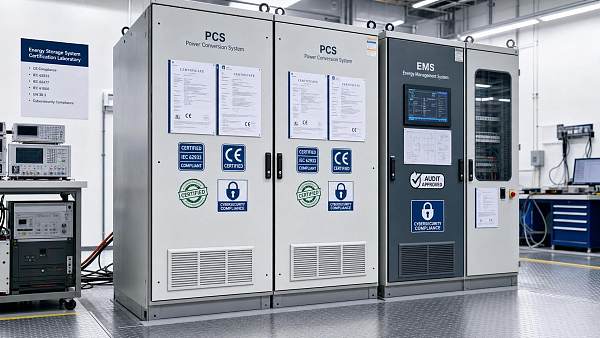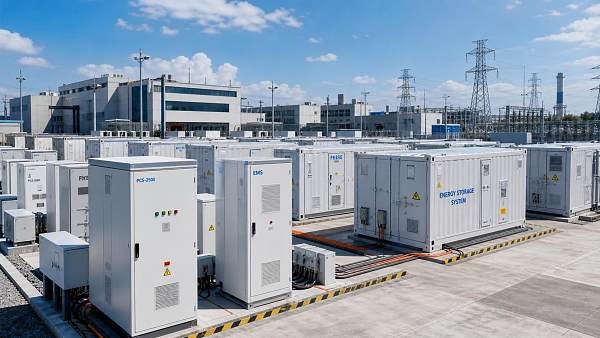
On June 26, 2026, TUV Rheinland released an updated cybersecurity certification template for PCS and energy management systems, introducing a new mandatory requirement tied to IEC 62443-4-2:2026. For companies involved in commercial and industrial energy storage exports to Germany and wider Europe, the update deserves attention because it affects certification submissions, software compliance preparation, and overall technical readiness timelines.
What the template update confirms
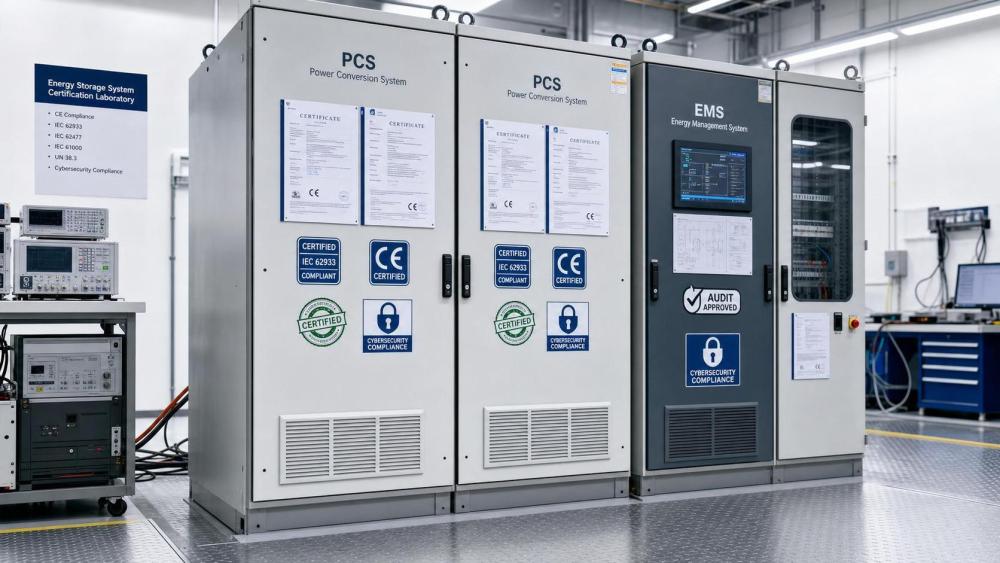
The newly issued template is identified as TR-PCS-SEC v3.2 and applies to PCS and EMS cybersecurity certification. According to the provided event summary, all energy storage converters and EMS software submitted for certification after August 1, 2026 must pass an IEC 62443-4-2:2026 secure development lifecycle (SDL) audit. The update was released by TUV Rheinland on June 26, 2026.
Where the immediate pressure may appear
Export-facing storage equipment suppliers
From an industry perspective, suppliers shipping PCS products to Germany and Europe may be affected first because certification timing is directly linked to market entry and project readiness. The main pressure point is the submission stage: products prepared under earlier assumptions may now require additional SDL-related evidence before certification can move forward.
EMS software teams and product owners
EMS software is explicitly covered in the updated requirement, so software development and compliance teams may need to pay closer attention than before. The potential impact is not limited to a document update; it may also affect how internal development processes are presented during audit preparation and customer-facing compliance discussions.
Project delivery and commercial coordination roles
What deserves closer attention is the link between certification and delivery planning. Teams handling customer schedules, export coordination, or bid preparation may need to recheck whether products intended for submission after August 1, 2026 are aligned with the new audit requirement, especially when delivery timing depends on certification progress.
European buyers and technical evaluators
Buyers, integrators, and technical review teams may also feel the effect through procurement and qualification workflows. Where certification status is part of vendor assessment, this update may change what supporting materials are requested from suppliers and when those materials need to be available.
What companies should watch now
Submission timing versus audit readiness
Companies should closely compare planned certification submission dates with their current SDL audit preparedness. The key issue is practical sequencing: a product intended for submission after August 1, 2026 may face a different compliance path than one submitted earlier.
Scope of materials prepared for certification
Analysis shows that the operational question is not only whether a product is technically mature, but whether the certification package is prepared for the new requirement. Teams should pay attention to whether existing files, process descriptions, and supporting records are sufficient for the mandatory IEC 62443-4-2:2026 SDL audit referenced in the update.
Customer communication on lead times
For companies exporting to Germany and Europe, external communication may become a practical issue. Where customers are planning deliveries around certification milestones, suppliers may need to clarify whether the new template changes expected preparation time or document review cadence.
Follow-up wording and rule interpretation
Observably, another point worth tracking is how the updated template is described in later official or market-facing communications. Businesses should distinguish between the confirmed fact already provided here and any later interpretation around implementation details, audit expectations, or supporting evidence.
Why this reads as more than a routine document revision
Analysis shows that this update is better understood as a compliance signal with operational consequences, rather than as a purely administrative template refresh. The reason is straightforward: the change introduces a mandatory audit condition tied to future certification submissions. At the same time, it is still more appropriate to treat the broader market impact as an evolving development, because the input information confirms the rule change and its likely effect on technical preparation cycles, but does not establish wider downstream outcomes yet.
How to read the signal at this stage
At this stage, the update is most appropriately understood as a near-term compliance change with possible medium-term implications for export preparation. It does not by itself prove a broader market shift, but it clearly indicates that cybersecurity review in PCS and EMS certification is becoming more consequential for companies targeting Germany and Europe. For affected suppliers, the immediate issue is readiness, not speculation.
Basis of this article
This article is based on the user-provided news title, event date, and event summary concerning TUV Rheinland's June 26, 2026 update to the PCS and EMS cybersecurity certification template and the new mandatory IEC 62443-4-2:2026 SDL audit requirement for submissions after August 1, 2026. For this type of development, commonly relevant source categories may include official notices, company announcements, industry association updates, authoritative media coverage, and standards-related documents. A specific official source link was not provided in the input, so further verification remains necessary. Continued monitoring should focus on any subsequent official wording, implementation clarification, and practical interpretation affecting certification preparation and export execution.
Related News
 TUV Rheinland Tightens PCS and EMS Cybersecurity TemplateGrid Storage ArchitectTUV Rheinland tightens PCS and EMS cybersecurity certification with a new IEC 62443-4-2:2026 SDL audit. Learn how this update may affect Germany and Europe energy storage exports, compliance timing, and certification readiness.
 Power Flow Control Systems: Key Selection FactorsGrid Storage ArchitectPower flow control systems are critical for BESS, EV charging, and grid stability. Discover the key selection factors that improve performance, reliability, and lifecycle value.
 Kehua Releases Grid-Forming Storage PaperGrid Storage ArchitectKehua Releases Grid-Forming Storage Paper, outlining grid-forming PCS functions, weak-grid delivery impact, and compliance signals shaping bids, testing, and project acceptance.
 Technical Comparison Resources for PCS and EMS Selection in BESS ProjectsGrid Storage ArchitectTechnical comparison resources for PCS and EMS selection in BESS projects: compare control logic, thermal safety, grid compliance, and lifecycle value to choose smarter, bankable storage solutions.
 Grid Dispatch Intelligence in Renewable Peak-Shaving ApplicationsGrid Storage ArchitectGrid dispatch intelligence drives smarter renewable peak-shaving by coordinating storage, transmission, EV charging, and hydrogen loads to cut curtailment, protect assets, and boost grid value.
 Can Smart Grid Neural Networks Improve EMS Forecast Accuracy?Grid Storage ArchitectSmart grid neural networks can improve EMS forecast accuracy by refining dispatch, storage timing, and grid response. See where real operational gains and ROI appear.
 DOE Safe Harbor Update Triggers PCS and EMS BuyingGrid Storage ArchitectDOE Safe Harbor Update reshapes PCS and EMS buying for 32 federally funded storage projects. See how new certification and VPP interface rules affect supplier access, procurement, and compliance planning.
 DOE Safe Harbor Update Triggers 70GWh PCS and EMS BuyingGrid Storage ArchitectDOE Safe Harbor update triggers 70GWh energy storage buying, putting PCS and EMS suppliers under new UL 1741 SA and FERC 2222 requirements. See who can bid now.
 DOE Safe Harbor Update Drives 70GWh PCS, EMS BuyingGrid Storage ArchitectDOE Safe Harbor update drives 70GWh PCS and EMS buying as projects enter procurement. Learn how UL 1741 SA, IEEE 1547-2024, and FERC 2222 shape vendor readiness.
 DOE Safe Harbor List Update Triggers 70GWh PCS and EMS BuyingGrid Storage ArchitectDOE Safe Harbor List update triggers 70.2GWh PCS and EMS buying in 2026 Q3-Q4. See how certifications, prequalification, and procurement timing can shape supplier access.
 Battery Management Systems: Common Faults and FixesGrid Storage ArchitectBattery management systems common faults and fixes: learn how to diagnose sensor drift, thermal imbalance, and communication loss across BESS, EV charging, and microgrid sites.
 DOE Safe Harbor Update Speeds PCS and EMS BuyingGrid Storage ArchitectDOE Safe Harbor update speeds PCS and EMS buying as 70–75GWh of U.S. storage projects move closer to procurement. See how FCC, IEEE 1547-2024, and VPP requirements reshape bids and delivery.