When a Bidirectional Power Conversion System Pays Off
For business evaluators, the real issue is not whether the technology works. It does. The harder question is when a power conversion system bidirectional design creates returns that justify the extra capital.
That answer depends on operating hours, tariff structure, power quality needs, and market access. In some projects, payback is fast. In others, the value stays mostly strategic.
A bidirectional converter can both charge and discharge. That sounds simple, but the commercial impact is broad. It turns storage, EV fleets, and flexible loads into active grid assets.
From recent market changes, the stronger signal is clear. Revenue no longer comes from one source alone. A power conversion system bidirectional setup pays off best when several value streams stack together.
What a Power Conversion System Bidirectional Setup Actually Changes
In a one-way architecture, electricity moves in a single direction for a defined task. That fits basic charging or fixed conversion. It does not fully support energy trading, fast response, or flexible dispatch.
A power conversion system bidirectional design changes that operating model. It lets the same asset absorb energy when prices are low and return energy when prices or system needs rise.
This also means better alignment with modern grid conditions. Renewable variability, demand peaks, and local voltage stress all reward assets that can respond in both directions.
In practical terms, this architecture matters most in four cases:
- Battery energy storage systems doing peak-valley arbitrage
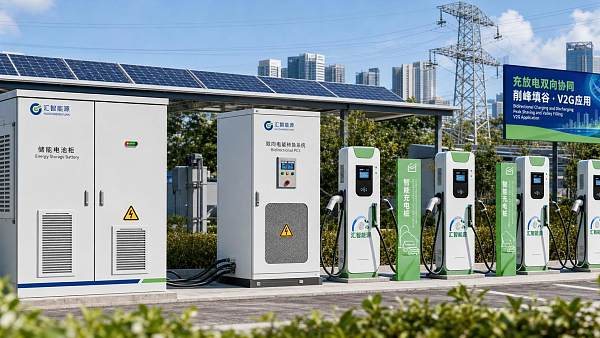
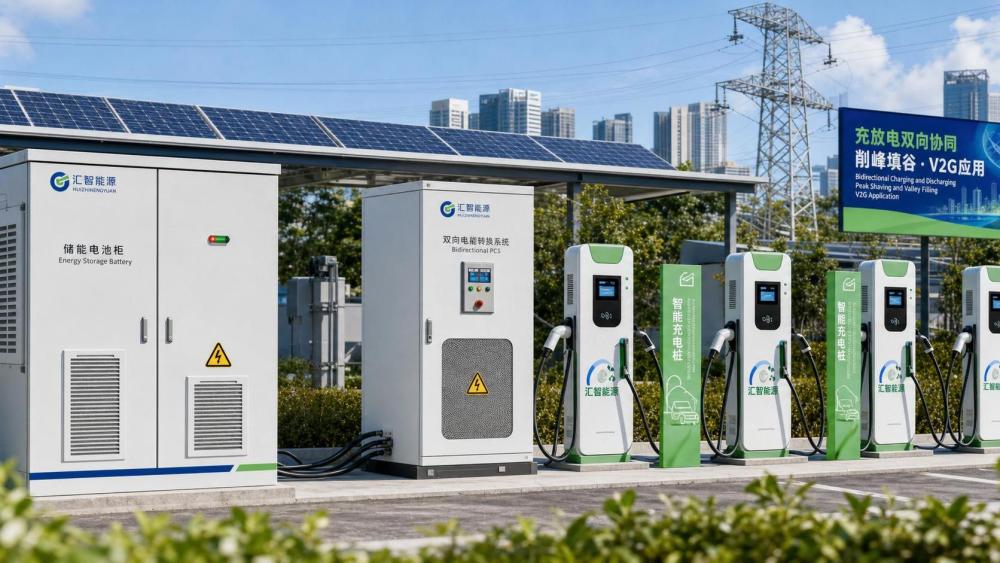
- EV charging hubs adding V2G capability
- Industrial sites reducing demand charges and backup risk
- Grid-support projects selling ancillary services
If none of these use cases exists, the economics weaken quickly. The equipment may still be technically attractive, but procurement logic becomes harder to defend.
Where the Commercial Return Usually Comes From
The most common return driver is energy arbitrage. Charge from cheap solar, wind, or off-peak power. Discharge during expensive evening or demand-heavy periods. That is the core bidirectional value case.
But arbitrage alone is often not enough. The stronger business case usually comes from layered benefits. A power conversion system bidirectional project performs better when it supports several cash flows at once.
1. Peak-Valley Arbitrage
This is the cleanest and easiest value stream to model. Projects with wide spread between charging and discharging tariffs tend to see the fastest payback.
2. Demand Charge Reduction
Commercial and industrial facilities can discharge during short peak intervals. That lowers billed peak demand and improves annual operating costs without changing production schedules.
3. Grid Services Revenue
Fast frequency response, reactive power support, and other ancillary services can materially improve returns. Here, converter response speed and control precision matter as much as installed capacity.
4. EV Fleet and V2G Monetization
For high-utilization fleets, a power conversion system bidirectional strategy can turn parked vehicles into flexible distributed storage. That value grows when fleet schedules are predictable.
5. Resilience and Outage Loss Avoidance
Some returns do not show up as energy revenue. Avoided downtime, protected cold-chain loads, or stable charging operations can be commercially significant in the right sector.
How to Tell if the Economics Really Work
This is where many decisions drift off course. A power conversion system bidirectional investment should not be judged by equipment price alone. It should be judged by usable cycles and monetizable flexibility.
Start with five commercial checks:
- Measure tariff spread across seasons, not just one month.
- Confirm annual cycle count under real operating limits.
- Check whether the site can access grid service markets.
- Estimate battery degradation cost per useful discharge.
- Model controls, software, and interconnection costs early.
A good rule is simple. If the project depends on one fragile assumption, it is not ready. If two or three revenue streams survive downside testing, the case becomes much stronger.
That also means LCOS matters more than headline capex. A cheaper converter that limits dispatch flexibility may destroy more value than it saves.
Decision Signals by Application Scenario
Different projects reach payoff at different thresholds. The table below gives a practical screening view for power conversion system bidirectional procurement decisions.
In short, scale alone does not guarantee returns. The value comes from dispatch discipline, tariff exposure, and the technical ability to move power at the right time.
What Buyers Often Underestimate
The first blind spot is control strategy. A power conversion system bidirectional unit is only as profitable as the software and rules driving it.
The second is thermal management. In storage-heavy applications, poor heat control reduces usable life, weakens efficiency, and cuts the very returns the investment model expects.
The third is compliance timing. Grid codes, interconnection approvals, UL 9540A implications, and local market rules can delay revenue start dates more than buyers expect.
There is also a basic commercial issue. Some vendors quote strong round-trip efficiency numbers under ideal conditions. Actual field performance may differ once ambient heat, partial load, and cycling behavior are included.
This is why procurement teams should request operating curves, not just brochure figures. Revenue depends on real-world dispatch windows, not lab-perfect snapshots.
A Practical Screening Framework for Procurement
If the goal is a fast first-pass decision, use this screen before issuing a full request for proposal.
- Does the site have enough daily or weekly spread in energy prices?
- Can the asset discharge often enough to justify added complexity?
- Is there measurable value in resilience, demand shaving, or V2G?
- Can site controls coordinate storage, chargers, and grid signals?
- Will compliance or interconnection delay commercial operation?
If the answer is yes to three or more, a power conversion system bidirectional solution deserves detailed modeling. If not, a simpler architecture may be economically cleaner.
The best buying decisions usually come from a combined view. Look at converter efficiency, battery behavior, controls, market rules, and asset utilization together. Separating them hides risk.
Final Take
A power conversion system bidirectional investment pays off when flexibility becomes monetizable, frequent, and controllable. That is the core test.
For storage, charging, and grid-upgrade projects, the strongest cases usually combine arbitrage, peak control, service revenue, and resilience. One benefit is helpful. Stacked benefits change the economics.
Before procurement moves forward, model real dispatch behavior, not optimistic theory. Check cycle economics, compliance timing, software capability, and thermal performance with equal care.
When those pieces line up, a power conversion system bidirectional design stops being a technical upgrade and becomes a clear commercial tool for higher asset returns.
Related News
 When a Bidirectional Power Conversion System Pays OffGrid Storage ArchitectPower conversion system bidirectional designs pay off when arbitrage, demand shaving, grid services, and resilience stack together. Learn when the ROI is strong.
 Japan JIS C 8715-2:2026 Adds RISC-V Firmware Audit RulesGrid Storage ArchitectJapan JIS C 8715-2:2026 adds RISC-V firmware audit rules for PCS and EMS exports to Japan. Learn the new requirements for traceability, PMP, and secure boot compliance.
 TUV Rheinland Tightens PCS and EMS Cybersecurity TemplateGrid Storage ArchitectTUV Rheinland tightens PCS and EMS cybersecurity certification with a new IEC 62443-4-2:2026 SDL audit. Learn how this update may affect Germany and Europe energy storage exports, compliance timing, and certification readiness.
 Power Flow Control Systems: Key Selection FactorsGrid Storage ArchitectPower flow control systems are critical for BESS, EV charging, and grid stability. Discover the key selection factors that improve performance, reliability, and lifecycle value.
 Kehua Releases Grid-Forming Storage PaperGrid Storage ArchitectKehua Releases Grid-Forming Storage Paper, outlining grid-forming PCS functions, weak-grid delivery impact, and compliance signals shaping bids, testing, and project acceptance.
 Technical Comparison Resources for PCS and EMS Selection in BESS ProjectsGrid Storage ArchitectTechnical comparison resources for PCS and EMS selection in BESS projects: compare control logic, thermal safety, grid compliance, and lifecycle value to choose smarter, bankable storage solutions.
 Grid Dispatch Intelligence in Renewable Peak-Shaving ApplicationsGrid Storage ArchitectGrid dispatch intelligence drives smarter renewable peak-shaving by coordinating storage, transmission, EV charging, and hydrogen loads to cut curtailment, protect assets, and boost grid value.
 Can Smart Grid Neural Networks Improve EMS Forecast Accuracy?Grid Storage ArchitectSmart grid neural networks can improve EMS forecast accuracy by refining dispatch, storage timing, and grid response. See where real operational gains and ROI appear.
 DOE Safe Harbor Update Triggers PCS and EMS BuyingGrid Storage ArchitectDOE Safe Harbor Update reshapes PCS and EMS buying for 32 federally funded storage projects. See how new certification and VPP interface rules affect supplier access, procurement, and compliance planning.
 DOE Safe Harbor Update Triggers 70GWh PCS and EMS BuyingGrid Storage ArchitectDOE Safe Harbor update triggers 70GWh energy storage buying, putting PCS and EMS suppliers under new UL 1741 SA and FERC 2222 requirements. See who can bid now.
 DOE Safe Harbor Update Drives 70GWh PCS, EMS BuyingGrid Storage ArchitectDOE Safe Harbor update drives 70GWh PCS and EMS buying as projects enter procurement. Learn how UL 1741 SA, IEEE 1547-2024, and FERC 2222 shape vendor readiness.
 DOE Safe Harbor List Update Triggers 70GWh PCS and EMS BuyingGrid Storage ArchitectDOE Safe Harbor List update triggers 70.2GWh PCS and EMS buying in 2026 Q3-Q4. See how certifications, prequalification, and procurement timing can shape supplier access.