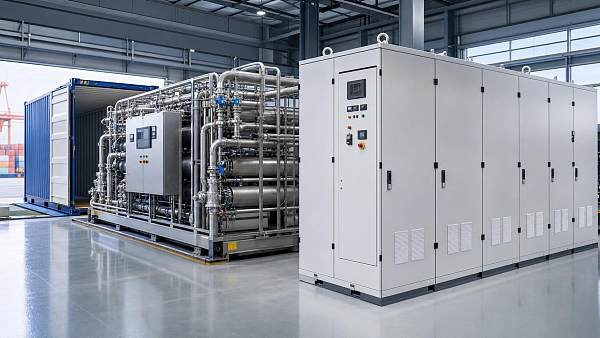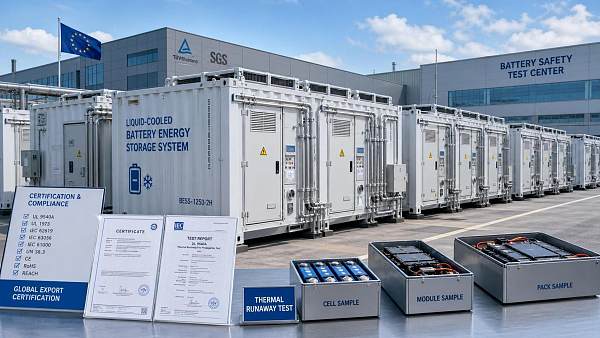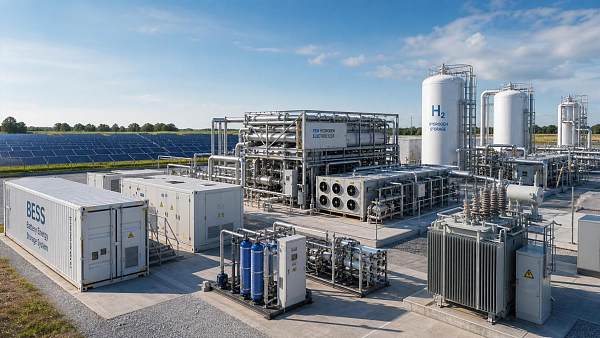
On May 28, 2026, the 19th China International Battery Fair (CIBF2026) opened at the Shenzhen Convention and Exhibition Center. The event introduced a dedicated export compliance acceleration initiative for alkaline (ALK) electrolyzers—significantly streamlining certification pathways for key overseas markets including the EU, Middle East, and Latin America.
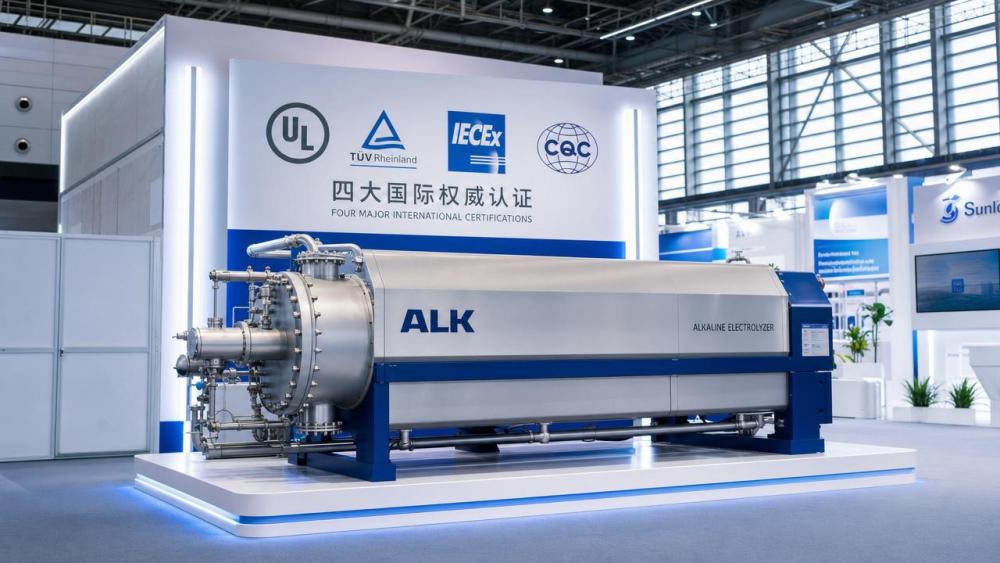
Launch of the ALK Electrolyzer Export Certification Hub
At its opening day on May 28, 2026, CIBF2026 established the ‘ALK Electrolyzer Export Certification Hub’, a co-located service zone jointly operated by UL, TÜV Rheinland, IECEx, and China Quality Certification Center (CQC). This hub offers integrated pre-assessment and localized testing services for four critical regulatory frameworks: IEC 62282-10:2025, UL 62368-1+62846, EU Pressure Equipment Directive (PED) 2014/68/EU, and CE-EMC/LVD requirements. The initiative reduces average compliance lead times for ALK electrolyzer exports to the EU, Middle East, and Latin America from 14 weeks to 5–7 weeks.
Impact Across the Hydrogen Equipment Value Chain
Export-Oriented Manufacturers
Direct trade enterprises face accelerated time-to-market pressure—and opportunity—as faster certification shortens order fulfillment cycles. They must now align product documentation, labeling, and test reports with the specific scope of each target market’s conformity assessment, especially under PED and IECEx schemes.
Raw Material & Component Suppliers
Suppliers of critical subsystems—including electrodes, diaphragms, and pressure-rated vessels—must ensure traceability and material declarations compliant with IEC 62282-10:2025 and PED Annex I essential safety requirements. Pre-certified components may gain competitive advantage in tender submissions.
Electrolyzer System Integrators
Manufacturers integrating ALK stacks into full systems must verify compatibility across multiple standards—e.g., ensuring UL 62368-1+62846 covers both power electronics and hydrogen safety interfaces. Functional safety documentation and EMC test plans require early coordination with certification bodies.
Compliance & Testing Service Providers
Third-party verification firms are seeing increased demand for parallel testing and gap analysis against dual-standard sets (e.g., UL + PED). Localized test capacity in Shenzhen—leveraging CQC’s infrastructure—is now a strategic differentiator for regional support speed.
Key Actions for ALK Electrolyzer Producers
Align Technical Documentation with Target-Market Certification Schemes
Producers should map internal design files, risk assessments, and test reports directly to clauses in IEC 62282-10:2025 and PED Annex I—not just generic safety claims—to avoid rework during pre-assessment.
Prioritize Localized EMC and LVD Testing in Shenzhen
Leveraging the Hub’s on-site EMC/LVD lab access avoids shipping prototypes abroad for preliminary validation, cutting iteration time and logistics risk—especially for large-format electrolyzer skids.
Prepare for Multi-Jurisdictional Conformity Declarations
EU PED requires a formal Declaration of Conformity signed by the manufacturer or authorized representative; Middle East markets often require additional GSO or SASO annexes. Producers must designate responsible parties and validate technical file completeness before submission.
Update Supplier Qualification Protocols for Critical Components
Since PED and IECEx mandate traceability of pressure-retaining parts, procurement teams must revise supplier questionnaires to include material certificates (e.g., EN 10204 3.1), weld procedure qualifications (WPQR), and non-destructive testing (NDT) records.
Industry Observation: From Certification Bottleneck to Integrated Compliance Workflow
Analysis shows this Hub represents more than a logistical convenience—it signals a structural shift toward harmonized, geography-aware compliance engineering. Observably, the compression of certification timelines from 14 to 5–7 weeks is not solely due to faster lab throughput, but stems from upfront alignment between standard developers (IEC), certifiers (UL, TÜV Rheinland), and national accreditation bodies (CQC). What deserves closer attention is how this model may influence future updates to IEC 62282-10 implementation guidelines—and whether similar hubs will emerge for PEM electrolyzers ahead of IEC 62282-8 adoption. It is more appropriate to understand this as an early indicator of de facto standardization in hydrogen equipment conformity assessment, rather than merely a temporary trade facilitation measure.
Strategic Implication for Global Hydrogen Infrastructure Development
This initiative lowers entry requirements—not technical thresholds—for ALK electrolyzer suppliers targeting emerging hydrogen markets. While it does not reduce inherent safety or performance obligations, it removes procedural friction that previously delayed pilot deployments and commercial tenders. The long-term significance lies in enabling faster feedback loops between field deployment, certification experience, and next-generation design iteration—particularly where local grid integration, ambient operating conditions, and maintenance protocols differ significantly across regions.
Source Information and Verification Notes
This article is based exclusively on the provided title, event date (May 28, 2026), and summary description. Specific official source links were not provided in the input and should be verified continuously. Stakeholders are advised to monitor upcoming CQC bulletins, UL/TÜV Rheinland technical advisories, and EU Commission updates on PED implementation guidance—particularly regarding classification rules for hydrogen generation equipment under Article 1(2)(b). Further observation is warranted on how certification bodies interpret ‘localization’ of testing and whether remote audit options expand beyond the initial Hub scope.
Related News
 How to Evaluate a Virtual Power Plant Aggregation PlatformProf. Kaelen VossVirtual power plant aggregation platform evaluation starts with real dispatch, integration, optimization, and security checks. Learn how to compare vendors and choose a scalable, bankable solution.
 EU Sets UL 9540A Rule for Imported Liquid-Cooled BESSGrid Storage ArchitectEU sets UL 9540A rule for imported liquid-cooled BESS. Learn how the October 2026 EU requirement impacts compliance, certification timelines, costs, and delivery planning.
 Oil-Immersed Transformer Applications in Reliable Power Distribution ProjectsUHV Engineering FellowAn application guide for oil-immersed transformer buyers reviewing load profile, site conditions, insulation, cooling, testing, documentation, and project integration.
 Grid Resilience Solution Price: Cost Drivers and ROI BenchmarksMr. Orion SterlingGrid resilience solution price explained: compare cost drivers, hidden risks, and ROI benchmarks to choose a safer, higher-value energy resilience investment.
 DOE Adds UL 62271-200 for Imported ElectrolyzersHydrogen Tech ScientistDOE Adds UL 62271-200 for Imported Electrolyzers: learn how the new U.S. rule affects ALK and PEM shipments, certification timing, compliance costs, and market access from Sept. 1, 2026.
 DC Fast Charging Station Kiosk: Key Features to Compare Before You SpecifyEV Infrastructure ExpertDC fast charging station kiosk selection goes beyond power ratings. Compare uptime, thermal design, connectors, payments, and grid readiness before you specify.
 EU Sets New Thermal Runaway Test Rule for Liquid-Cooled BESSGrid Storage ArchitectEU Sets New Thermal Runaway Test Rule for Liquid-Cooled BESS: learn how UL 9540A Tier 3 and EN 50620:2025 requirements may impact EU market access, timelines, and compliance costs.
 PEM Hydrogen Electrolyzer Sizing: Key Factors That Affect Efficiency and CostHydrogen Tech ScientistPEM hydrogen electrolyzer sizing directly affects efficiency, CAPEX, and hydrogen cost. Learn the key factors shaping smarter, scalable system decisions.
 IEC 62933-5-2:2026 Makes VPP Interfaces MandatoryGrid Storage ArchitectIEC 62933-5-2:2026 makes VPP interfaces mandatory for newly certified PCS and EMS products, reshaping compliance in 32 export markets. Learn what manufacturers, integrators, and distributors must do now.
 Energy Storage Systems Integration: Common Failures and FixesGrid Storage ArchitectEnergy storage systems integration often fails at control, thermal, and commissioning interfaces. Discover common faults, practical fixes, and how to improve BESS reliability and project ROI.
 EV Charging Protocol References That Matter for System CompatibilityEV Infrastructure ExpertEV charging protocol references explained for real system compatibility. Learn how CCS, ISO 15118, DIN 70121, OCPP, and grid standards reduce integration risk and support scalable EV charging.
 C&I Storage for Factories: Where It Delivers the Best ROIGrid Storage ArchitectCommercial and industrial storage for factories delivers the best ROI when it cuts demand charges, boosts solar self-consumption, and protects uptime. See where payback is fastest.