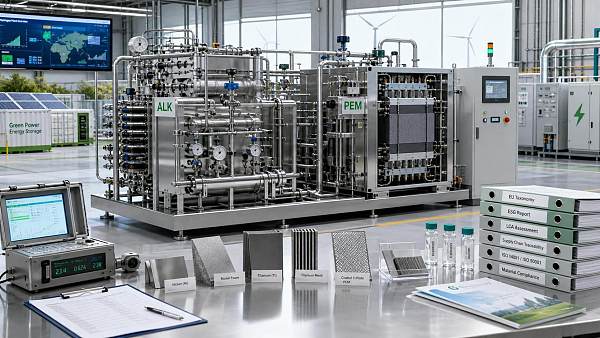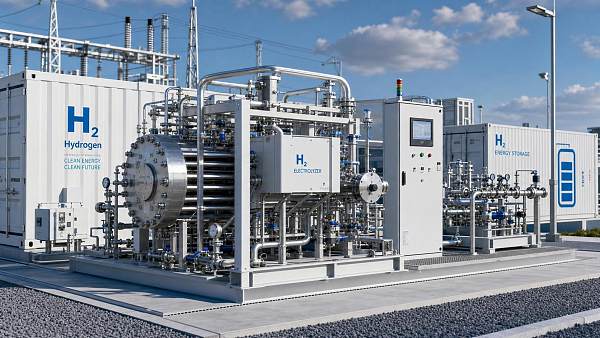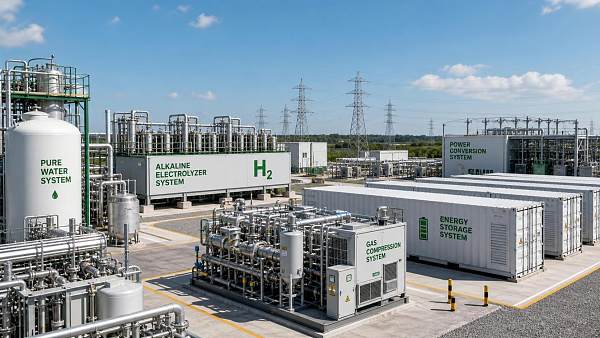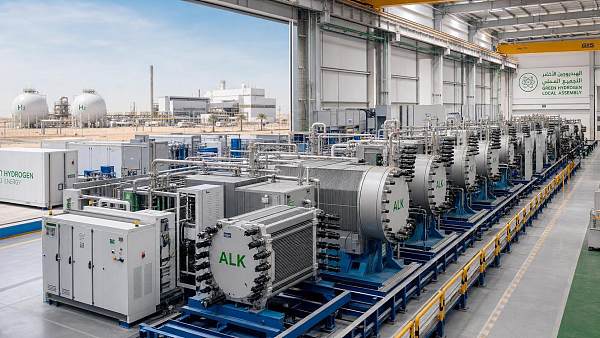
On June 28, 2026, the European Commission formally proposed extending the Carbon Border Adjustment Mechanism (CBAM) to ALK and PEM electrolyzers from January 2027. For companies supplying electrolyzers into EU grid-scale hydrogen projects, this is not just a policy headline but a compliance signal tied to emissions reporting across manufacturing, key raw materials, and electricity sourcing. Exporters, procurement teams, manufacturers, and certification-related service providers should pay close attention because the proposal directly connects market access with carbon data quality, supporting documentation, and supply-chain traceability.
What the Proposal Clearly Covers
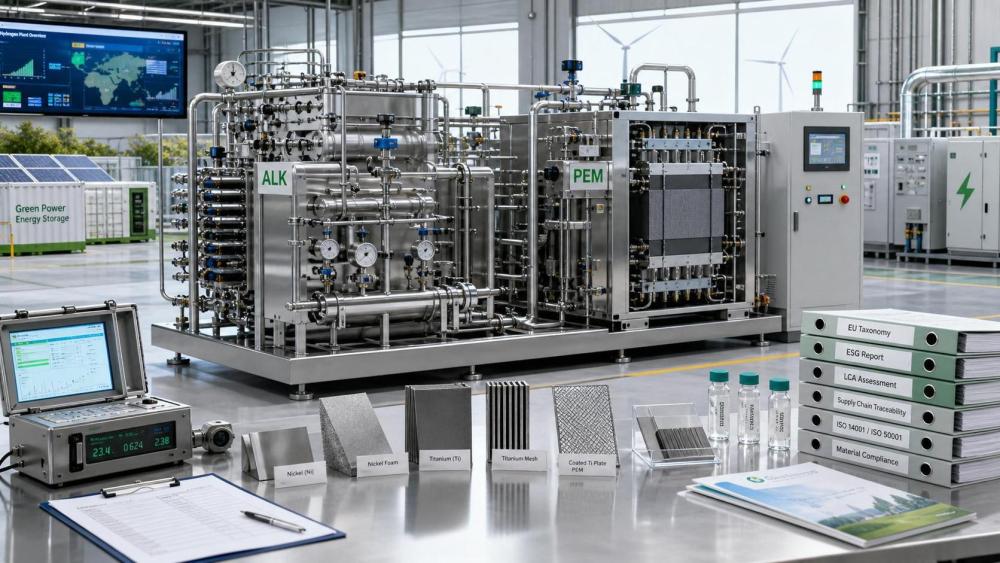
The confirmed information is limited but commercially significant. The European Commission has formally proposed adding ALK and PEM electrolyzers to the scope of CBAM with effect from January 2027. Under the proposal, exporters would be required to report embedded emissions linked to manufacturing, raw materials such as nickel and titanium, and the energy mix used. The development is described as directly affecting Chinese and Korean electrolyzer suppliers serving EU grid-scale hydrogen projects. The same event summary also indicates an urgent need for ISO 14067-compliant EPDs and documentation related to green electricity procurement.
Where the Pressure Is Likely to Appear First
Export-facing electrolyzer suppliers
From an industry perspective, exporters are the first group likely to feel the practical effect of the proposed rule change because the requirement is tied to what must be reported when supplying into the EU market. The immediate concern is not only product shipment, but whether emissions data from production, materials, and power use can be assembled into a form that supports customer and compliance expectations.
Manufacturing and upstream material coordination
Analysis shows that manufacturing teams and upstream sourcing functions may be affected through the need to account for embedded emissions associated with production inputs, including materials such as nickel and titanium. This can shift attention toward supplier data collection, consistency of technical records, and the ability to connect raw material information with product-level environmental documentation.
Project buyers and procurement review
For procurement teams involved in EU grid-scale hydrogen projects, the proposal may influence how suppliers are screened and how bid documents are evaluated. What deserves closer attention is whether suppliers can provide ISO 14067-compliant EPDs and documentation supporting green electricity procurement, because these materials may become more relevant in supplier qualification, technical review, or contract preparation.
Certification and documentation support services
Certification-related firms, verification providers, and documentation support teams may also see a more active role if exporters move to prepare EPDs and supporting carbon records. The likely impact here is operational rather than theoretical: more emphasis on document readiness, methodological consistency, and the alignment of emissions claims with recognized reporting expectations.
What Companies Should Review Now
Check whether current carbon documentation is usable
Analysis shows that companies supplying ALK or PEM electrolyzers into the EU should review whether their existing environmental documentation can support reporting on manufacturing emissions, raw materials, and energy mix. If current files are fragmented across plants, procurement teams, and project delivery functions, document gaps may become a practical bottleneck.
Focus on ISO 14067-compliant EPD readiness
The event summary specifically points to urgent demand for ISO 14067-compliant EPDs. It is therefore reasonable for suppliers to assess whether they already have EPD preparation pathways, internal data ownership, and verification support. This should be understood as a compliance preparation issue rather than proof that every execution detail is already fixed.
Review electricity sourcing records
Because the proposed reporting scope includes the energy mix, companies should pay close attention to how electricity procurement records are maintained and whether green electricity documentation is clear, current, and traceable. Observably, this is relevant not only for sustainability teams but also for procurement, operations, and customer-facing bid support functions.
Track customer and tender document changes
What deserves closer attention is how the proposal may later appear in buyer questionnaires, technical specifications, or tender support materials. The current information does not confirm final execution language, so companies should treat this as a signal to monitor downstream documentation requirements rather than assume a fully settled compliance framework.
Why This Looks More Like an Execution Signal Than a Finished Rule
Observably, this development should be read as more than a general policy discussion because it identifies product scope, a proposed effective timing, and concrete reporting themes covering manufacturing, materials, and energy mix. At the same time, analysis shows it is more appropriate to understand the situation as a rule dynamic still requiring close follow-up, since the input does not provide further official detail on final implementation language, review procedures, or market enforcement practice. That distinction matters for industry planning: the compliance direction is visible, but the operating details still need to be watched carefully.
How the Market May Need to Read This Stage
At this stage, the proposal is best understood as a serious compliance and trade signal for electrolyzer suppliers connected to EU hydrogen projects, especially those exporting from China and Korea. The practical importance lies in emissions reporting readiness, material traceability, and electricity procurement documentation rather than in any confirmed final outcome beyond the information provided. A measured reading is appropriate: the direction of travel is clear enough to justify preparation, while the final execution framework still deserves continued observation.
Basis of This Article and What Still Needs Verification
This article is generated from the user-provided news title, event date, and event summary. For developments of this kind, relevant source categories usually include official announcements, regulatory publications, customs or trade authority information, industry association updates, standards-related documents, and reporting from established media outlets. No specific official source link was provided in the input, so the exact official reference still needs to be verified on an ongoing basis. It also remains necessary to monitor later detail on implementation language, certification interpretation, tender document changes, industry feedback, and how affected companies actually respond in practice.
Related News
 EU Moves to Bring Electrolyzers Into CBAMHydrogen Tech ScientistEU Moves to Bring Electrolyzers Into CBAM: learn how the 2027 proposal affects ALK and PEM electrolyzer suppliers, carbon reporting, ISO 14067 EPDs, and EU hydrogen project compliance.
 Hydrogen Electrolyzers ISO Certification ChecklistHydrogen Tech ScientistHydrogen electrolyzers ISO certification checklist: learn key standards, audit gaps, and practical steps to speed approval, reduce risk, and strengthen project credibility.
 Alkaline Electrolyzer Efficiency vs CAPEX: What Matters Most in Project PlanningHydrogen Tech ScientistAlkaline electrolyzer project planning starts with more than efficiency alone. Discover how CAPEX, power cost, utilization, and bankability shape smarter hydrogen investment decisions.
 NEOM Starts ALK Assembly Program, Grants First China LicensesHydrogen Tech ScientistNEOM starts its ALK assembly program with first China licenses, setting a $2.1/kg LCOH cap and ISO 22734-2:2025 interface rule. Learn what it means for suppliers, bids, compliance, and project delivery.
 Brazil ANP Sets PCS Integration Rule for ALK ExportsHydrogen Tech ScientistBrazil ANP sets PCS integration rule for ALK exports, requiring shared-cabinet control and on-site validation. Learn how electrolyzer makers and buyers can prepare for Brazil compliance.
 Brazil Mandates PCS-Integrated ALK ElectrolyzersHydrogen Tech ScientistBrazil mandates PCS-integrated ALK electrolyzers for new orders, requiring IEEE 1547-2018 Rev.2 support and joint certification. Learn what exporters, buyers, and project teams must do now.
 Brazil Sets Integrated PCS Rule for ALK Hydrogen BidsHydrogen Tech ScientistBrazil Sets Integrated PCS Rule for ALK Hydrogen Bids: discover how ANP’s new co-architecture and IEC 61850-7-42 requirements could reshape bidding, compliance, and market access.
 Brazil ANP Tender Sets New Entry Rules for ALK BidsHydrogen Tech ScientistBrazil ANP tender sets new entry rules for ALK bids, requiring PCS integration, IEC 62443-3-3 interfaces, and extra compliance files. See what suppliers must prepare before December.
 Brazil ANP Opens First 1.2GW ALK TenderHydrogen Tech ScientistBrazil ANP opens its first 1.2GW ALK tender, spotlighting PCS co-architecture and IEC 62864-2 grid interface rules. See what suppliers and integrators must prepare now.
 Chile Sets First Grid Code for Green Hydrogen-Storage PlantsHydrogen Tech ScientistChile sets the first grid code for green hydrogen-storage plants, reshaping ALK electrolyzer, PCS/EMS, and BESS integration. Learn what it means for compliance, bidding, and project delivery.
 Chile Sets Grid Rules for Green Hydrogen-BESS PlantsHydrogen Tech ScientistChile sets new grid rules for green hydrogen-BESS plants, requiring shared PCS and EMS control. Learn how the Chile standard could reshape compliance, system design, and Latin America market strategy.
 Chile Sets Grid Rules for ALK-BESS Hybrid PlantsHydrogen Tech ScientistChile Sets Grid Rules for ALK-BESS Hybrid Plants: learn how Chile’s new grid standard reshapes PCS, EMS, and SCADA design, compliance, and project delivery before the July 2026 deadline.