Deionized Water Specs for Water Electrolysis Systems
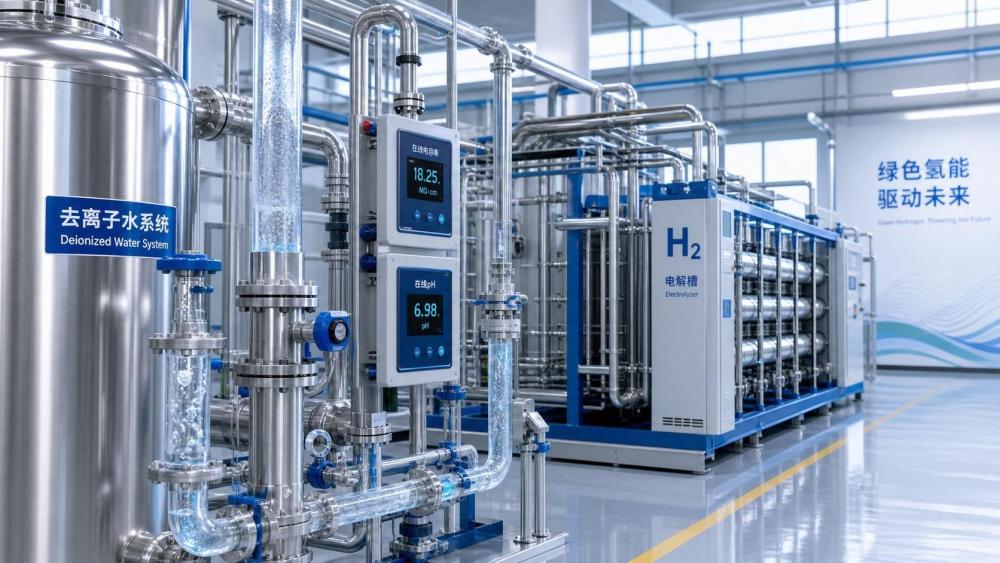
For technical evaluators, water quality is not a side issue. It sits at the center of electrolyzer efficiency, stack life, and project bankability.
That is why water electrolysis systems deionized water requirements deserve careful review before vendor comparison, factory acceptance, and site commissioning.
A hydrogen plant can have a strong power supply, solid controls, and a reputable stack supplier. Poor water still undermines the whole system.
In practice, deionized water quality affects membrane integrity, catalyst activity, scaling risk, gas purity, and maintenance intervals.
The core question is simple. How pure must water be for reliable electrolysis, and how should that purity be verified over time?
The answer depends on electrolyzer type, supplier design margin, pretreatment train, and local feedwater variability. Still, some specifications show up almost everywhere.
Why deionized water quality matters in electrolysis
Water electrolysis systems deionized water must do more than look clean. It must remain chemically stable inside a sensitive electrochemical environment.
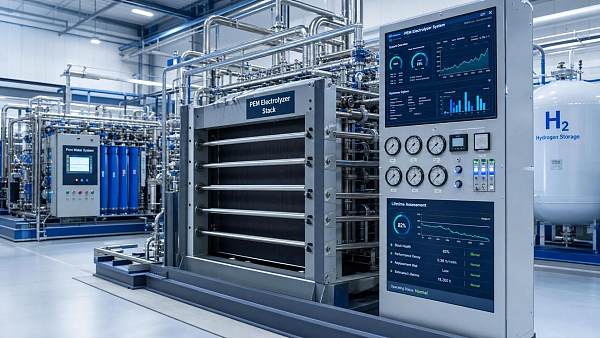
In PEM units, ionic contamination can attack membranes, poison catalysts, and raise system resistance. Even low levels can matter over long operating hours.
In alkaline systems, the tolerance window may be wider, but hardness, silica, chlorides, and organics still create performance and reliability problems.
This also means water quality is tied to hydrogen purity. Impurities can migrate, accumulate, or interfere with downstream drying and purification steps.
From a project risk view, the water package often decides whether the stack ages gradually or starts drifting early.
Key deionized water specs to review
When reviewing water electrolysis systems deionized water specifications, start with measurable parameters, not broad claims like ultra-pure or industrial grade.
Most vendor documents focus on conductivity or resistivity first. That makes sense, but it is only one part of the picture.
Core parameters
- Conductivity or resistivity: common indicators of ionic contamination and overall polishing effectiveness.
- Silica: a critical scaling and fouling risk, especially where raw water has variable dissolved solids.
- Total organic carbon: relevant for membrane stability, biofouling control, and long-term cleanliness.
- Chloride and sulfate: corrosive species that can shorten component life and affect stack materials.
- Hardness, calcium, and magnesium: primary scale formers that should be pushed near zero.
- Sodium, iron, copper, and other metals: often low in concentration, yet highly problematic in electrochemical systems.
- Dissolved gases and microbiological load: sometimes overlooked, but important in storage and recirculation loops.
Typical target ranges
Exact limits vary by OEM. Even so, many modern projects use these working targets during technical evaluation.
These values are not a substitute for OEM data sheets. They are a screening tool for bid evaluation and utility design alignment.
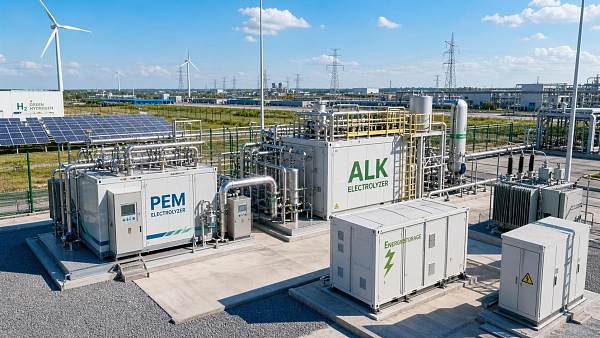
PEM vs alkaline: the spec is not identical
A common evaluation mistake is treating all water electrolysis systems deionized water requirements as interchangeable. They are not.
PEM electrolyzers usually demand tighter water purity. Their membrane and noble metal catalyst environment leaves less room for contamination.
Alkaline electrolyzers can be somewhat more forgiving, yet balance-of-plant components still suffer when feedwater quality drifts.
SOEC and emerging high-temperature designs introduce another layer. There, steam quality and upstream water conditioning become equally important.
So the better approach is simple. Ask for stack-specific water limits, not just plant-level water package descriptions.
How pretreatment design shapes final water quality
Water electrolysis systems deionized water quality is the end result of pretreatment discipline. It does not come from a polishing skid alone.
Raw water source matters first. Municipal water, groundwater, surface water, and desalinated water each carry different risk profiles.
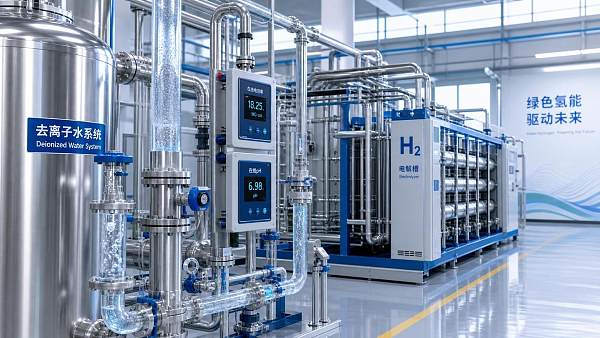
A typical treatment train may include multimedia filtration, activated carbon, softening or antiscalant dosing, reverse osmosis, and mixed-bed deionization.
Some projects add electrodeionization for tighter and more stable product water. That is especially useful where operating continuity matters.
The practical point is clear. A strong final spec is meaningless if the pretreatment system cannot hold it during seasonal raw water swings.
Questions worth asking vendors
- What raw water envelope was used in the design basis?
- Which contaminants drive the replacement rate of resins or membranes?
- What happens to stack warranty if conductivity excursions occur?
- How is silica monitored between laboratory tests?
- Can the water package sustain ramping and intermittent operation?
Monitoring, sampling, and operating discipline
Even the best water electrolysis systems deionized water spec fails without disciplined monitoring. Continuous verification is part of the specification.
Online conductivity measurement is standard, but it should be paired with periodic lab checks for silica, metals, TOC, and ionic species.
Sampling points also matter. Product water, recirculation loops, storage tanks, and stack inlet lines can show different conditions.
More importantly, alarm limits must trigger action. Too many systems collect clean data and still respond too late.
- Set normal, warning, and trip thresholds for conductivity and tank quality.
- Track resin exhaustion and RO differential pressure as leading indicators.
- Review water trends against stack voltage drift, not in isolation.
- Document any off-spec event with duration, root cause, and recovery steps.
Common failure modes linked to poor deionized water
From recent project reviews, the pattern is familiar. The problem is rarely one dramatic event. It is usually cumulative water quality drift.
Typical consequences include higher cell voltage, unstable gas purity, scaling in heat exchangers, resin overconsumption, and shortened maintenance cycles.
In harsher cases, chloride or metal contamination can accelerate corrosion and force unplanned stack inspection.
This is why water electrolysis systems deionized water should be reviewed as an asset protection topic, not just a utility cost line.
A practical evaluation checklist
For technical due diligence, a short checklist usually reveals whether a water design is robust or only looks complete on paper.
- Confirm the exact water electrolysis systems deionized water limits at stack inlet.
- Match those limits to local raw water analysis across seasons.
- Check whether the treatment train has enough redundancy and buffer volume.
- Review consumable replacement intervals under real feedwater conditions.
- Verify instrument locations, calibration intervals, and alarm logic.
- Ask how off-spec water affects warranty, performance guarantees, and availability targets.
That checklist does not replace detailed engineering. It does help separate mature designs from optimistic presentations.
Final takeaway
Reliable hydrogen production starts with disciplined water control. In that sense, water electrolysis systems deionized water is a core performance specification.
The strongest evaluations look beyond one conductivity number. They connect water chemistry, pretreatment resilience, online monitoring, and warranty boundaries.
When those pieces align, stack durability improves, operating risk drops, and the project becomes easier to scale with confidence.
For any new hydrogen project, make the deionized water specification a front-end decision. It is much cheaper than correcting water-related damage later.
Related News
 Deionized Water Specs for Water Electrolysis SystemsHydrogen Tech ScientistWater electrolysis systems deionized water specs directly affect stack life, hydrogen purity, and uptime. Discover key limits, OEM review points, and practical checks for reliable performance.
 PEM Electrolyzer Degradation Rates: How to Judge Lifetime and Stack Replacement RiskHydrogen Tech ScientistPEM electrolyzer degradation rates shape lifetime, hydrogen cost, and stack replacement risk. Learn how to assess real-world aging signals and make smarter planning decisions.
 PEM Electrolysis vs ALK: Which Fits Fast-Response Projects?Hydrogen Tech ScientistPEM electrolysis vs ALK: discover which technology fits fast-response hydrogen projects best, with insights on ramping, flexibility, cost, and real-world grid integration.
 PEM Electrolysis Efficiency: What Really Impacts Hydrogen Output?Hydrogen Tech ScientistPEM electrolysis efficiency depends on more than stack ratings. Learn what drives real hydrogen output, from water quality to thermal control, and compare systems with confidence.
 PEM Electrolysis vs ALK: Which Lowers Ramp-Time Risk in 2026?Hydrogen Tech ScientistPEM electrolysis vs ALK in 2026: discover which technology better reduces ramp-time risk, improves renewable integration, and boosts dispatch reliability for hydrogen projects.
 PEM Electrolysis Efficiency: When Higher Capex Pays OffHydrogen Tech ScientistPEM electrolysis can justify higher capex when flexibility, purity, and renewable integration improve lifetime returns. See when the premium pays off.
 Green Hydrogen Production Cost: ALK vs PEM in PracticeHydrogen Tech ScientistGreen hydrogen production cost in practice: compare ALK vs PEM across CAPEX, flexibility, efficiency, and real project risk to choose the bankable path.