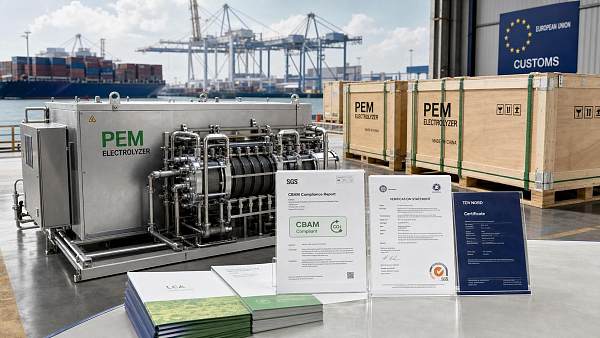
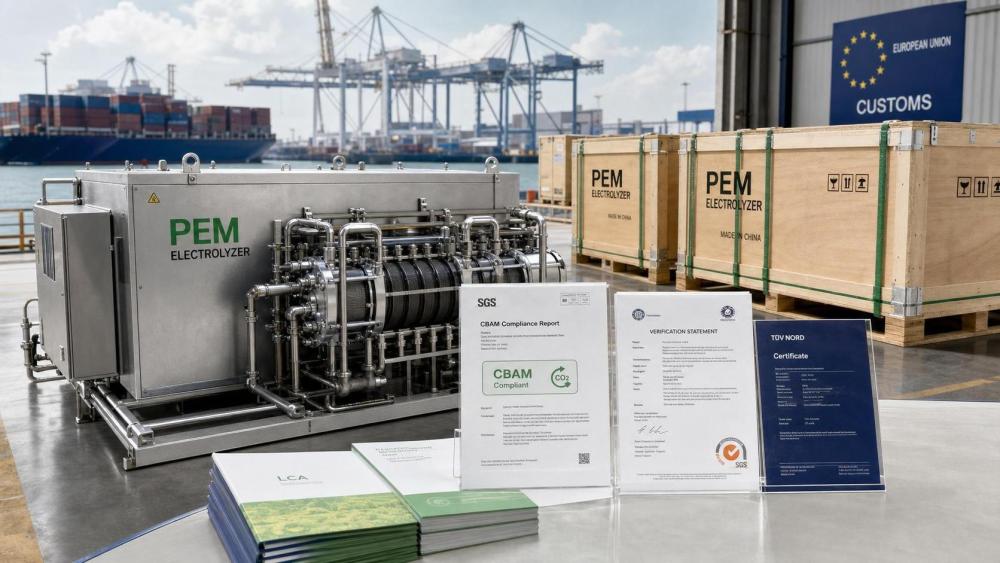
On 1 July 2026, the European Commission formally brought PEM electrolyzers into the scope of the Carbon Border Adjustment Mechanism (CBAM), with the change taking effect just 24 hours after the expansion was announced. For exporters shipping to EU customs, the immediate issue is no longer policy interpretation alone but execution: verified embedded emissions data and third-party verification are now required for each shipment. This deserves close attention from Chinese PEM electrolyzer manufacturers, EU distributors, compliance teams, and supply chain service providers because the change directly links customs clearance with emissions reporting, documentation quality, and alignment with EN 15316-4-7:2026 and TÜV-accredited LCA requirements.
What Has Been Confirmed as of 1 July 2026
The confirmed facts are narrow but operationally significant. The European Commission expanded CBAM to cover PEM electrolyzers effective 1 July 2026. The implementation timing was immediate, with the measure taking effect 24 hours after the expansion. Exporters must now provide verified embedded emissions data for shipments entering EU customs, and those submissions must be supported by third-party verification.
The change directly affects Chinese PEM electrolyzer manufacturers supplying EU distributors. The reporting and documentation side is also clearly defined in the information provided: affected exporters must align with EN 15316-4-7:2026 reporting protocols and prepare TÜV-accredited life cycle assessment documentation.
Where the Pressure Will Be Felt First
Manufacturers shipping into EU channels
From an industry perspective, Chinese PEM electrolyzer manufacturers are the most directly exposed group because the new requirement attaches to products already moving toward EU distribution channels. The practical impact is likely to appear first in emissions accounting, document preparation, and shipment readiness. What deserves closer attention is whether internal data systems, product-level emissions records, and external verification arrangements are already in place for customs-facing submissions.
EU distributors managing import continuity
EU distributors may be affected because their incoming shipments now depend on the exporter's ability to present compliant emissions data and third-party verification. The pressure point here is commercial continuity rather than policy design alone. Observably, distributors need to pay attention to whether upstream suppliers can deliver documentation that matches customs expectations, especially where delivery timing and import processing are sensitive.
Compliance, verification, and documentation service providers
Service providers involved in life cycle assessment, standards-based reporting, and verification may see immediate demand because the new rule requires more than self-declared information. The key business impact is likely to sit in evidence preparation, audit coordination, and the conversion of technical emissions data into customs-usable files. What matters most is not general advisory work, but the ability to support EN 15316-4-7:2026 alignment and TÜV-accredited LCA documentation under tight timelines.
Logistics and customs-facing supply chain teams
Supply chain service teams may also be affected where shipment release depends on document completeness. Analysis shows the issue is less about transportation itself and more about whether the required verified emissions materials are available at the point of customs processing. For these teams, the immediate concern is document sequencing, handoff accuracy, and communication between exporter, distributor, and verification parties.
What Companies Need to Check Immediately
Whether current product files can support verified emissions reporting
The new requirement centers on verified embedded emissions data, so companies need to assess whether existing product documentation is sufficient for that purpose. This is not the same as holding general sustainability material; the practical question is whether the data can be submitted in the required compliance context.
How fast EN 15316-4-7:2026 alignment can be operationalized
The information provided makes immediate alignment with EN 15316-4-7:2026 a direct requirement. Companies should therefore focus on the operational gap between having technical data internally and expressing it in a reporting format that can withstand customs and verification review.
Whether TÜV-accredited LCA documentation is ready for live shipments
Analysis shows this is a near-term execution issue rather than a distant compliance project. If shipments are already planned or in transit to EU distributors, firms need clarity on whether TÜV-accredited LCA documentation has been prepared, verified, and linked to the relevant product and shipment records.
How customer and distributor communication should be handled
Where documentation readiness is uncertain, supplier communication with EU distributors becomes a practical priority. What deserves closer attention is not just whether a company understands the rule, but whether it can explain shipment status, documentation timing, and any compliance dependencies clearly to downstream partners.
Why This Looks Like More Than a One-Day Compliance Update
Observably, this development should not be read only as a procedural customs adjustment. Analysis shows it also acts as a policy signal that product-level emissions accountability is becoming more tightly connected to market access for PEM electrolyzer shipments into the EU. At the same time, the current information is limited to the scope expansion, the reporting and verification requirement, and the identified standards pathway. For that reason, it is more appropriate to understand this as an implemented compliance change with broader strategic implications still requiring continued observation.
How the Market Should Read the Development Now
At this stage, the industry significance lies in immediacy. The expansion of CBAM to PEM electrolyzers is already effective, and the most immediate consequence is that export eligibility into the EU customs process now depends on verified emissions reporting and third-party documentation support. A neutral reading is that this is both a short-term operational change and a longer-term regulatory signal. It is more appropriate to understand the event as a live compliance requirement first, while continuing to monitor how reporting practice, verification expectations, and trade-side execution evolve around it.
Basis of This Article and Ongoing Verification
This article is based on the user-provided news title, event date, and event summary. For this type of development, relevant source categories would typically include official European Commission notices, customs-related regulatory communications, company compliance disclosures, industry association updates, accredited verification materials, and standards organization documents. No specific official source link was provided in the input, so the exact primary reference still requires ongoing verification. Continued attention should be given to any further official wording, implementation clarifications, and documentation expectations tied to EN 15316-4-7:2026 and TÜV-accredited LCA submissions.
Related News
 EU Extends CBAM to PEM ElectrolyzersHydrogen Tech ScientistEU Extends CBAM to PEM Electrolyzers: learn what verified embedded emissions, third-party checks, EN 15316-4-7:2026, and TÜV-accredited LCA now mean for EU-bound shipments.
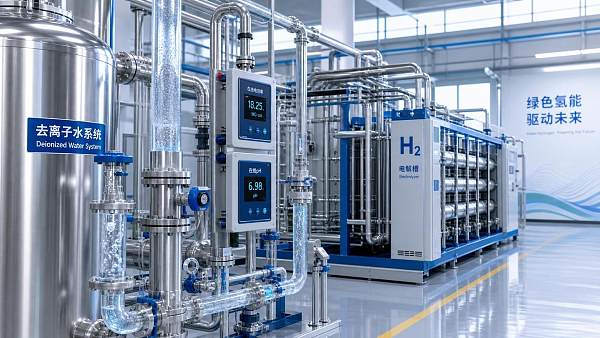
 Deionized Water Specs for Water Electrolysis SystemsHydrogen Tech ScientistWater electrolysis systems deionized water specs directly affect stack life, hydrogen purity, and uptime. Discover key limits, OEM review points, and practical checks for reliable performance.
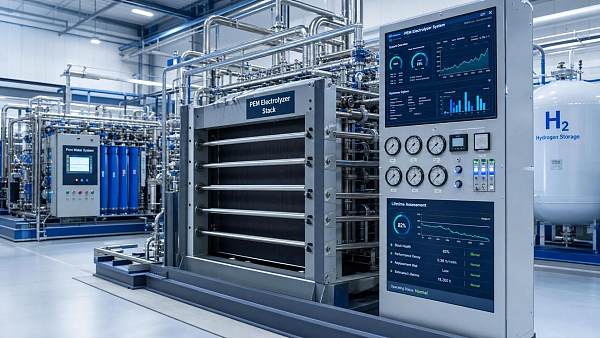
 PEM Electrolyzer Degradation Rates: How to Judge Lifetime and Stack Replacement RiskHydrogen Tech ScientistPEM electrolyzer degradation rates shape lifetime, hydrogen cost, and stack replacement risk. Learn how to assess real-world aging signals and make smarter planning decisions.
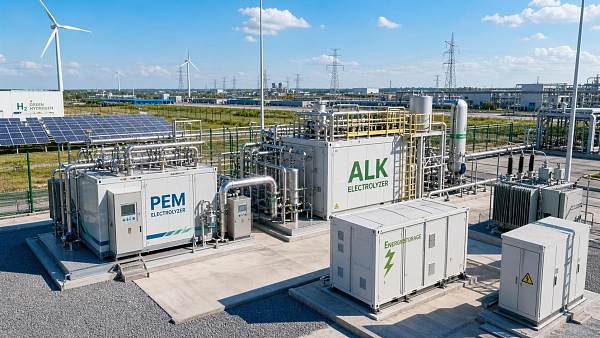
 PEM Electrolysis vs ALK: Which Fits Fast-Response Projects?Hydrogen Tech ScientistPEM electrolysis vs ALK: discover which technology fits fast-response hydrogen projects best, with insights on ramping, flexibility, cost, and real-world grid integration.
 PEM Electrolysis Efficiency: What Really Impacts Hydrogen Output?Hydrogen Tech ScientistPEM electrolysis efficiency depends on more than stack ratings. Learn what drives real hydrogen output, from water quality to thermal control, and compare systems with confidence.
 PEM Electrolysis vs ALK: Which Lowers Ramp-Time Risk in 2026?Hydrogen Tech ScientistPEM electrolysis vs ALK in 2026: discover which technology better reduces ramp-time risk, improves renewable integration, and boosts dispatch reliability for hydrogen projects.
 PEM Electrolysis Efficiency: When Higher Capex Pays OffHydrogen Tech ScientistPEM electrolysis can justify higher capex when flexibility, purity, and renewable integration improve lifetime returns. See when the premium pays off.
 Green Hydrogen Production Cost: ALK vs PEM in PracticeHydrogen Tech ScientistGreen hydrogen production cost in practice: compare ALK vs PEM across CAPEX, flexibility, efficiency, and real project risk to choose the bankable path.