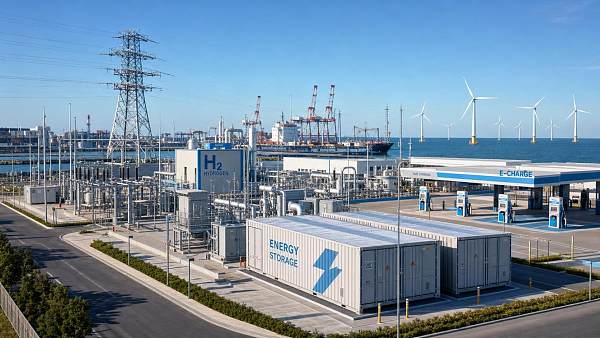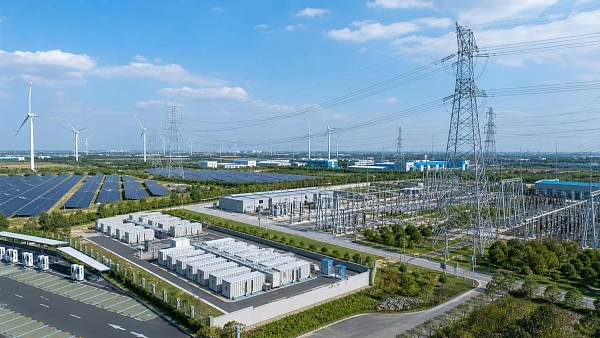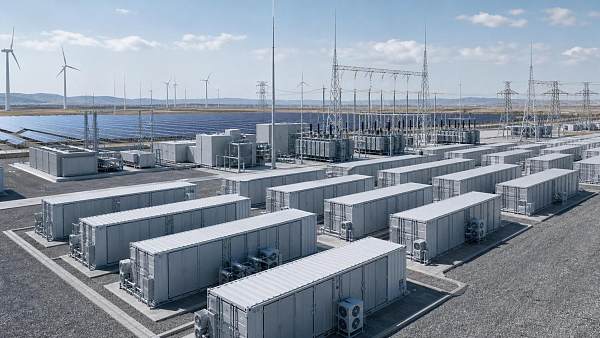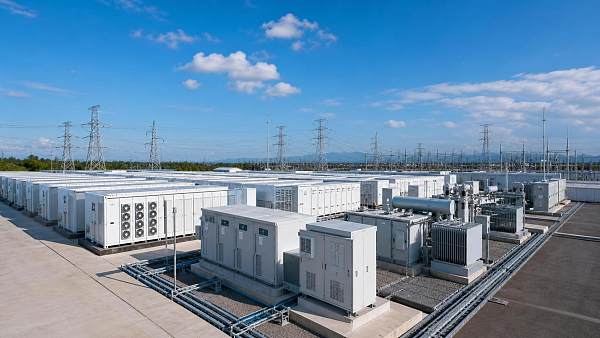
On April 17, 2026, the ESIE 2026 conference unveiled the Energy Storage Industry Research White Paper 2026, marking a pivotal moment for global energy storage policy and investment dynamics. The release coincides with the formal implementation of China’s first national-level capacity tariff mechanism for grid-side independent new-energy storage—triggering ripple effects across international supply chains, project finance models, and technology export strategies.
Event Overview
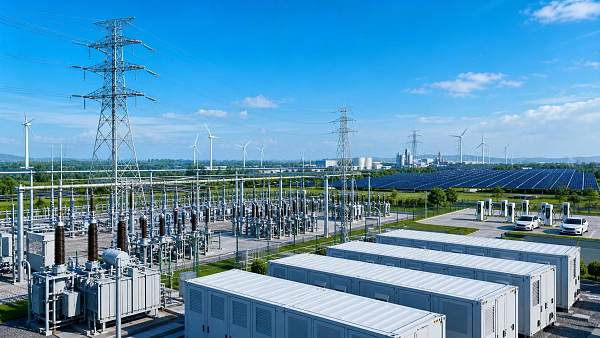
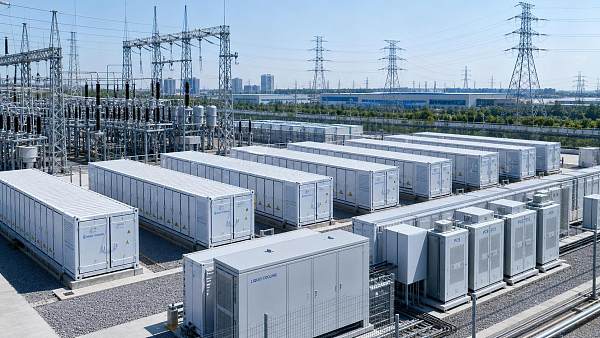
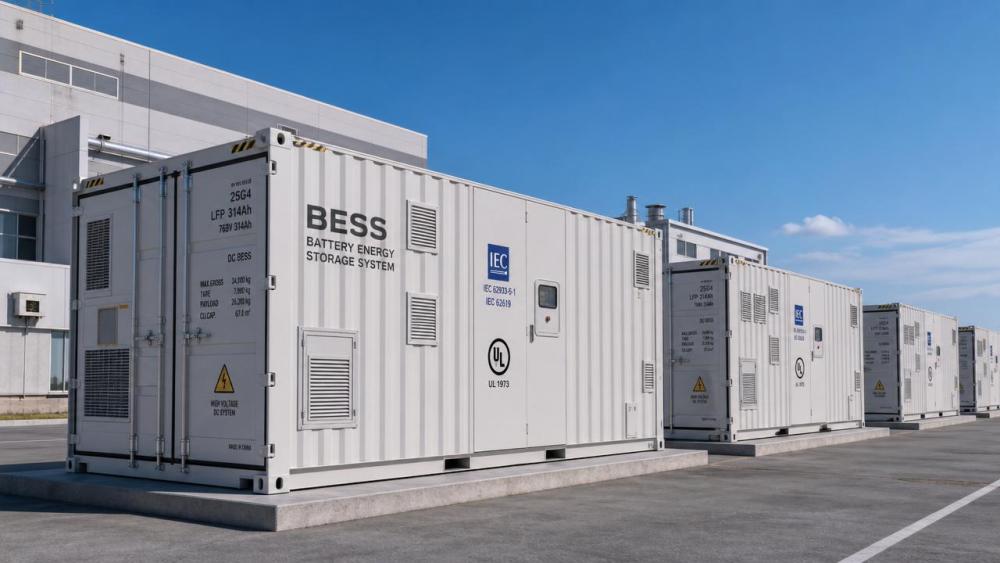
The Energy Storage Industry Research White Paper 2026, published on April 17, 2026, reports that China’s cumulative installed capacity of new-energy storage reached 144.7 GW by end-2025, accounting for 51.9% of the global total. Effective January 2026, China introduced a nationwide capacity tariff mechanism for grid-side independent new-energy storage, setting a benchmark rate of RMB 0.28 per kW·h. Under this mechanism, battery energy storage system (BESS) providers—including CATL and BYD—are accelerating EPC deployment of standalone storage projects overseas. Orders for power conversion systems (PCS), BESS containerized solutions, and energy management systems (EMS) have been secured for 12 flagship projects, including those led by ACWA Power (Saudi Arabia) and AGL (Australia).
Impact on Key Industry Segments
Direct Trade Enterprises: These firms—particularly those engaged in cross-border EPC contracting and equipment export—are experiencing heightened demand for integrated storage solutions. The capacity tariff mechanism enhances revenue visibility for overseas storage assets, thereby strengthening buyer creditworthiness and shortening contract negotiation cycles. Impact manifests in expanded bidding pipelines, increased pre-shipment financing requests, and tighter delivery windows for modular BESS units.
Raw Material Procurement Enterprises: Upstream buyers of lithium iron phosphate (LFP) cathode materials, lithium hexafluorophosphate (LiPF6), and structural aluminum alloys face rising order volatility. While domestic demand remains stable, export-oriented procurement is now subject to dual pressure: accelerated timelines from overseas EPC schedules and evolving regional compliance requirements (e.g., Australian Clean Energy Regulator reporting standards, Saudi SABIC sustainability clauses). Inventory turnover cycles are compressing, but long-term contracts remain scarce.
Manufacturing Enterprises: OEMs producing PCS, thermal management modules, and EMS software platforms are adjusting production planning to accommodate higher customization rates—especially for grid-code compliance (e.g., IEEE 1547-2018, EN 50549). Capacity tariff certainty has not yet translated into standardized product configurations; instead, it is driving parallel development of region-specific firmware stacks and certification-ready mechanical enclosures. Labor allocation is shifting toward systems integration testing over pure assembly volume.
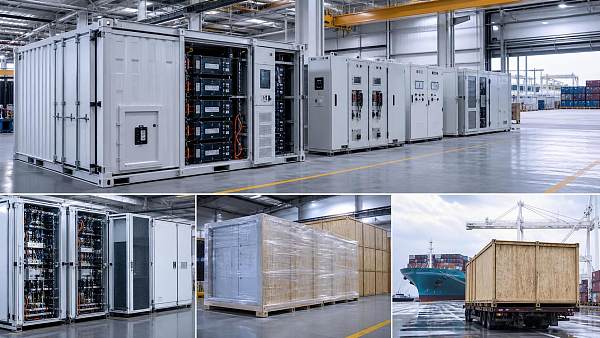
Supply Chain Service Enterprises: Logistics providers specializing in oversized cargo (e.g., 20-ft BESS containers), customs brokers with energy-sector expertise, and third-party certification agencies report surging inquiries—particularly for IEC 62933-2-2 (safety) and UL 9540A (thermal propagation) validation support. However, lead times for maritime transport to Middle Eastern and Oceania ports have extended by 8–12 days due to vessel repositioning constraints, prompting early booking mandates from clients.
Key Focus Areas and Recommended Actions
Monitor tariff mechanism rollout fidelity beyond pilot provinces
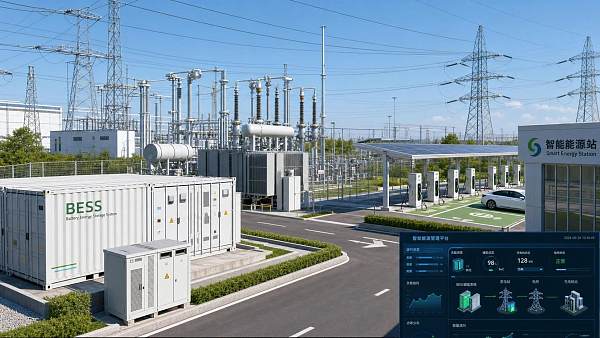
While the RMB 0.28/kW·h benchmark is national, actual payments depend on provincial grid dispatch rules and interconnection agreements. Firms should track real-time settlement data from State Grid’s ‘New Energy Storage Settlement Dashboard’ (launched March 2026) rather than rely solely on headline pricing.
Validate EMS interoperability with foreign SCADA platforms
Overseas projects increasingly require EMS-to-SCADA integration via IEC 61850 GOOSE messaging or DNP3. Chinese EMS vendors must prioritize field-testing with AGL’s GE Digital Grid Solutions platform and ACWA Power’s Siemens Desigo CCMS—not just lab-based protocol conformance.
Prepare for downstream contractual shifts in EPC risk allocation
International clients are now inserting ‘capacity factor guarantee’ clauses tied to tariff eligibility—requiring manufacturers to co-sign performance bonds covering 15-year round-trip efficiency decay. Legal teams should review force majeure definitions in light of recent GCC heatwave-related derating incidents.
Editorial Perspective / Industry Observation
Analysis shows the capacity tariff mechanism is less a subsidy instrument and more a market signal tool: it does not directly fund construction but anchors revenue expectations sufficient to attract non-recourse project finance. Observably, its greatest near-term effect lies in reshaping how international developers underwrite storage—shifting from purely arbitrage-driven models toward capacity-revenue-backed debt structures. From an industry perspective, this represents a structural inflection point: China’s policy design is now serving as a de facto template for emerging markets seeking bankable storage frameworks, though local adaptation (e.g., currency hedging, land-use rights clarity) remains uneven.
Conclusion
This policy milestone does not guarantee sustained export growth—but it does lower the perceived risk threshold for capital deployment in utility-scale storage. For global stakeholders, the more durable implication is the consolidation of China’s role as both a manufacturing hub and a regulatory reference point. A rational observation is that competitive advantage will increasingly accrue to firms capable of coupling technical standardization with jurisdictional agility—not just scale or cost leadership.
Source Attribution
Primary source: Energy Storage Industry Research White Paper 2026, ESIE Conference Secretariat, April 17, 2026. Official tariff framework: National Development and Reform Commission (NDRC) & National Energy Administration (NEA), ‘Interim Measures on Capacity Tariff for Independent New-Energy Storage’, effective January 1, 2026 (Document No. NEA-ES-2025-087).
Areas under ongoing observation: Provincial implementation variance (notably Guangdong vs. Gansu), FX settlement delays in RMB-denominated offshore contracts, and EU Battery Regulation (EU 2023/1542) conformity timelines for exported BESS containers.
Related News
 Energy Arbitrage Calculator: What Inputs Change ROI the Most?Mr. Orion SterlingEnergy arbitrage calculator insights: discover which inputs most affect ROI, from price spreads and efficiency to degradation, demand charges, and dispatch risk.
 Grid-Scale Storage Systems: Cost Drivers, Revenue Paths, and Payback RisksMr. Orion SterlingGrid-scale storage systems explained: uncover key cost drivers, revenue streams, and payback risks to evaluate projects smarter and invest with greater confidence.
 Energy Intelligence Platforms for Sourcing: What to Compare Before You BuyMr. Orion SterlingEnergy intelligence platforms for sourcing: compare supplier depth, technical compliance, market signals, and lifecycle cost tools before you buy to reduce risk and choose with confidence.
 LCOS Benchmarking Methods That Expose Hidden Storage CostsMr. Orion SterlingLCOS benchmarking methods that reveal hidden storage costs, from augmentation and thermal losses to downtime and compliance, helping buyers compare BESS projects with confidence.
 Zero-Carbon Infrastructure in Europe: What Will Shape Projects in 2026Mr. Orion SterlingZero-carbon infrastructure Europe enters a tougher 2026 phase shaped by storage, grids, hydrogen, and EV charging. Discover what makes projects bankable, compliant, and investment-ready.
 Dynamic Power Flow Control: When It Pays Off in Congested GridsMr. Orion SterlingDynamic power flow control can unlock hidden grid capacity, cut curtailment, and defer costly upgrades. Learn where it delivers the fastest ROI in congested grids.
 Grid-Scale Energy Storage Cost Drivers in 2026Mr. Orion SterlingGrid-scale energy storage cost drivers in 2026 go far beyond battery prices. Explore how thermal control, PCS efficiency, safety, software, and financing reshape project returns.
 Utility Scale Battery Storage Solutions: Key Cost Drivers Beyond Battery CellsMr. Orion SterlingUtility scale battery storage solutions cost far more than battery cells alone. Explore hidden drivers like thermal design, PCS, safety, EPC, and interconnection to compare suppliers smarter.
 Energy Storage Innovations Reshaping Grid Flexibility in 2026Mr. Orion SterlingEnergy storage innovations are redefining grid flexibility in 2026, from BESS and VPPs to hydrogen and EV charging. Discover what drives resilience, safety, and smarter returns.
 Industrial Equipment Sourcing Information: How to Vet Suppliers and Hidden CostsMr. Orion SterlingIndustrial equipment sourcing information helps you vet suppliers, uncover hidden costs, and avoid risky low-price offers. Learn how to protect uptime, compliance, and project ROI.
 IEA Flags Power Grid and Storage as 2026 Investment PriorityMr. Orion SterlingIEA flags power grid and storage as the 2026 investment priority, highlighting rising demand for UHV equipment, liquid-cooled BESS, and PCS/EMS systems. Explore supply chain risks and market opportunities.
 Energy Intelligence: 5 Signals That Improve Grid Asset DecisionsMr. Orion SterlingEnergy intelligence reveals 5 high-impact signals for smarter grid asset decisions, helping teams improve safety, flexibility, and returns across storage, charging, transmission, and hydrogen systems.