Energy intelligence starts with the right signals, not more data
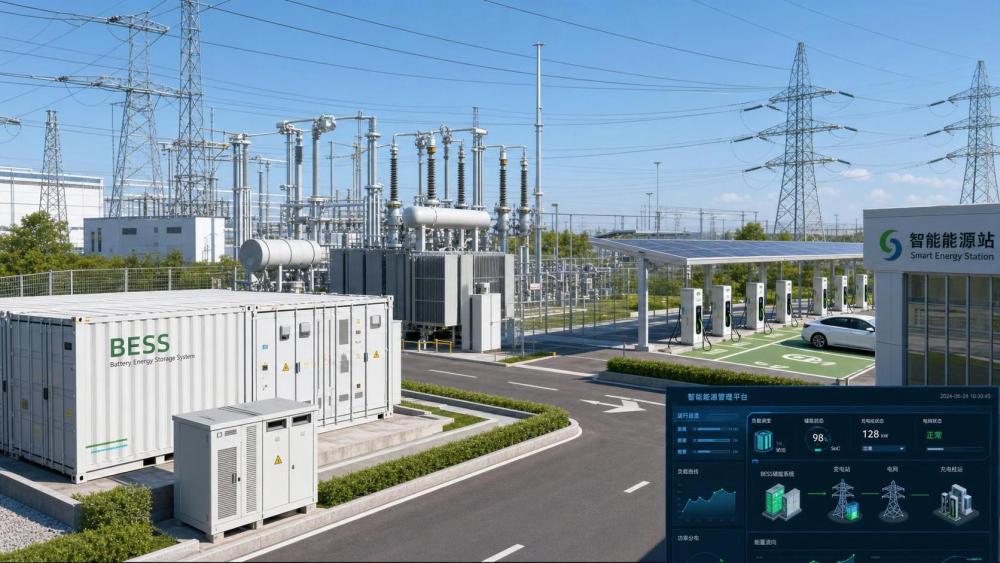
Power assets now operate in a harsher environment. Prices swing faster. Renewable output shifts by the hour. Grid constraints appear where planning models once looked stable.
That is why energy intelligence matters. It helps turn scattered technical, commercial, and operational inputs into decisions that protect uptime and improve returns.
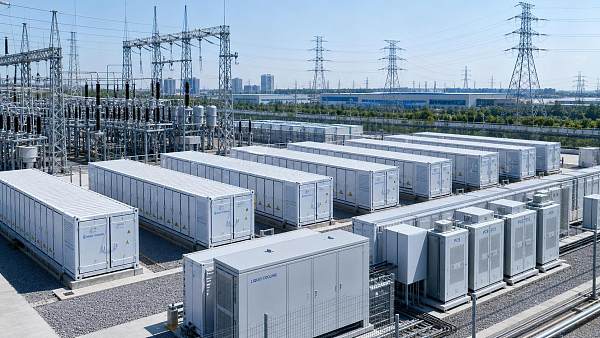
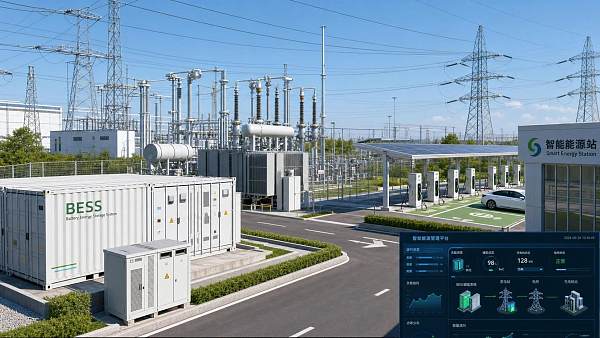
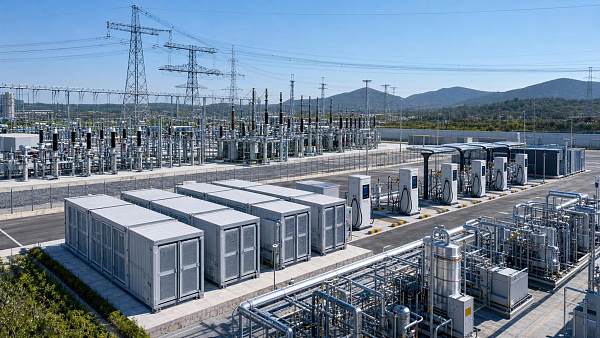
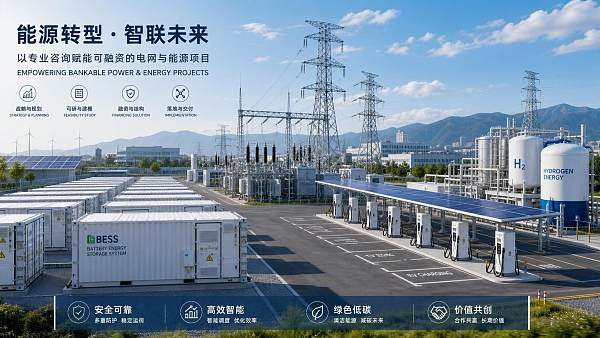
For assets such as BESS containers, UHV links, EV charging hubs, and hydrogen electrolyzers, the same question keeps coming up: which signals actually change a decision?
A useful answer is rarely a single KPI. In practice, strong energy intelligence combines safety, dispatch behavior, equipment stress, market timing, and network flexibility.
This is also where platforms like ESGS fit naturally into the picture. Their value is not noise. It is stitching together battery thermodynamics, millisecond power flow, compliance, and asset economics.
What does energy intelligence really mean for grid asset decisions?
In simple terms, energy intelligence is decision-grade visibility. It is more than monitoring. It tells you which change deserves action, and which one is only background variation.
For a storage project, that might mean knowing whether a temperature delta is a maintenance issue or an early safety warning. For transmission assets, it may mean spotting overload patterns before losses become structural.
The concept becomes even more important across integrated infrastructure. A charging site, for example, cannot be judged only by charger utilization. Grid connection limits, local tariff windows, and V2G readiness also matter.
The strongest energy intelligence frameworks usually connect five layers:
- asset condition and thermal behavior
- real dispatch performance under changing loads
- market and tariff capture potential
- compliance exposure and safety boundaries
- system value inside a wider grid or microgrid
When those layers are read together, decisions become less reactive. Capital can be directed toward assets that stay stable, flexible, and profitable under real operating pressure.
Which five signals deserve the closest attention?
The market offers endless dashboards, but only a handful of signals consistently improve grid asset decisions. These five have the strongest practical value across storage, charging, transmission, and hydrogen systems.
1. Thermal deviation, not just average temperature
In BESS containers, the average pack temperature can look acceptable while cell-to-cell deviation is rising. That gap often tells a more important story than the average itself.
A small thermal imbalance can evolve into uneven aging, power derating, or worse, thermal runaway risk. ESGS-style analysis is valuable here because thermodynamic detail changes real asset value.
2. Dispatch response speed under real conditions
Stated response times often come from ideal tests. Energy intelligence looks at actual ramp behavior during fluctuating frequency events, congestion periods, or mixed renewable input.
This matters for PCS, VPP-linked chargers, and fast-balancing storage. Assets that miss milliseconds repeatedly may still run, but they deliver less strategic value.
3. Revenue quality, not only headline revenue
A storage station can show attractive gross income while hiding poor cycling efficiency, capacity fade, or unstable arbitrage windows. Revenue quality asks whether earnings are repeatable.
That is why LCOS, peak-valley spread durability, and ancillary service consistency belong inside any serious energy intelligence process.
4. Network stress at connection points
An asset may be healthy on its own and still underperform because of feeder congestion, transformer overload patterns, or switching instability upstream.
For UHV transformers, GIS equipment, and large charging depots, this signal helps distinguish an equipment issue from a grid architecture problem.
5. Conversion flexibility across time horizons
Some assets solve minute-level balancing. Others convert excess power into longer-duration value, as hydrogen electrolyzers do through Power-to-X pathways.
Energy intelligence should show whether flexibility is short, medium, or seasonal. That changes planning, financing, and integration choices.
How do these signals look across different asset categories?
The same signal does not carry the same meaning everywhere. A quick comparison helps turn abstract indicators into practical judgment.
This kind of table is useful because energy intelligence is context-driven. The same metric can mean optimization in one asset class and hidden risk in another.
Where do decision-makers usually misread the data?
One common mistake is trusting aggregate numbers too early. A fleet-level efficiency score can hide a few weak nodes that create most of the downside.
Another mistake is separating engineering data from commercial analysis. A battery that cycles harder for short-term revenue may lose margin later through degradation and downtime.
Compliance is also underestimated. In cross-border storage projects, UL 9540A interpretation, fire propagation testing, and site safety rules can alter bankability as much as technical specifications.
The same pattern appears in charging and hydrogen. High utilization looks attractive, but without power quality control, cooling discipline, or offtake certainty, utilization alone can mislead.
More reliable energy intelligence usually asks a tougher set of follow-up questions:
- Is the signal stable across seasons and dispatch modes?
- Does the metric reflect asset physics or only financial output?
- What changes if interconnection limits tighten?
- Is the risk visible at unit level or only after aggregation?
How can energy intelligence support faster, safer investment choices?
The goal is not to delay decisions with endless analysis. Good energy intelligence shortens the path from signal to action by ranking what deserves immediate attention.
In practical terms, a strong review process often begins with a narrow decision frame. Is the priority reliability, expansion timing, market capture, compliance, or multi-asset coordination?
After that, compare assets using a small decision matrix instead of a giant dashboard. ESGS reflects this cross-disciplinary logic well by connecting safety testing, VPP dispatch behavior, and LCOS economics.
A workable checklist can look like this:
- Verify thermal and electrical stress signals before reviewing revenue assumptions.
- Check whether response performance holds in non-ideal operating windows.
- Map connection-point constraints before expanding charging or storage capacity.
- Test whether flexibility value is hourly, daily, or seasonal.
- Include compliance and exportability risks in financial comparisons.
That approach makes energy intelligence usable. It turns raw monitoring into a disciplined way to choose upgrades, phase investments, or redesign operations.
What should be reviewed next if the signals look mixed?
Mixed signals are normal. A profitable asset can still be fragile. A technically strong asset can still be badly positioned in the network.
The best next step is to narrow the uncertainty. Review site-level operating history, compare seasonal patterns, and separate one-off events from repeated behavior.
Then move into scenario testing. Ask how the asset performs under tighter grid rules, lower price spreads, faster cycling, or delayed maintenance windows.
That is where energy intelligence earns its name. It does not promise perfect prediction. It improves judgment by linking physical performance, market logic, and infrastructure context.
For teams reviewing storage, transmission, charging, or hydrogen projects, the smartest move is often simple: define the five signals that matter most, track them consistently, and let them guide investment standards.
If the objective is clearer asset decisions, start by comparing thermal stability, dispatch quality, revenue durability, connection stress, and flexibility horizon across the portfolio. That creates a far stronger base for the next move.
Related News
 Energy Storage Innovations Reshaping Grid Flexibility in 2026Mr. Orion SterlingEnergy storage innovations are redefining grid flexibility in 2026, from BESS and VPPs to hydrogen and EV charging. Discover what drives resilience, safety, and smarter returns.
 Industrial Equipment Sourcing Information: How to Vet Suppliers and Hidden CostsMr. Orion SterlingIndustrial equipment sourcing information helps you vet suppliers, uncover hidden costs, and avoid risky low-price offers. Learn how to protect uptime, compliance, and project ROI.
 IEA Flags Power Grid and Storage as 2026 Investment PriorityMr. Orion SterlingIEA flags power grid and storage as the 2026 investment priority, highlighting rising demand for UHV equipment, liquid-cooled BESS, and PCS/EMS systems. Explore supply chain risks and market opportunities.
 Energy Intelligence: 5 Signals That Improve Grid Asset DecisionsMr. Orion SterlingEnergy intelligence reveals 5 high-impact signals for smarter grid asset decisions, helping teams improve safety, flexibility, and returns across storage, charging, transmission, and hydrogen systems.
 Grid Interconnection Delays: What Drives Cost and Risk?Mr. Orion SterlingGrid interconnection delays can drive redesign, upgrade costs, and revenue loss. Learn what raises risk for BESS, EV charging, and hydrogen projects—and how to plan ahead.
 Frequency Regulation Revenue: How to Evaluate Payback and Market RiskMr. Orion SterlingFrequency regulation revenue explained: learn how to evaluate payback, battery wear, pricing volatility, and market risk to make smarter storage investment decisions.
 How Energy Transition Consulting Shapes Bankable Grid ProjectsMr. Orion SterlingEnergy transition consulting helps turn complex grid assets into bankable projects by reducing risk, improving revenue visibility, and strengthening investor confidence.
 Zero-Carbon Grids: Key Cost Drivers and ROI in 2026Mr. Orion SterlingZero-carbon grids in 2026: uncover the real cost drivers, ROI levers, and hidden risks across BESS, UHV, hydrogen, and EV charging to make smarter, higher-return grid investments.
 LCOS Analysis for Grid-Scale Storage: Which Cost Inputs Matter Most?Mr. Orion SterlingLCOS analysis reveals which cost inputs truly shape grid-scale storage returns. Explore capex, degradation, efficiency, augmentation, and financing to make smarter BESS procurement decisions.
 Distributed Storage vs Centralized Systems: What Changes Grid Resilience?Mr. Orion SterlingDistributed storage vs centralized systems: discover how distributed storage improves grid resilience, speeds outage recovery, reduces local congestion, and supports smarter energy strategy.
 How Renewable Integration Impacts Curtailment, Stability, and ROIMr. Orion SterlingRenewable integration shapes curtailment, grid stability, and ROI. Discover how storage, transmission, hydrogen, and smart controls can reduce losses and improve project returns.
 Renewable Energy Reservoirs: Benefits, Limits, and Grid ValueMr. Orion SterlingRenewable energy reservoirs explained: discover their benefits, limits, and real grid value across batteries, hydrogen, EV fleets, and pumped hydro for smarter energy planning.