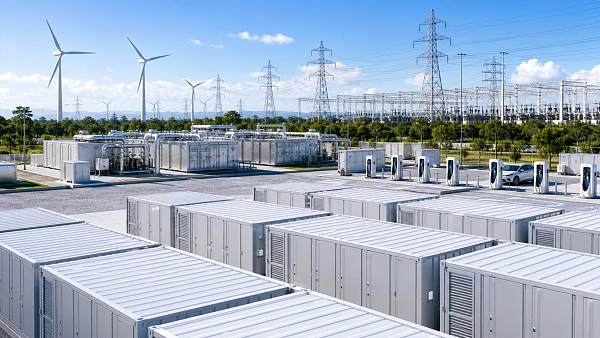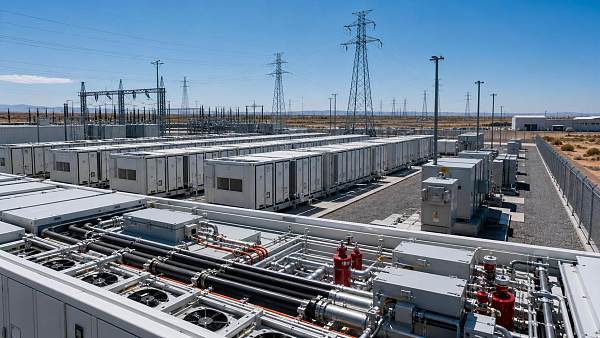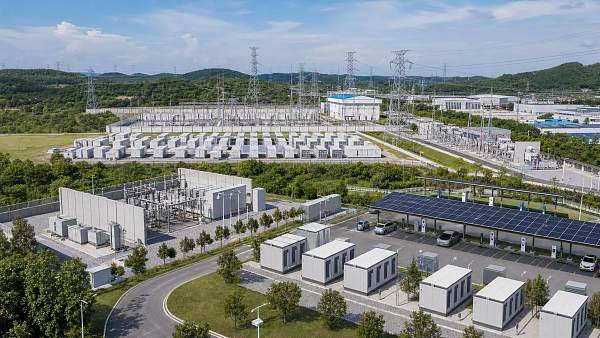
Grid-Scale Energy Storage Costs Are Being Repriced by the Whole System
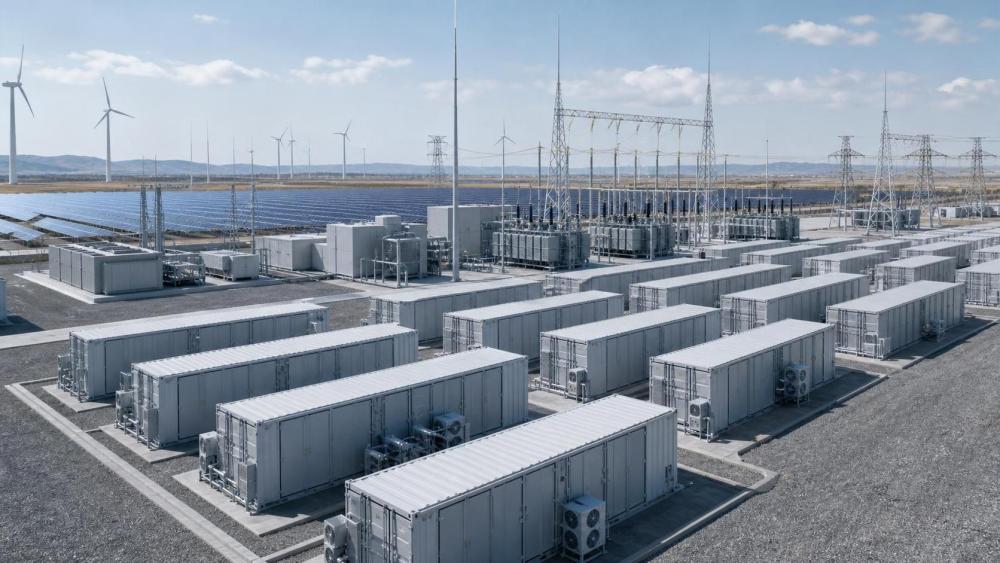
In 2026, grid-scale energy storage is being evaluated through a wider lens than battery pack pricing. That shift is now visible across project bidding, financing terms, and dispatch contracts.
The market still watches cell prices closely. Yet the stronger signal is that cost leadership now depends on how storage performs inside real grid conditions.
For large projects, the decisive question is no longer simple capex per kWh. It is delivered value across safety, uptime, cycle life, conversion efficiency, and grid service revenue.
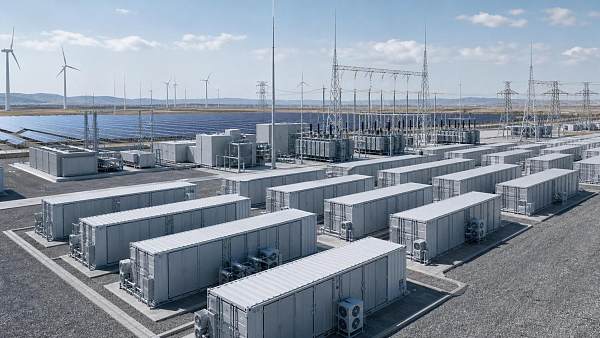
This is especially true where solar, offshore wind, EV charging hubs, and long-distance transmission are expanding together. Grid-scale energy storage is becoming part of infrastructure logic, not just equipment procurement.
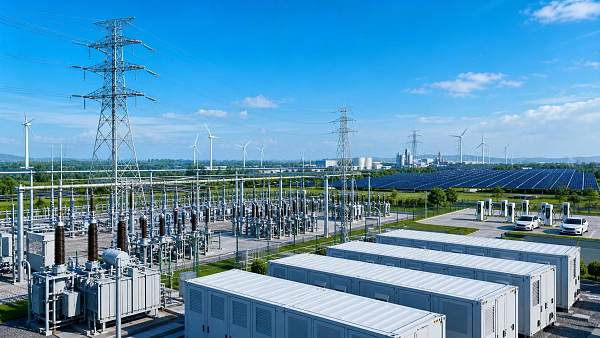
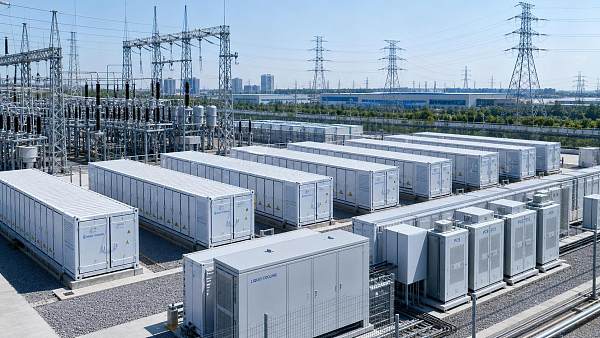
That broader view also explains why ESGS places storage beside UHV transformers, smart grid equipment, electrolyzers, and charging networks. These assets increasingly shape each other’s economics.
Why battery price alone explains less of the 2026 picture
A few years ago, many buyers compared projects by container price and nominal duration. That approach now misses too much hidden cost.
Degradation profiles differ more sharply under high-throughput operation. Ambient temperature, cycling intensity, and dispatch frequency can change usable life far faster than spreadsheet assumptions suggest.
The same applies to parasitic loads. Liquid cooling, auxiliary power, and site HVAC choices are no longer minor footnotes when storage is operating in hot climates or dense utility-scale clusters.
PCS design also matters more than many models admit. A small efficiency gap can materially alter revenue where projects rely on daily arbitrage plus ancillary services.
In practice, grid-scale energy storage cost drivers now sit across electrochemistry, balance of plant, software, compliance, and financing discipline. The system boundary has widened.
The cost stack is moving from simple hardware to operating architecture
Thermal control and safety are now financial variables
One of the clearest 2026 changes is that thermal management is no longer treated as a supporting subsystem. It has become a primary cost driver for grid-scale energy storage.
The reason is straightforward. Higher energy concentration raises the operational penalty of uneven cell temperature, especially in heavy cycling applications.
Advanced liquid cooling is gaining preference because it helps keep cell temperature spread tightly controlled. That improves usable life and reduces hidden degradation drift between racks.
More important, safety testing is moving upstream in decision-making. Developers and lenders increasingly ask early questions about propagation behavior, fire isolation, and emergency response design.
This is where the intelligence approach matters. ESGS tracks how thermal design, compliance interpretation, and export rules intersect, rather than treating them as separate topics.
That integrated view matters because a failed safety assumption can erase any apparent savings from cheaper hardware. Delays, redesign, insurance premiums, and curtailed site approvals can dominate total economics.
Power electronics and dispatch value are becoming harder to separate
Another strong signal is the rising importance of PCS architecture and control software. Grid-scale energy storage now earns value from more complex operating patterns than simple peak shifting.
Projects are increasingly expected to support frequency response, voltage support, reserve capacity, congestion relief, and renewable smoothing. Each service places different demands on response speed and round-trip efficiency.
That makes millisecond-level power flow control more relevant outside specialist discussions. In fast-moving grids, dispatch quality can separate premium assets from average ones.
The impact extends beyond storage sites themselves. UHV transmission, GIS switchgear, HVDC routing, and virtual power plant orchestration increasingly determine where storage value can actually be captured.
In other words, grid-scale energy storage economics are becoming more locational. A technically similar container may produce very different returns depending on network topology and market access.
Where the revenue model is shifting
- Energy arbitrage remains important, but narrower spreads push operators to seek stacked services.
- Capacity payments and availability guarantees are gaining weight in bankable project models.
- Curtailment-heavy renewable regions reward flexible charging windows and faster dispatch logic.
- EV charging clusters and industrial microgrids create local value pools with different cycling profiles.
Land, interconnection, and financing now shape cost as much as hardware choices
Some of the most underestimated grid-scale energy storage cost drivers are outside the container. Land preparation, permitting pathways, and interconnection timing are now central to project competitiveness.
Land-constrained sites can favor higher density designs, but those choices may tighten thermal and fire engineering requirements. The tradeoff is rarely neutral.
Interconnection queues are another pressure point. Delays can shift revenue start dates, raise capital costs, and weaken the benefit of lower upfront equipment pricing.
Financiers are responding by looking more closely at LCOS under realistic dispatch assumptions. They increasingly discount optimistic cycle counts and generic merchant revenue projections.
This is why independent storage stations are being modeled more like strategic infrastructure assets. Their value now depends on resilience, service optionality, and contract structure, not just installed megawatt-hours.
The broader energy ecosystem is changing what storage must do
Grid-scale energy storage does not operate in isolation anymore. Its economics are increasingly linked to adjacent infrastructure expansion.
UHV transmission moves remote solar and wind into demand centers, but it also changes congestion patterns and storage placement logic. Charging hubs create steep local peaks. Electrolyzers reshape off-peak absorption.
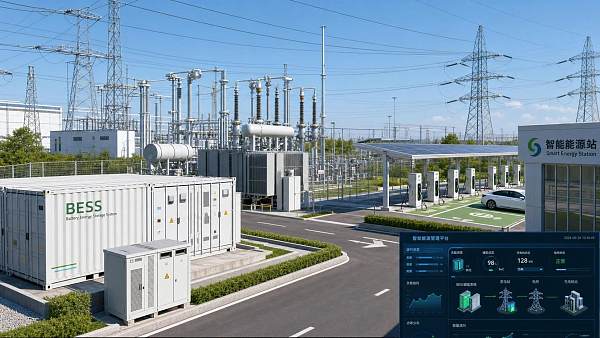
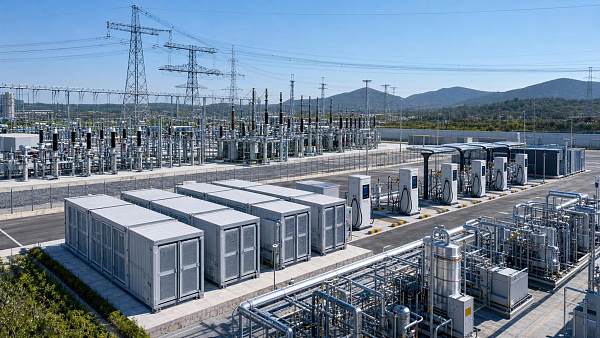
That is why system observers are watching the full energy chain. BESS containers, smart T&D equipment, EV charging, and hydrogen conversion are converging into a shared flexibility market.
A practical implication follows. Storage assets with stronger digital visibility and better integration interfaces will likely command better utilization than isolated, single-purpose systems.
From a market perspective, the winners in 2026 will be those that can convert technical flexibility into contractual revenue with low operational friction.
What deserves closer attention before the next investment cycle
The immediate task is not chasing the lowest quoted battery number. It is building a clearer view of which grid-scale energy storage cost drivers are structural and which are temporary.
A useful starting point is to compare projects through operational outcomes instead of nameplate metrics alone. That means checking temperature control strategy, degradation assumptions, PCS efficiency, and dispatch logic together.
It also helps to review how safety compliance affects schedule risk. In many markets, certification timing and fire design are now inseparable from financial close.
Three near-term actions stand out:
- Rebuild cost models around LCOS, auxiliary loads, and realistic revenue stacking.
- Stress-test site designs against thermal spread, compliance requirements, and interconnection delays.
- Track adjacent signals from UHV buildout, EV charging growth, VPP adoption, and hydrogen demand.
The market is still moving quickly, but the direction is clearer now. In 2026, grid-scale energy storage will reward those who read costs as system behavior, not just bill of materials.
Related News
 Grid-Scale Energy Storage Cost Drivers in 2026Mr. Orion SterlingGrid-scale energy storage cost drivers in 2026 go far beyond battery prices. Explore how thermal control, PCS efficiency, safety, software, and financing reshape project returns.
 Utility Scale Battery Storage Solutions: Key Cost Drivers Beyond Battery CellsMr. Orion SterlingUtility scale battery storage solutions cost far more than battery cells alone. Explore hidden drivers like thermal design, PCS, safety, EPC, and interconnection to compare suppliers smarter.
 Energy Storage Innovations Reshaping Grid Flexibility in 2026Mr. Orion SterlingEnergy storage innovations are redefining grid flexibility in 2026, from BESS and VPPs to hydrogen and EV charging. Discover what drives resilience, safety, and smarter returns.
 Industrial Equipment Sourcing Information: How to Vet Suppliers and Hidden CostsMr. Orion SterlingIndustrial equipment sourcing information helps you vet suppliers, uncover hidden costs, and avoid risky low-price offers. Learn how to protect uptime, compliance, and project ROI.
 IEA Flags Power Grid and Storage as 2026 Investment PriorityMr. Orion SterlingIEA flags power grid and storage as the 2026 investment priority, highlighting rising demand for UHV equipment, liquid-cooled BESS, and PCS/EMS systems. Explore supply chain risks and market opportunities.
 Energy Intelligence: 5 Signals That Improve Grid Asset DecisionsMr. Orion SterlingEnergy intelligence reveals 5 high-impact signals for smarter grid asset decisions, helping teams improve safety, flexibility, and returns across storage, charging, transmission, and hydrogen systems.
 Grid Interconnection Delays: What Drives Cost and Risk?Mr. Orion SterlingGrid interconnection delays can drive redesign, upgrade costs, and revenue loss. Learn what raises risk for BESS, EV charging, and hydrogen projects—and how to plan ahead.
 Frequency Regulation Revenue: How to Evaluate Payback and Market RiskMr. Orion SterlingFrequency regulation revenue explained: learn how to evaluate payback, battery wear, pricing volatility, and market risk to make smarter storage investment decisions.
 How Energy Transition Consulting Shapes Bankable Grid ProjectsMr. Orion SterlingEnergy transition consulting helps turn complex grid assets into bankable projects by reducing risk, improving revenue visibility, and strengthening investor confidence.
 Zero-Carbon Grids: Key Cost Drivers and ROI in 2026Mr. Orion SterlingZero-carbon grids in 2026: uncover the real cost drivers, ROI levers, and hidden risks across BESS, UHV, hydrogen, and EV charging to make smarter, higher-return grid investments.
 LCOS Analysis for Grid-Scale Storage: Which Cost Inputs Matter Most?Mr. Orion SterlingLCOS analysis reveals which cost inputs truly shape grid-scale storage returns. Explore capex, degradation, efficiency, augmentation, and financing to make smarter BESS procurement decisions.
 Distributed Storage vs Centralized Systems: What Changes Grid Resilience?Mr. Orion SterlingDistributed storage vs centralized systems: discover how distributed storage improves grid resilience, speeds outage recovery, reduces local congestion, and supports smarter energy strategy.