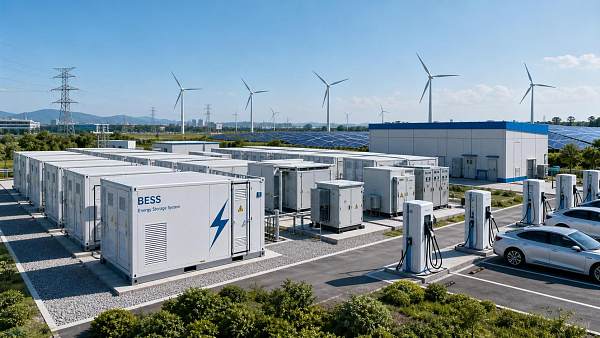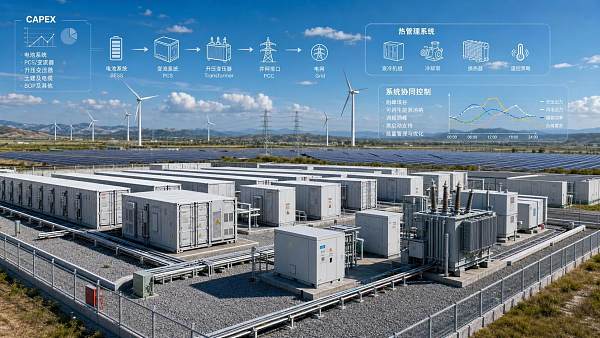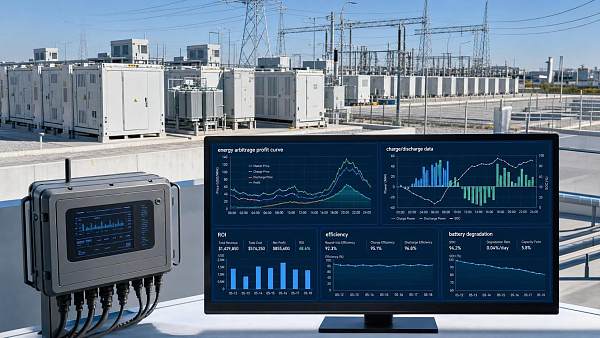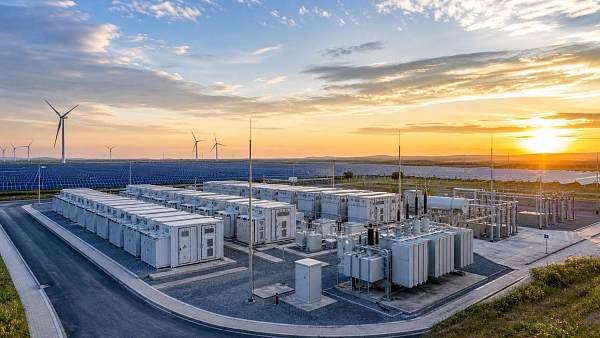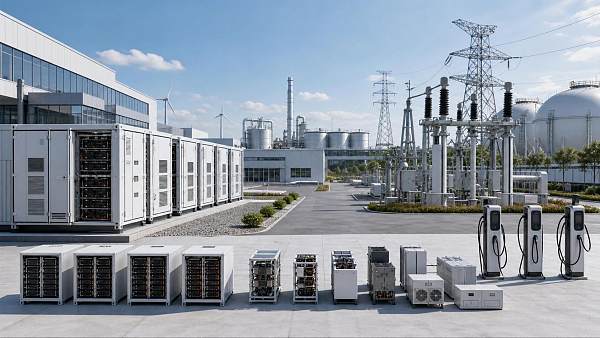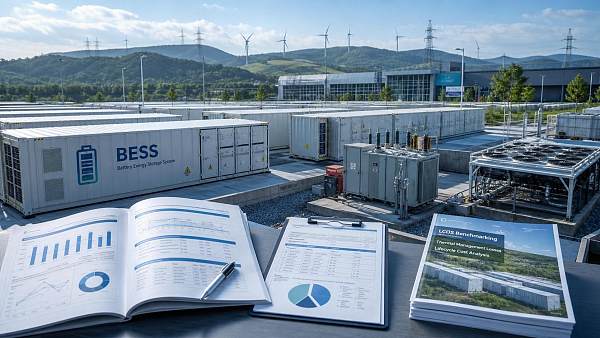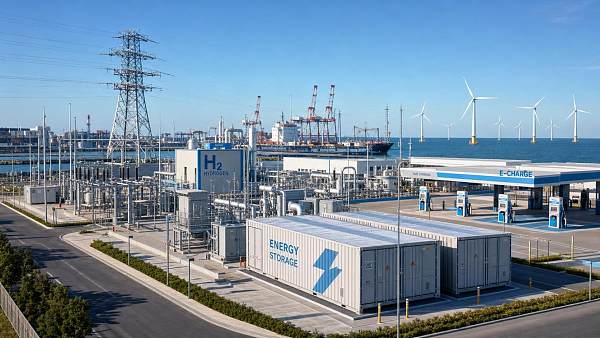
In 2026, energy arbitrage is no longer a simple buy-low, sell-high calculation.
For grid-scale BESS, EV charging hubs, and hybrid renewable assets, ROI now depends on markets, policy, degradation, and dispatch intelligence.
This shift matters because storage is becoming both a financial asset and a grid-stability instrument.
Energy Arbitrage ROI Is Being Repriced by 2026 Market Signals
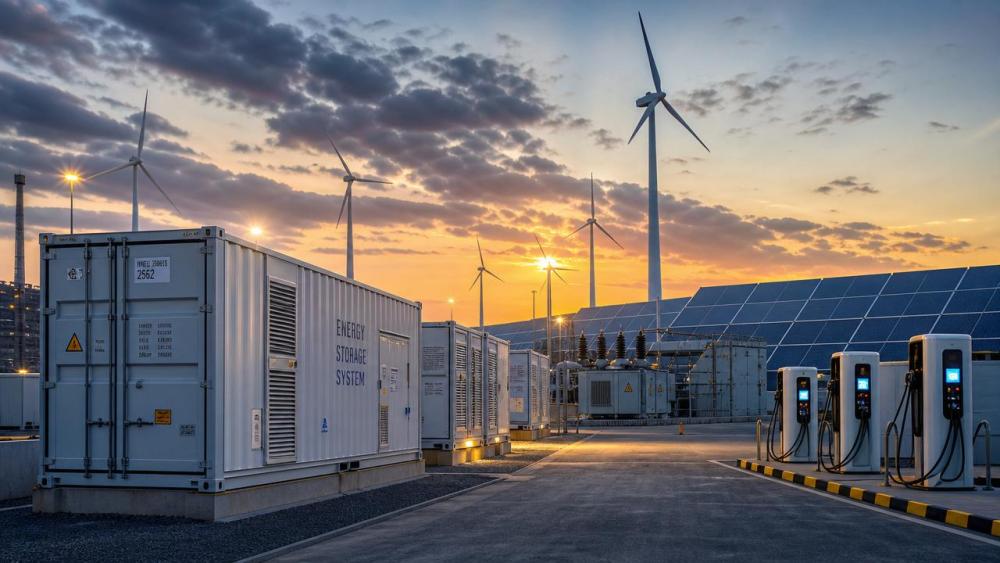
The old energy arbitrage model assumed predictable spreads between low-price renewable hours and evening peak demand.
By 2026, those spreads are becoming sharper, shorter, and more dependent on local congestion.
Solar saturation creates deeper midday price troughs in many markets, while electrification lifts evening and winter peaks.
This can expand energy arbitrage revenue, but only for assets able to respond quickly and preserve battery health.
Grid-scale BESS containers now compete on dispatch accuracy, thermal control, PCS efficiency, and market access.
The ROI question is shifting from “How large is the spread?” to “How much spread can be captured safely?”
Why the Energy Arbitrage Equation Changes in 2026
Several structural forces are changing the economics of energy arbitrage across power systems, transport infrastructure, and industrial loads.
The strongest opportunities appear where renewable curtailment, grid constraints, and flexible demand converge.
These forces do not affect every region equally.
Energy arbitrage performs best when price volatility is monetizable through approved market participation and reliable interconnection.
Price Spreads Are Wider, but Capture Rates Are Less Certain
In many grids, renewable penetration increases negative or near-zero pricing during selected hours.
That appears favorable for energy arbitrage, especially when BESS assets can charge from curtailed solar or wind.
However, growing storage deployment can compress spreads by competing for the same low-cost charging windows.
This means project ROI cannot rely on historical spreads alone.
Forward curves, congestion forecasts, renewable buildout, and ancillary market saturation should be modeled together.
Energy arbitrage returns may rise in constrained nodes, but fall in zones with excessive storage clustering.
The local node matters more than the national average
A national power price trend can hide valuable node-level volatility.
A battery near a congested renewable corridor may outperform a larger asset in a smoother pricing zone.
For 2026, energy arbitrage analysis should examine locational marginal pricing, grid queues, curtailment patterns, and transmission expansion schedules.
Degradation Modeling Becomes a Profit Gatekeeper
Every arbitrage cycle consumes part of the battery’s economic life.
In 2026, credible energy arbitrage ROI must include depth of discharge, temperature, C-rate, calendar aging, and augmentation cost.
A high spread is not automatically profitable if it accelerates cell degradation beyond modeled expectations.
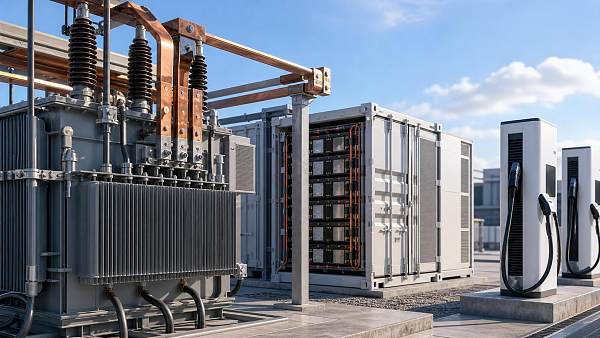
This is where advanced liquid cooling and thermal uniformity influence financial results.
Keeping cell temperature differences within tight ranges reduces stress, improves availability, and protects warranty assumptions.
Energy arbitrage strategies should therefore be optimized against net margin after degradation, not gross spread alone.
- Track revenue per equivalent full cycle.
- Limit dispatch during low-margin volatility.
- Model augmentation timing under multiple price cases.
- Tie warranty terms to realistic operating profiles.
- Use LCOS as a constraint, not an afterthought.
Revenue Stacking Changes the Meaning of Energy Arbitrage
Pure energy arbitrage is rarely the full income story for modern storage assets.
By 2026, successful assets often combine arbitrage with capacity payments, frequency response, reserve services, and congestion relief.
This creates higher revenue potential, but also operational conflicts.
A battery reserved for grid services may miss a profitable peak-price discharge window.
Conversely, chasing energy arbitrage can reduce state-of-charge availability for contracted reliability obligations.
Dispatch software must decide which opportunity produces the best risk-adjusted value in real time.
The dispatch brain becomes a financial engine
Millisecond-level control is no longer only an engineering advantage.
It directly affects bid accuracy, penalty avoidance, settlement performance, and energy arbitrage capture rates.
Virtual Power Plants add another layer by coordinating chargers, C&I cabinets, and distributed batteries.
When aggregated correctly, distributed flexibility can compete with centralized assets in selected markets.
EV Charging Hubs Turn Load Management into Arbitrage Value
High-power EV charging changes local demand curves.
An 800V liquid-cooled supercharging site can create sharp load spikes if unmanaged.
On-site BESS can reduce demand charges, shift grid intake, and support energy arbitrage during volatile hours.
V2G participation may further expand flexibility, although customer behavior and market rules remain uncertain.
For charging and swapping stations, energy arbitrage ROI depends on utilization, tariff design, and battery scheduling discipline.
The strongest sites will combine fast charging, storage buffering, solar canopies, and automated market bidding.
Hydrogen and UHV Infrastructure Influence Storage Economics
Energy arbitrage also changes when hydrogen electrolyzers and UHV transmission enter the system.
Electrolyzers can absorb low-price renewable energy, creating competition for the cheapest charging hours.
In some regions, this may reduce available spreads for BESS assets.
In others, hydrogen demand can stabilize renewable projects and support larger clean energy buildouts.
UHV power transmission can also shift value by reducing spatial mismatch between renewable bases and industrial centers.
If transmission relieves congestion, local energy arbitrage spreads may narrow.
If transmission delays persist, local storage can remain highly valuable.
What Different Business Links Should Watch
The 2026 shift affects project design, financing, operation, safety, and grid integration differently.
Each link should treat energy arbitrage as a system-level decision, not a standalone trading tactic.
- Asset design: optimize duration, PCS rating, cooling performance, and augmentation pathway.
- Grid connection: evaluate congestion, curtailment, interconnection timelines, and dispatch restrictions.
- Finance model: stress-test spreads, capacity revenue, tax credits, and operating penalties.
- Operations: align state-of-charge policy with real-time market opportunities.
- Safety compliance: link UL 9540A evidence with insurability and permitting confidence.
The most resilient business cases combine conservative downside assumptions with flexible upside participation.
Energy arbitrage should be modeled under normal, stressed, and saturated storage deployment scenarios.
A Practical 2026 Checklist for Energy Arbitrage ROI
A stronger ROI assessment should separate market opportunity from technical ability and contractual certainty.
This checklist helps prevent attractive headline spreads from becoming weak realized returns.
It also improves communication between engineering, compliance, operations, and capital planning teams.
How to Respond as 2026 Approaches
The best response is not to abandon energy arbitrage assumptions.
It is to make them more granular, dynamic, and technically grounded.
Scenario planning should include storage saturation, delayed transmission, faster EV adoption, and changing capacity accreditation.
Dispatch simulations should be connected to degradation curves and real settlement rules.
Safety and compliance should be included early, especially for containerized BESS deployed near load centers.
- Build node-level price cases, not only regional averages.
- Compare two-hour, four-hour, and longer-duration configurations.
- Quantify missed revenue from unavailable state-of-charge.
- Validate dispatch algorithms against penalty exposure.
- Update ROI after every major market rule change.
The Bottom Line: Energy Arbitrage Still Matters, but Precision Wins
Energy arbitrage remains a core value stream for storage, charging infrastructure, and hybrid renewable projects in 2026.
Yet the margin belongs to assets that combine market insight with disciplined engineering.
Price volatility alone is not enough.
ROI depends on controllable degradation, reliable grid access, intelligent dispatch, and credible revenue stacking.
The next step is to audit each storage investment against local volatility, technical limits, compliance readiness, and market participation rights.
With that discipline, energy arbitrage can become a resilient profit engine rather than a fragile spreadsheet assumption.
Related News
 Grid Resilience Solution Price: Cost Drivers and ROI BenchmarksMr. Orion SterlingGrid resilience solution price explained: compare cost drivers, hidden risks, and ROI benchmarks to choose a safer, higher-value energy resilience investment.
 Millisecond Grid Control Cost: What Drives ROI in Fast-Response Storage?Mr. Orion SterlingMillisecond grid control cost directly affects ROI in fast-response storage. Discover what drives returns, lowers risk, and improves revenue, uptime, and bankability.
 Renewable Power Storage Solution Cost: What Drives CAPEX and PaybackMr. Orion SterlingRenewable power storage solution cost explained: discover what drives CAPEX, thermal design, PCS, safety compliance, and payback to make smarter, lower-risk storage investment decisions.
 Electrical Infrastructure Materials That Affect Lifecycle CostMr. Orion SterlingElectrical infrastructure materials directly shape lifecycle cost through losses, maintenance, downtime, and risk. Discover how smarter material choices protect ROI.
 Supplier Capability Evaluation Checklist for High-Risk Energy ProjectsMr. Orion SterlingSupplier capability evaluation checklist for high-risk energy projects. Learn how to assess safety, compliance, quality, and delivery resilience to reduce risk and improve sourcing decisions.
 Peak Shaving Solution Europe: When the ROI Works in 2026Mr. Orion SterlingPeak shaving solution Europe: discover when ROI works in 2026, which sites profit first, and how to compare BESS options for faster payback, lower grid costs, and scalable energy flexibility.
![]() Zero Carbon Grid Solution Integration: Key Design Choices and Cost RisksMr. Orion SterlingZero carbon grid solution integration explained: discover key design choices, hidden interface cost risks, and how storage, EV charging, transmission, and hydrogen affect project value.
Zero Carbon Grid Solution Integration: Key Design Choices and Cost RisksMr. Orion SterlingZero carbon grid solution integration explained: discover key design choices, hidden interface cost risks, and how storage, EV charging, transmission, and hydrogen affect project value. Energy Arbitrage Calculator: What Inputs Change ROI the Most?Mr. Orion SterlingEnergy arbitrage calculator insights: discover which inputs most affect ROI, from price spreads and efficiency to degradation, demand charges, and dispatch risk.
 Grid-Scale Storage Systems: Cost Drivers, Revenue Paths, and Payback RisksMr. Orion SterlingGrid-scale storage systems explained: uncover key cost drivers, revenue streams, and payback risks to evaluate projects smarter and invest with greater confidence.
 Energy Intelligence Platforms for Sourcing: What to Compare Before You BuyMr. Orion SterlingEnergy intelligence platforms for sourcing: compare supplier depth, technical compliance, market signals, and lifecycle cost tools before you buy to reduce risk and choose with confidence.
 LCOS Benchmarking Methods That Expose Hidden Storage CostsMr. Orion SterlingLCOS benchmarking methods that reveal hidden storage costs, from augmentation and thermal losses to downtime and compliance, helping buyers compare BESS projects with confidence.
 Zero-Carbon Infrastructure in Europe: What Will Shape Projects in 2026Mr. Orion SterlingZero-carbon infrastructure Europe enters a tougher 2026 phase shaped by storage, grids, hydrogen, and EV charging. Discover what makes projects bankable, compliant, and investment-ready.