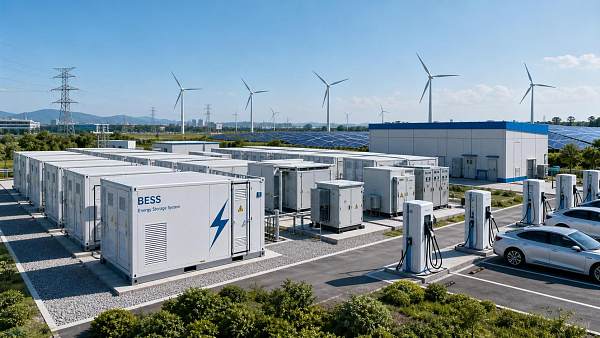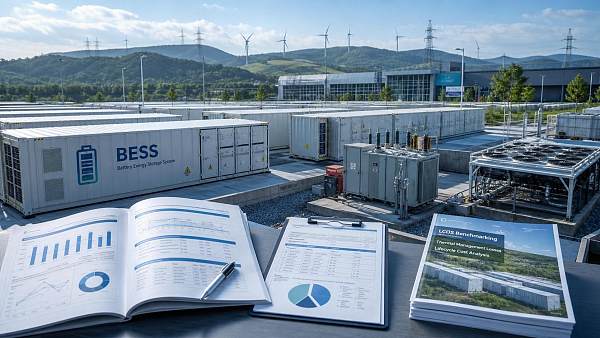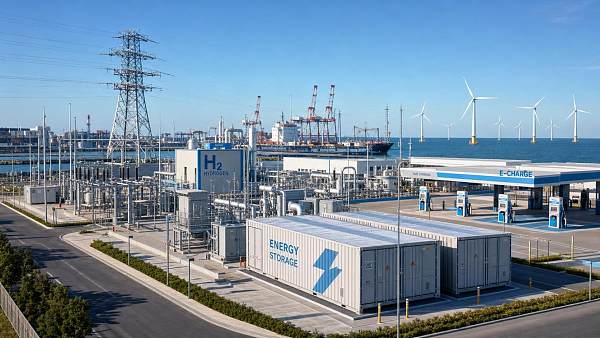
For financial approvers, grid modernization is no longer a technical upgrade line item—it is a capital allocation decision tied to reliability, asset utilization, regulatory risk, and long-term energy transition value. From BESS containers and UHV transmission to smart substations, EV charging hubs, and hydrogen-ready infrastructure, every investment must prove measurable ROI. This article examines the cost drivers that matter most, helping decision-makers separate essential modernization spending from low-impact upgrades and build a stronger business case for resilient, flexible, zero-carbon grids.
Where Grid Modernization ROI Actually Comes From
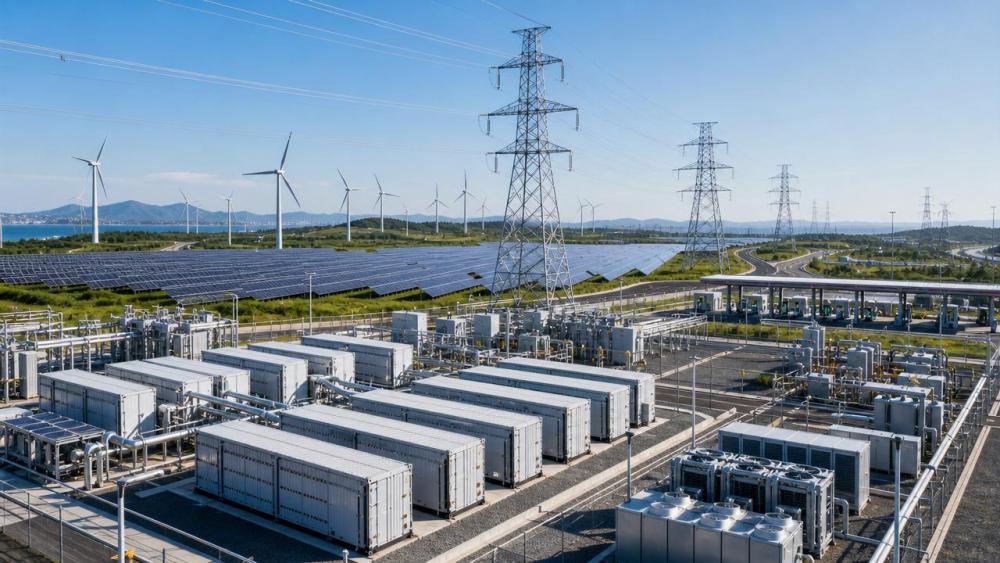
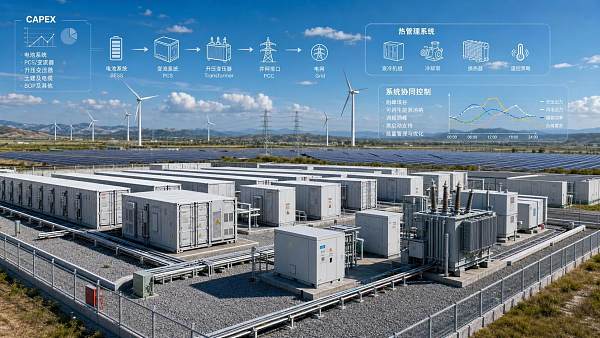
The return on grid modernization rarely comes from one asset alone. It comes from coordinated performance across storage, transmission, protection, automation, charging, and dispatch intelligence.
A finance team may see separate proposals for BESS containers, GIS switchgear, UHV transformers, SCADA upgrades, or EV charging hubs. The economic value appears when these systems reduce curtailment, congestion, outages, and peak procurement costs.
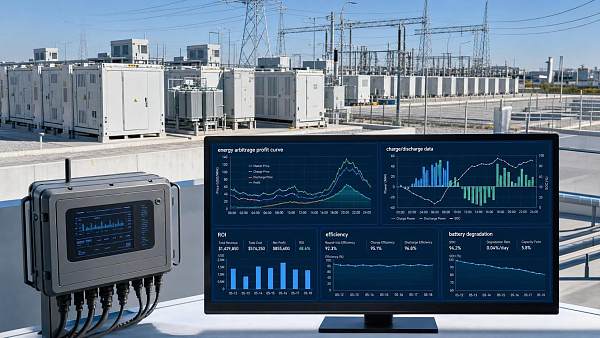
The ROI equation finance teams should use
- Revenue uplift from ancillary services, capacity leasing, peak-valley arbitrage, fast charging, and improved renewable dispatch.
- Cost avoidance from lower outage penalties, reduced diesel backup, deferred substation expansion, and lower transmission losses.
- Risk reduction from compliance-ready safety design, thermal runaway mitigation, cyber segmentation, and better fault isolation.
- Asset-life extension through liquid cooling, transformer monitoring, power flow control, predictive maintenance, and digital twins.
ESGS evaluates grid modernization through this combined lens: technical stability, safety boundaries, monetizable flexibility, and long-term infrastructure value.
Which Cost Drivers Have the Largest Impact on ROI?
Not every cost item deserves equal scrutiny. Financial approvers should focus on drivers that alter lifetime revenue, compliance exposure, failure cost, and utilization rate.
The table below organizes major grid modernization cost categories by their ROI sensitivity and the approval questions they raise.
The highest ROI items are usually not the cheapest. They are the components that protect uptime, improve dispatchability, and convert idle assets into revenue-generating capacity.
Scenario-Based Budgeting: Storage, Transmission, Charging, or Hydrogen?
Grid modernization decisions become clearer when budgets are matched to operating scenarios. A port, utility, industrial park, and highway charging corridor do not need identical asset mixes.
When BESS containers deserve priority
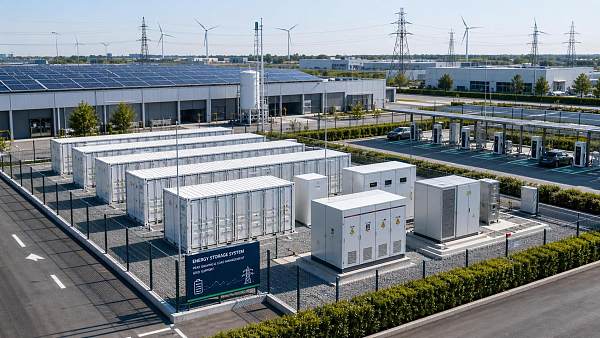
BESS containers often deliver strong financial logic where renewable curtailment, demand charges, frequency regulation, or peak capacity shortages are already measurable.
Finance teams should examine LCOS, cycle strategy, PCS efficiency, battery degradation, fire protection design, warranty conditions, and available grid-service markets.
When UHV and smart T&D investments dominate
UHV transformers, HVDC valves, GIS switchgear, and protection equipment matter most where generation and load are separated by hundreds or thousands of kilometers.
These assets rarely show quick payback in isolation. Their value lies in lower loss, higher transfer capacity, congestion relief, and regional energy security.
When EV charging and hydrogen shift the ROI case
Mega EV charging and swapping stations add load, but V2G capabilities can also create flexible distributed storage when dispatch logic is mature.
Hydrogen electrolyzers are more suitable when surplus renewable power is frequent, long-duration storage is required, or industrial offtake agreements support utilization.
- Choose storage first when price spreads, curtailment, or ancillary-service markets are visible and contractable.
- Choose T&D reinforcement first when bottlenecks limit renewable evacuation or industrial load growth.
- Choose charging hubs when traffic demand, grid connection capacity, and payment utilization are well validated.
- Choose hydrogen readiness when power-to-X demand can be backed by offtake, policy support, and operating hours.
How to Compare Modernization Options Without Overbuying
Overbuying is a common failure in grid modernization. It happens when technical teams specify maximum capability while financial teams need staged value creation.
The following comparison helps separate core investments from upgrades that should wait until demand, regulation, or market rules become clearer.
The practical lesson is simple: approve capacity that has a defined operating role. Defer decorative digitization until data quality, control rights, and monetization routes are clear.
Technical Parameters Finance Should Not Ignore
Finance teams do not need to become protection engineers. However, several technical parameters directly influence payback, insurance review, and long-term operating expense.
BESS parameters linked to financial performance
- Temperature uniformity affects cell aging, available capacity, and emergency shutdown probability in high-cycle operations.
- PCS conversion efficiency changes the real margin of arbitrage, frequency regulation, and renewable shifting.
- Round-trip efficiency should be tested against expected load profiles, not only against ideal laboratory conditions.
- Fire detection, gas venting, spacing, and UL 9540A-related evidence influence permitting and risk acceptance.
Transmission and substation parameters tied to risk
For smart grid T&D equipment, fault current interruption time, insulation coordination, harmonic tolerance, and condition monitoring are financial variables, not technical luxuries.
For UHV power transformers, loss level, cooling mode, partial discharge monitoring, and transport constraints can reshape lifecycle cost and project schedule risk.
Compliance and Bankability: The Hidden Cost of Weak Documentation
A grid modernization project can fail financially even when equipment performs well. Poor documentation can delay permits, insurance review, interconnection approval, and lender confidence.
The compliance checklist below highlights common documentation areas financial approvers should request before final procurement approval.
Compliance does not guarantee ROI, but weak compliance can destroy it. The approval file should include technical evidence, safety reasoning, and commercial assumptions together.
A Practical Approval Framework for Grid Modernization Spending
The strongest business cases translate engineering language into financial decisions. Approvers need a repeatable framework before comparing suppliers, EPC proposals, or phased investments.
Step-by-step decision path
- Define the bottleneck: curtailment, overload, outage exposure, demand charge, charging queue, or renewable evacuation constraint.
- Quantify the financial pain using historical tariffs, outage records, congestion data, energy prices, and utilization forecasts.
- Match the bottleneck to asset categories such as BESS, smart T&D, UHV transmission, EV charging, or hydrogen electrolyzers.
- Test the revenue stack under conservative, base, and upside scenarios rather than relying on a single payback number.
- Request safety, interconnection, lifecycle, and service documentation before price negotiation becomes the dominant discussion.
This framework helps prevent a familiar problem: approving visible hardware while underfunding the controls, cooling, studies, and documentation that make returns bankable.
Common Misconceptions That Reduce Grid Modernization Returns
Financial approvers often inherit optimistic models. Challenging assumptions early is cheaper than discovering problems after procurement, interconnection, or commercial operation.
Misconception 1: Lowest capex means best ROI
Low capex can become expensive if it increases downtime, accelerates battery degradation, fails permitting review, or limits access to ancillary-service revenue.
Misconception 2: Digital platforms create value automatically
VPPs and digital twins only create measurable value when metering accuracy, dispatch rights, market participation, and control latency are commercially defined.
Misconception 3: Hydrogen readiness should be funded everywhere
Hydrogen electrolyzers require renewable surplus, water access, offtake demand, compression or storage planning, and enough operating hours to support the investment case.
- Ask for downside scenarios where energy spreads narrow or capacity payments decline.
- Separate mandatory compliance spending from optional future-proofing upgrades.
- Review whether operations teams can actually dispatch and maintain the assets being purchased.
FAQ: Questions Financial Approvers Ask Before Signing Off
How long should payback be for grid modernization projects?
There is no universal payback period. BESS arbitrage projects may be judged differently from UHV transmission or substation reliability upgrades.
Approvers should compare payback with asset life, regulated returns, risk reduction, and strategic value, not only annual cash savings.
What should be checked first in a BESS modernization proposal?
Start with use case, revenue stack, interconnection assumptions, LCOS, thermal management design, degradation curve, and fire safety evidence.
If those items are vague, a lower price should not be treated as a stronger commercial offer.
Are EV charging hubs grid assets or transport assets?
They are increasingly both. High-power charging creates local grid stress, while V2G and storage integration can provide flexibility.
The financial case should include utilization, connection capacity, demand charges, user pricing, and potential grid-service participation.
When should modernization be phased instead of built at full scale?
Phasing is sensible when load growth, market rules, hydrogen offtake, or distributed asset participation remain uncertain.
However, core civil works, protection design, and communication architecture should allow later expansion without costly redesign.
Why Choose ESGS for Grid Modernization Intelligence
ESGS helps financial approvers evaluate grid modernization with a practical bridge between engineering performance and investment discipline.
Our intelligence focus covers grid-scale BESS containers, smart grid T&D equipment, UHV transformers, EV charging and swapping hubs, and hydrogen electrolyzers.
Through safety analysis, dispatch modeling, LCOS thinking, and compliance review, ESGS supports decisions where reliability and asset returns must be proven together.
What you can consult before approval
- Parameter confirmation for BESS capacity, PCS rating, cooling strategy, transformer rating, and charging power configuration.
- Solution comparison for storage-first, transmission-first, VPP-led, charging-hub, or hydrogen-ready modernization pathways.
- Compliance requirement review, including safety documentation, interconnection studies, grid code concerns, and certification expectations.
- Budget discussion covering capex boundaries, lifecycle cost, delivery schedule pressure, phased procurement, and quotation preparation.
- Customized intelligence support for investment committees, supplier evaluation, export positioning, and project risk communication.
If your team is preparing a grid modernization budget, ESGS can help clarify which costs protect ROI, which upgrades can wait, and which assumptions need evidence before approval.
- BESS containers
- hydrogen electrolyzers
- HVDC valves
- peak shaving
- frequency regulation
- power flow control
- zero-carbon grids
- distributed storage
- power-to-x
- energy transition
- grid modernization
- thermal management
- energy storage safety
- grid interconnection
- grid-scale BESS
- UHV transformers
- EV charging hubs
- battery energy storage
Related News
 Grid Resilience Solution Price: Cost Drivers and ROI BenchmarksMr. Orion SterlingGrid resilience solution price explained: compare cost drivers, hidden risks, and ROI benchmarks to choose a safer, higher-value energy resilience investment.
 Millisecond Grid Control Cost: What Drives ROI in Fast-Response Storage?Mr. Orion SterlingMillisecond grid control cost directly affects ROI in fast-response storage. Discover what drives returns, lowers risk, and improves revenue, uptime, and bankability.
 Renewable Power Storage Solution Cost: What Drives CAPEX and PaybackMr. Orion SterlingRenewable power storage solution cost explained: discover what drives CAPEX, thermal design, PCS, safety compliance, and payback to make smarter, lower-risk storage investment decisions.
 Electrical Infrastructure Materials That Affect Lifecycle CostMr. Orion SterlingElectrical infrastructure materials directly shape lifecycle cost through losses, maintenance, downtime, and risk. Discover how smarter material choices protect ROI.
 Supplier Capability Evaluation Checklist for High-Risk Energy ProjectsMr. Orion SterlingSupplier capability evaluation checklist for high-risk energy projects. Learn how to assess safety, compliance, quality, and delivery resilience to reduce risk and improve sourcing decisions.
 Peak Shaving Solution Europe: When the ROI Works in 2026Mr. Orion SterlingPeak shaving solution Europe: discover when ROI works in 2026, which sites profit first, and how to compare BESS options for faster payback, lower grid costs, and scalable energy flexibility.
![]() Zero Carbon Grid Solution Integration: Key Design Choices and Cost RisksMr. Orion SterlingZero carbon grid solution integration explained: discover key design choices, hidden interface cost risks, and how storage, EV charging, transmission, and hydrogen affect project value.
Zero Carbon Grid Solution Integration: Key Design Choices and Cost RisksMr. Orion SterlingZero carbon grid solution integration explained: discover key design choices, hidden interface cost risks, and how storage, EV charging, transmission, and hydrogen affect project value. Energy Arbitrage Calculator: What Inputs Change ROI the Most?Mr. Orion SterlingEnergy arbitrage calculator insights: discover which inputs most affect ROI, from price spreads and efficiency to degradation, demand charges, and dispatch risk.
 Grid-Scale Storage Systems: Cost Drivers, Revenue Paths, and Payback RisksMr. Orion SterlingGrid-scale storage systems explained: uncover key cost drivers, revenue streams, and payback risks to evaluate projects smarter and invest with greater confidence.
 Energy Intelligence Platforms for Sourcing: What to Compare Before You BuyMr. Orion SterlingEnergy intelligence platforms for sourcing: compare supplier depth, technical compliance, market signals, and lifecycle cost tools before you buy to reduce risk and choose with confidence.
 LCOS Benchmarking Methods That Expose Hidden Storage CostsMr. Orion SterlingLCOS benchmarking methods that reveal hidden storage costs, from augmentation and thermal losses to downtime and compliance, helping buyers compare BESS projects with confidence.
 Zero-Carbon Infrastructure in Europe: What Will Shape Projects in 2026Mr. Orion SterlingZero-carbon infrastructure Europe enters a tougher 2026 phase shaped by storage, grids, hydrogen, and EV charging. Discover what makes projects bankable, compliant, and investment-ready.