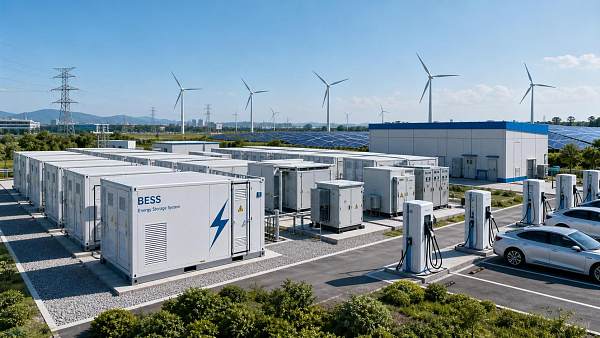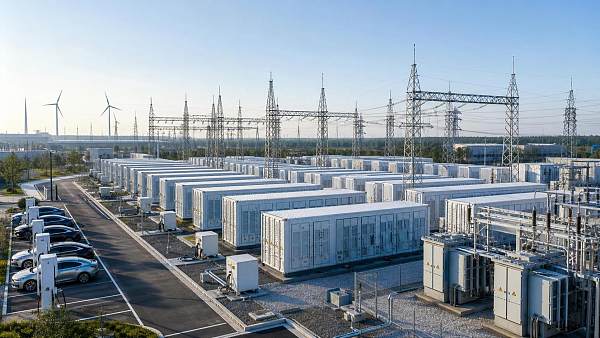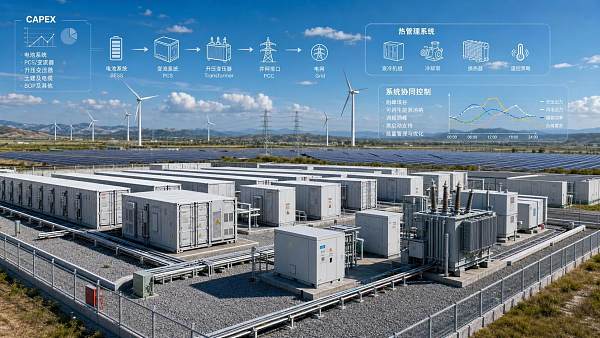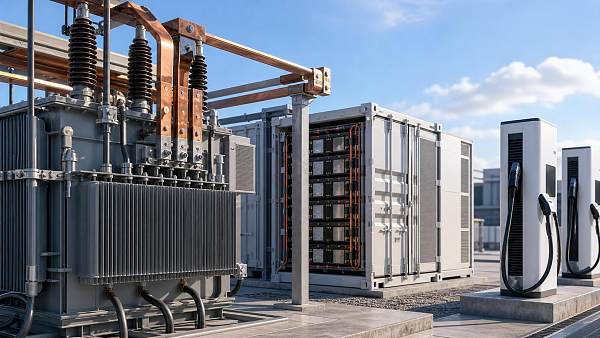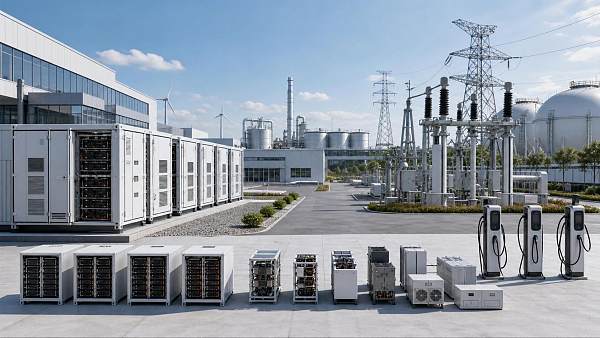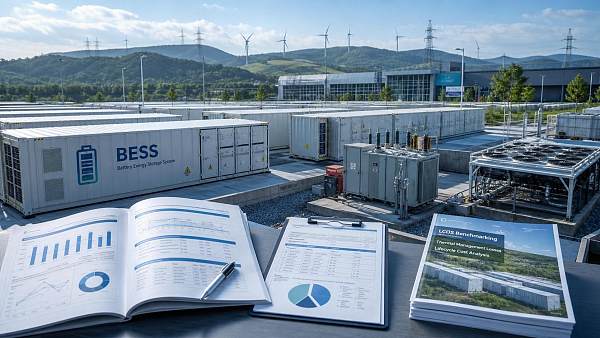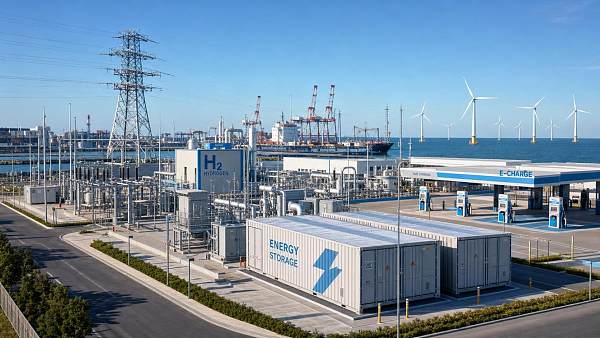
Extreme weather is no longer an occasional disruption—it is a design condition for modern energy infrastructure. For project managers and engineering leads, grid resilience solutions must now combine BESS containers, smart T&D equipment, UHV transmission, EV charging hubs, and hydrogen systems into a coordinated defense against outages, thermal risks, and power-flow instability. This article explores how resilient grid architecture can protect assets, maintain operational continuity, and support high-return clean energy deployment in an increasingly volatile climate.
Why Extreme Weather Changes the Procurement Logic for Grid Resilience Solutions
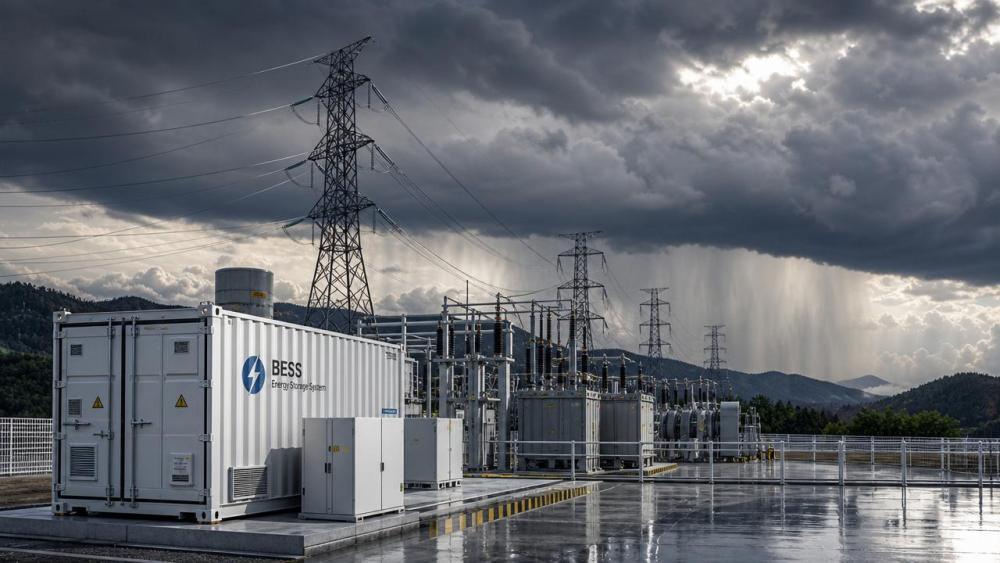
Storms, heat waves, floods, wildfires, and cold snaps expose weak points that ordinary planning often misses. A single transformer trip, overheated battery rack, or failed feeder can cascade across substations, charging stations, and industrial loads.
For project managers, grid resilience solutions are not just technical upgrades. They are schedule protection, risk control, insurance support, and revenue continuity for assets expected to operate for decades.
- Design risk increases when renewable generation, EV charging demand, and distributed storage all fluctuate during severe weather events.
- Procurement risk grows when equipment specifications are separated from thermal safety, protection coordination, and grid dispatch requirements.
- Commercial risk appears when assets cannot participate in peak shaving, capacity leasing, VPP dispatch, or emergency backup markets.
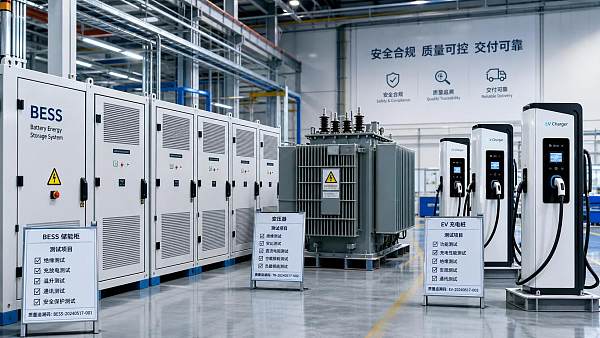
ESGS evaluates grid resilience solutions through five interconnected pillars: BESS containers, smart grid T&D equipment, UHV transformers, EV charging and swapping infrastructure, and hydrogen electrolyzers. The goal is to connect physical reliability with asset returns.
What Should a Resilient Grid Architecture Include?
A resilient grid is not built from one device. It is an operating architecture where storage, protection, transmission, charging, and Power-to-X assets respond together under abnormal conditions.
The following table summarizes how core infrastructure modules support grid resilience solutions during extreme weather, renewable intermittency, and emergency recovery.
This architecture helps engineering leads compare modules by function rather than by catalog description. Strong grid resilience solutions connect equipment choices to fault behavior, dispatch value, and emergency operations.
From Component Procurement to System Resilience
Traditional procurement often optimizes each package separately. Extreme weather requires a different method: specify how each package behaves when voltage fluctuates, communication fails, temperatures rise, or access roads are blocked.
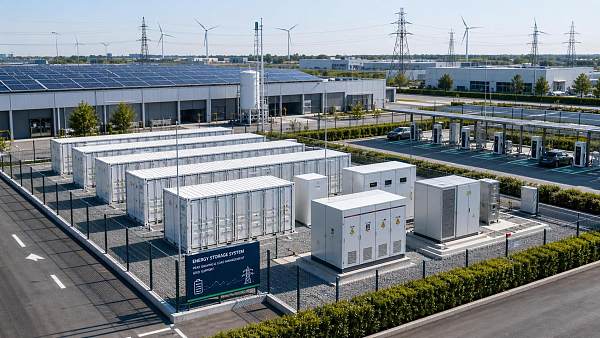
For example, a BESS container with advanced liquid cooling may protect cell temperature spread, but it also needs coordinated PCS control, emergency ventilation, fire detection, and grid-code compliant dispatch logic.
Which Application Scenarios Need Grid Resilience Solutions Most?
Different assets face different weather stress. A coastal substation worries about corrosion and flooding, while a desert solar corridor worries about heat, dust, and long-distance transmission stability.
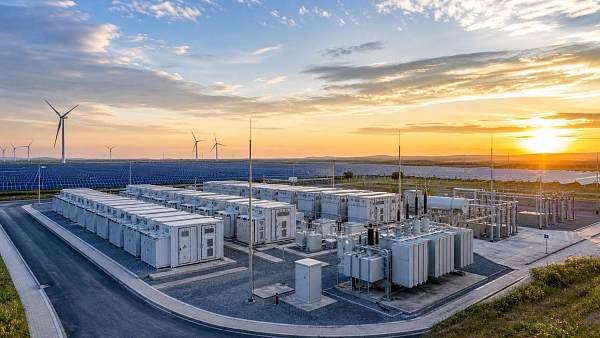
- Renewable energy bases need storage and UHV transmission to reduce curtailment and move power from remote generation zones to load centers.
- Industrial parks need microgrid control, backup storage, and protection coordination to prevent production stoppage during grid disturbances.
- Highway charging corridors need flexible charging, on-site BESS, and demand management when traffic surges after evacuation or recovery events.
- Ports and logistics hubs need electrification, hydrogen pathways, and robust substations to maintain cranes, fleets, cold chains, and security systems.
ESGS sees grid resilience solutions as a bridge between clean power supply and operational continuity. The most valuable projects usually combine daily economic use with emergency support capability.
Scenario Example: EV Charging Hubs Under Heat and Peak Demand
A mega charging site may operate normally in mild weather, then face extreme afternoon demand during a heat wave. Without storage, dispatch logic, and transformer headroom, service reliability can fall quickly.
Resilient design pairs liquid-cooled supercharging with BESS buffers, smart load allocation, and V2G-ready control. This turns the charging hub from a grid burden into a flexible energy node.
How to Compare Technical Parameters Without Overbuying
Project teams often face a difficult balance: under-specification creates outage risk, but over-specification ties up capital and delays approval. Practical grid resilience solutions use parameter ranges tied to operating scenarios.
The table below gives evaluation parameters that help compare suppliers and design options before final engineering, procurement, and construction commitments.
The strongest procurement documents translate these checks into acceptance criteria. Instead of asking for “high reliability,” request test evidence, operating limits, alarm logic, and interface documents.
Procurement Checklist for Project Managers and Engineering Leads
Grid resilience solutions are easier to purchase when the team separates mandatory requirements from optimization targets. This reduces supplier ambiguity and helps finance teams understand trade-offs.
- Define the weather design case, including maximum temperature, flood exposure, wind load, dust level, corrosion risk, and grid disturbance profile.
- Map critical loads and recovery priorities, including substations, data systems, emergency lighting, charging bays, pumping systems, and industrial process loads.
- Set performance acceptance rules for discharge duration, voltage support, black-start scope, thermal alarms, and protection coordination.
- Review supplier documentation for installation constraints, commissioning requirements, warranty exclusions, spare parts, and remote monitoring responsibilities.
- Connect technical decisions to LCOS, capacity revenue, demand charge reduction, curtailment recovery, and avoided downtime value.
ESGS helps project teams examine grid resilience solutions through both engineering and commercial lenses. This is especially useful when budgets are tight and delivery deadlines are fixed.
Key Documents to Request Before Award
Before awarding a package, request single-line diagrams, communication protocols, safety analysis, factory test plans, commissioning procedures, and operation manuals. Missing documents often signal hidden integration risk.
Compliance and Safety: Where Many Projects Lose Time
Safety requirements are not paperwork details. They influence enclosure spacing, fire response planning, insurance review, export approvals, and the schedule of grid interconnection.
For BESS-heavy grid resilience solutions, teams commonly review standards and test references such as UL 9540, UL 9540A, IEC 62933, NFPA 855, and local grid codes where applicable.
- Thermal runaway propagation analysis should be reviewed early, not after container layout and fire access routes are frozen.
- Hydrogen systems require attention to ventilation, hazardous area classification, leak detection, emergency shutdown, and water treatment quality.
- EV charging hubs need electrical safety, communication security, metering accuracy, and grid interconnection rules aligned before commissioning.
Dr. Valeria Thorne’s safety-oriented intelligence work at ESGS focuses on how compliance evidence protects exporters, developers, and EPC teams from late-stage redesign and legal exposure.
Cost, Alternatives, and Return Logic for Grid Resilience Solutions
Resilience spending must be defensible. The right question is not whether the lowest upfront cost wins, but whether the selected system protects availability and creates operational revenue.
The following comparison helps decision makers evaluate cost logic across common resilience options without reducing the discussion to equipment price alone.
Mr. Orion Sterling’s LCOS-focused analysis at ESGS is designed for this decision layer. It connects capital cost, degradation, dispatch revenue, capacity leasing, and avoided outage value.
Implementation Roadmap: From Risk Mapping to Commissioning
A strong implementation roadmap prevents grid resilience solutions from becoming disconnected equipment packages. The workflow should begin with risk, then move into architecture, procurement, integration, and operation.
- Conduct a weather and grid-risk audit covering historical outages, projected climate stress, network constraints, and emergency operation requirements.
- Build a resilience architecture that defines storage duration, feeder segmentation, transformer loading, charging flexibility, and hydrogen integration points.
- Prepare a technical specification that includes safety evidence, control interfaces, performance tests, delivery milestones, and documentation obligations.
- Validate integration through simulations, relay coordination studies, thermal models, cybersecurity review, and staged commissioning plans.
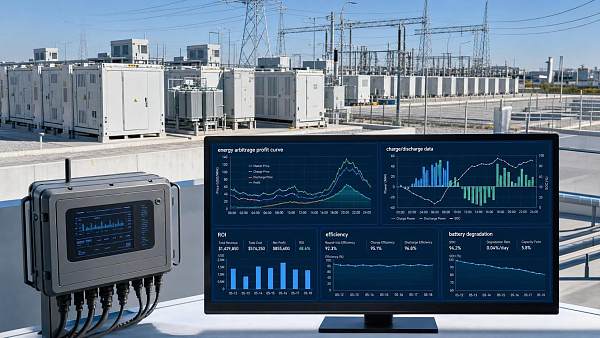
- Operate with monitoring dashboards, alarm escalation, preventive maintenance, and periodic revenue review for peak shaving or VPP participation.
Prof. Kaelen Voss’s dispatch-oriented analysis emphasizes millisecond-level coordination. In practice, this means controllers, chargers, storage cabinets, and substations must share reliable data and fallback logic.
Common Misconceptions About Grid Resilience Solutions
Many project delays come from assumptions made too early. Resilience planning is strongest when the team challenges these assumptions before equipment procurement begins.
- Misconception one: backup capacity alone creates resilience. In reality, controls, protection, fuel or charge availability, and restart procedures are equally important.
- Misconception two: all BESS containers behave similarly. Thermal design, rack spacing, BMS strategy, and PCS integration can change safety and dispatch outcomes.
- Misconception three: compliance can be finalized after supplier selection. Late safety review often forces layout changes, documentation gaps, or commissioning delays.
- Misconception four: hydrogen and battery storage compete in every case. They often serve different time scales, from short-duration grid response to long-duration energy conversion.
FAQ: How do I start selecting grid resilience solutions?
Start with the failure scenario, not the product catalog. Define critical loads, required backup duration, weather exposure, interconnection limits, and whether the asset must also earn revenue during normal operation.
FAQ: Are BESS containers suitable for all extreme weather sites?
They can be suitable, but only after checking ambient temperature, flood elevation, fire access, ventilation, cooling redundancy, and enclosure protection. Site-specific risk determines whether additional civil or safety measures are needed.
FAQ: What should be reviewed before requesting a quotation?
Prepare load profiles, single-line diagrams, desired discharge duration, grid-code requirements, communication protocols, certification expectations, delivery schedule, and budget range. Better inputs produce more comparable quotations.
Why Choose ESGS for Grid Resilience Solutions Intelligence?
ESGS supports project managers and engineering leads who must make defensible decisions under technical, budget, and schedule pressure. Our intelligence connects equipment behavior with grid stability and asset returns.
You can consult ESGS for parameter confirmation, BESS container selection, UHV and T&D architecture review, EV charging hub flexibility assessment, hydrogen electrolyzer comparison, certification requirements, and supplier documentation checks.
If your project requires grid resilience solutions for extreme weather, contact ESGS to discuss operating scenarios, delivery cycles, customized architecture, compliance evidence, sample documentation, and quotation preparation. Visioning Grid Pulses, Intelligence Storing the Future.
Related News
 Grid Resilience Solution Price: Cost Drivers and ROI BenchmarksMr. Orion SterlingGrid resilience solution price explained: compare cost drivers, hidden risks, and ROI benchmarks to choose a safer, higher-value energy resilience investment.
 Millisecond Grid Control Cost: What Drives ROI in Fast-Response Storage?Mr. Orion SterlingMillisecond grid control cost directly affects ROI in fast-response storage. Discover what drives returns, lowers risk, and improves revenue, uptime, and bankability.
 Renewable Power Storage Solution Cost: What Drives CAPEX and PaybackMr. Orion SterlingRenewable power storage solution cost explained: discover what drives CAPEX, thermal design, PCS, safety compliance, and payback to make smarter, lower-risk storage investment decisions.
 Electrical Infrastructure Materials That Affect Lifecycle CostMr. Orion SterlingElectrical infrastructure materials directly shape lifecycle cost through losses, maintenance, downtime, and risk. Discover how smarter material choices protect ROI.
 Supplier Capability Evaluation Checklist for High-Risk Energy ProjectsMr. Orion SterlingSupplier capability evaluation checklist for high-risk energy projects. Learn how to assess safety, compliance, quality, and delivery resilience to reduce risk and improve sourcing decisions.
 Peak Shaving Solution Europe: When the ROI Works in 2026Mr. Orion SterlingPeak shaving solution Europe: discover when ROI works in 2026, which sites profit first, and how to compare BESS options for faster payback, lower grid costs, and scalable energy flexibility.
![]() Zero Carbon Grid Solution Integration: Key Design Choices and Cost RisksMr. Orion SterlingZero carbon grid solution integration explained: discover key design choices, hidden interface cost risks, and how storage, EV charging, transmission, and hydrogen affect project value.
Zero Carbon Grid Solution Integration: Key Design Choices and Cost RisksMr. Orion SterlingZero carbon grid solution integration explained: discover key design choices, hidden interface cost risks, and how storage, EV charging, transmission, and hydrogen affect project value. Energy Arbitrage Calculator: What Inputs Change ROI the Most?Mr. Orion SterlingEnergy arbitrage calculator insights: discover which inputs most affect ROI, from price spreads and efficiency to degradation, demand charges, and dispatch risk.
 Grid-Scale Storage Systems: Cost Drivers, Revenue Paths, and Payback RisksMr. Orion SterlingGrid-scale storage systems explained: uncover key cost drivers, revenue streams, and payback risks to evaluate projects smarter and invest with greater confidence.
 Energy Intelligence Platforms for Sourcing: What to Compare Before You BuyMr. Orion SterlingEnergy intelligence platforms for sourcing: compare supplier depth, technical compliance, market signals, and lifecycle cost tools before you buy to reduce risk and choose with confidence.
 LCOS Benchmarking Methods That Expose Hidden Storage CostsMr. Orion SterlingLCOS benchmarking methods that reveal hidden storage costs, from augmentation and thermal losses to downtime and compliance, helping buyers compare BESS projects with confidence.
 Zero-Carbon Infrastructure in Europe: What Will Shape Projects in 2026Mr. Orion SterlingZero-carbon infrastructure Europe enters a tougher 2026 phase shaped by storage, grids, hydrogen, and EV charging. Discover what makes projects bankable, compliant, and investment-ready.