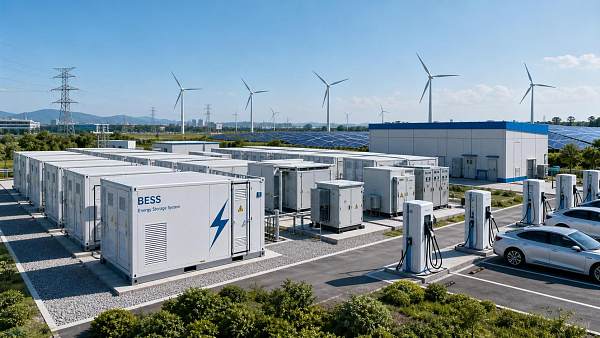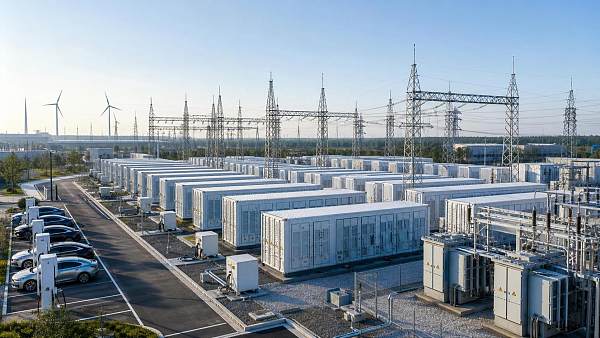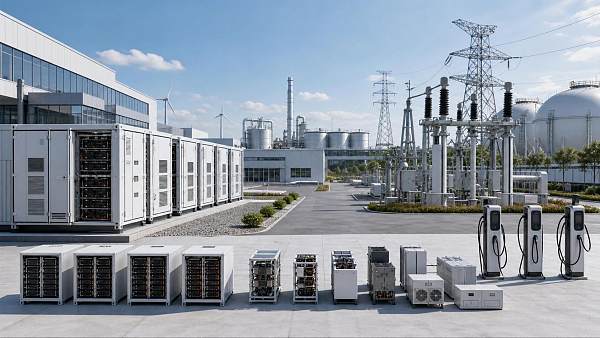
For financial approvers, grid-scale energy storage in 2026 is no longer just a resilience upgrade—it is a measurable capital strategy.
As power markets reward flexibility, peak shaving, and ancillary services, the ROI debate is shifting beyond simple payback.
The stronger question is practical: which value streams remain durable, financeable, and defensible under changing grid conditions?
This matters across the broader energy transition, where storage, transmission, charging, and hydrogen increasingly interact as one investment ecosystem.
Why grid-scale energy storage ROI looks different in 2026
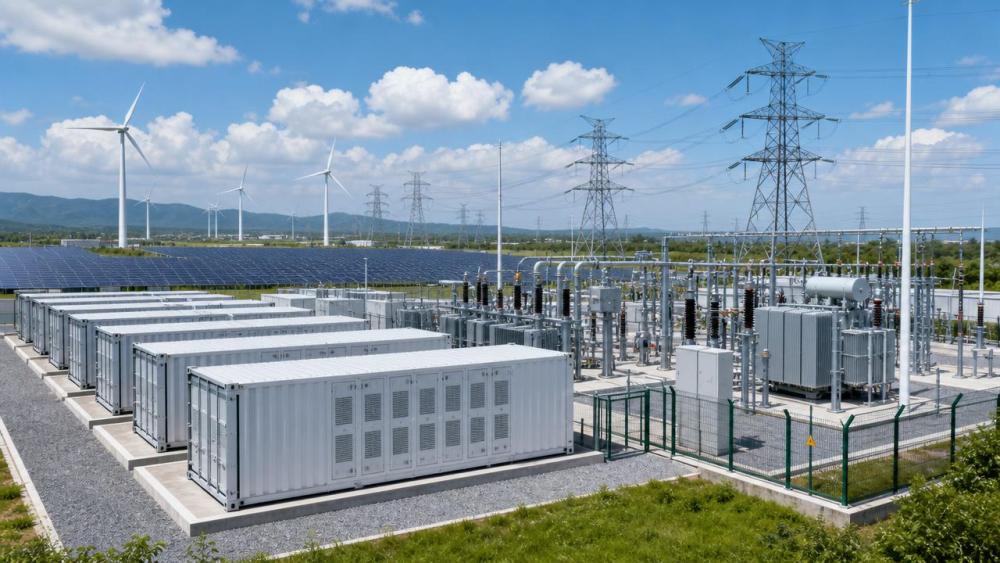
The 2026 market favors assets that can stack services instead of relying on a single arbitrage spread.
That shift changes how grid-scale energy storage is modeled, financed, and contracted.
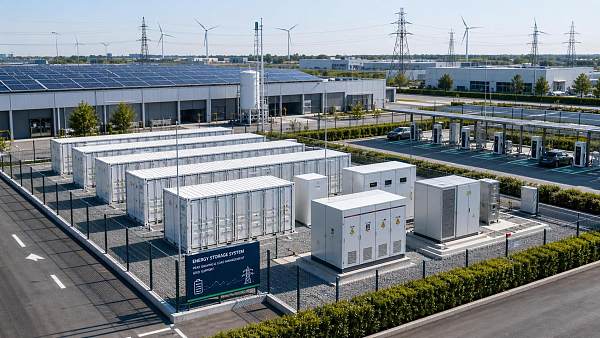
Battery energy storage systems now sit closer to core grid infrastructure than optional balancing tools.
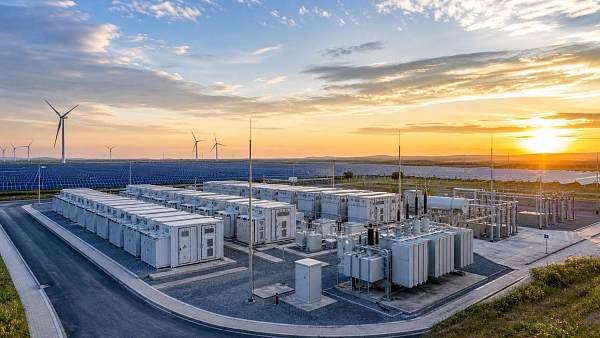
In many regions, solar and wind penetration has widened intraday price swings while increasing curtailment risk.
At the same time, grid operators increasingly pay for fast response, voltage support, congestion relief, and reserve capacity.
This means ROI depends less on battery hardware alone and more on dispatch strategy, interconnection quality, and market design.
For intelligence platforms like ESGS, that connection is central.
Storage economics now link thermodynamic control, PCS response, substation compatibility, and digital dispatch into one bankability equation.
The trend signals behind stronger grid-scale energy storage returns
Several signals explain why grid-scale energy storage has become a more investable asset class in 2026.
- Power price volatility is structurally higher in renewable-heavy markets.
- Grid constraints are increasing the value of local flexibility.
- Ancillary service markets are opening to faster, digitally controlled assets.
- Curtailment reduction is becoming a measurable revenue or avoided-cost benefit.
- Long-term capacity contracts are improving cash-flow visibility.
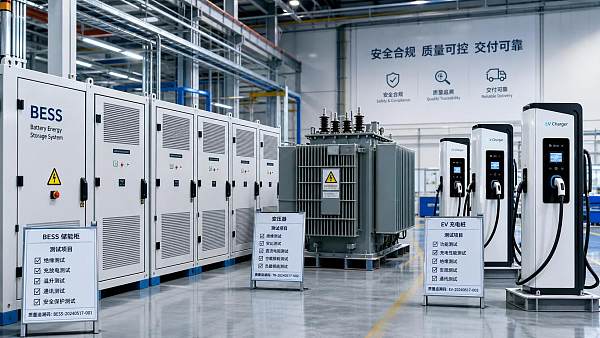
- Safety standards and performance testing are reducing perceived technical risk.
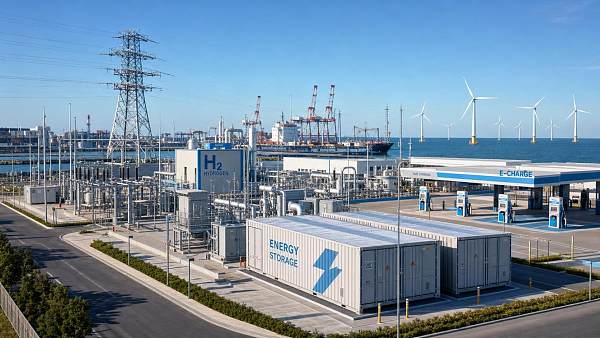
These trends support not only battery projects, but also transmission upgrades, EV charging hubs, and green hydrogen integration.
The result is a broader infrastructure thesis, not a narrow equipment purchase.
What is driving the economics
ROI in grid-scale energy storage now depends on stacked value streams
The most bankable grid-scale energy storage projects combine multiple revenue layers.
A project that only buys low and sells high is exposed to compression when competitors enter the same market.
A project that also sells reserves, ramping support, and local grid services is more resilient.
That is why revenue stacking has become the center of storage underwriting.
- Day-ahead and intraday arbitrage
- Primary and secondary frequency regulation
- Capacity market participation
- Resource adequacy contracts
- Renewable firming and shaping agreements
- Grid congestion relief and deferment value
Projects linked to transmission bottlenecks or renewable curtailment zones often produce better long-term economics.
This is especially true where UHV corridors, substations, and smart T&D upgrades already support power routing flexibility.
The hidden cost variables that shape real storage profitability
Headline capex tells only part of the story.
In grid-scale energy storage, actual ROI is heavily influenced by cost variables that are often underestimated early.
Key cost items to model carefully
- Degradation under real duty cycles, not laboratory assumptions
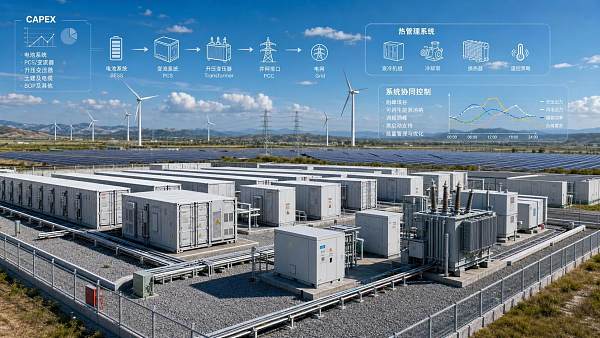
- Round-trip efficiency losses across battery, PCS, transformer, and HVAC systems
- Auxiliary consumption from liquid cooling and site controls
- Augmentation timing and replacement cell price uncertainty
- Fire protection, UL 9540A compliance, and insurance costs
- Interconnection delays and substation upgrade obligations
- Software licensing and market optimization platform fees
Thermal management deserves special attention.
Poor temperature uniformity accelerates aging, weakens availability, and increases safety exposure.
Advanced liquid cooling can therefore improve ROI by protecting usable capacity, not just by meeting safety expectations.
How the 2026 shift affects adjacent energy infrastructure decisions
The rise of grid-scale energy storage changes more than battery project screening.
It also affects planning across transmission, charging, and hydrogen systems.
Storage can reduce network stress near dense EV charging hubs.
It can also absorb renewable peaks before power is diverted to electrolyzers or long-distance transmission assets.
This creates a portfolio logic where flexible assets are coordinated rather than evaluated in isolation.
Digital dispatch platforms become critical because they translate hardware capability into monetizable behavior.
When a virtual power plant can orchestrate storage, chargers, and industrial loads together, the revenue pool becomes wider.
That broader orchestration increasingly defines competitive advantage.
What deserves the closest attention before approving a project
Before committing capital, several issues deserve sharper review than the usual capex and payback summary.
- Revenue quality: Separate merchant upside from contracted income.
- Location value: Test the node, congestion pattern, and curtailment history.
- Controls stack: Verify EMS, PCS, and market bidding integration.
- Safety framework: Check propagation testing, fire zoning, and response protocols.
- Lifecycle realism: Model degradation, augmentation, and end-of-warranty performance.
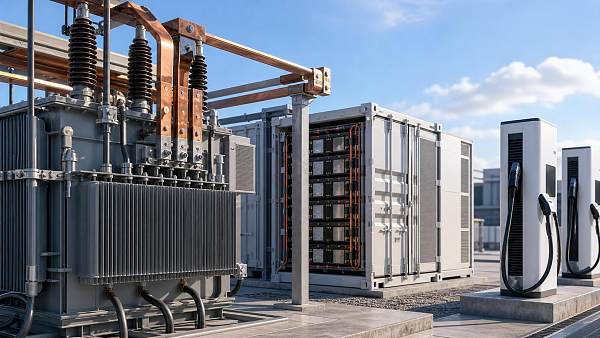
- Grid fit: Confirm transformer, switchgear, and interconnection readiness.
In 2026, the strongest projects are rarely the cheapest systems on paper.
They are the systems with the clearest operating envelope and the most defendable dispatch economics.
A practical framework for judging grid-scale energy storage bankability
What the next move should look like
A useful next step is to stop evaluating grid-scale energy storage as a standalone battery purchase.
Instead, assess it as a flexible infrastructure node inside a wider power ecosystem.
That means testing project returns against transmission capacity, renewable profile, charging demand, and dispatch software capability.
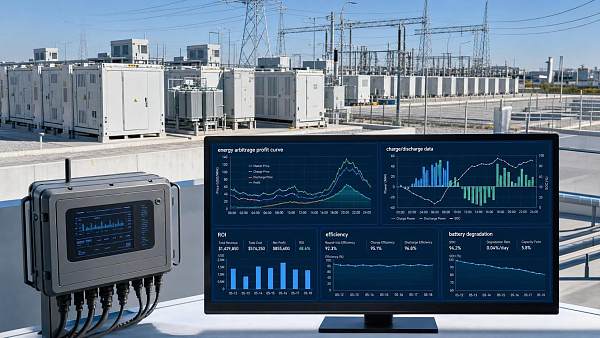
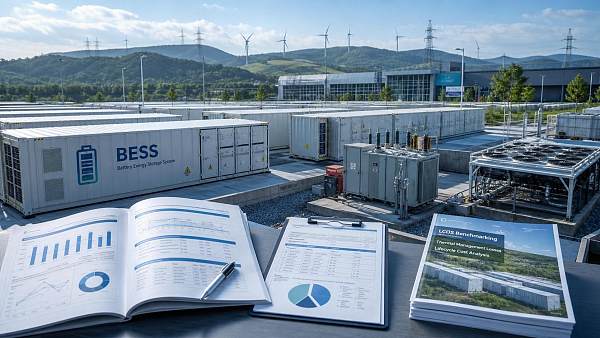
It also means using LCOS, revenue-stack sensitivity, and compliance screening together, not separately.
For 2026, the best grid-scale energy storage decisions will come from integrated intelligence.
Projects win when safety, market design, thermal discipline, and millisecond-level control are stitched into one investment case.
That is where durable ROI is being built.
Related News
 Grid Resilience Solution Price: Cost Drivers and ROI BenchmarksMr. Orion SterlingGrid resilience solution price explained: compare cost drivers, hidden risks, and ROI benchmarks to choose a safer, higher-value energy resilience investment.
 Millisecond Grid Control Cost: What Drives ROI in Fast-Response Storage?Mr. Orion SterlingMillisecond grid control cost directly affects ROI in fast-response storage. Discover what drives returns, lowers risk, and improves revenue, uptime, and bankability.
 Renewable Power Storage Solution Cost: What Drives CAPEX and PaybackMr. Orion SterlingRenewable power storage solution cost explained: discover what drives CAPEX, thermal design, PCS, safety compliance, and payback to make smarter, lower-risk storage investment decisions.
 Electrical Infrastructure Materials That Affect Lifecycle CostMr. Orion SterlingElectrical infrastructure materials directly shape lifecycle cost through losses, maintenance, downtime, and risk. Discover how smarter material choices protect ROI.
 Supplier Capability Evaluation Checklist for High-Risk Energy ProjectsMr. Orion SterlingSupplier capability evaluation checklist for high-risk energy projects. Learn how to assess safety, compliance, quality, and delivery resilience to reduce risk and improve sourcing decisions.
 Peak Shaving Solution Europe: When the ROI Works in 2026Mr. Orion SterlingPeak shaving solution Europe: discover when ROI works in 2026, which sites profit first, and how to compare BESS options for faster payback, lower grid costs, and scalable energy flexibility.
![]() Zero Carbon Grid Solution Integration: Key Design Choices and Cost RisksMr. Orion SterlingZero carbon grid solution integration explained: discover key design choices, hidden interface cost risks, and how storage, EV charging, transmission, and hydrogen affect project value.
Zero Carbon Grid Solution Integration: Key Design Choices and Cost RisksMr. Orion SterlingZero carbon grid solution integration explained: discover key design choices, hidden interface cost risks, and how storage, EV charging, transmission, and hydrogen affect project value. Energy Arbitrage Calculator: What Inputs Change ROI the Most?Mr. Orion SterlingEnergy arbitrage calculator insights: discover which inputs most affect ROI, from price spreads and efficiency to degradation, demand charges, and dispatch risk.
 Grid-Scale Storage Systems: Cost Drivers, Revenue Paths, and Payback RisksMr. Orion SterlingGrid-scale storage systems explained: uncover key cost drivers, revenue streams, and payback risks to evaluate projects smarter and invest with greater confidence.
 Energy Intelligence Platforms for Sourcing: What to Compare Before You BuyMr. Orion SterlingEnergy intelligence platforms for sourcing: compare supplier depth, technical compliance, market signals, and lifecycle cost tools before you buy to reduce risk and choose with confidence.
 LCOS Benchmarking Methods That Expose Hidden Storage CostsMr. Orion SterlingLCOS benchmarking methods that reveal hidden storage costs, from augmentation and thermal losses to downtime and compliance, helping buyers compare BESS projects with confidence.
 Zero-Carbon Infrastructure in Europe: What Will Shape Projects in 2026Mr. Orion SterlingZero-carbon infrastructure Europe enters a tougher 2026 phase shaped by storage, grids, hydrogen, and EV charging. Discover what makes projects bankable, compliant, and investment-ready.