Carbon-neutral transport is moving from ambition to operating reality. The core debate is no longer whether to decarbonize mobility, but how to do it at acceptable cost.
For infrastructure planners and investors, carbon-neutral transport links vehicles, power systems, storage, charging, and hydrogen into one economics question. Emissions impact matters, but timing, utilization, and grid resilience matter just as much.
That is why cost vs impact must be evaluated across the whole value chain. A cheaper asset can create expensive grid constraints, while a higher upfront investment can unlock superior lifetime returns.
Carbon-neutral transport is being redefined by infrastructure, not only by vehicles

The biggest shift in carbon-neutral transport is system thinking. Fleet electrification alone does not guarantee lower total cost, cleaner power, or operational stability.
Transport decarbonization now depends on charging density, BESS flexibility, transmission access, and fuel diversity. The vehicle is visible, but the enabling grid architecture determines actual business performance.
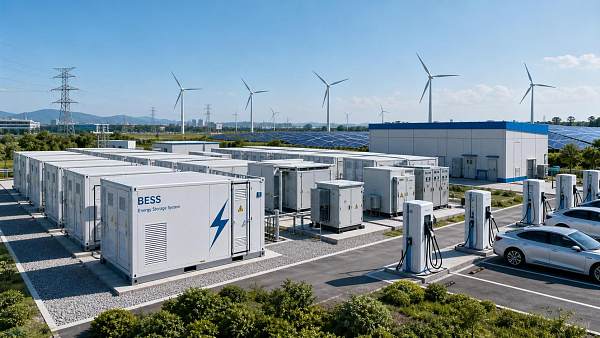
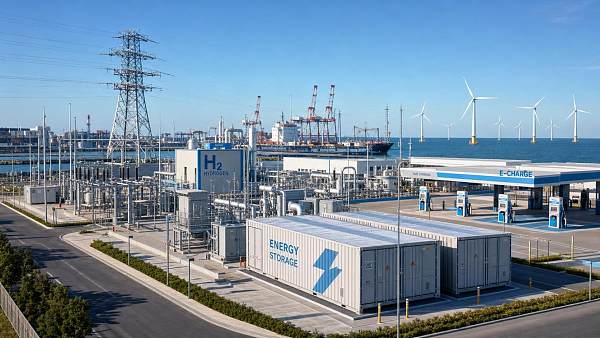
This is where ESGS brings useful perspective. Its focus on BESS containers, UHV power transmission, hydrogen electrolyzers, and mega EV charging systems reflects the real backbone of carbon-neutral transport.
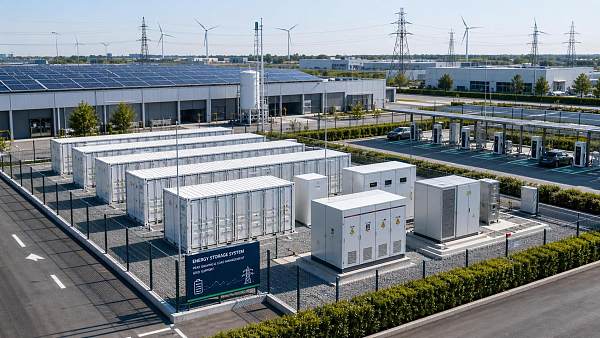
In practice, the market is moving from single-asset decisions to integrated energy hubs. Charging depots, swapping stations, distributed storage, and grid dispatch software are increasingly evaluated as one portfolio.
Several trend signals show why cost vs impact is now a board-level issue
Three signals stand out across the global market. First, transport electrification is growing faster than local distribution upgrades in many regions.
Second, power price volatility is making unmanaged charging more expensive. Third, decarbonization targets are forcing businesses to prove both emissions reduction and capital discipline.
These pressures make carbon-neutral transport a coordination challenge. Clean mobility now requires synchronized investment across hardware, software, and power sourcing.
The strongest projects are no longer judged only by installed capacity. They are judged by utilization, ramp response, uptime, safety compliance, and delivered carbon reduction per dollar invested.
The drivers behind this shift are clear and measurable
The real cost of carbon-neutral transport depends on where energy is buffered and controlled
Many evaluations overemphasize charger price or vehicle price. In reality, the economics of carbon-neutral transport often hinge on buffering and control layers.
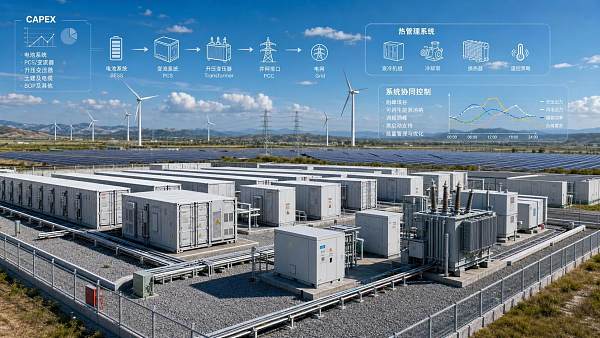
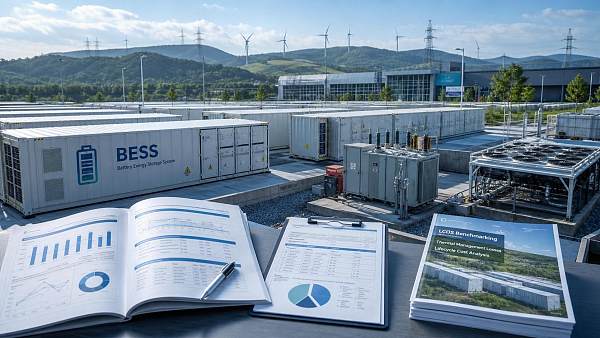
BESS containers are one of the most effective tools here. They absorb cheap or excess electricity, reduce peak demand, and support charging during constrained grid hours.
That lowers operating cost and improves emissions impact when charging is shifted toward cleaner generation windows. It also reduces the need for oversized grid connection in some cases.
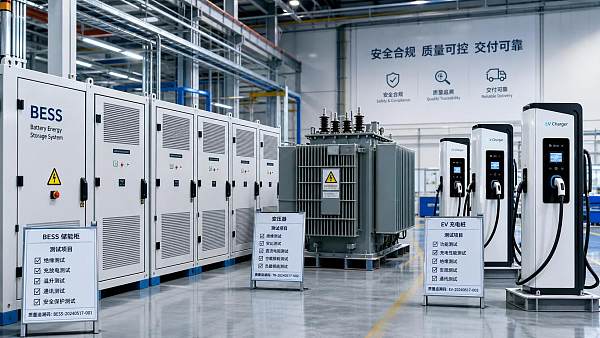
ESGS highlights this with its focus on advanced thermal management and PCS coordination. In large storage systems, safety and dispatch quality are not side issues; they define asset bankability.
Where major cost gaps usually appear
- Undersized local grids that trigger expensive reinforcement.
- Low charger utilization during early deployment stages.
- Poor load management that inflates demand charges.
- Storage systems selected without lifecycle and safety analysis.
- Renewable sourcing claims unsupported by hourly matching.
A stronger model combines charging, storage, and software dispatch. This improves load factor, protects uptime, and creates a more credible carbon-neutral transport pathway.
Impact differs across charging, hydrogen, and transmission pathways
Not every transport segment should follow the same decarbonization route. Carbon-neutral transport must be matched to duty cycle, route intensity, energy density, and network access.
Charging-led pathways
Battery-electric systems usually offer the strongest efficiency for urban fleets, depot charging, and predictable return-to-base operations. Their impact improves further when paired with BESS and V2G.
The cost challenge is concentrated in connection upgrades and peak loads. Smart scheduling and liquid-cooled high-voltage charging can improve throughput without uncontrolled grid stress.
Hydrogen-led pathways
Hydrogen has weaker round-trip efficiency, but it can fit heavy-duty, long-range, and remote applications. Carbon-neutral transport using hydrogen becomes more credible when green power would otherwise be curtailed.
ESGS correctly treats electrolyzers as conversion infrastructure, not standalone equipment. Their value depends on electricity price, operating profile, storage logistics, and end-use certainty.
Transmission-enabled pathways
UHV and HVDC networks are often missing from mobility discussions. Yet carbon-neutral transport cannot scale if clean electricity remains stranded far from demand centers.
Long-distance transmission reduces the mismatch between renewable generation zones and transport corridors. That can materially improve carbon intensity and lower delivered power cost over time.
The business impact extends beyond emissions reporting
The shift to carbon-neutral transport affects asset planning, site design, power contracting, and digital operations. It changes how energy risk is priced across the business.
A fragmented rollout can create stranded chargers, underused storage, or fuel systems with weak utilization. An integrated rollout can turn the same assets into revenue-supporting grid resources.
That is especially true when VPP logic is applied. Aggregated chargers and storage can support frequency response, demand optimization, and market participation beyond transport use alone.
Key areas that deserve close attention
- Total cost of ownership, not only purchase price.
- Interconnection timeline and upgrade responsibility.
- Storage LCOS and cycle strategy.
- Thermal safety, fire compliance, and export certification.
- Hourly carbon intensity of electricity supply.
- Utilization scenarios for chargers, swap stations, or hydrogen assets.
- Potential grid service revenue from flexible assets.
A practical decision framework makes carbon-neutral transport easier to evaluate
A useful framework compares cost, carbon impact, scalability, and operational resilience together. No single metric is enough.
This type of analysis helps avoid false trade-offs. The best carbon-neutral transport strategy is often neither the cheapest nor the most aggressive at the start.
It is the one that compounds value through safer storage, smarter charging, stronger grid access, and cleaner energy synchronization over time.
The next move is to connect mobility plans with grid intelligence
Carbon-neutral transport should be assessed as an energy systems investment. That means mapping route demand, charging behavior, grid limits, storage potential, and power quality together.
A smart next step is to build a phased scenario model. Compare charging-only, charging-plus-BESS, and hydrogen-linked cases under the same utilization and tariff assumptions.
Then test resilience, safety, and market upside, not only emissions claims. This approach reveals where carbon-neutral transport creates durable business value instead of symbolic progress.
With deep visibility into storage, transmission, charging, and electrolyzer systems, ESGS offers a practical lens for this transition. The winners will be those who treat clean transport as dispatchable infrastructure, not isolated equipment.
Related News
 Grid Resilience Solution Price: Cost Drivers and ROI BenchmarksMr. Orion SterlingGrid resilience solution price explained: compare cost drivers, hidden risks, and ROI benchmarks to choose a safer, higher-value energy resilience investment.
 Millisecond Grid Control Cost: What Drives ROI in Fast-Response Storage?Mr. Orion SterlingMillisecond grid control cost directly affects ROI in fast-response storage. Discover what drives returns, lowers risk, and improves revenue, uptime, and bankability.
 Renewable Power Storage Solution Cost: What Drives CAPEX and PaybackMr. Orion SterlingRenewable power storage solution cost explained: discover what drives CAPEX, thermal design, PCS, safety compliance, and payback to make smarter, lower-risk storage investment decisions.
 Electrical Infrastructure Materials That Affect Lifecycle CostMr. Orion SterlingElectrical infrastructure materials directly shape lifecycle cost through losses, maintenance, downtime, and risk. Discover how smarter material choices protect ROI.
 Supplier Capability Evaluation Checklist for High-Risk Energy ProjectsMr. Orion SterlingSupplier capability evaluation checklist for high-risk energy projects. Learn how to assess safety, compliance, quality, and delivery resilience to reduce risk and improve sourcing decisions.
 Peak Shaving Solution Europe: When the ROI Works in 2026Mr. Orion SterlingPeak shaving solution Europe: discover when ROI works in 2026, which sites profit first, and how to compare BESS options for faster payback, lower grid costs, and scalable energy flexibility.
![]() Zero Carbon Grid Solution Integration: Key Design Choices and Cost RisksMr. Orion SterlingZero carbon grid solution integration explained: discover key design choices, hidden interface cost risks, and how storage, EV charging, transmission, and hydrogen affect project value.
Zero Carbon Grid Solution Integration: Key Design Choices and Cost RisksMr. Orion SterlingZero carbon grid solution integration explained: discover key design choices, hidden interface cost risks, and how storage, EV charging, transmission, and hydrogen affect project value. Energy Arbitrage Calculator: What Inputs Change ROI the Most?Mr. Orion SterlingEnergy arbitrage calculator insights: discover which inputs most affect ROI, from price spreads and efficiency to degradation, demand charges, and dispatch risk.
 Grid-Scale Storage Systems: Cost Drivers, Revenue Paths, and Payback RisksMr. Orion SterlingGrid-scale storage systems explained: uncover key cost drivers, revenue streams, and payback risks to evaluate projects smarter and invest with greater confidence.
 Energy Intelligence Platforms for Sourcing: What to Compare Before You BuyMr. Orion SterlingEnergy intelligence platforms for sourcing: compare supplier depth, technical compliance, market signals, and lifecycle cost tools before you buy to reduce risk and choose with confidence.
 LCOS Benchmarking Methods That Expose Hidden Storage CostsMr. Orion SterlingLCOS benchmarking methods that reveal hidden storage costs, from augmentation and thermal losses to downtime and compliance, helping buyers compare BESS projects with confidence.
 Zero-Carbon Infrastructure in Europe: What Will Shape Projects in 2026Mr. Orion SterlingZero-carbon infrastructure Europe enters a tougher 2026 phase shaped by storage, grids, hydrogen, and EV charging. Discover what makes projects bankable, compliant, and investment-ready.