LCOS Analysis: What Really Drives Battery Project ROI?
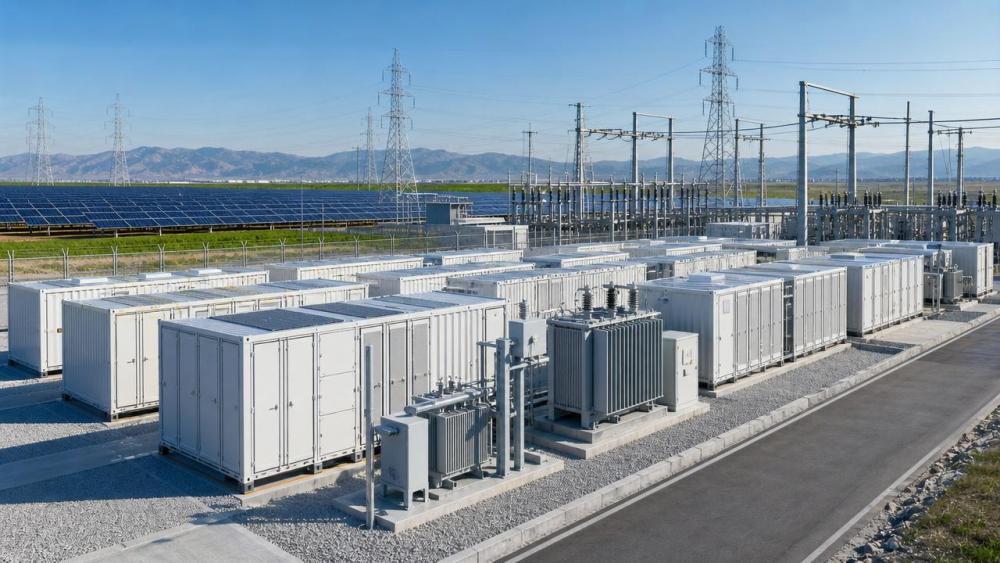
For financial decision-makers, LCOS analysis is not just an engineering shortcut. It is one of the most practical tools for testing project bankability and return durability.
At first glance, many battery projects look attractive because capex headlines are falling. In practice, ROI depends on far more than the purchase price of cells and containers.
A strong LCOS analysis shows what each delivered megawatt-hour truly costs over the full life of the asset. That changes investment discussions quickly.
It also helps compare project designs, warranty structures, dispatch strategies, and revenue assumptions on the same economic basis.
In utility-scale storage, that clarity matters. A project with lower upfront cost can still produce a worse outcome if utilization stays weak or augmentation is poorly timed.
That is why LCOS analysis has become central in battery procurement, storage financing, and portfolio screening.
What LCOS Analysis Actually Measures
In simple terms, LCOS analysis calculates the lifetime cost of every usable unit of discharged energy.
It usually includes initial capex, replacement costs, operating expenses, charging costs, performance degradation, and the cost of capital.
The denominator is just as important. It is not nameplate capacity. It is delivered energy after accounting for efficiency losses, availability, and degradation.
This is where many surface-level project models fail. They assume ideal cycling, stable performance, and steady market access year after year.
A useful LCOS analysis does the opposite. It pressures each assumption and shows how fragile or resilient the economics really are.
- How much energy is actually delivered over time
- How much that energy costs after all losses
- How financing and replacement timing affect returns
- How sensitive the project is to operational underperformance
The Cost Drivers Everyone Sees First
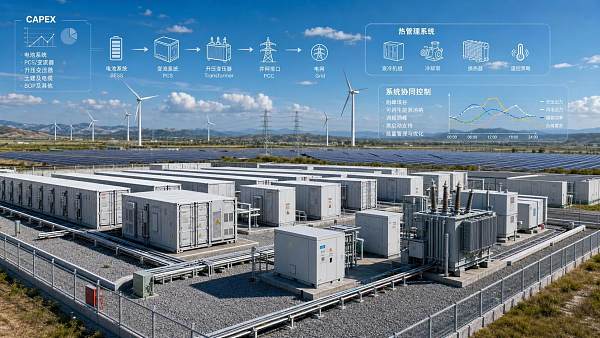
Capex still matters, of course. Battery racks, PCS, EMS, thermal management, transformers, land, EPC, and interconnection shape the initial investment case.
But the most valuable LCOS analysis goes deeper than equipment quotes. It asks whether the system architecture supports stable output and predictable lifecycle cost.
For example, advanced liquid cooling may raise upfront cost. Yet better temperature uniformity can protect cycle life, reduce failure risk, and improve usable throughput.
That can lower LCOS more effectively than negotiating a small cell price discount.
The same logic applies to fire protection, controls, and grid compliance. If downtime rises or dispatch flexibility falls, project ROI drops faster than many models suggest.
Look beyond headline capex
- Cell chemistry influences degradation curve and augmentation needs
- Thermal design affects safety, efficiency, and warranty confidence
- PCS sizing shapes round-trip efficiency and dispatch flexibility
- Balance-of-plant quality impacts availability and maintenance cost
The Hidden ROI Engine: Utilization and Revenue Quality
Here is the stronger signal in most battery projects. Utilization often moves economics more than modest capex changes.
A battery designed for daily cycling but dispatched irregularly will produce a weak LCOS analysis, even if procurement pricing looked excellent.
On the other hand, a project with secure revenue stacking can tolerate a higher capital base because delivered value stays consistent.
This is especially relevant in peak-valley arbitrage, ancillary services, capacity contracts, and tolling arrangements.
A serious LCOS analysis should test not only expected cycles per year, but also the certainty of those cycles.
That means asking whether market rules, grid congestion, curtailment patterns, and offtake structures support sustained asset use.
Questions worth asking early
- Is the battery contracted, merchant, or hybrid?
- How many cycles are realistic, not theoretical?
- What percentage of revenue is fixed or indexed?
- How exposed is the project to rule changes?
Cycle Life, Degradation, and Augmentation Timing
Every storage investor hears about cycle life. Fewer models fully connect it to cash flow timing.
Battery degradation does not only reduce energy capacity. It can also weaken power performance, market eligibility, and contract compliance.
That is why LCOS analysis must include an augmentation strategy. Waiting too long may save short-term cash but damage long-term revenue capture.
Adding capacity too early can also hurt returns if future module prices fall sharply.
The best answer is rarely generic. It depends on contract shape, dispatch intensity, technology mix, and replacement logistics.
In real procurement reviews, this is where a detailed LCOS analysis often separates disciplined owners from optimistic buyers.
Why augmentation can change the investment case
- It preserves contractable capacity at critical years
- It supports better revenue continuity
- It shifts maintenance and financing needs over time
- It changes residual value assumptions at exit
Efficiency, Availability, and Dispatch Performance
Round-trip efficiency looks simple on paper. In operations, it is shaped by temperature control, inverter loading, auxiliary power demand, and site conditions.
A few points of efficiency loss may not sound dramatic. Over thousands of cycles, they materially change delivered energy and charging cost.
Availability is just as critical. Forced outages, software instability, and slow fault recovery can turn a promising asset into an underperforming one.
This also means contract terms deserve close attention. Guaranteed availability, liquidated damages, and performance testing standards should support the modeled LCOS analysis.
If not, the spreadsheet may be more aggressive than the legal structure behind it.
Financing Structure Can Reshape LCOS Analysis
This point is often underestimated. Two technically similar projects can show very different economics because their financing structures are not the same.
Cost of debt, tenor, grace periods, equity return thresholds, and tax treatment all influence the final LCOS analysis.
So does the timing mismatch between early capex and later revenue ramp-up.
In markets with revenue volatility, lenders also care about dispatch predictability and merchant exposure.
That pushes project teams to connect technical modeling with credit logic, not treat them as separate workstreams.
From a procurement and cost perspective, the lowest bid is rarely the whole story. Bankable structure can be worth more than a nominal equipment saving.
A Practical LCOS Analysis Checklist for Battery Investment Reviews
In actual business reviews, a practical checklist keeps decision-making grounded. It also reduces the risk of approving a model built on unrealistic optimism.
- Check whether throughput assumptions match local market dispatch reality
- Test degradation using realistic temperature and operating profiles
- Model augmentation timing under several price decline scenarios
- Separate fixed revenue from merchant upside
- Confirm warranty terms align with guaranteed project output
- Stress-test availability and downtime events
- Include auxiliary load and charging energy cost in full
- Review financing sensitivity alongside technical sensitivity
This kind of LCOS analysis does more than compare suppliers. It helps reveal which design choices protect long-term value under real operating pressure.
Final Take: ROI Follows Throughput Quality, Not Just Purchase Price
The most reliable conclusion is straightforward. Battery project ROI is driven by lifetime delivered value, not by capex alone.
That is why LCOS analysis remains the clearest bridge between engineering reality and capital discipline.
When utilization is credible, degradation is modeled honestly, augmentation is planned well, and financing is aligned, storage economics become far easier to trust.
From a procurement and cost standpoint, better questions usually produce better projects.
Before approving any battery investment, use LCOS analysis to challenge assumptions, compare scenarios, and identify the real drivers of durable returns.
Related News
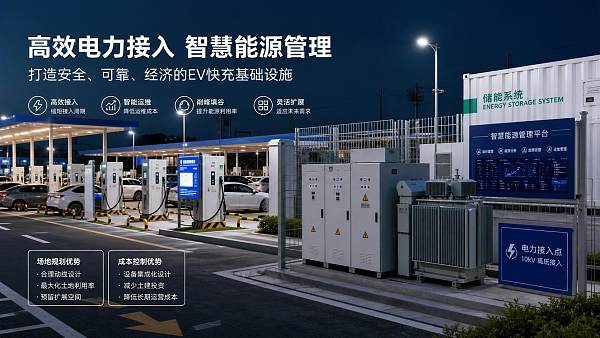
 EV Charging Infrastructure Projects: Cost Risks and Site Planning BasicsMr. Orion SterlingEV charging infrastructure projects succeed when costs, power access, and site planning are validated early. Learn practical ways to reduce budget risk and build scalable, profitable charging sites.
 Grid Resilience Solution Price: Cost Drivers and ROI BenchmarksMr. Orion SterlingGrid resilience solution price explained: compare cost drivers, hidden risks, and ROI benchmarks to choose a safer, higher-value energy resilience investment.
 Millisecond Grid Control Cost: What Drives ROI in Fast-Response Storage?Mr. Orion SterlingMillisecond grid control cost directly affects ROI in fast-response storage. Discover what drives returns, lowers risk, and improves revenue, uptime, and bankability.
 Renewable Power Storage Solution Cost: What Drives CAPEX and PaybackMr. Orion SterlingRenewable power storage solution cost explained: discover what drives CAPEX, thermal design, PCS, safety compliance, and payback to make smarter, lower-risk storage investment decisions.
 Electrical Infrastructure Materials That Affect Lifecycle CostMr. Orion SterlingElectrical infrastructure materials directly shape lifecycle cost through losses, maintenance, downtime, and risk. Discover how smarter material choices protect ROI.
 Supplier Capability Evaluation Checklist for High-Risk Energy ProjectsMr. Orion SterlingSupplier capability evaluation checklist for high-risk energy projects. Learn how to assess safety, compliance, quality, and delivery resilience to reduce risk and improve sourcing decisions.
 Peak Shaving Solution Europe: When the ROI Works in 2026Mr. Orion SterlingPeak shaving solution Europe: discover when ROI works in 2026, which sites profit first, and how to compare BESS options for faster payback, lower grid costs, and scalable energy flexibility.
![]() Zero Carbon Grid Solution Integration: Key Design Choices and Cost RisksMr. Orion SterlingZero carbon grid solution integration explained: discover key design choices, hidden interface cost risks, and how storage, EV charging, transmission, and hydrogen affect project value.
Zero Carbon Grid Solution Integration: Key Design Choices and Cost RisksMr. Orion SterlingZero carbon grid solution integration explained: discover key design choices, hidden interface cost risks, and how storage, EV charging, transmission, and hydrogen affect project value. Energy Arbitrage Calculator: What Inputs Change ROI the Most?Mr. Orion SterlingEnergy arbitrage calculator insights: discover which inputs most affect ROI, from price spreads and efficiency to degradation, demand charges, and dispatch risk.
 Grid-Scale Storage Systems: Cost Drivers, Revenue Paths, and Payback RisksMr. Orion SterlingGrid-scale storage systems explained: uncover key cost drivers, revenue streams, and payback risks to evaluate projects smarter and invest with greater confidence.
 Energy Intelligence Platforms for Sourcing: What to Compare Before You BuyMr. Orion SterlingEnergy intelligence platforms for sourcing: compare supplier depth, technical compliance, market signals, and lifecycle cost tools before you buy to reduce risk and choose with confidence.
 LCOS Benchmarking Methods That Expose Hidden Storage CostsMr. Orion SterlingLCOS benchmarking methods that reveal hidden storage costs, from augmentation and thermal losses to downtime and compliance, helping buyers compare BESS projects with confidence.