When Energy Transition Consulting Delivers Measurable ROI

For many companies, the energy transition feels urgent, expensive, and full of moving parts.
That is exactly why energy transition consulting matters only when it produces measurable outcomes.
A polished roadmap is not enough.
Decision-makers need lower operating costs, fewer technical mistakes, stronger resilience, and faster payback from infrastructure investments.
In practice, the strongest energy transition consulting connects strategy with asset-level economics.
It translates grid complexity into business cases that can be tested, financed, and executed.
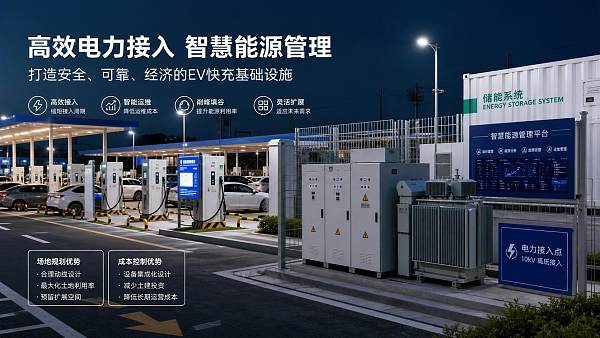
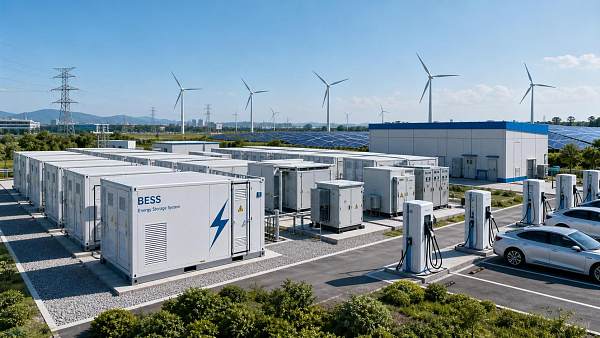
That is especially important in sectors shaped by BESS containers, smart grid equipment, UHV transmission, EV charging networks, and hydrogen electrolyzers.
Each system can create value.
Each system can also lock in costly errors if chosen without the right intelligence.
From a procurement and cost perspective, the question is simple.
How does energy transition consulting move from advice to measurable ROI?
Why ROI Has Become the Core Test
Recent market shifts make capital discipline much sharper.
Power prices fluctuate.
Grid access rules evolve.
Technology cycles shorten.
A project that looked attractive on paper two years ago may now underperform.
That is why energy transition consulting is increasingly evaluated like an investment tool, not a strategy presentation.
The best consulting work identifies where value is actually created.
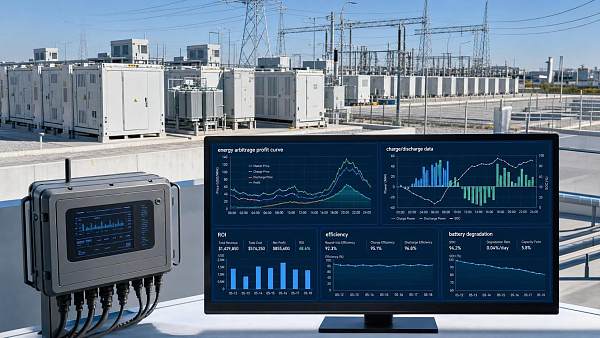
- Peak-valley arbitrage for grid-scale storage
- Capacity leasing and ancillary service revenues
- Reduced curtailment of wind and solar assets
- Lower thermal losses in long-distance transmission
- Improved charger utilization and site profitability
- Better hydrogen production economics from surplus power
In other words, energy transition consulting delivers ROI when it turns technical optionality into quantified decisions.
Where Energy Transition Consulting Creates Financial Value
The value usually appears in four areas.
1. Better asset selection
A cheaper component is not always the lower-cost option.
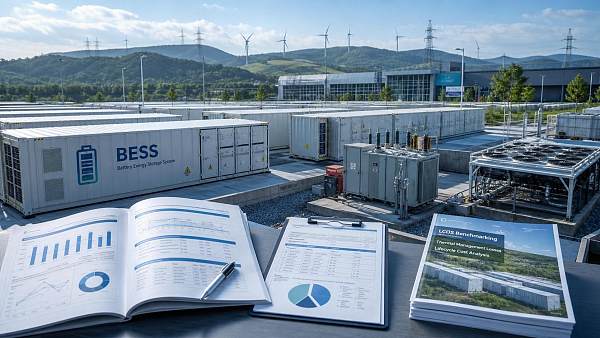
For BESS containers, thermal management quality, cycle life, fire compliance, and PCS performance shape lifetime returns.
Strong energy transition consulting compares total lifecycle value, not just bid price.
2. Smarter system sizing
Oversized infrastructure destroys returns.
Undersized infrastructure limits revenue.
Whether evaluating chargers, electrolyzers, or storage duration, good consulting matches technical scale with demand profiles and tariff structures.
3. Lower compliance and safety risk
Risk is expensive.
A delayed permit, failed certification, or thermal runaway incident can wipe out projected margins.
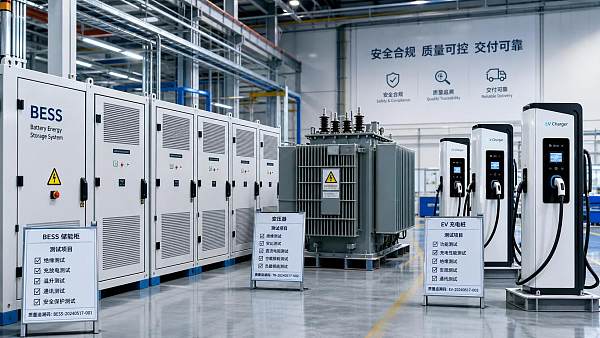
This is where energy transition consulting linked to standards such as UL 9540A becomes commercially critical.
4. Higher operational intelligence
Once assets go live, dispatch quality determines real returns.
Millisecond-level power flow control, VPP orchestration, and digital twin modeling improve utilization and reduce avoidable losses.
That is where strategy becomes operating profit.
How to Evaluate Consulting Across Key Infrastructure Choices
Not all projects need the same consulting lens.
The procurement process should reflect where the economics are most sensitive.
This is one reason specialized intelligence platforms matter.
ESGS, for example, follows the systems that sit at the center of modern power flexibility.
That includes battery thermodynamic management, grid routing equipment, ultra-high-voltage transmission, EV charging hubs, and hydrogen conversion assets.
The deeper the technical stitching, the more realistic the ROI model becomes.
What Strong Energy Transition Consulting Looks Like in Procurement
In actual procurement, measurable ROI starts before vendor selection.
A useful consulting partner should improve how requirements are written, compared, and negotiated.
- Define the commercial objective first, such as cost reduction, resilience, or new revenue.
- Translate that objective into technical criteria tied to measurable performance.
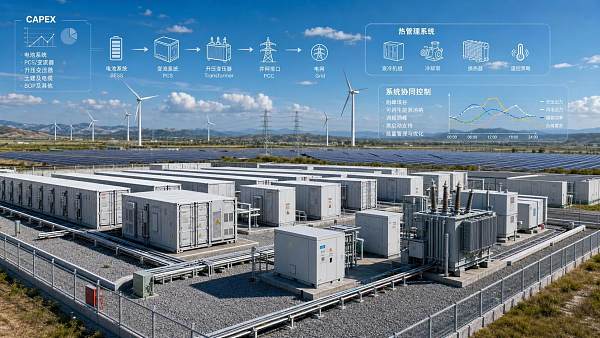
- Model total cost of ownership, not only initial CAPEX.
- Stress-test assumptions using scenarios for tariffs, utilization, and regulation.
- Filter suppliers through compliance, interoperability, and operating reliability.
- Build a post-award operating plan that protects projected returns.
This process sounds straightforward.
Yet many projects still fail because the economic model and technical design are separated too early.
Effective energy transition consulting keeps them connected from sourcing to operation.
Common Mistakes That Destroy ROI
Several patterns show up repeatedly.
- Buying on lowest price without checking lifecycle efficiency
- Ignoring dispatch software and focusing only on hardware
- Using generic storage assumptions instead of site-specific load data
- Overlooking fire testing, export standards, or local grid codes
- Treating EV charging, storage, and V2G as isolated systems
- Launching hydrogen projects without low-cost power certainty
These mistakes are costly because they often surface late.
By then, redesigns, delays, or stranded assets become real threats.
That is another reason energy transition consulting should be measured by risk avoided as much as revenue gained.
How to Judge Whether a Consulting Partner Will Deliver
A capable partner should show more than industry familiarity.
It should combine strategic judgment with engineering depth and commercial realism.
Look for a team that can explain:
- How ROI is modeled at asset and portfolio level
- Which assumptions have the highest downside risk
- What operating data is needed before procurement starts
- How safety and compliance affect bankability
- Where software, controls, and digital twins improve returns
- How changing regulation alters the business case over time
This cross-disciplinary capability is where ESGS offers a useful reference point.
Its focus on safety analysis, dispatch science, and storage economics reflects the real drivers behind modern energy transition consulting.
In fast-moving infrastructure markets, fragmented advice is rarely enough.
The Practical Bottom Line
The strongest energy transition consulting does not sell abstraction.
It helps organizations buy and operate infrastructure with better confidence and better returns.
That means choosing the right storage architecture, the right grid equipment, the right charging strategy, or the right hydrogen timing.
It also means understanding that measurable ROI comes from the full system, not a single device.
As the push toward carbon-neutral transport and zero-carbon grids accelerates, procurement decisions will carry larger financial consequences.
So the real question is no longer whether to invest.
It is whether the chosen energy transition consulting can convert complexity into clear, bankable results.
If the answer is yes, ROI becomes visible in lower risk, stronger resilience, and better long-term asset performance.
That is the standard worth applying before the next major infrastructure decision moves forward.
Related News
 EV Charging Infrastructure Projects: Cost Risks and Site Planning BasicsMr. Orion SterlingEV charging infrastructure projects succeed when costs, power access, and site planning are validated early. Learn practical ways to reduce budget risk and build scalable, profitable charging sites.
 Grid Resilience Solution Price: Cost Drivers and ROI BenchmarksMr. Orion SterlingGrid resilience solution price explained: compare cost drivers, hidden risks, and ROI benchmarks to choose a safer, higher-value energy resilience investment.
 Millisecond Grid Control Cost: What Drives ROI in Fast-Response Storage?Mr. Orion SterlingMillisecond grid control cost directly affects ROI in fast-response storage. Discover what drives returns, lowers risk, and improves revenue, uptime, and bankability.
 Renewable Power Storage Solution Cost: What Drives CAPEX and PaybackMr. Orion SterlingRenewable power storage solution cost explained: discover what drives CAPEX, thermal design, PCS, safety compliance, and payback to make smarter, lower-risk storage investment decisions.
 Electrical Infrastructure Materials That Affect Lifecycle CostMr. Orion SterlingElectrical infrastructure materials directly shape lifecycle cost through losses, maintenance, downtime, and risk. Discover how smarter material choices protect ROI.
 Supplier Capability Evaluation Checklist for High-Risk Energy ProjectsMr. Orion SterlingSupplier capability evaluation checklist for high-risk energy projects. Learn how to assess safety, compliance, quality, and delivery resilience to reduce risk and improve sourcing decisions.
 Peak Shaving Solution Europe: When the ROI Works in 2026Mr. Orion SterlingPeak shaving solution Europe: discover when ROI works in 2026, which sites profit first, and how to compare BESS options for faster payback, lower grid costs, and scalable energy flexibility.
![]() Zero Carbon Grid Solution Integration: Key Design Choices and Cost RisksMr. Orion SterlingZero carbon grid solution integration explained: discover key design choices, hidden interface cost risks, and how storage, EV charging, transmission, and hydrogen affect project value.
Zero Carbon Grid Solution Integration: Key Design Choices and Cost RisksMr. Orion SterlingZero carbon grid solution integration explained: discover key design choices, hidden interface cost risks, and how storage, EV charging, transmission, and hydrogen affect project value. Energy Arbitrage Calculator: What Inputs Change ROI the Most?Mr. Orion SterlingEnergy arbitrage calculator insights: discover which inputs most affect ROI, from price spreads and efficiency to degradation, demand charges, and dispatch risk.
 Grid-Scale Storage Systems: Cost Drivers, Revenue Paths, and Payback RisksMr. Orion SterlingGrid-scale storage systems explained: uncover key cost drivers, revenue streams, and payback risks to evaluate projects smarter and invest with greater confidence.
 Energy Intelligence Platforms for Sourcing: What to Compare Before You BuyMr. Orion SterlingEnergy intelligence platforms for sourcing: compare supplier depth, technical compliance, market signals, and lifecycle cost tools before you buy to reduce risk and choose with confidence.
 LCOS Benchmarking Methods That Expose Hidden Storage CostsMr. Orion SterlingLCOS benchmarking methods that reveal hidden storage costs, from augmentation and thermal losses to downtime and compliance, helping buyers compare BESS projects with confidence.