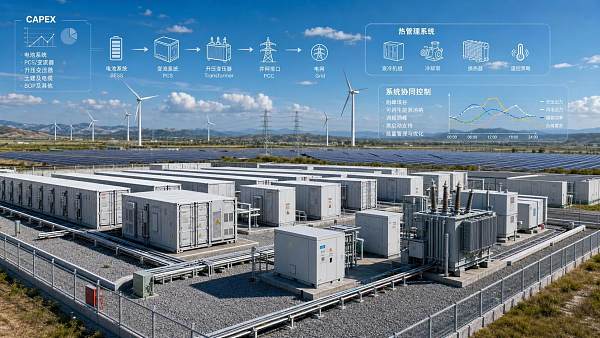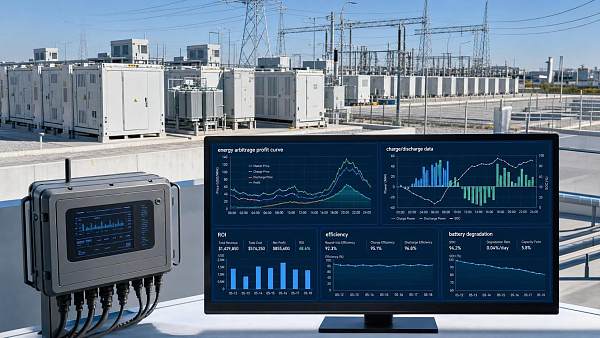
For finance decision-makers, rising demand charges can quietly erode project margins and operating cash flow. The right peak shaving strategies help reduce tariff exposure, improve asset utilization, and strengthen ROI across storage, charging, and grid-intensive operations. This article explores practical ways to align load management, BESS deployment, and power flow optimization with both cost control and long-term capital efficiency.
What are peak shaving strategies, and why do demand charges matter so much?
Peak shaving strategies are methods that reduce short periods of very high electricity demand. Utilities often bill these peaks separately from energy consumption.
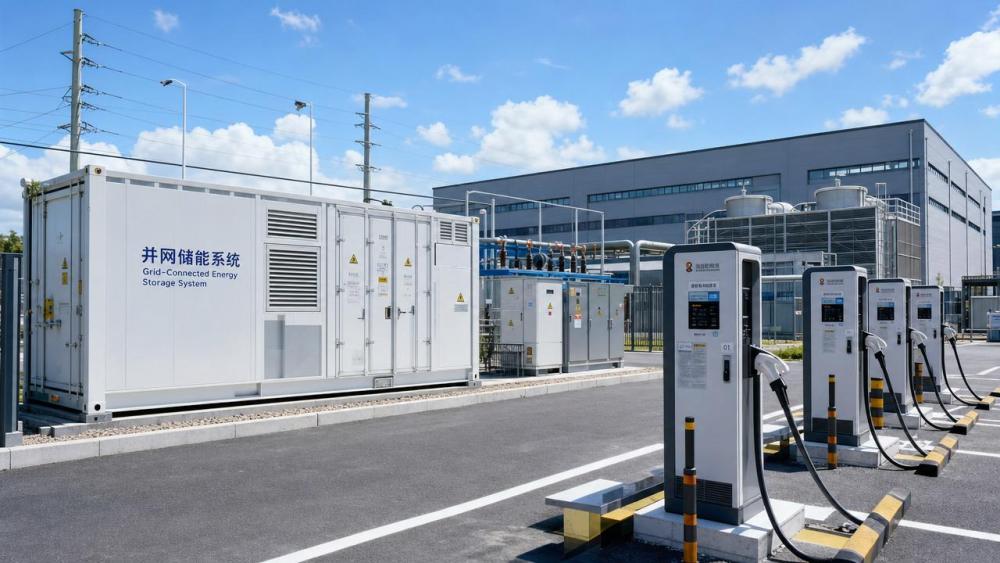
A facility may use moderate energy overall, yet still pay heavily for a few intense intervals. That is why demand charges can distort the real cost picture.
Effective peak shaving strategies focus on timing, flexibility, and control. They flatten the load profile instead of only reducing total kilowatt-hours.
In grid-connected industries, demand peaks often come from simultaneous equipment startup, fast EV charging, cooling surges, or production shifts.
For energy-intensive sites, one unmanaged spike can trigger a higher monthly bill. In some tariffs, a single fifteen-minute interval matters greatly.
That makes peak shaving strategies financially important for BESS containers, charging hubs, data-rich campuses, and smart grid interface assets.
From the ESGS perspective, peak shaving is not only a billing tactic. It is also a power flow discipline that supports grid stability and asset efficiency.
Which operations benefit most from peak shaving strategies?
Peak shaving strategies work best where loads are concentrated, cyclical, or predictable. The more visible the peak pattern, the stronger the opportunity.
High-potential application scenarios
- Grid-scale BESS projects supporting tariff management and capacity smoothing
- Mega EV charging and swapping stations with clustered fast-charging peaks
- Industrial facilities with motors, compressors, furnaces, or process cooling spikes
- Commercial campuses with HVAC-driven seasonal demand peaks
- Ports, logistics parks, and transport depots with synchronized equipment usage
- Hybrid renewable sites that need firm output during constrained grid intervals
The strongest candidates usually have interval meter data, recurring load peaks, and electricity tariffs with clear demand charge components.
Sites with electrification plans also benefit early. New chargers, heat pumps, electrolyzers, or digital infrastructure can create avoidable peak costs.
Peak shaving strategies become even more valuable when expansion is cheaper than a transformer or service upgrade delay.
For example, an EV charging hub can use storage to discharge during simultaneous charging events. That prevents a sharp import spike from the grid.
Similarly, hydrogen electrolyzer operations can be scheduled around low-demand windows, while BESS supports local balancing during constrained periods.
How do peak shaving strategies actually work in practice?
Most peak shaving strategies combine forecasting, controls, and flexible assets. The objective is to cap demand before the billing meter records a spike.
Common operating methods
- Load shifting moves noncritical consumption to lower-demand periods.
- Battery discharge supplies power during short peaks.
- Demand response temporarily curtails selected equipment.
- Smart charging staggers EV sessions or lowers charging rates.
- On-site generation offsets grid import during critical intervals.
The best systems use predictive control. They do not wait for the peak to happen. They anticipate it from weather, schedules, and live load data.
A BESS container is especially effective because it reacts in milliseconds. That speed matters when several high-power assets ramp together.
In advanced deployments, peak shaving strategies are integrated with PCS controls, EMS software, and tariff logic. This improves precision and repeatability.
At larger sites, digital twins can simulate demand peaks before implementation. That helps validate dispatch settings, cycle counts, and expected savings.
Where V2G is available, EV fleets may also support peak shaving strategies. Vehicles become distributed storage resources during selected windows.
How should you choose between BESS, operational controls, and hybrid approaches?
The right choice depends on peak duration, frequency, tariff design, and operational tolerance. Not every demand problem needs a battery-first solution.
Practical comparison table
Hybrid peak shaving strategies usually perform best in real operations. They reduce battery stress while preserving savings and operational continuity.
For example, pre-cooling, charger scheduling, and limited BESS discharge can jointly cap peaks at lower lifecycle cost.
This matters because battery economics are not only about capex. They also depend on degradation, auxiliary loads, and dispatch discipline.
What mistakes weaken peak shaving strategies or reduce savings?
Many projects underperform because they treat peak shaving as a simple battery sizing exercise. In reality, tariff structure and control logic are decisive.
Common pitfalls to avoid
- Using monthly average data instead of interval demand data
- Ignoring ratchet clauses or seasonal tariff rules
- Oversizing storage for rare events
- Undersizing inverter power for rapid peaks
- Forgetting HVAC and thermal management parasitic loads
- Not aligning controls with production or charging behavior
Another mistake is optimizing only for today’s tariff. Electrification growth can change the site peak shape within a short planning horizon.
Safety and compliance also matter. BESS-based peak shaving strategies need strong thermal management, fire testing awareness, and export-standard readiness.
In mission-critical environments, resilience must be considered alongside savings. A battery reserved for backup power cannot always be fully dispatched.
Good projects define dispatch priorities clearly. Cost control, power quality, uptime, and reserve obligations must not conflict in the control stack.
How do you evaluate ROI, timeline, and next steps for peak shaving strategies?
Peak shaving strategies should be evaluated with financial and technical metrics together. Simple payback alone rarely captures the full value stack.
Key evaluation factors
- Demand charge reduction potential by month and season
- Battery cycle life impact and LCOS implications
- Deferred grid upgrade or transformer expansion value
- Revenue stacking from ancillary services or arbitrage
- Software, interconnection, and compliance costs
A fast screening study often starts with twelve months of interval data. That reveals the number, height, and duration of demand peaks.
Next, model several dispatch cases. Compare operational-only controls, storage-assisted controls, and hybrid peak shaving strategies under actual tariff rules.
Then test sensitivity. Savings may change with weather, charging growth, production expansion, and equipment downtime.
For complex energy assets, ESGS-aligned analysis links battery thermodynamics, PCS behavior, and grid power flow control into one financial view.
That integrated approach is especially useful when projects combine BESS containers, UHV-linked power systems, chargers, and flexible electrolysis loads.
Quick FAQ table: which question should be answered first?
The most effective peak shaving strategies begin with data, not assumptions. Start by identifying the exact intervals that create the highest charges.
Then compare the full menu of controls, storage, and hybrid options. The lowest-risk plan is often the one with the best control visibility.
When peak shaving strategies are paired with disciplined modeling, they can cut demand charges, improve grid interaction, and support stronger capital efficiency.
A practical next step is a site-specific demand study covering interval data, tariff logic, dispatch scenarios, and lifecycle economics before final investment decisions.
Related News
 Grid Resilience Solution Price: Cost Drivers and ROI BenchmarksMr. Orion SterlingGrid resilience solution price explained: compare cost drivers, hidden risks, and ROI benchmarks to choose a safer, higher-value energy resilience investment.
 Millisecond Grid Control Cost: What Drives ROI in Fast-Response Storage?Mr. Orion SterlingMillisecond grid control cost directly affects ROI in fast-response storage. Discover what drives returns, lowers risk, and improves revenue, uptime, and bankability.
 Renewable Power Storage Solution Cost: What Drives CAPEX and PaybackMr. Orion SterlingRenewable power storage solution cost explained: discover what drives CAPEX, thermal design, PCS, safety compliance, and payback to make smarter, lower-risk storage investment decisions.
 Electrical Infrastructure Materials That Affect Lifecycle CostMr. Orion SterlingElectrical infrastructure materials directly shape lifecycle cost through losses, maintenance, downtime, and risk. Discover how smarter material choices protect ROI.
 Supplier Capability Evaluation Checklist for High-Risk Energy ProjectsMr. Orion SterlingSupplier capability evaluation checklist for high-risk energy projects. Learn how to assess safety, compliance, quality, and delivery resilience to reduce risk and improve sourcing decisions.
 Peak Shaving Solution Europe: When the ROI Works in 2026Mr. Orion SterlingPeak shaving solution Europe: discover when ROI works in 2026, which sites profit first, and how to compare BESS options for faster payback, lower grid costs, and scalable energy flexibility.
![]() Zero Carbon Grid Solution Integration: Key Design Choices and Cost RisksMr. Orion SterlingZero carbon grid solution integration explained: discover key design choices, hidden interface cost risks, and how storage, EV charging, transmission, and hydrogen affect project value.
Zero Carbon Grid Solution Integration: Key Design Choices and Cost RisksMr. Orion SterlingZero carbon grid solution integration explained: discover key design choices, hidden interface cost risks, and how storage, EV charging, transmission, and hydrogen affect project value. Energy Arbitrage Calculator: What Inputs Change ROI the Most?Mr. Orion SterlingEnergy arbitrage calculator insights: discover which inputs most affect ROI, from price spreads and efficiency to degradation, demand charges, and dispatch risk.
 Grid-Scale Storage Systems: Cost Drivers, Revenue Paths, and Payback RisksMr. Orion SterlingGrid-scale storage systems explained: uncover key cost drivers, revenue streams, and payback risks to evaluate projects smarter and invest with greater confidence.
 Energy Intelligence Platforms for Sourcing: What to Compare Before You BuyMr. Orion SterlingEnergy intelligence platforms for sourcing: compare supplier depth, technical compliance, market signals, and lifecycle cost tools before you buy to reduce risk and choose with confidence.
 LCOS Benchmarking Methods That Expose Hidden Storage CostsMr. Orion SterlingLCOS benchmarking methods that reveal hidden storage costs, from augmentation and thermal losses to downtime and compliance, helping buyers compare BESS projects with confidence.
 Zero-Carbon Infrastructure in Europe: What Will Shape Projects in 2026Mr. Orion SterlingZero-carbon infrastructure Europe enters a tougher 2026 phase shaped by storage, grids, hydrogen, and EV charging. Discover what makes projects bankable, compliant, and investment-ready.