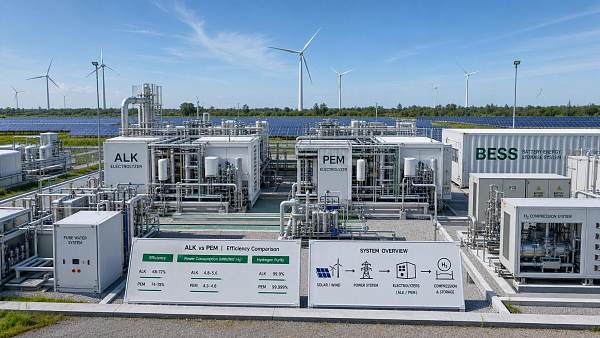
In green hydrogen planning, electrolyzer technologies efficiency is no longer a narrow engineering metric. It directly affects project economics, operating flexibility, and the value of every megawatt connected to renewables, storage, and the grid.
That is why the ALK versus PEM discussion matters in real projects. The better choice depends less on brochure claims and more on power profiles, water quality, dispatch strategy, maintenance philosophy, and expansion timing.
Across the broader energy system, this decision also links with BESS containers, smart transmission equipment, and digital dispatch platforms. For platforms such as ESGS, hydrogen is not isolated equipment; it is part of a coordinated clean power infrastructure stack.
What Efficiency Really Means in Electrolyzer Projects
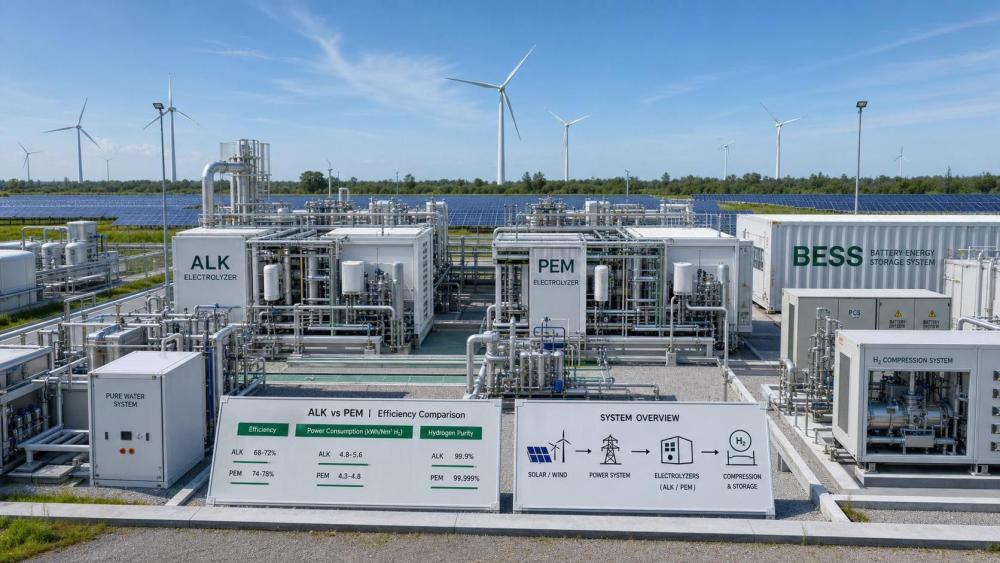
When people discuss electrolyzer technologies efficiency, they often mean electricity consumed per kilogram of hydrogen. That is important, but project teams usually need a wider lens.
Real efficiency includes stack efficiency, balance-of-plant losses, compression needs, part-load behavior, startup energy, and downtime. A system with strong nameplate numbers can still underperform in field conditions.
This becomes more relevant when hydrogen plants are fed by solar, wind, or hybrid microgrids. Variable power changes the effective efficiency picture far more than many early feasibility models assume.
In practice, the question is not simply which technology is more efficient. The better question is which technology preserves useful efficiency under the actual operating rhythm of the site.
ALK and PEM Start from Different Design Logics
ALK electrolysis is the more established route. It uses a liquid alkaline electrolyte and has a long industrial record, especially in steady, large-scale applications.
PEM uses a solid polymer electrolyte membrane. It is generally positioned as the faster, more dynamic option, especially where power input fluctuates with renewable generation.
Those technical differences shape how electrolyzer technologies efficiency appears at the plant level. ALK often looks attractive in lower-cost baseload scenarios, while PEM can create more value where flexibility has monetary importance.
Where ALK Holds Its Ground
ALK remains highly relevant for projects designed around stable electricity supply. This includes industrial parks, ammonia plants, refinery substitution programs, and sites with firm grid access.
If the power source runs at relatively consistent load, ALK can deliver credible electrolyzer technologies efficiency with a more familiar cost structure. That matters where hydrogen price competitiveness is the leading objective.
Another advantage is organizational comfort. Many industrial operators prefer technologies with long operating histories, wider service familiarity, and predictable spare parts planning.
However, the value case weakens when the project depends on frequent cycling. In sites dominated by intermittent solar and wind, efficiency can erode because the whole plant spends more time away from ideal operating conditions.
Why PEM Gains Attention in Renewable-Linked Projects
PEM has become central to many new project evaluations because renewable energy is rarely smooth. Curtailment windows, cloud events, wind ramps, and dynamic power prices reward flexible electrolysis.
In those settings, electrolyzer technologies efficiency is tied to response speed. A system that starts quickly and follows power more closely can convert more otherwise stranded electricity into useful hydrogen.
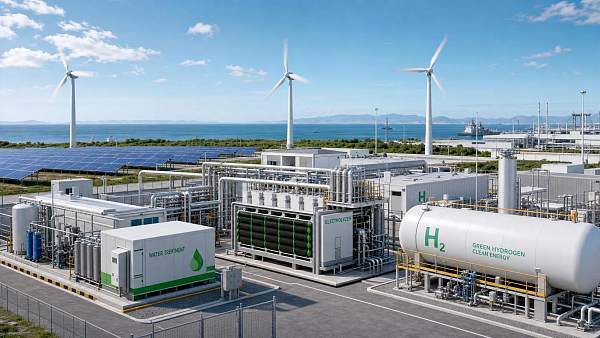
This is especially relevant in integrated energy hubs. A site may combine photovoltaics, battery storage, medium-voltage distribution equipment, and electrolyzers under one dispatch logic.
PEM often fits these architectures better because it can participate in tighter operating schedules. That does not automatically make it cheaper, but it can make it more valuable.
The Hidden Variables Behind Field Performance
Comparing ALK and PEM only by stack efficiency misses several field realities. These are usually where project performance diverges from initial financial models.
Power quality and grid interaction
Electrolyzers do not operate in a vacuum. Harmonics, voltage stability, transformer sizing, and switching events can influence uptime, control behavior, and usable efficiency.
This is why hydrogen projects increasingly need the same discipline seen in BESS and smart grid assets. The electrical interface is part of the business case.
Water and purification systems
Water quality is not a background issue. Treatment requirements, reject streams, and purification stability all influence operating expenditure and effective plant efficiency.
Maintenance strategy
A technology may appear efficient on paper yet lose value through maintenance interruptions. Planned outages, stack replacement intervals, and local service capability shape lifetime performance.
Compression and downstream use
Hydrogen is rarely produced for storage at atmospheric conditions. Compression, purification, and delivery pressure should be included when discussing electrolyzer technologies efficiency in commercial terms.
How Real Project Types Tend to Split
The ALK versus PEM decision usually becomes clearer when mapped to project type rather than debated in the abstract.
- Grid-connected industrial hydrogen replacement: ALK often remains competitive where electricity supply is steady and scale is large.
- Wind and solar co-located hydrogen production: PEM often gains ground where rapid load following improves energy capture.
- Ports and logistics fuel hubs: PEM can be attractive where demand swings and storage cycles are frequent.
- Remote energy systems and microgrids: the answer depends on whether batteries smooth the power profile before electrolysis.
That last point matters. In some projects, a BESS layer changes the electrolyzer choice by reshaping intermittency. A buffered ALK plant may perform differently from a directly coupled one.
A More Useful Decision Framework
Shortlists become stronger when teams judge electrolyzer technologies efficiency through a whole-system lens rather than a single performance figure.
The following questions usually separate good assumptions from weak ones:
- How many annual hours will the plant run near optimal load?
- What is the real ramping profile of the connected power source?
- Will batteries, curtailment logic, or grid contracts smooth that profile?
- How much value comes from flexibility versus lowest hydrogen production cost?
- What service support exists in the target region over the asset life?
- How will water treatment, compression, and purity requirements alter net efficiency?
This is also where an intelligence-led approach helps. ESGS-style analysis connects hydrogen assets with storage, power electronics, grid dispatch, and compliance realities instead of treating procurement as a stand-alone choice.
What to Watch Next
The market is moving beyond headline comparisons. Developers now care more about dispatchable hydrogen, hybrid energy parks, digital twins, and bankable operating data.
That shift will make electrolyzer technologies efficiency a more contextual metric. The winning systems will be those that stay efficient within the real electrical, thermal, and commercial boundaries of the site.
A practical next step is to compare ALK and PEM using site-specific load curves, water conditions, grid constraints, and downstream hydrogen use. Once those variables are visible, the technology choice usually becomes far less ambiguous.
Related News
 Electrolyzer Technologies Efficiency: ALK vs PEM in Real ProjectsProf. Kaelen VossElectrolyzer technologies efficiency compared: discover how ALK vs PEM perform in real hydrogen projects, from stable grids to renewables, and choose the smarter path for cost, flexibility, and ROI.
 Hydrogen Fuel Production Skid vs Fixed Plant: Which Fits Faster Deployment?Prof. Kaelen VossHydrogen fuel production skid or fixed plant—which deploys faster? Compare speed, permitting, cost, and scalability to choose the right hydrogen project strategy.
 Green Hydrogen System Basics: Key Components and Project RisksProf. Kaelen VossGreen hydrogen system basics explained: explore core components, business value, and key project risks to assess cost, safety, and performance before you invest.
 How to Evaluate a Hydrogen Energy Storage Supplier in 2026Prof. Kaelen VossHydrogen energy storage supplier selection in 2026 starts with system fit, safety, compliance, and lifecycle cost. Learn the key criteria to compare vendors and choose with confidence.
 Hydrogen Energy Infrastructure Storage Systems: Key Design Risks and Trade-OffsProf. Kaelen VossHydrogen energy infrastructure storage systems face critical trade-offs in safety, efficiency, cost, and compliance. Explore key design risks and smarter evaluation strategies.
 EU Issues EN 50641-3 for VPP Grid AccessProf. Kaelen VossEN 50641-3 reshapes EU VPP grid access with new rules on telemetry, cybersecurity, and interoperability. See what VPP operators, EMS vendors, and storage integrators must prepare now.
 Carbon-Neutral Transport: What Is Changing in Fleet Planning in 2026Prof. Kaelen VossCarbon-neutral transport in 2026 is reshaping fleet planning around grid capacity, charging, storage, and risk. Discover the key shifts driving smarter, scalable fleet decisions.
 Hydrogen Energy Infrastructure Risks in Early-Stage ProjectsProf. Kaelen VossHydrogen energy infrastructure risks can derail early-stage projects fast. Learn how grid, electrolyzer, safety, storage, and transport factors shape bankability, compliance, and returns.
 Hydrogen Fuel Production Cost Breakdown for 2026 PlanningProf. Kaelen VossHydrogen fuel production cost breakdown for 2026 planning: compare electricity, electrolyzer CAPEX, storage, transport, and financing to make smarter, bankable project decisions.
 Power-to-X Hydrogen Production: When Does the Business Case Work?Prof. Kaelen VossPower-to-X hydrogen production works when cheap clean power, high electrolyzer utilization, reliable offtake, and smart logistics align. Explore what makes projects bankable.
 VPP Technology Trends Reshaping Distributed Energy in 2026Prof. Kaelen VossVPP technology is reshaping distributed energy in 2026, linking BESS, EV charging, grids, and hydrogen loads to unlock flexible, bankable revenue and smarter power control.
 Hydrogen Electrolyzers in VPPs: Flexibility Value and LimitsProf. Kaelen VossHydrogen electrolyzers in VPPs can unlock renewable flexibility, grid balancing, and Power-to-X revenue—if dispatch limits, storage, pricing, and offtake risks are managed.