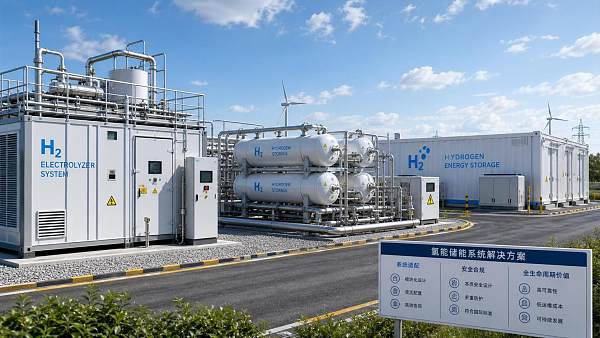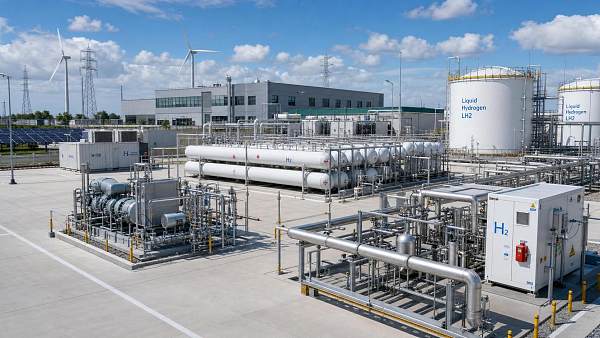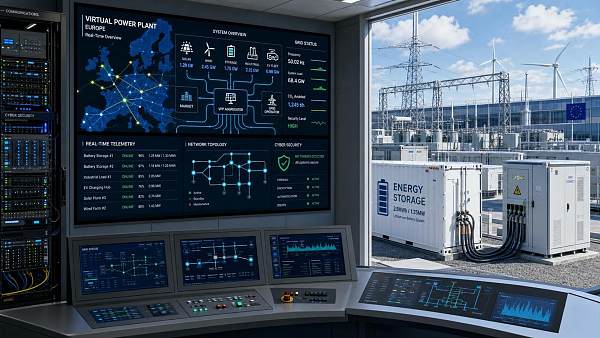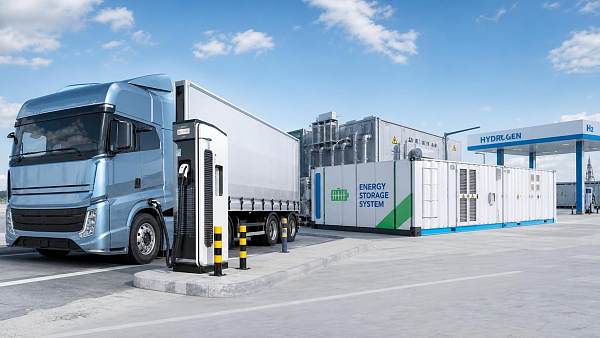
As virtual power plants move from pilot programs to market-facing assets, hydrogen electrolyzers are emerging as flexible loads that can absorb surplus renewable power, support grid balancing, and create new Power-to-X revenue streams. Yet their business value depends on response speed, operating constraints, hydrogen offtake certainty, electricity pricing, and participation rules in flexibility markets. For commercial evaluators, the key question is not whether electrolyzers can provide flexibility, but how much of that flexibility is bankable under real dispatch, degradation, safety, and market conditions.
This question is becoming urgent for developers, industrial energy buyers, grid service aggregators, and infrastructure investors. A 20 MW electrolyzer may look like a controllable load on a dispatch screen, but its commercial value changes sharply if minimum load, ramp rate, water quality, hydrogen storage, or offtake limits reduce available flexibility during high-price hours.
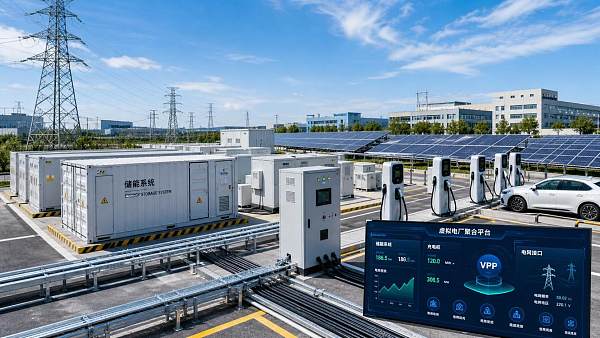
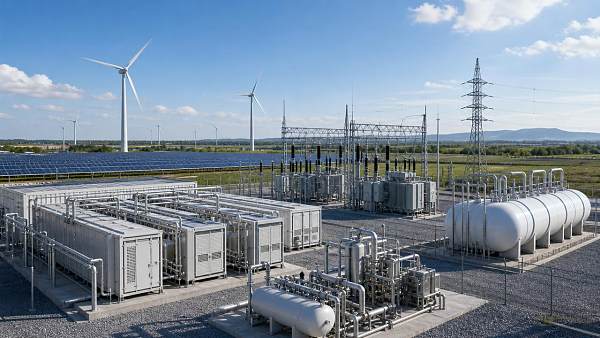
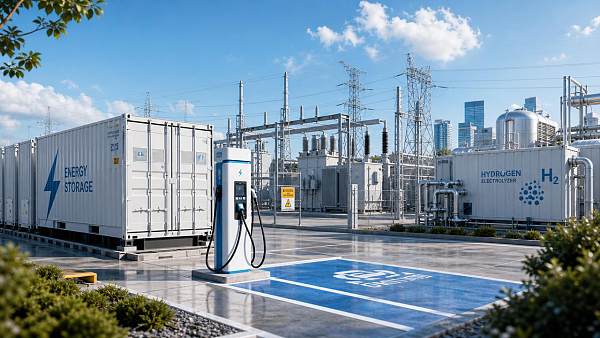
For ESGS, hydrogen electrolyzers sit beside BESS containers, UHV transmission, smart grid equipment, and EV charging infrastructure as part of the same flexibility architecture. They are not batteries, but under the right market design they can behave like dispatchable demand with long-duration energy conversion value.
Where Hydrogen Electrolyzers Fit in Virtual Power Plants
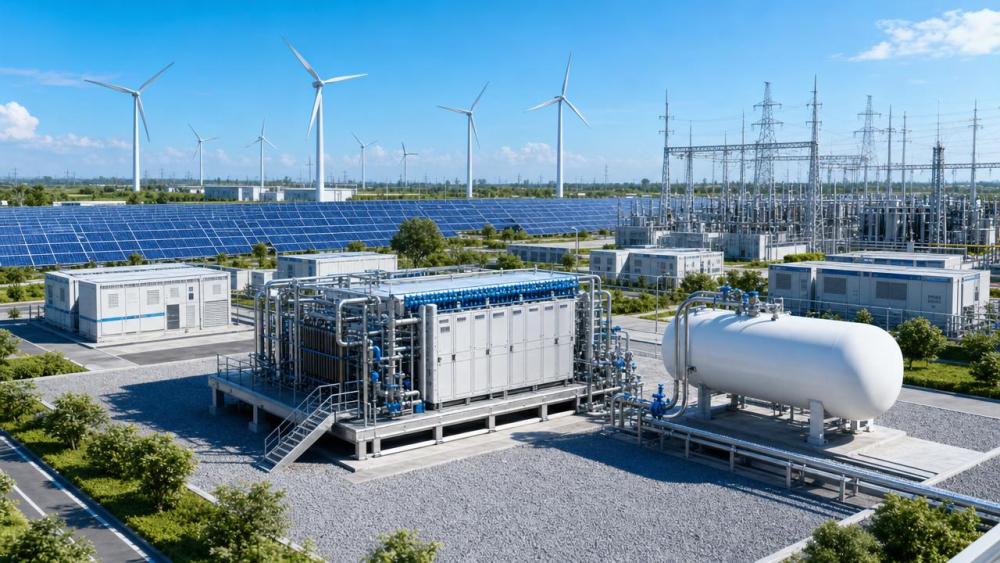
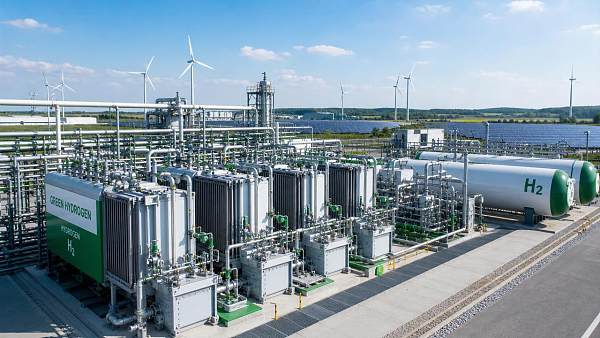
A virtual power plant aggregates distributed assets into a controllable portfolio. Traditional VPP portfolios include C&I batteries, EV chargers, rooftop solar, HVAC loads, and backup generation. Hydrogen electrolyzers add a different layer: large, flexible demand that converts electricity into storable fuel.
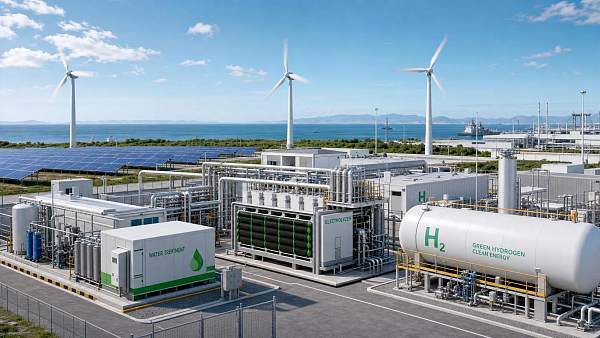
In a renewable-heavy grid, the most valuable operating window may be negative-price midday power, high-wind night production, or congestion-driven curtailment. Electrolyzers can absorb 5 MW, 50 MW, or even 200 MW blocks, depending on plant scale and grid connection capacity.
Flexible Load, Not Simple Storage
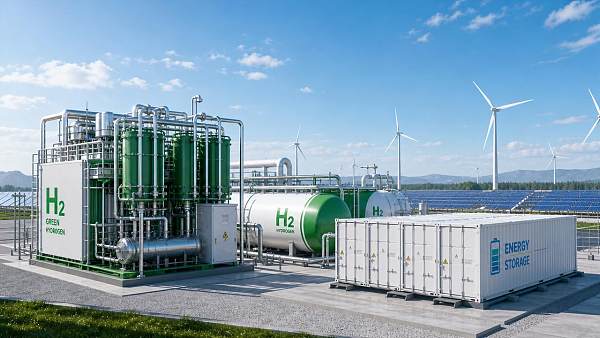
Commercial teams often compare hydrogen electrolyzers with batteries. The comparison is useful but incomplete. BESS provides rapid bidirectional power; electrolyzers provide adjustable consumption and create a molecule that may be stored for days, weeks, or industrial use.
A battery can discharge electricity back to the grid within milliseconds. An electrolyzer usually cannot. Its value is based on turning down during scarcity, ramping up during surplus, and monetizing hydrogen through offtake contracts, mobility hubs, ammonia, methanol, steel, or refinery applications.
Core VPP Use Cases
- Renewable absorption during 2–6 hour surplus windows from solar or wind generation.
- Demand response by reducing load when wholesale prices exceed a preset threshold.
- Congestion management near renewable zones, substations, or UHV receiving terminals.
- Power-to-X revenue stacking where hydrogen sales support grid flexibility economics.
- Portfolio balancing alongside BESS containers and high-power EV charging stations.
The strongest business case usually appears when hydrogen electrolyzers are not treated as isolated production equipment. They should be evaluated as grid-interactive assets connected to price signals, dispatch algorithms, storage buffers, and bankable hydrogen demand.
Flexibility Value: What Can Be Monetized
The flexibility value of hydrogen electrolyzers comes from several revenue layers. Some are direct, such as demand response payments. Others are indirect, including lower electricity procurement cost, avoided curtailment, improved renewable PPA utilization, and higher green hydrogen margins.
For a commercial evaluator, the first step is to separate technical flexibility from tradable flexibility. A stack may ramp from 20% to 100% load, but only part of that range may qualify under market rules, metering requirements, telemetry intervals, or minimum bid sizes.
Common Revenue Streams and Constraints
The following table summarizes how hydrogen electrolyzers may participate in VPP value creation. The figures are indicative ranges used in early-stage business screening, not guaranteed performance values.
The key conclusion is that flexibility must be tied to a dispatchable operating envelope. Hydrogen electrolyzers with wider turndown ratios, verified ramp capability, robust balance-of-plant design, and integrated storage buffers are easier to monetize in VPP portfolios.
The Role of Electricity Price Spread
Electricity cost often represents the dominant variable in green hydrogen production economics. A project buying power at a flat tariff has less flexibility upside than one exposed to hourly prices, renewable PPAs, or curtailed energy contracts.
A basic evaluator model should test at least 3 scenarios: fixed-price procurement, time-of-use procurement, and dynamic market procurement. The difference between the cheapest 25% of hours and the most expensive 25% of hours often determines whether flexible dispatch improves margins.
Bankability Test for Price-Based Dispatch
- Map hourly power prices against renewable availability for at least 12 months.
- Set minimum hydrogen delivery obligations by day, week, and month.
- Define maximum ramp events per day to limit operational stress.
- Calculate hydrogen production loss when the asset curtails consumption.
- Compare flexibility revenue with lost hydrogen margin and added maintenance cost.
If the model cannot pass these 5 checks, the flexibility revenue may look attractive in a presentation but remain difficult to finance. Investors need dispatch logic that survives real prices, not only average tariffs.
Technical Limits That Shape Bankable Flexibility
Hydrogen electrolyzers are industrial plants, not pure software-controlled loads. Their VPP value is bounded by electrochemical behavior, balance-of-plant response, compressor operation, water treatment, gas purity, thermal management, safety systems, and grid interconnection agreements.
The most common procurement mistake is to evaluate only stack efficiency at nominal load. For VPP applications, buyers also need dynamic performance curves across 10%, 20%, 50%, and 100% operation, plus restart limits and degradation assumptions.
PEM and Alkaline Behavior in Flexible Operation
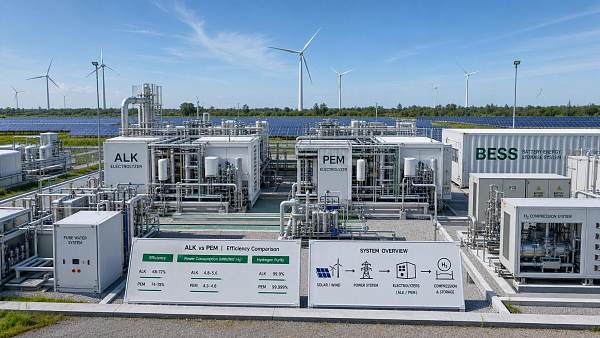
PEM electrolyzers are commonly associated with faster dynamic response and compact design. Alkaline systems are often valued for maturity and potential cost advantages. The right choice depends on load cycling, water requirements, capex, O&M strategy, and hydrogen pressure needs.
Commercial evaluation should avoid a single-technology bias. A 10 MW PEM plant may suit fast balancing near a renewable hub, while a larger alkaline plant may fit steady industrial hydrogen offtake with moderate flexibility windows.
Before issuing an RFQ, buyers should translate grid service ambitions into equipment specifications. The table below shows decision factors that matter when hydrogen electrolyzers are expected to participate in VPP dispatch.
The practical takeaway is simple: VPP-grade flexibility should be purchased, tested, and contracted. If the EPC scope, warranty language, and control interface do not specify dynamic operation, the assumed revenue may not be enforceable.
Balance-of-Plant Bottlenecks
A fast stack does not automatically mean a fast plant. Compressors, dryers, cooling loops, gas separators, water treatment units, and power electronics can create response delays. These systems may impose minimum run times or staged operating modes.
For example, a plant may accept a 60-second electrical setpoint change, but hydrogen quality validation, pressure control, or compressor cycling may limit how often the command can be repeated. Evaluators should request full-plant dynamic test data, not only component datasheets.
Dispatch Limits to Include in Financial Models
- Maximum number of ramp cycles per day, typically defined by warranty or O&M plan.
- Minimum uptime and downtime after a start-stop sequence.
- Hydrogen purity thresholds before delivery into storage, pipeline, or industrial use.
- Cooling and thermal stabilization time during high-load operation.
- Grid interconnection limits, including reactive power and protection requirements.
These constraints do not eliminate value. They make value more precise. A credible VPP model should show when hydrogen electrolyzers can respond, when they should hold steady, and when a BESS asset should handle faster grid duties.
Commercial Evaluation: From Concept to Investable Asset
Commercial evaluators should treat hydrogen electrolyzers as multi-market infrastructure. The investment case combines electricity procurement, hydrogen sales, flexibility revenue, grid connection cost, water availability, land, permitting, safety, and long-term service agreements.
A strong assessment normally takes 6–12 weeks for pre-feasibility and 3–6 months for bankable technical and commercial due diligence. The timeline depends on grid study complexity, offtake negotiations, environmental approvals, and procurement maturity.
Six Questions Before Committing Capital
- Is there a firm hydrogen offtake pathway for at least 60%–80% of expected annual output?
- Can the grid connection support the target MW load without excessive reinforcement cost?
- Are flexibility market rules stable enough for a 10–15 year revenue model?
- Does the electrolyzer supplier warranty cover the proposed dynamic duty cycle?
- Is storage sized to decouple grid dispatch from downstream hydrogen delivery?
- Can the control system communicate securely with VPP platforms at required intervals?
If 2 or more of these answers remain unclear, the project should remain in option-stage development. The most bankable projects define revenue boundaries early instead of assuming every MW of demand is fully dispatchable.
How ESGS Frames the Asset Stack
Within an ESGS-style infrastructure view, hydrogen electrolyzers work best when coordinated with batteries, smart T&D equipment, UHV corridors, and EV charging hubs. Each asset solves a different time scale of the clean power mismatch.
BESS containers handle millisecond to 4-hour balancing. EV charging and swapping stations contribute flexible distributed demand. UHV transmission moves bulk renewable power across thousands of kilometers. Electrolyzers convert surplus power into molecules for longer-duration storage and industrial use.
Recommended Procurement Documents
- A dynamic operating profile with hourly dispatch assumptions across at least 1 year.
- A grid services matrix defining eligible products, telemetry, response time, and penalties.
- A hydrogen offtake term sheet with delivery pressure, purity, volume, and curtailment rights.
- A degradation and warranty schedule linked to operating hours, starts, and ramp events.
- A safety case covering ventilation, hazardous zones, emergency shutdown, and operator training.
These documents help translate flexibility from a general concept into contractual deliverables. They also make supplier comparison more transparent, especially when bids differ on capex, stack replacement, service scope, or control integration.
Risk Controls and Practical Deployment Advice
The biggest risk is over-crediting flexibility before confirming operational limits. A project may assume 500 demand response events per year, but the electrolyzer warranty, storage capacity, or offtake schedule may support far fewer profitable events.
Safety is equally important. Hydrogen systems require disciplined engineering for leak detection, ventilation, electrical classification, pressure management, emergency shutdown, and maintenance access. VPP dispatch should never override plant safety logic or gas handling constraints.
A 4-Step Deployment Path
- Screen the market: identify power price volatility, curtailment hours, flexibility products, and hydrogen demand density.
- Define the technical envelope: validate ramp rates, minimum load, storage duration, and control interfaces.
- Contract the revenue stack: align electricity procurement, offtake, grid services, and availability obligations.
- Operate with feedback: compare dispatch performance against degradation, safety events, and monthly revenue variance.
This sequence reduces the chance of building an excellent hydrogen plant that performs poorly as a VPP asset. The control strategy should be designed before financial close, not added after commissioning.
Common Misunderstandings
One misconception is that all low-cost electricity should be consumed immediately. In practice, water treatment, hydrogen storage, downstream pressure limits, and daily offtake schedules may cap useful consumption even when power is cheap.
Another misunderstanding is that faster response always means higher revenue. Some markets pay for availability, some pay for delivered response, and some impose penalties for non-performance. The commercial structure matters as much as the equipment capability.
A third issue is ignoring portfolio design. Hydrogen electrolyzers may be more valuable when paired with a 10 MWh or 50 MWh BESS that absorbs fast signals while the electrolyzer follows slower dispatch bands.
Turning Electrolyzer Flexibility into a Bankable Decision
Hydrogen electrolyzers can provide meaningful VPP flexibility, but their bankable value depends on the operating envelope, market qualification, storage design, offtake certainty, and electricity procurement structure. The asset is most compelling where renewable surplus, industrial hydrogen demand, and grid flexibility needs overlap.
For commercial evaluators, the right question is not whether the plant can ramp. The better question is how often it can ramp profitably, safely, contractually, and without damaging the long-term hydrogen production business case.
ESGS helps decision-makers connect grid-scale BESS logic, VPP dispatch intelligence, UHV power flow, EV charging flexibility, and hydrogen electrolyzers into a clearer investment view. This integrated perspective supports safer procurement, stronger financial models, and more resilient zero-carbon infrastructure planning.
If you are evaluating a Power-to-X project, a renewable hydrogen hub, or a VPP portfolio that includes hydrogen electrolyzers, contact ESGS to discuss technical assumptions, market participation risks, and customized commercial evaluation frameworks.
Related News
 How to Evaluate a Virtual Power Plant Aggregation PlatformProf. Kaelen VossVirtual power plant aggregation platform evaluation starts with real dispatch, integration, optimization, and security checks. Learn how to compare vendors and choose a scalable, bankable solution.
 Electrolyzer Technologies Efficiency: ALK vs PEM in Real ProjectsProf. Kaelen VossElectrolyzer technologies efficiency compared: discover how ALK vs PEM perform in real hydrogen projects, from stable grids to renewables, and choose the smarter path for cost, flexibility, and ROI.
 Hydrogen Fuel Production Skid vs Fixed Plant: Which Fits Faster Deployment?Prof. Kaelen VossHydrogen fuel production skid or fixed plant—which deploys faster? Compare speed, permitting, cost, and scalability to choose the right hydrogen project strategy.
 Green Hydrogen System Basics: Key Components and Project RisksProf. Kaelen VossGreen hydrogen system basics explained: explore core components, business value, and key project risks to assess cost, safety, and performance before you invest.
 How to Evaluate a Hydrogen Energy Storage Supplier in 2026Prof. Kaelen VossHydrogen energy storage supplier selection in 2026 starts with system fit, safety, compliance, and lifecycle cost. Learn the key criteria to compare vendors and choose with confidence.
 Hydrogen Energy Infrastructure Storage Systems: Key Design Risks and Trade-OffsProf. Kaelen VossHydrogen energy infrastructure storage systems face critical trade-offs in safety, efficiency, cost, and compliance. Explore key design risks and smarter evaluation strategies.
 EU Issues EN 50641-3 for VPP Grid AccessProf. Kaelen VossEN 50641-3 reshapes EU VPP grid access with new rules on telemetry, cybersecurity, and interoperability. See what VPP operators, EMS vendors, and storage integrators must prepare now.
 Carbon-Neutral Transport: What Is Changing in Fleet Planning in 2026Prof. Kaelen VossCarbon-neutral transport in 2026 is reshaping fleet planning around grid capacity, charging, storage, and risk. Discover the key shifts driving smarter, scalable fleet decisions.
 Hydrogen Energy Infrastructure Risks in Early-Stage ProjectsProf. Kaelen VossHydrogen energy infrastructure risks can derail early-stage projects fast. Learn how grid, electrolyzer, safety, storage, and transport factors shape bankability, compliance, and returns.
 Hydrogen Fuel Production Cost Breakdown for 2026 PlanningProf. Kaelen VossHydrogen fuel production cost breakdown for 2026 planning: compare electricity, electrolyzer CAPEX, storage, transport, and financing to make smarter, bankable project decisions.
 Power-to-X Hydrogen Production: When Does the Business Case Work?Prof. Kaelen VossPower-to-X hydrogen production works when cheap clean power, high electrolyzer utilization, reliable offtake, and smart logistics align. Explore what makes projects bankable.
 VPP Technology Trends Reshaping Distributed Energy in 2026Prof. Kaelen VossVPP technology is reshaping distributed energy in 2026, linking BESS, EV charging, grids, and hydrogen loads to unlock flexible, bankable revenue and smarter power control.