VPP technology is moving from pilot logic to system-level control
Distributed energy is no longer a side story in power markets. By 2026, it is becoming a core operating layer across grids, mobility, storage, and industrial power use.
That shift is why VPP technology now matters beyond software conversations. It is emerging as the control architecture that turns scattered assets into coordinated, monetizable flexibility.
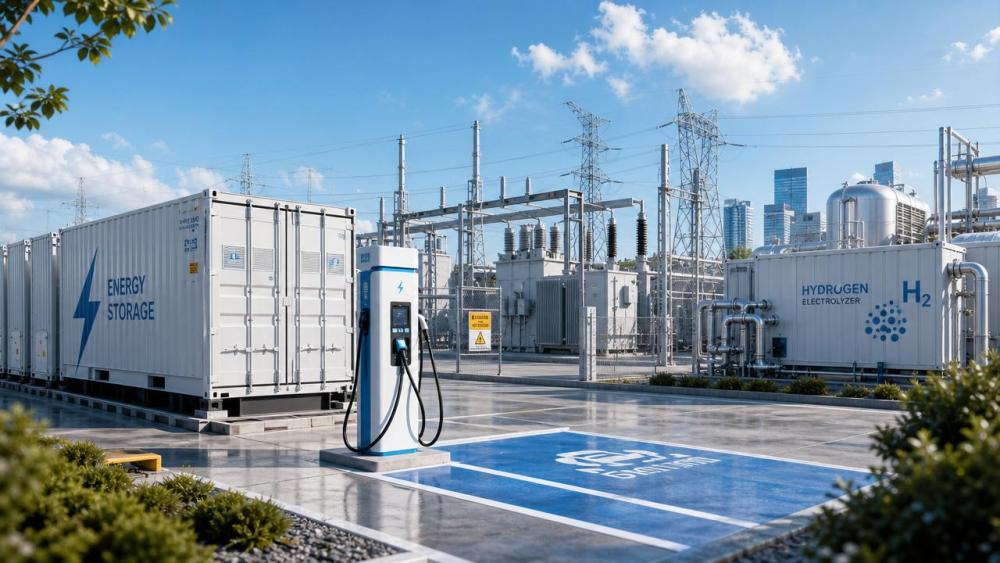
What looks new is not just scale. The more meaningful change is that batteries, chargers, transformers, and electrolyzers are starting to interact within the same dispatch logic.
For platforms tracking grid-scale BESS containers, UHV transmission, hydrogen systems, and mega charging networks, this is a visible market signal. The boundaries between infrastructure classes are getting thinner.
In practical terms, VPP technology is becoming the business layer that connects millisecond power flow control with asset return expectations, compliance risk, and decarbonization targets.
Why the 2026 signal is becoming harder to ignore
Several trends are converging at once. Renewable penetration is rising, grid congestion is spreading, and power price volatility is creating sharper incentives for flexible control.
At the same time, asset fleets are becoming more dispatchable. Liquid-cooled BESS now performs with tighter thermal consistency, while V2G-ready charging networks are more capable of participating in grid services.
A second driver is transmission complexity. UHV corridors move clean power over long distances, but local balancing still requires faster demand-side and edge-side orchestration.
This is where VPP technology gains strategic weight. It can bridge large infrastructure with fragmented endpoints, rather than forcing every flexibility problem back onto central generation.
The third push comes from economics. Capacity markets, ancillary services, peak-valley arbitrage, and demand charge management are increasingly linked through one operational question: who can respond fastest with measured reliability?
- Higher renewable curtailment makes flexible aggregation more valuable.
- Grid operators need verifiable response from non-traditional assets.
- Asset owners want stacked revenues, not single-use deployment.
- Compliance requirements are pushing better telemetry and control discipline.
The real change is interoperability across energy reservoirs and power arteries
In earlier deployments, a virtual power plant often meant aggregating rooftop solar, household batteries, or a narrow load portfolio. That model is expanding quickly.
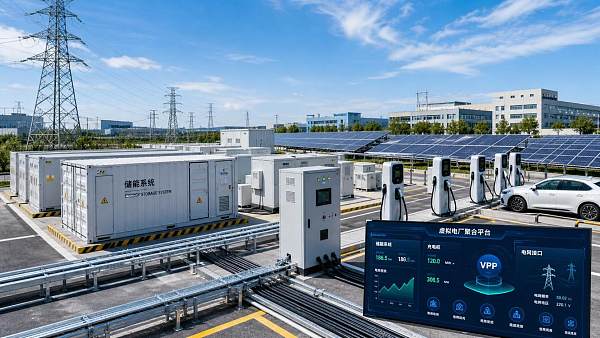
By 2026, stronger VPP technology will increasingly coordinate four different asset families at once: stationary storage, charging infrastructure, smart grid equipment, and hydrogen-linked flexible load.
This matters because these assets behave differently. BESS responds in milliseconds. EV fleets respond through availability windows. Electrolyzers absorb surplus power over longer operational cycles.
A mature VPP is not valuable because it connects many devices. It is valuable because it understands different response speeds, state-of-charge limits, thermal boundaries, and market priorities.
That is also why ESGS-style market intelligence becomes relevant. The winning operators are not just reading software trends. They are reading how physical infrastructure constraints shape digital dispatch options.
Where asset coordination is getting more sophisticated
Software alone will not define the next winners
One common misunderstanding is that VPP technology is mainly an AI scheduling problem. In reality, 2026 performance will depend just as much on hardware behavior and standards compliance.
For BESS fleets, thermal management remains a hidden determinant of dispatch quality. If cell temperature spread widens, response confidence drops and aggressive market participation becomes riskier.
For charging clusters, communication stability and load forecasting matter more than headline charger count. A large fleet with poor telemetry is less valuable than a smaller fleet with dependable control.
Safety and certification are also moving closer to strategy. UL 9540A, local grid codes, cybersecurity rules, and settlement accuracy standards are no longer downstream issues.
More operators are realizing that VPP technology must be designed around bankability. Revenue models only hold when response quality survives audits, incidents, and cross-market scaling.
The impact is spreading across operations, finance, and infrastructure planning
The first effect appears in operations. Dispatch teams are shifting from asset-level monitoring toward portfolio-level optimization, with more emphasis on forecast confidence and exception handling.
The second effect is financial. Investors are paying closer attention to LCOS, degradation curves, and multi-service revenue stacking, not just installed capacity or connected endpoints.
The third effect touches infrastructure strategy. UHV transmission still matters for moving energy across distance, but local flexibility determines whether that energy lands profitably and reliably.
This changes planning priorities. Instead of treating storage, charging, and flexible industrial loads as separate projects, more portfolios are evaluating them as an orchestrated grid service layer.
In that environment, VPP technology becomes a filter for capital allocation. It helps identify which assets can deliver dispatchable value, and which remain operationally isolated.
What deserves closer attention now
- Telemetry granularity, especially for mixed fleets with batteries and charging hubs.
- Control latency under real market events, not only simulation conditions.
- Battery thermal consistency and degradation under stacked use cases.
- Interconnection and compliance readiness across different grid territories.
- Revenue exposure if one service market weakens or access rules change.
A more disciplined 2026 playbook is starting to emerge
From recent market behavior, the strongest VPP technology strategies are becoming less experimental. They are more selective, more data-driven, and more grounded in physical asset realities.
One pattern is clear: start with assets that already have control maturity. Batteries, charging depots, and commercial storage cabinets often provide the cleanest path to measurable flexibility.
Another pattern is to design around local congestion and price spread, not just total connected megawatts. Location is becoming as important as portfolio size.
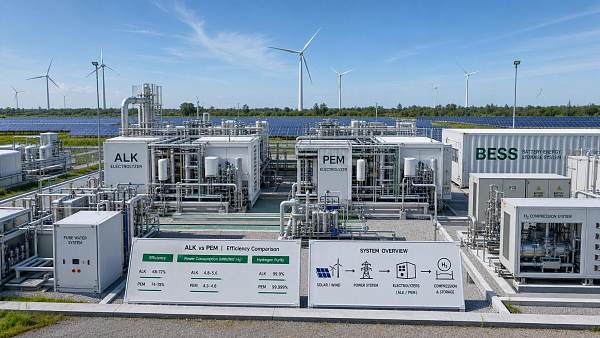
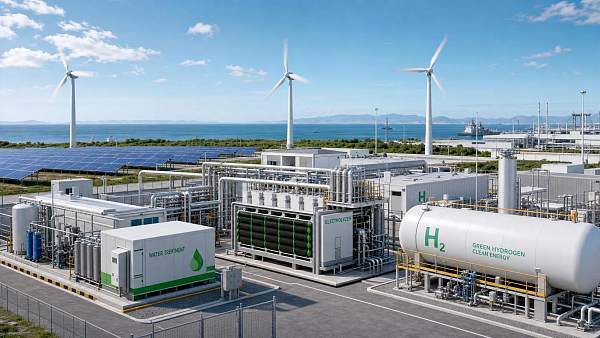
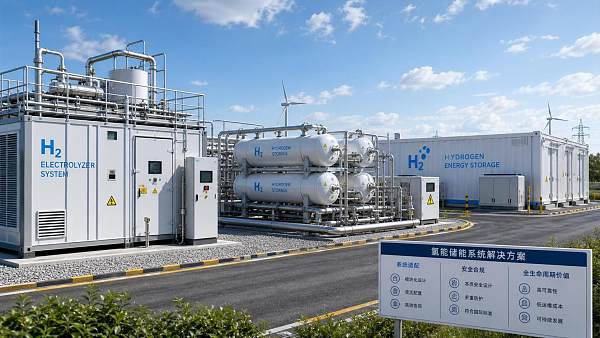
It is also becoming practical to use hydrogen electrolyzers as strategic flexible load in regions with recurring renewable oversupply. That does not replace storage, but it changes the balancing mix.
The more advanced operators are pairing VPP technology with digital twins, better dispatch forecasting, and scenario-based stress tests. The goal is not abstract intelligence. The goal is dependable execution.
What to do before the market signal gets crowded
The next step is not to chase every distributed asset class at once. It is to map where flexibility, compliance, and market access already overlap inside the portfolio.
A practical review should compare response speed, metering quality, thermal limits, interconnection status, and revenue stacking potential across candidate assets.
It also helps to track how VPP technology interacts with broader energy infrastructure. BESS, UHV systems, charging corridors, and hydrogen conversion are no longer independent planning topics.
By 2026, the advantage is likely to belong to operators that understand this convergence early. The market is rewarding coordination quality, not just equipment ownership.
A useful next move is to establish a phased assessment: identify dispatchable assets, test multi-service economics, monitor standards changes, and refine a location-based flexibility roadmap.
That approach keeps VPP technology tied to commercial discipline. It also provides a clearer way to turn distributed energy complexity into resilient, bankable growth.
Related News
 How to Evaluate a Virtual Power Plant Aggregation PlatformProf. Kaelen VossVirtual power plant aggregation platform evaluation starts with real dispatch, integration, optimization, and security checks. Learn how to compare vendors and choose a scalable, bankable solution.
 Electrolyzer Technologies Efficiency: ALK vs PEM in Real ProjectsProf. Kaelen VossElectrolyzer technologies efficiency compared: discover how ALK vs PEM perform in real hydrogen projects, from stable grids to renewables, and choose the smarter path for cost, flexibility, and ROI.
 Hydrogen Fuel Production Skid vs Fixed Plant: Which Fits Faster Deployment?Prof. Kaelen VossHydrogen fuel production skid or fixed plant—which deploys faster? Compare speed, permitting, cost, and scalability to choose the right hydrogen project strategy.
 Green Hydrogen System Basics: Key Components and Project RisksProf. Kaelen VossGreen hydrogen system basics explained: explore core components, business value, and key project risks to assess cost, safety, and performance before you invest.
 How to Evaluate a Hydrogen Energy Storage Supplier in 2026Prof. Kaelen VossHydrogen energy storage supplier selection in 2026 starts with system fit, safety, compliance, and lifecycle cost. Learn the key criteria to compare vendors and choose with confidence.
 Hydrogen Energy Infrastructure Storage Systems: Key Design Risks and Trade-OffsProf. Kaelen VossHydrogen energy infrastructure storage systems face critical trade-offs in safety, efficiency, cost, and compliance. Explore key design risks and smarter evaluation strategies.
 EU Issues EN 50641-3 for VPP Grid AccessProf. Kaelen VossEN 50641-3 reshapes EU VPP grid access with new rules on telemetry, cybersecurity, and interoperability. See what VPP operators, EMS vendors, and storage integrators must prepare now.
 Carbon-Neutral Transport: What Is Changing in Fleet Planning in 2026Prof. Kaelen VossCarbon-neutral transport in 2026 is reshaping fleet planning around grid capacity, charging, storage, and risk. Discover the key shifts driving smarter, scalable fleet decisions.
 Hydrogen Energy Infrastructure Risks in Early-Stage ProjectsProf. Kaelen VossHydrogen energy infrastructure risks can derail early-stage projects fast. Learn how grid, electrolyzer, safety, storage, and transport factors shape bankability, compliance, and returns.
 Hydrogen Fuel Production Cost Breakdown for 2026 PlanningProf. Kaelen VossHydrogen fuel production cost breakdown for 2026 planning: compare electricity, electrolyzer CAPEX, storage, transport, and financing to make smarter, bankable project decisions.
 Power-to-X Hydrogen Production: When Does the Business Case Work?Prof. Kaelen VossPower-to-X hydrogen production works when cheap clean power, high electrolyzer utilization, reliable offtake, and smart logistics align. Explore what makes projects bankable.
 VPP Technology Trends Reshaping Distributed Energy in 2026Prof. Kaelen VossVPP technology is reshaping distributed energy in 2026, linking BESS, EV charging, grids, and hydrogen loads to unlock flexible, bankable revenue and smarter power control.